Antique Writing Bureau
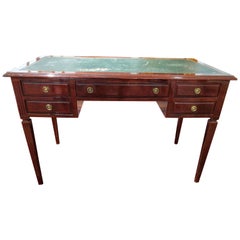
Early 20th Century French Louis XVI Antique Writing Bureau
Oak
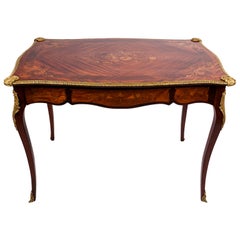
Late 19th Century French Louis XV Antique Writing Bureau
Rosewood
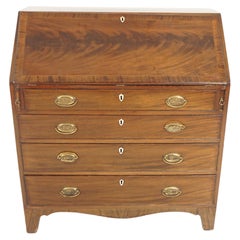
1810s Scottish Antique Writing Bureau
Walnut
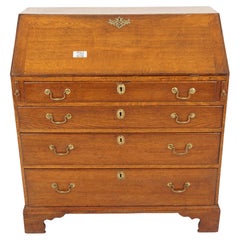
19th Century North American Georgian Antique Writing Bureau
Oak
Mid-19th Century English Neoclassical Antique Writing Bureau
Mahogany
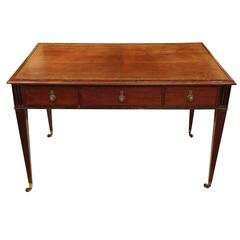
1890s French Louis XVI Antique Writing Bureau
Walnut
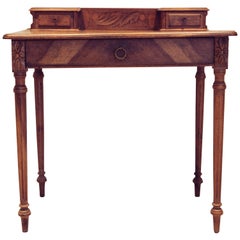
Late 18th Century French Louis XVI Antique Writing Bureau
Wood
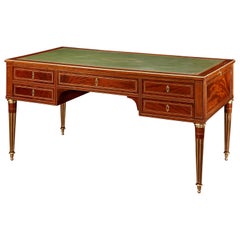
19th Century French Antique Writing Bureau
Bronze
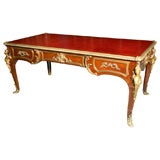
Early 20th Century French Louis XVI Antique Writing Bureau
Walnut
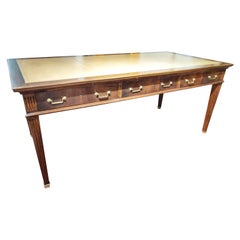
Early 18th Century Italian Louis XV Antique Writing Bureau
Walnut
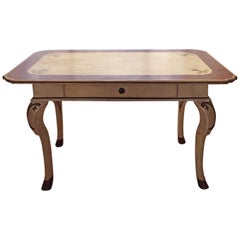
1890s French Empire Antique Writing Bureau
Bronze
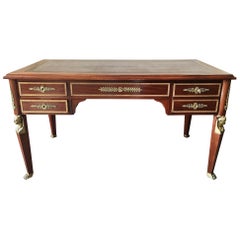
Early 18th Century English Queen Anne Antique Writing Bureau
Wood
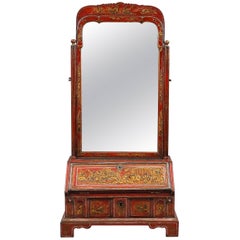
1760s French Louis XV Antique Writing Bureau
Wood
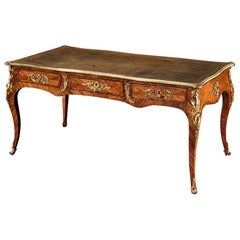
Mid-19th Century British Victorian Antique Writing Bureau
Mahogany
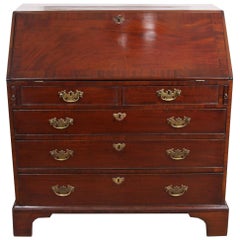

Late 18th Century English Antique Writing Bureau
Oak
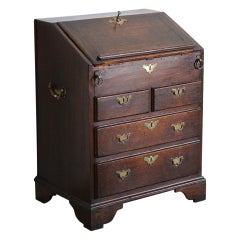
1780s Austrian Other Antique Writing Bureau
Cherry
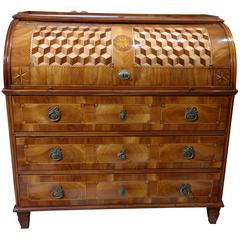
Mid-18th Century Louis XV Antique Writing Bureau
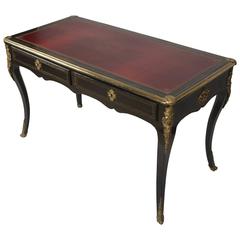
Early 20th Century Antique Writing Bureau
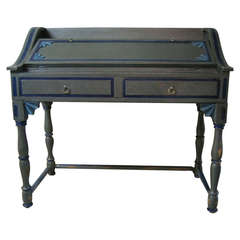
Early 18th Century Vietnamese George III Antique Writing Bureau
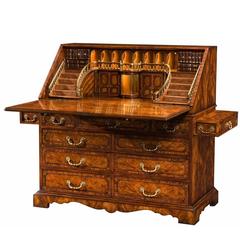
19th Century Antique Writing Bureau
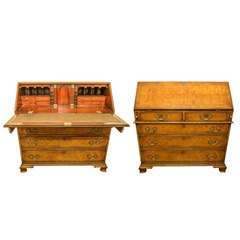
18th Century and Earlier French Antique Writing Bureau
Brass
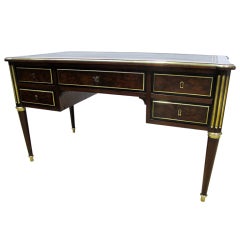
19th Century French Antique Writing Bureau
Brass
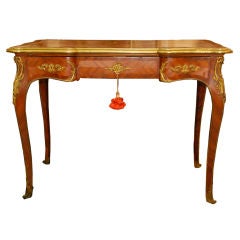
Late 18th Century French Louis XVI Antique Writing Bureau
Wood
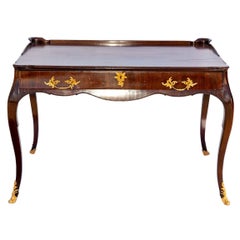
19th Century French Napoleon III Antique Writing Bureau
Brass
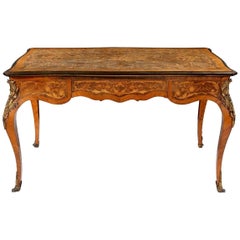
18th Century English George III Antique Writing Bureau
Mahogany
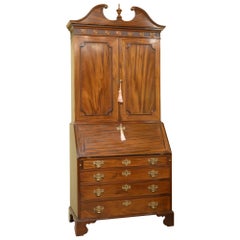
17th Century French Renaissance Antique Writing Bureau
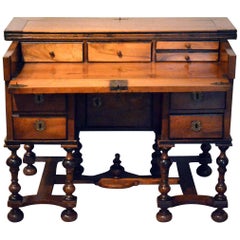
19th Century French Louis XVI Antique Writing Bureau
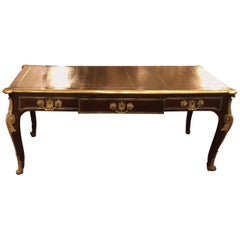
18th Century Italian Louis XVI Antique Writing Bureau
Walnut
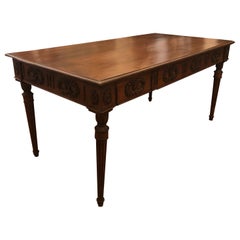
Early 19th Century French Antique Writing Bureau
Metal
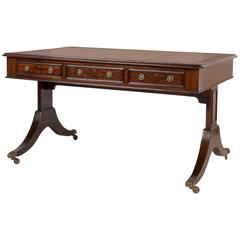
18th Century and Earlier French Louis XV Antique Writing Bureau
Walnut, Leather
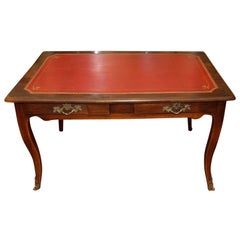
1770s George III Antique Writing Bureau
Elm
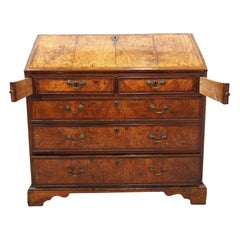
Early 1900s English Antique Writing Bureau
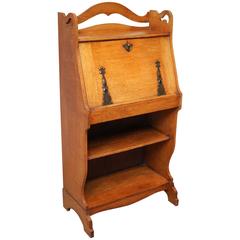
1850s German Biedermeier Antique Writing Bureau
Walnut
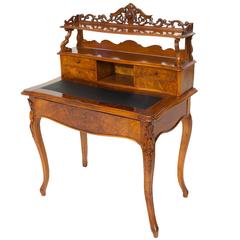
Early 20th Century French Louis XV Antique Writing Bureau
Fruitwood, Kingwood
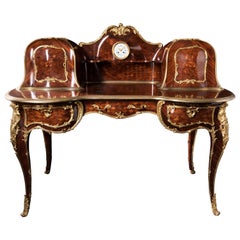
18th Century and Earlier French Antique Writing Bureau
Bronze
Late 18th Century French Louis XVI Antique Writing Bureau
Bronze
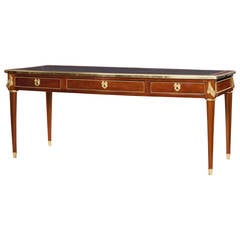
Early 19th Century French Empire Antique Writing Bureau
Ormolu
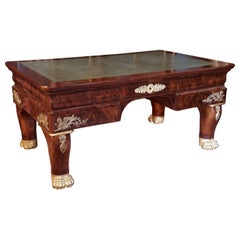
18th Century and Earlier French Antique Writing Bureau
Ormolu
19th Century Italian Antique Writing Bureau
Bronze
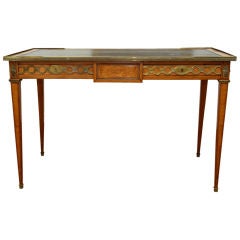
Late 19th Century French Antique Writing Bureau
Wood
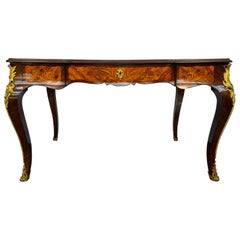
1690s French Louis XIV Antique Writing Bureau
Bronze, Copper
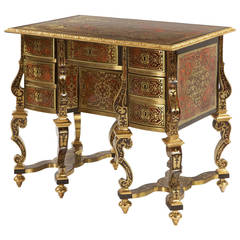
18th Century and Earlier French French Provincial Antique Writing Bureau
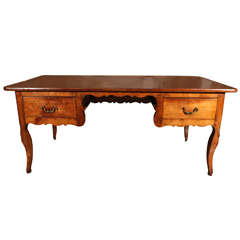
18th Century and Earlier French Antique Writing Bureau
Walnut
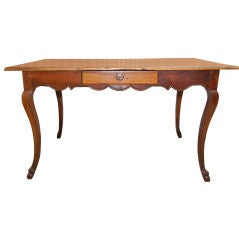
Early 20th Century French Antique Writing Bureau
Brass
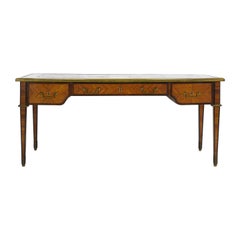
Late 18th Century Swedish Neoclassical Antique Writing Bureau
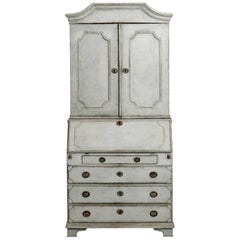
Mid-19th Century French Antique Writing Bureau
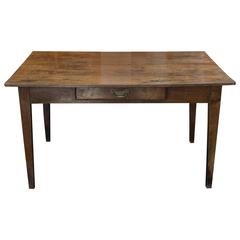
Late 19th Century French Antique Writing Bureau
Mahogany
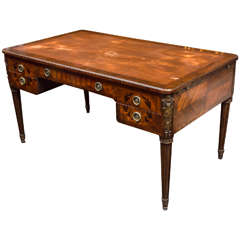
1820s French First Empire Antique Writing Bureau
Elm, Sycamore
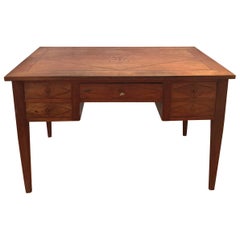
Late 19th Century French Louis XV Antique Writing Bureau
Bronze
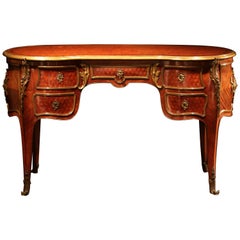
1860s Dutch Antique Writing Bureau
Walnut
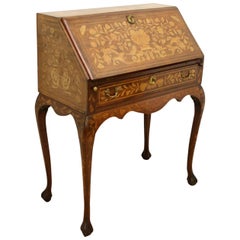
18th Century and Earlier French Antique Writing Bureau
Ormolu
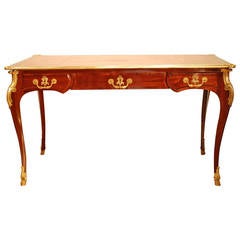
Late 19th Century English Louis XV Antique Writing Bureau
Fruitwood, Tulipwood
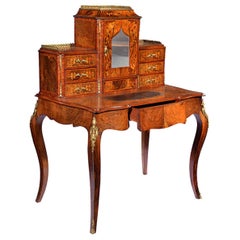
19th Century French Charles X Antique Writing Bureau
Rosewood
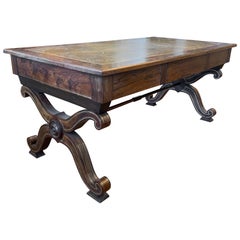
19th Century French Rococo Antique Writing Bureau
Bronze
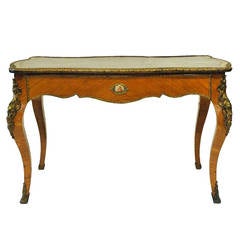
19th Century French Charles X Antique Writing Bureau
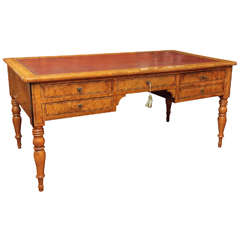
18th Century and Earlier English Antique Writing Bureau
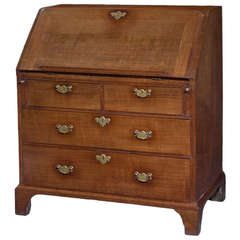
Mid-18th Century Antique Writing Bureau
- 1
- ...
Antique Writing Bureau For Sale on 1stDibs
How Much is a Antique Writing Bureau?
Finding the Right Desks-writing-tables for You
Choosing the perfect writing desk or writing table is a profoundly personal journey, one that people have been embarking upon for centuries.
Queen Atossa of Persia, from her writing table circa 500 B.C., is said to have been the originator of the art of handwritten letters. Hers was reportedly the first in a long and colorful history of penned correspondence that grew in popularity alongside literacy. The demand for suitable writing desks, which would serve the composer of the letters as well as ensure the comfort of the recipient naturally followed, and the design of these necessary furnishings has evolved throughout history.
Once people began to seek freedom from the outwardly ornate styles of the walnut and rosewood writing desks and drafting tables introduced in the name of Queen Victoria and King Louis XV, radical shifts occurred, such as those that materialized during the Art Nouveau period, when designers longed to produce furniture inspired by the natural world’s beauty. A prime example is the work of the famous late-19th-century Spanish architect Antoni Gaudí — his rolltop desk featured deep side drawers and was adorned with carved motifs that paid tribute to nature. Gaudí regularly combined structural precision with decorative elements, creating beautiful pieces of furniture in wood and metal.
Soon afterward, preferences for sleek, geometric, stylized forms in furniture that saw an emphasis on natural wood grains and traditional craftsmanship took hold. Today, Art Deco desks are still favored by designers who seek to infuse interiors with an air of luxury. One of the most prominent figures of the Art Deco movement was French decorator and furniture designer Émile-Jacques Ruhlmann. With his use of neoclassical motifs as well as expensive and exotic materials such as imported dark woods and inlays of precious metals for his writing desks, Ruhlmann came to symbolize good taste and modernity.
The rise in appreciation for Scandinavian modernism continues to influence the design of contemporary writing desks. It employs the “no fuss” or “less is more” approach to creating a tasteful, sophisticated space. Sweden’s master cabinetmaker Bruno Mathsson created gallery-worthy designs that are as functional as they are beautiful. Finnish architect Alvar Aalto never viewed himself as an artist, but, like Mathsson, his furniture designs reflected a fondness for organic materials and a humanistic approach. Danish designers such as Hans Wegner introduced elegant shapes and lines to mid-century desks and writing tables, often working in oak and solid teak.
From vintage desks to contemporary styles, 1stDibs offers a broad spectrum of choices for conducting all personal and business writing and reading activities.
- What is an antique bureau?1 Answer1stDibs ExpertOctober 19, 2021An antique bureau is any bureau that is 100 years old or older. The term bureau today is typically used as another word for a dresser or a chest of drawers. This word has also been used to refer to a writing desk. Find a collection of antique bureaus on 1stDibs today.
Read More
20 Inviting Dining Rooms Perfectly Arranged for Entertaining
Top interior designers show — and tell — us how to create delectable spaces for hosting dinner parties.
This Alain Delon–Designed Table Is Almost as Handsome as He Was
Fans of the French film star may be surprised to learn that he had a flair for furniture with sleek lines and disco-era flash.
Uchronia’s Plant Stand Gives Pots a Pretty Perch with All the Trimmings
Like other pieces in the firm’s Candy Box collection, the cheerful limited-edition design showcases French craft.
The Ultimate Guide to Types of Tables for the Home
Whether you’re just moving in or ready to give your home a makeover, our guide will give you pointers on tables that are fitting for every room, nook and hallway.
Is Lionel Jadot the Willy Wonka of Upcycled Belgian Design?
From his massive collaborative workshop in a former paper factory, the designer concocts funky furniture from disused materials, as well as luxe hotel interiors like the new Mix Brussels.
Inspired by the Cosmos, Sandra Nunnerley’s Nova Table Has a Futuristic Feel
The designer’s innovative use of an unexpected material gives this console a lift.
This 19th-Century Gilded Desk Displays a Fanciful Kingdom in Marquetry
The stately piece brings both gravitas and whimsy to any work space.
In Guadalajara, These Luscious Side Tables Are Chiseled from Volcanic Rock
Use them as tables or stools, indoors or out.