Art Deco Bamboo
Vintage 1970s French Art Deco End Tables
Bronze
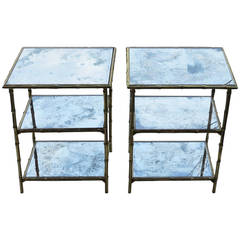

Vintage 1970s French Art Deco Shelves
Bronze

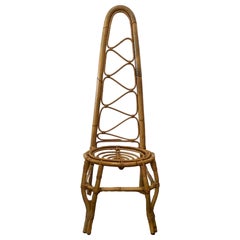
Mid-20th Century Italian Art Deco Chairs
Bamboo
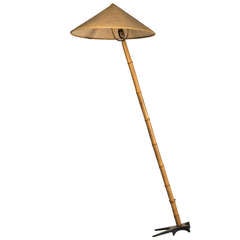
Vintage 1930s Austrian Art Deco Floor Lamps
Bamboo
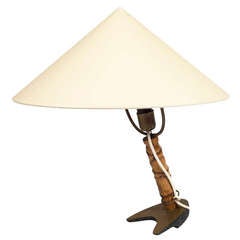
Vintage 1930s Austrian Art Deco Table Lamps
Bamboo
Vintage 1930s Austrian Art Deco Table Lamps
Bamboo
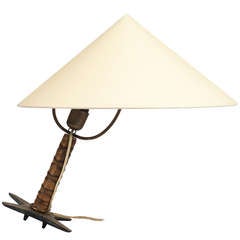
Vintage 1940s French Art Deco Side Chairs
Leather, Walnut, Bamboo
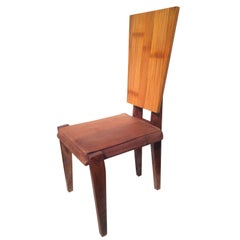
French Side Tables
Brass
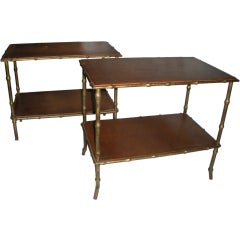
20th Century French Coffee and Cocktail Tables
Brass
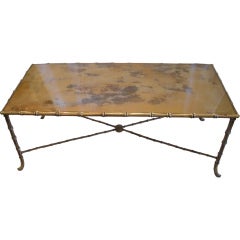
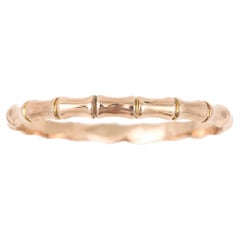
Vintage 1920s English Art Deco Cuff Bracelets
9k Gold, Rose Gold
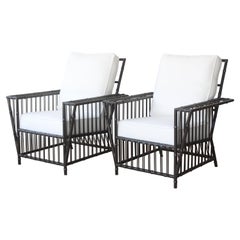
Vintage 1960s American Art Deco Lounge Chairs
Steel
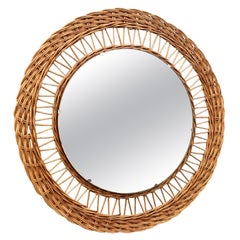
Mid-20th Century Czech Art Deco Wall Mirrors
Bamboo
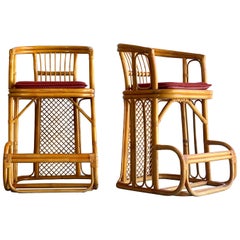
Mid-20th Century Italian Art Deco Stools
Bamboo, Rattan
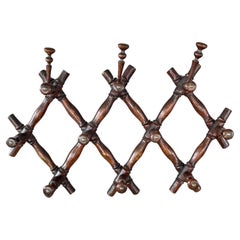
Early 20th Century Art Deco Coat Racks and Stands
Brass
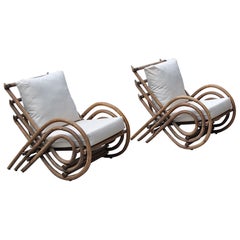
Late 20th Century French Art Deco Armchairs
Rattan
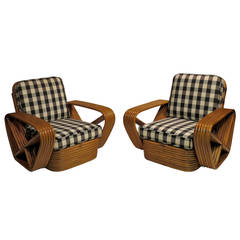
Vintage 1940s American Art Deco Lounge Chairs
Bamboo, Rattan, Wicker
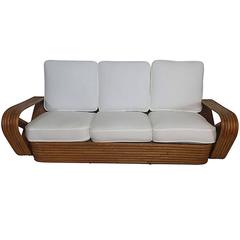
Vintage 1930s Unknown Art Deco Settees
Metal
- 1
Art Deco Bamboo For Sale on 1stDibs
How Much is a Art Deco Bamboo?
A Close Look at Art-deco Furniture
Art Deco furniture is characterized by its celebration of modern life. More than its emphasis on natural wood grains and focus on traditional craftsmanship, vintage Art Deco dining chairs, tables, desks, cabinets and other furniture — which typically refers to pieces produced during the 1920s and 1930s — is an ode to the glamour of the “Roaring Twenties.”
ORIGINS OF ART DECO FURNITURE DESIGN
- Emerged in the 1920s
- Flourished while the popularity of Art Nouveau declined
- Term derives from 1925’s Exposition Internationale des Arts Décoratifs et Industriels Modernes (International Exhibition of Modern Decorative and Industrial Arts) in Paris, France
- Informed by Ancient Egypt, Cubism, Futurism, Louis XVI, De Stijl, modernism and the Vienna Secession; influenced Streamline Moderne and mid-century modernism
CHARACTERISTICS OF ART DECO FURNITURE DESIGN
- Bold geometric lines and forms, floral motifs
- Use of expensive materials such as shagreen or marble as well as exotic woods such as mahogany, ebony and zebra wood
- Metal accents, shimmering mirrored finishes
- Embellishments made from exotic animal hides, inlays of mother-of-pearl or ivory
ART DECO FURNITURE DESIGNERS TO KNOW
VINTAGE ART DECO FURNITURE ON 1STDIBS
Few design styles are as universally recognized and appreciated as Art Deco. The term alone conjures visions of the Roaring Twenties, Machine Age metropolises, vast ocean liners, sleek typography and Prohibition-era hedonism. The iconic movement made an indelible mark on all fields of design throughout the 1920s and ’30s, celebrating society’s growing industrialization with refined elegance and stunning craftsmanship.
Widely known designers associated with the Art Deco style include Émile-Jacques Ruhlmann, Eileen Gray, Maurice Dufrêne, Paul Follot and Jules Leleu.
The term Art Deco derives from the name of a large decorative arts exhibition held in Paris in 1925. “Art Deco design” is often used broadly, to describe the work of creators in associated or ancillary styles. This is particularly true of American Art Deco, which is also called Streamline Moderne or Machine Age design. (Streamline Moderne, sometimes known as Art Moderne, was a phenomenon largely of the 1930s, post–Art Nouveau.)
Art Deco textile designers employed dazzling floral motifs and vivid colors, and while Art Deco furniture makers respected the dark woods and modern metals with which they worked, they frequently incorporated decorative embellishments such as exotic animal hides as well as veneers in their seating, case pieces, living room sets and bedroom furniture.
From mother-of-pearl inlaid vitrines to chrome aviator chairs, bold and inventive works in the Art Deco style include chaise longues (also known as chaise lounges) and curved armchairs. Today, the style is still favored by interior designers looking to infuse a home with an air of luxury and sophistication.
The vintage Art Deco furniture for sale on 1stDibs includes dressers, coffee tables, decorative objects and more.
- What is the history of Art Deco?1 Answer1stDibs ExpertMarch 25, 2024The history of Art Deco begins in the early 20th century.
Art Deco emerged as a global design style around the start of World War I, during the last years of Art Nouveau's popularity. The style conjures visions of the Roaring Twenties, Machine Age metropolises, vast ocean liners, sleek typography and Prohibition-era hedonism. Its hallmarks include the use of geometric designs influenced by Cubism. Major discoveries of Egyptian tombs during the era also influenced the movement.
The term Art Deco derives from the name of a large decorative arts exhibition, the Exposition Internationale des Arts Décoratifs et Industriels Modernes, held in Paris in 1925. After World War II, tastes shifted toward more functional, less ornate modernism, but today, the Art Deco style is still favored for its luxurious sophistication. On 1stDibs, shop a large selection of vintage Art Deco furniture. - How do I identify Art Deco?1 Answer1stDibs ExpertApril 5, 2022To identify Art Deco, look for the characteristics of the period. Furniture produced at the time is generally lacquered metal with a mirror-like glossy finish. Wooden items should be an exotic wood. Most items feature symmetrical designs, and geometric forms were popular motifs during the period. In addition, Art Deco often shows the influence of Hellenistic, Egyptian and Asian designs. Shop a variety of Art Deco furniture and decorative objects on 1stDibs.
- When did Art Deco originate?1 Answer1stDibs ExpertFebruary 1, 2024The Art Deco period originated in France. Its name comes from the title of a large decorative arts exhibition held in Paris in 1925, credited with introducing the style to the world. It was informed by ancient Egypt, Cubism, Futurism, Louis XVI, De Stijl, modernism and the Vienna Secession and went on to influence the Streamline Moderne and mid-century modern movements. Shop a wide range of Art Deco furniture, decorative objects and jewelry on 1stDibs.
- What defines Art Deco?1 Answer1stDibs ExpertApril 5, 2024A few things define Art Deco. Date is one factor, as the style emerged in the 1920s and remained popular during the 1930s. Art Deco design usually includes bold geometric lines and forms or intricate repeating floral motifs. Designers working in this style tended to use expensive materials, such as shagreen or marble, as well as exotic woods like mahogany, ebony and zebra wood. Furniture often featured metal accents, mirrored finishes and embellishments made from exotic animal hides and inlays of mother-of-pearl or ivory. Shop a wide range of Art Deco furniture on 1stDibs.
- What was Art Deco influenced by?1 Answer1stDibs ExpertMay 3, 2024Art Deco was influenced by a number of things. The discovery of ancient tombs around the turn of the century led to a renewed interest in Egyptian furniture and architecture that inspired Art Deco designers. Art Deco was also informed by Cubism, Futurism, Louis XVI style, De Stijl, modernism and the Vienna Secession. Shop a large collection of Art Deco furniture, decorative objects and jewelry on 1stDibs.
- What is art deco ring?1 Answer1stDibs ExpertAugust 17, 2021Art Deco rings were made during the early 20th century. Named for a design movement that originated at a large decorative arts exhibition held in Paris in 1925, Art Deco rings are generally quite geometric, symmetrical and incorporate a variety of gemstones — especially sapphires and emeralds. Find a wide variety of Art Deco rings for sale on 1stDibs.
- What is an Art Deco lamp?1 Answer1stDibs ExpertApril 5, 2022An Art Deco lamp is any lamp that’s made in the styles of the Art Deco movement, which was dominant in the 1920s and 1930s. On 1stDibs, you’ll find a collection of Art Deco lamps from some of the world’s top sellers.
- What is an art deco watch?1 Answer1stDibs ExpertApril 5, 2022An art deco watch is defined by its geometric case, which is either circular or rectangular. The watch style was highly popular between 1920 and 1950, and is still sought after today. You’ll find a collection of art deco watches from some of the world’s top sellers on 1stDibs
- What is art deco jewelry?1 Answer1stDibs ExpertFebruary 22, 2021Art Deco jewelry was popular during the design movement of the 1920s and 30s. Art Deco jewelry is typically characterized by geometric patterns and gemstones of contrasting colors.
- What was the Art Deco movement?1 Answer1stDibs ExpertMay 30, 2024The Art Deco movement was a decorative style popular during the 1920s and ’30s. Few design styles are as universally recognized and appreciated as Art Deco. The term alone conjures visions of the Roaring Twenties, Machine Age metropolises, vast ocean liners, sleek typography and Prohibition-era hedonism. The iconic movement made an indelible mark on all fields of design, celebrating society's growing industrialization with refined elegance and stunning craftsmanship. Widely known designers associated with the Art Deco style include Émile-Jacques Ruhlmann, Eileen Gray, Maurice Dufrêne, Paul Follot and Jules Leleu. The term Art Deco derives from the name of a large decorative arts exhibition held in Paris in 1925. On 1stDibs, shop a wide range of Art Deco furniture and decorative objects.
- 1stDibs ExpertAugust 15, 2019
The main difference between Art Nouveau and Art Deco is that the former is detailed and ornate, and the latter is sharp and geometrical. When the movement started at the end of the 19th century, Art Nouveau was heavily influenced by nature and the curved lines of flowers. Art Deco, which became popular in the beginning of the 20th century, was inspired by the geometric abstraction of cubism.
- 1stDibs ExpertAugust 26, 2024The difference between Art Deco and mid-century modern (MCM) is that the terms describe two distinct design styles. Art Deco typically refers to pieces produced between the 1920s and 1930s. Furniture produced in this style tends to display bold geometric lines and forms, floral motifs, metal accents, shimmering mirrored finishes and embellishments made from exotic animal hides, inlays of mother-of-pearl or ivory. MCM, or mid-century modern, emerged after World War II. Organically shaped, clean-lined and elegantly simple are three terms that well describe vintage mid-century modern furniture. Designers working in this style frequently used industrial materials, including steel, fiberglass, molded plywood, and alluring woods such as teak, rosewood and oak. Explore a wide variety of Art Deco and mid-century modern furniture on 1stDibs.
- 1stDibs ExpertFebruary 13, 2023To know if a ring is Art Deco, examine its style. The Art Deco period, encompassing the 1920s and ’30s, ushered in a very distinct look in the design of jewelry. Makers often incorporated geometric motifs in jewelry designs. Materials may also provide a clue about the era of the piece. Platinum, rubies, sapphires and emeralds were some of the most common precious metals and gemstones used at the time. Keep in mind that there are many convincing reproductions of Art Deco rings and other high-quality pieces inspired by originals. As a result, you may wish to have a certified appraiser or expert within the field of antique jewelry design to evaluate the ring. Shop a selection of Art Deco rings on 1stDibs.
- 1stDibs ExpertFebruary 27, 2024To identify Art Deco furniture, first look for maker's markings in inconspicuous areas. Once you've found them, use trusted online resources to research the manufacturer and determine whether they were active during the Art Deco era, which spanned from the 1920s through the 1930s. You can also look for classic characteristics of Art Deco furniture, such as bold geometric lines and forms, intricate floral motifs, metal accents, mirrored finishes and fine materials such as shagreen, marble, mahogany wood, zebra wood, ebony, exotic animal hides, onyx and mother-of-pearl. A certified appraiser or knowledgeable antiques dealer can also assist you with making identifications. Shop a collection of Art Deco furniture on 1stDibs.
- Is Art Deco jewelry valuable?1 Answer1stDibs ExpertFebruary 1, 2024Yes, some Art Deco jewelry is valuable. Jewelry from the 1920s and ’30s has remained consistently popular. It experienced a major revival in the 1960s, and even today, jewelry makers continue to be inspired by the period. As a result, demand for Art Deco jewelry is typically high, but the actual value of a piece depends on its style, maker, age and condition. A certified appraiser or experienced antiques dealer can help you determine how much your jewelry is worth. Explore a large selection of Art Deco jewelry on 1stDibs.
- Was Eileen Gray Art Deco?1 Answer1stDibs ExpertFebruary 21, 2024The answer to whether Eileen Gray's designs were Art Deco depends on which piece you're considering. Gray was ever-evolving as a designer. By the early 1920s, she was creating geometric works that embodied the essence of Art Deco and the nascent modernist design movement. Some pieces, like her Bricks screen, employ the planar forms favored by Gerrit Rietveld and other De Stijl architects of the Netherlands. Others feature the tubular chrome framing used by Marcel Breuer and Ludwig Mies van der Rohe, who are associated with the mid-century modern design style. On 1stDibs, shop a variety of Eileen Gray furniture.
- 1stDibs ExpertAugust 15, 2019
The main features of Art Deco are geometry-influenced shapes, bright color schemes and bold patterns. Art Deco architecture and design are both heavily influenced by the Cubism movement, which relied on the use of non-traditional angles and shapes.
- 1stDibs ExpertSeptember 25, 2019
Art Deco features bold geometric designs, clean lines and vibrant colors.
- How was Art Deco furniture made?1 Answer1stDibs ExpertApril 5, 2022Art Deco furniture was largely made by hand. Crafters often employed exotic hardwood like zebra wood, rosewood and Macassar ebony. Many pieces had a polished Japanese lacquer finish, which gave a high-gloss shine to the wood. On 1stDibs, shop a variety of Art Deco furniture.
- 1stDibs ExpertNovember 8, 2023Art Deco engagement rings are accessories that were produced during the 1920s and '30s and are characterized by details associated with the Art Deco style. They're often very colorful and feature bold geometric lines as well as gemstones cut in nontraditional ways. While the style got its name from an arts exhibition in Paris in 1925, Art Deco was inspired by Cubism and a shift from Art Nouveau's floral aesthetic. The modern look of Art Deco engagement rings reflects an evolution in fashion, visual art and more, as well as the sweeping societal changes taking hold at the time. On 1stDibs, shop a range of vintage Art Deco engagement rings.
Read More
My Father Was Obsessed with This French Art Deco Tiger Lamp
The 1920s design is a thrilling combination of saturated colors, ancient motifs and modern aesthetics.
This Onyx, Diamond and Sapphire Ring Is an Art Deco Stunner
The exquisite French jewel feels as modern today as when it was created, nearly a century ago.
Eileen Gray’s Famed Cliffside Villa in the South of France Is Returned to Its Modernist Glory
After years of diligent restoration, E-1027, the designer-cum-architect’s marriage of romance and modernism, is finally complete.
A 1920s Art Deco Necklace with a Stunning Drop Emerald
The cabochon gem centerpiece and diamond-set elliptical rings makes it a marvel of Gatsby-era glamour.
Cartier: The Jeweler Who Helped Define Art Deco
Cartier created some of the most iconic jewelry designs that defined this era.
Our Guide to Victorian, Edwardian and Art Deco Engagement Rings
Learn about these antique jewelry styles, then choose a design that speaks to you.
Why Vintage Watches Are Making a Comeback
Men, women and the watchmakers themselves are falling for the old-fashioned charm of retro timepieces.
The Process: 5 Creators of Chic Customizable Lighting
Bespoke lighting is a hallmark of upscale interiors, and contemporary makers are increasingly ambitious in their materials and forms.