Atmos Clock Used
Recent Sales
1970s Swiss Atmos Clock Used
Brass
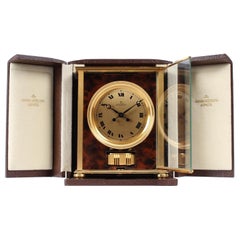

Atmos Clock Used For Sale on 1stDibs
How Much is a Atmos Clock Used?
Jaeger-LeCoultre for sale on 1stDibs
The exquisite art of watchmaking is on display in the distinctive designs of Jaeger-LeCoultre. The Swiss manufacturer is celebrated for its striking Art Deco–era antique clocks, while its range of sumptuous luxury watches spans the gamut of modern design, each one a time capsule of its period.
Jaeger-LeCoultre was established in 1833 by watchmaker Antoine LeCoultre in the Vallée de Joux of the Swiss mountains. LeCoultre was also an inventor who, in 1844, created the millionomètre. As the first instrument to measure thousandths of a millimeter with total accuracy, it refined the meticulous watchmaking process. By 1866, LeCoultre's son, Elie LeCoultre, took over the business. He revolutionized watchmaking by bringing all 180 skills involved in the trade into one workshop: LeCoultre Cie Manufacture.
By 1903, the company had passed to Antoine LeCoultre's grandson, Jacques-David LeCoultre. He created a signature line of ultra-thin watches in partnership with Edmond Jaeger, a French watchmaker who specialized in flat watch cases. In 1907, Louis Cartier signed a contract with Jaeger so that Cartier would have movements for its popular timepieces produced exclusively at LeCoultre in Switzerland. This era saw the debut of Cartier’s Santos as well as its Tank watch.
Watchmakers at Jaeger-LeCoultre began to experiment with the Art Deco style that had encompassed the 1920s and the 1930s. At the time, there were many influences that led to the creation of Art Deco jewelry, while the cases of Art Deco clocks featured architectural details and saw an integration of materials such as brass, glass and marble. Iconic Jaeger-LeCoultre designs from this era include the 1928 Atmos clock and the Reverso watch. Stylish and practical, the coveted Reverso watch features a case that you can flip to protect the watch face.
During the 1950s and '60s, Jaeger-LeCoultre watchmakers continued the manufacturer’s tradition of prioritizing practical reliability. In 1958, the company introduced the robust and durable Geophysic watch collection. The Memovox Polaris, an alarm-equipped dive watch one could wear underwater, followed in 1968.
The best-known timepiece in the company's modern collection is the Master Control watch, unveiled in 1992. It symbolizes a return to the thin style and performance-first ethic of classic Jaeger-LeCoultre. In 2018, the watchmaker also launched the Polaris collection. Inspired by the original Memovox, the series features a sporty, elegant and contemporary look.
Find vintage Jaeger-LeCoultre wristwatches and pocket watches on 1stDibs.
Materials: Brass Furniture
Whether burnished or lacquered, antique, new and vintage brass furniture can elevate a room.
From traditional spaces that use brass as an accent — by way of brass dining chairs or brass pendant lights — to contemporary rooms that embrace bold brass decor, there are many ways to incorporate the golden-hued metal.
“I find mixed metals to be a very updated approach, as opposed to the old days, when it was all shiny brass of dulled-out silver tones,” says interior designer Drew McGukin. “I especially love working with brass and blackened steel for added warmth and tonality. To me, aged brass is complementary across many design styles and can trend contemporary or traditional when pushed either way.”
He proves his point in a San Francisco entryway, where a Lindsey Adelman light fixture hangs above a limited-edition table and stools by Kelly Wearstler — also an enthusiast of juxtapositions — all providing bronze accents. The walls were hand-painted by artist Caroline Lizarraga and the ombré stair runner is by DMc.
West Coast designer Catherine Kwong chose a sleek brass and lacquered-parchment credenza by Scala Luxury to fit this San Francisco apartment. “The design of this sideboard is reminiscent of work by French modernist Jean Prouvé. The brass font imbues the space with warmth and the round ‘portholes’ provide an arresting geometric element.”
Find antique, new and vintage brass tables, case pieces and other furnishings now on 1stDibs.
Finding the Right Mantel-clocks for You
Personal time-telling devices may have migrated from our pockets to our wrists and finally onto our phones, but despite the convenience of a handheld digital timekeeper, nothing can beat well-made vintage, new and antique mantel clocks.
Invented by clockmakers in France and popularized in the 18th and 19th centuries, these practical yet ornate pieces were typically displayed on top of fireplaces or desks. While the most common mantel clocks were created in the traditional tambour style, which features a wide base that flares into an upright drum- or camelback-shaped case, modern clockmakers and furniture designers have experimented with their own ideas for these decorative objects over the years, introducing different forms and working with unconventional materials. A collection of whimsical, monochromatic handmade mantel clocks crafted by Dutch designer Kiki van Eijk, called Floating Frames, for example, features minimalist frames of anodized wire and ceramic clockfaces.
When shopping for an antique, vintage or new mantel clock, don’t be afraid to branch out. Wood mantel clocks of any era will bring a classic, elegant allure to the shelving in your living room or the bookcase in your bedroom, while Empire-style mantel clocks will comparatively boast eye-catching gilt bronze and pronounced sculptural attributes. Some Art Deco mantel clocks will feature an integration of marble or glass and will likely be marked by the decorative embellishments associated with that particular furniture style.
There’s just something about cool clocks, right? Spend your time with an extraordinary collection of mantel clocks on 1stDibs today.