Audoux Minet Bar Stool
Mid-20th Century French Mid-Century Modern Stools
Wrought Iron
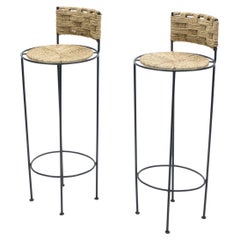

Recent Sales
Vintage 1950s French Mid-Century Modern Stools
Rope, Ash
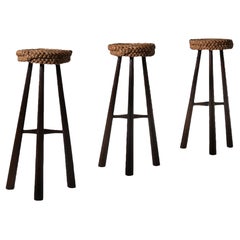
Mid-20th Century French Mid-Century Modern Stools
Rope, Wood
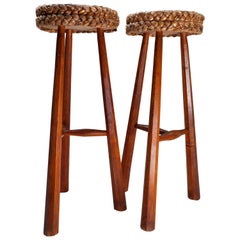
Mid-20th Century French Stools
Cord, Rope
Vintage 1950s French Mid-Century Modern Stools
Wrought Iron
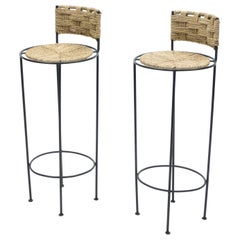
Vintage 1950s French Mid-Century Modern Stools
Wrought Iron
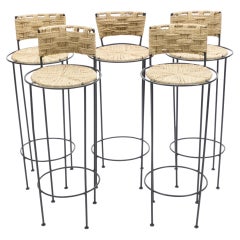
Vintage 1950s French Mid-Century Modern Stools
Wrought Iron
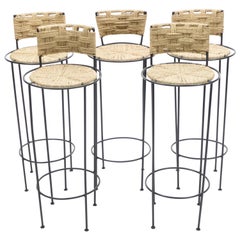
Vintage 1950s French Mid-Century Modern Stools
Metal
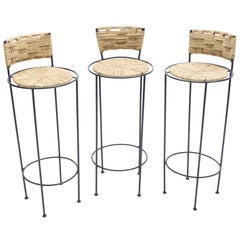
Mid-20th Century French Mid-Century Modern Stools
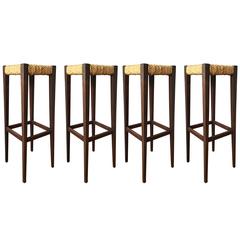
Vintage 1950s Mid-Century Modern Stools
Rope, Beech
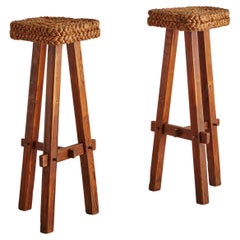
Vintage 1950s French Mid-Century Modern Dry Bars
Rope, Oak
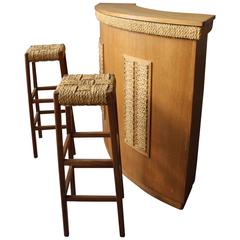
Vintage 1950s French Ottomans and Poufs
Rope
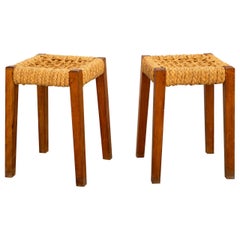
Mid-20th Century French Mid-Century Modern Stools
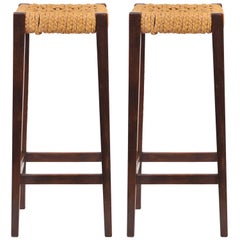
Vintage 1950s French Mid-Century Modern Stools
Rattan, Oak
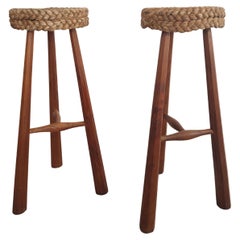
Vintage 1960s Italian Mid-Century Modern Stools
People Also Browsed
Vintage 1960s Danish Scandinavian Modern Wall Lights and Sconces
Copper
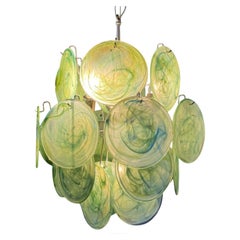
Late 20th Century Italian Mid-Century Modern Chandeliers and Pendants
Art Glass, Murano Glass
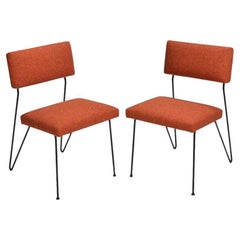
20th Century American Modern Chairs
Steel
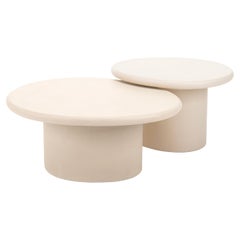
2010s Belgian Minimalist Coffee and Cocktail Tables
Cement, Limestone
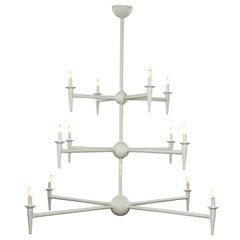
21st Century and Contemporary American Chandeliers and Pendants
Plaster
Vintage 1970s Italian Mid-Century Modern Chairs
Straw, Ash
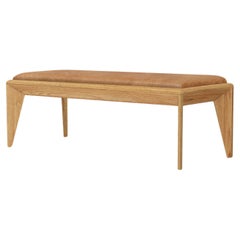
21st Century and Contemporary Brazilian Modern Benches
Wood, Fabric
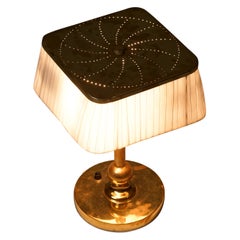
Mid-20th Century Finnish Scandinavian Modern Table Lamps
Brass
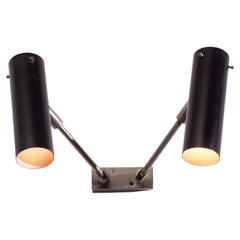
Vintage 1950s Italian Mid-Century Modern Wall Lights and Sconces
Metal, Aluminum
Vintage 1960s German Mid-Century Modern Chandeliers and Pendants
Murano Glass
21st Century and Contemporary American Minimalist Benches
Resin, Fiberglass
2010s Italian Mid-Century Modern Wall Lights and Sconces
Brass, Gold Leaf
Vintage 1970s American Post-Modern Flush Mount
Ceramic
21st Century and Contemporary Italian Modern Decorative Baskets
Leather
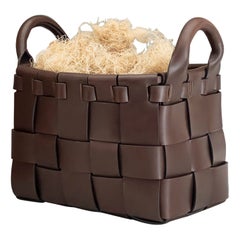
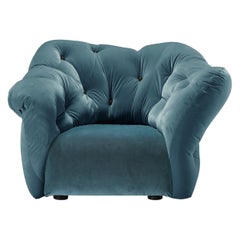
21st Century and Contemporary Italian Sofas
Velvet
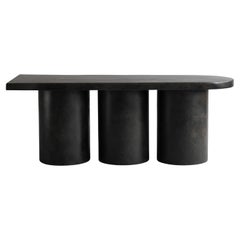
2010s Danish Modern Benches
Concrete
Audoux Minet Bar Stool For Sale on 1stDibs
How Much is a Audoux Minet Bar Stool?
Adrien Audoux and Frida Minnet for sale on 1stDibs
While little is known about audacious modernist designers Adrien Audoux and Frida Minnet, the French-Swiss husband-and-wife duo created playful and unique decorative objects, dining chairs, sconces and other furniture during the mid-20th century. Rejecting Art Deco lavishness and the concept that seating, tables and other furnishings should be made with luxurious and exotic materials, Minnet and Audoux adopted a rustic style in their work, integrating abaca hemp cord and other organic materials such as beech and bamboo in their provocative designs.
Audoux and Minnet were active in Côte d'Azur, France — they are believed to have established a workshop there in the late 1920s. The designers were members of the Union des Artistes Modernes, a collective of like-minded artists founded in 1929. The raison d'être of the Union was to design household furnishings and decorative pieces for a wider demographic of people, not merely affluent Parisians — a target kind of buyer for many creators of the day. They promoted simplicity and prioritized functionalism. The collective’s membership boasted other celebrated furniture designers, including Jean Prouvé, Charlotte Perriand, Francis Jourdain and Louis Sognot.
Minnet and Audoux spent much of their time in the Provence region, a hub of creativity where other artists such as Pablo Picasso found endless inspiration. They created everything from lighting to lounge chairs and end tables that reflected a nautical theme and coastal living. Minnet and Audoux’s imaginative works — table lamps with shades covered in raffia, oak benches with seat backs of woven rope — were made available to passers-by in the duo’s retail outlet in the seaside resort town of Golfe-Juan. The pair also incorporated woven rope into larger pieces such as armchairs and side tables. These furnishings are often compared to the work of similarly adventurous Union des Artistes Modernes member Charlotte Perriand. Several of Audoux and Minnet’s seating pieces are on display at the Maison Dumas in St. Tropez, France.
Find vintage Adrien Audoux and Frida Minnet furniture on 1stDibs.
A Close Look at Mid-century Modern Furniture
Organically shaped, clean-lined and elegantly simple are three terms that well describe vintage mid-century modern furniture. The style, which emerged primarily in the years following World War II, is characterized by pieces that were conceived and made in an energetic, optimistic spirit by creators who believed that good design was an essential part of good living.
ORIGINS OF MID-CENTURY MODERN FURNITURE DESIGN
- Emerged during the mid-20th century
- Informed by European modernism, Bauhaus, International style, Scandinavian modernism and Frank Lloyd Wright’s architecture
- A heyday of innovation in postwar America
- Experimentation with new ideas, new materials and new forms flourished in Scandinavia, Italy, the former Czechoslovakia and elsewhere in Europe
CHARACTERISTICS OF MID-CENTURY MODERN FURNITURE DESIGN
- Simplicity, organic forms, clean lines
- A blend of neutral and bold Pop art colors
- Use of natural and man-made materials — alluring woods such as teak, rosewood and oak; steel, fiberglass and molded plywood
- Light-filled spaces with colorful upholstery
- Glass walls and an emphasis on the outdoors
- Promotion of functionality
MID-CENTURY MODERN FURNITURE DESIGNERS TO KNOW
- Charles and Ray Eames
- Eero Saarinen
- Milo Baughman
- Florence Knoll
- Harry Bertoia
- Isamu Noguchi
- George Nelson
- Danish modernists Hans Wegner and Arne Jacobsen, whose emphasis on natural materials and craftsmanship influenced American designers and vice versa
ICONIC MID-CENTURY MODERN FURNITURE DESIGNS
- Eames lounge chair
- Nelson daybed
- Florence Knoll sofa
- Egg chair
- Womb chair
- Noguchi coffee table
- Barcelona chair
VINTAGE MID-CENTURY MODERN FURNITURE ON 1STDIBS
The mid-century modern era saw leagues of postwar American architects and designers animated by new ideas and new technology. The lean, functionalist International-style architecture of Le Corbusier and Bauhaus eminences Ludwig Mies van der Rohe and Walter Gropius had been promoted in the United States during the 1930s by Philip Johnson and others. New building techniques, such as “post-and-beam” construction, allowed the International-style schemes to be realized on a small scale in open-plan houses with long walls of glass.
Materials developed for wartime use became available for domestic goods and were incorporated into mid-century modern furniture designs. Charles and Ray Eames and Eero Saarinen, who had experimented extensively with molded plywood, eagerly embraced fiberglass for pieces such as the La Chaise and the Womb chair, respectively.
Architect, writer and designer George Nelson created with his team shades for the Bubble lamp using a new translucent polymer skin and, as design director at Herman Miller, recruited the Eameses, Alexander Girard and others for projects at the legendary Michigan furniture manufacturer.
Harry Bertoia and Isamu Noguchi devised chairs and tables built of wire mesh and wire struts. Materials were repurposed too: The Danish-born designer Jens Risom created a line of chairs using surplus parachute straps for webbed seats and backrests.
The Risom lounge chair was among the first pieces of furniture commissioned and produced by celebrated manufacturer Knoll, a chief influencer in the rise of modern design in the United States, thanks to the work of Florence Knoll, the pioneering architect and designer who made the firm a leader in its field. The seating that Knoll created for office spaces — as well as pieces designed by Florence initially for commercial clients — soon became desirable for the home.
As the demand for casual, uncluttered furnishings grew, more mid-century furniture designers caught the spirit.
Classically oriented creators such as Edward Wormley, house designer for Dunbar Inc., offered such pieces as the sinuous Listen to Me chaise; the British expatriate T.H. Robsjohn-Gibbings switched gears, creating items such as the tiered, biomorphic Mesa table. There were Young Turks such as Paul McCobb, who designed holistic groups of sleek, blond wood furniture, and Milo Baughman, who espoused a West Coast aesthetic in minimalist teak dining tables and lushly upholstered chairs and sofas with angular steel frames.
Generations turn over, and mid-century modern remains arguably the most popular style going. As the collection of vintage mid-century modern chairs, dressers, coffee tables and other furniture for the living room, dining room, bedroom and elsewhere on 1stDibs demonstrates, this period saw one of the most delightful and dramatic flowerings of creativity in design history.
Finding the Right Stools for You
Stools are versatile and a necessary addition to any living room, kitchen area or elsewhere in your home. A sofa or reliable lounge chair might nab all the credit, comfort-wise, but don’t discount the roles that good antique, new and vintage stools can play.
“Stools are jewels and statements in a space, and they can also be investment pieces,” says New York City designer Amy Lau, who adds that these seats provide an excellent choice for setting an interior’s general tone.
Stools, which are among the oldest forms of wooden furnishings, may also serve as decorative pieces, even if we’re talking about a stool that is far less sculptural than the gracefully curving molded plywood shells that make up Sōri Yanagi’s provocative Butterfly stool.
Fawn Galli, a New York interior designer, uses her stools in the same way you would use a throw pillow. “I normally buy several styles and move them around the home where needed,” she says.
Stools are smaller pieces of seating as compared to armchairs or dining chairs and can add depth as well as functionality to a space that you’ve set aside for entertaining. For a splash of color, consider the Stool 60, a pioneering work of bentwood by Finnish architect and furniture maker Alvar Aalto. It’s manufactured by Artek and comes in a variety of colored seats and finishes.
Barstools that date back to the 1970s are now more ubiquitous in kitchens. Vintage barstools have seen renewed interest, be they a meld of chrome and leather or transparent plastic, such as the Lucite and stainless-steel counter stool variety from Indiana-born furniture designer Charles Hollis Jones, who is renowned for his acrylic works. A cluster of barstools — perhaps a set of four brushed-aluminum counter stools by Emeco or Tubby Tube stools by Faye Toogood — can encourage merriment in the kitchen. If you’ve got the room for family and friends to congregate and enjoy cocktails where the cooking is done, consider matching your stools with a tall table.
Whether you need counter stools, drafting stools or another kind, explore an extensive range of antique, new and vintage stools on 1stDibs.