Biedermeier Walnut Chests
Antique 1830s Czech Biedermeier Commodes and Chests of Drawers
Walnut
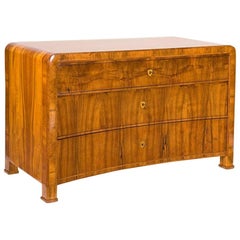

Antique 1820s Biedermeier Commodes and Chests of Drawers
Walnut
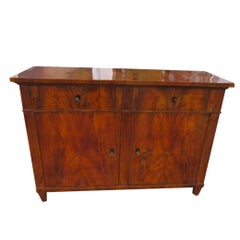
Antique 1820s German Biedermeier Commodes and Chests of Drawers
Walnut
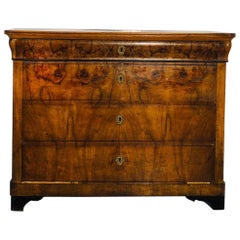
- 1
- ...
Biedermeier Walnut Chests For Sale on 1stDibs
How Much are Biedermeier Walnut Chests?
A Close Look at Biedermeier Furniture
The authentic Biedermeier furniture on 1stDibs is representative of the first modern European decorative style not dictated by the tastes of the aristocracy. Following the Napoleonic wars, a growing, wealthy urban middle class in the German-speaking states of Central Europe began to demand rights and privileges once granted only to nobles. To avoid trouble, the upwardly striving confined their political discussions to one another’s homes. And so the salon was born.
Cabinetmakers in cities such as Vienna, Berlin and Mainz began to offer goods that reflected the tastes and needs of the new class. The makers of Biedermeier chairs, tables and other furniture used little or no gilding, silver hardware or other lavish ornament. Ebonized trims are common on Biedermeier cabinetry, and neoclassical elements — lyre-shaped chair splats, carved scrollwork, table supports shaped like Greek columns. But the strongest aesthetic statement came from the wood — richly-grained, honey-colored, often book-matched veneers of walnut and fruitwood.
There are two iconic Biedermeier furniture forms, both made to outfit rooms designed for conversation. One is the sofa, deeply upholstered with a strong, architectural wooden frame. The second is the circular pedestal table, which stood at the center of the room, offering a surface on which to place coffee and cake services; or to roll out a map, or sketch out ideas on paper.
“Biedermeier” was originally a derogatory term — it derives from the pen names of two German magazine writers who mocked bourgeois manners. Looking at the elegant and refined antique, new and vintage Biedermeier furniture offered on 1stDibs, that is now an amusing irony.
Finding the Right Commodes-chests-of-drawers for You
Shopping for a commode or a chest of drawers?
Commode is the French term for a low chest of drawers, but it is also sometimes used to denote any case piece with a particularly intricate design. The commode dates to circa 1700 France, where it was used as an alternative to a taller cabinet piece so as to not obscure paneled, mirrored or tapestried walls. Coffers, or chests, which were large wooden boxes with hinged lids and sometimes stood on ball feet, preceded chests of drawers, a fashionable cabinet furnishing that garnered acclaim for its obvious storage potential and versatility. The term commode was also used to refer to a piece of bedroom furniture — a washstand or nightstand that contained a chamber pot.
As time passed, French and British furniture makers led the way in the production of chests of drawers, and features like the integration of bronze and ornamental pulls became commonplace. Antique French commodes in the Louis XV style were sometimes crafted in mahogany or walnut, while an Italian marble top added a sophisticated decorative flourish. This specific type of case piece grew in popularity in the years that followed.
So, what makes a chest of drawers different from a common dresser? Dressers are short, and chests of drawers are overall taller pieces of furniture that typically do not have room on the top for a mirror as most dressers do. Tallboys and highboys are variations of the dresser form. Some chests of drawers have one column of four to six long drawers or three long drawers in their bottom section that are topped by a cluster of small side-by-side drawers on the top. To further complicate things, we sometimes refer to particularly short chests of drawers as nightstands.
Even though chests of drawers are commonly thought of as bedroom furniture to store clothing, these are adaptable pieces. A chest of drawers can house important documents — think of your walnut Art Deco commode as an upgrade to your filing cabinet. Nestle your chest near your home’s front door to store coats and other outerwear, while the top can be a place to drop your handbag. Add some flair to your kitchen, where this lovable case piece can hold pots, pans and even cookbooks.
When shopping for the right chest of drawers for your home, there are a few key things to consider: What will you be storing in it? How big a chest will you need?
Speaking of size, don’t dream too big. If your space is on the smaller side, a more streamlined vintage mid-century modern chest of drawers, perhaps one designed by Paul McCobb or T.H. Robsjohn-Gibbings, may best suit your needs.
At 1stDibs, we make it easy to add style and storage to your home. Browse our collection of antique and vintage commodes and chests of drawers today.