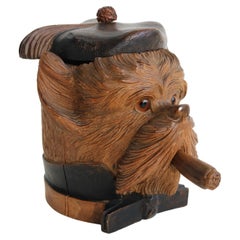
Black Forest Dog Humidor
Antique Late 19th Century Swiss Black Forest Cigar Boxes and Humidors
Wood
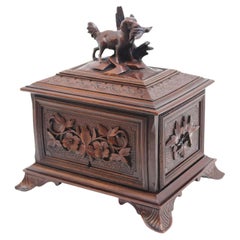

Antique Late 19th Century Swiss Tobacco Accessories
Wood
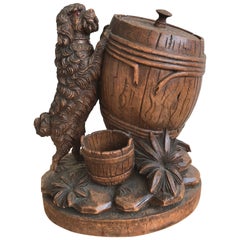
Recent Sales
Antique 1870s German Black Forest Cigar Boxes and Humidors
Wood

Antique Late 19th Century German Cigar Boxes and Humidors
Walnut
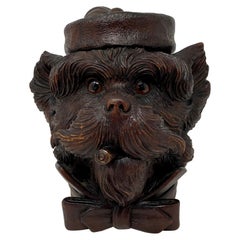
Antique 1880s Cigar Boxes and Humidors
Oak
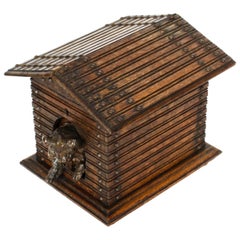
Antique 19th Century Swiss Black Forest Cigar Boxes and Humidors
Fruitwood
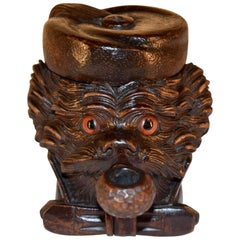
Antique 19th Century Swiss Black Forest Cigar Boxes and Humidors
Fruitwood
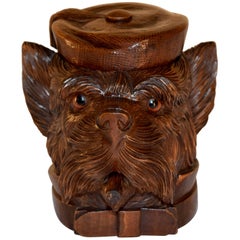
Antique 1890s Swiss Black Forest Cigar Boxes and Humidors
Brass
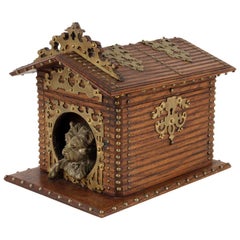
Early 20th Century European Black Forest Cigar Boxes and Humidors
Brass
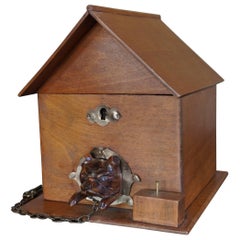
Antique Late 19th Century Swiss Black Forest Snuff Boxes and Tobacco Boxes
Wood
People Also Browsed
Antique Early 1900s Austrian Edwardian Animal Sculptures
Bronze
Vintage 1930s Art Deco Tableware
Glass
Antique 1880s English Other Animal Sculptures
Terracotta
1860s Academic Figurative Sculptures
Bronze
Mid-20th Century Italian Mid-Century Modern Vases
Blown Glass, Murano Glass

Antique 19th Century Italian Rococo Table Lamps
Wood
Antique Late 19th Century French Planters, Cachepots and Jardinières
Ceramic, Majolica
Antique 1880s German Black Forest Animal Sculptures
Bronze
1860s French School Animal Paintings
Gold Leaf

Antique 1860s German Louis XVI Models and Miniatures
Porcelain
Antique Late 19th Century French Animal Sculptures
Bronze
Vintage 1970s Italian Hollywood Regency Animal Sculptures
Ceramic
Early 20th Century Austrian Romantic Figurative Sculptures
Metal
Vintage 1930s French Art Deco Wall-mounted Sculptures
Other

Early 20th Century Swiss Black Forest Animal Sculptures
Wood
Antique 19th Century Animal Sculptures
Bronze
Finding the Right Cigar-boxes for You
Cigars were not always packaged in what we now know as the antique cigar boxes and humidors that have over time become eye-catching decorative objects as well as collector’s items.
Outside the United States, cigar boxes are said to have originated in the 1840s when a German businessman, Hermann Dietrich Upmann of H. Upmann Cigars, bought a cigar factory and opened a bank in Havana, Cuba. Upmann reportedly handed out cedar cigar boxes branded with advertising for the bank as gifts to his banking clients. In the early 1860s, after years of cigars being shipped in big crates or barrels, cigar boxes became a requirement when the United States passed a law that mandated the use of boxes for tobacco producers, which was part of a broader effort to regulate the tobacco industry and generate revenue for the war effort. Humidors, which are moisture-controlled storage boxes that allow a cigar enthusiast to store, organize and preserve a larger collection of cigars, were very popular accessories during the early 1900s onward.
As the use of cigar boxes and humidors became widespread, all kinds of options materialized over the years, with particularly vibrant editions of these decorative objects emerging during the Art Nouveau, mid-century modern and other eras. Visionary designers like Isamu Noguchi popularized the idea of tobacco accessories as art with projects such as his decorative ashtrays.
Today, not unlike antique and vintage ashtrays, cigar boxes are more than practical objects. In fact, there are many uses for an old cigar box even after the cigars are gone. They can be used as planters, tissue boxes or can support your long-delayed effort to organize your sewing and craft supplies. During the Great Depression, an emptied cigar box — perhaps a walnut Art Deco-style cigar box with inlays in bronze and hand-carved decorative geometric patterns adorning its exterior — was occasionally repurposed as a jewelry box.
Antique and vintage cigar boxes — made of wood, metal or other materials — are valuable treasures in some corners of the collecting world, and in your home, they’re exquisite desk ornaments and colorful flourishes to add to your bookcase or mantel. On 1stDibs, find a variety of antique and vintage cigar boxes and other decorative boxes today.