Brass Brutalist Ashtray
Late 20th Century Spanish Brutalist Ashtrays
Aluminum, Brass

Recent Sales
Vintage 1960s Italian Brutalist Tobacco Accessories
Brass
Vintage 1970s Italian Brutalist Ashtrays
Brass
Mid-20th Century Indian Brutalist Ashtrays
Brass
Vintage 1980s Spanish Brutalist Ashtrays
Aluminum, Brass
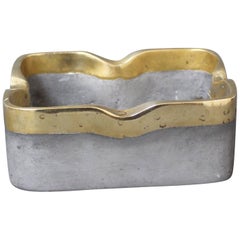
Vintage 1980s Spanish Brutalist Decorative Dishes and Vide-Poche
Aluminum, Brass
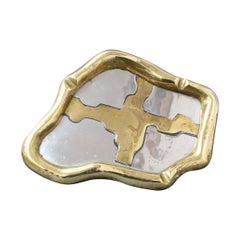
Vintage 1960s Ashtrays
Brass, Enamel
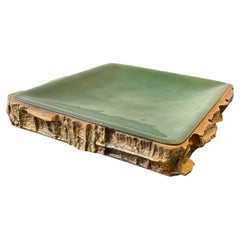
Vintage 1980s Spanish Hollywood Regency Ashtrays
Aluminum, Brass
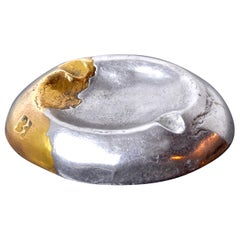
Vintage 1980s Spanish Brutalist Ashtrays
Aluminum, Brass
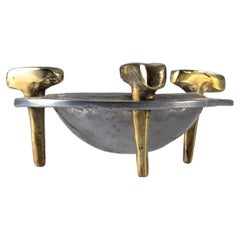
20th Century Brutalist Tobacco Accessories
Brass
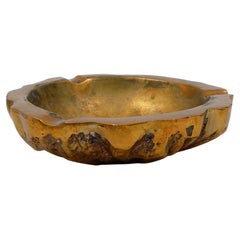
Vintage 1970s European Brutalist Ashtrays
Aluminum, Brass
People Also Browsed
2010s British Scandinavian Modern Ottomans and Poufs
Sheepskin, Oak
Mid-20th Century Italian Mid-Century Modern Desks and Writing Tables
Metal, Aluminum, Steel
Vintage 1950s American Mid-Century Modern Dining Room Chairs
Textile
Vintage 1950s Italian Ashtrays
Alabaster
2010s Italian Industrial Doors and Gates
Stainless Steel
Vintage 1960s French Space Age Lounge Chairs
Fabric
2010s British Art Deco Lounge Chairs
Alpaca, Wood
Vintage 1960s Swedish Scandinavian Modern Daybeds
Metal
Vintage 1930s European Bauhaus Doors and Gates
Brass
2010s Italian Mid-Century Modern Chairs
Plastic
2010s Italian Industrial Doors and Gates
Stainless Steel
Vintage 1950s Austrian Ashtrays
Metal
Vintage 1960s American Mid-Century Modern Coffee and Cocktail Tables
Ebony, Oak, Walnut
20th Century Polish Mid-Century Modern Chairs
Plastic
Vintage 1950s Slipper Chairs
Mahogany
21st Century and Contemporary Egyptian Vases
Alabaster
A Close Look at Brutalist Furniture
The design of brutalist furniture encompasses that which is crafted, hewn and worked by hand — an aesthetic rebuke (or, at least, a counterpoint) to furniture that is created using 21st-century materials and technology. Lately, the word “brutalist” has been adopted by the realms of furniture design and the decorative arts to refer to chairs, cabinets, tables and accessory pieces such as mirror frames and lighting that are made of rougher, deeply textured metals and other materials that are the visual and palpable antithesis of the sleek, smooth and suave.
ORIGINS OF BRUTALIST FURNITURE DESIGN
- Brutalism emerged during the mid-20th century
- Term coined by architecture critic Reyner Banham
- Originated in the United Kingdom
- Brutalist architecture gained popularity in the United States beginning in the early 1960s
- Inaugural brutalist projects include Unité d'habitation and the city of Chandigarh, India, both of which owe to influential architect Charles-Édouard “Le Corbusier” Jeanneret
- Le Corbusier’s cousin, Pierre Jeanneret, designed hundreds of chairs, tables, cabinets and lamps for Chandigarh
- Informed by the Bauhaus, constructivism, modernism and the International Style; part of mid-century modernism
- Contrasted starkly with Beaux Arts style
CHARACTERISTICS OF BRUTALIST FURNITURE DESIGN
- Use of industrial materials — tubular steel, concrete, glass, granite
- Prioritizes functionalism, minimalism and utilization of negative space
- Spare silhouettes, pronounced geometric shapes
- Stripped-down, natural look; rugged textures, modular construction
- Interiors featuring airy visual flow and reliance on neutral palettes
BRUTALIST FURNITURE DESIGNERS TO KNOW
VINTAGE BRUTALIST FURNITURE ON 1STDIBS
The term brutalism — which derives from the French word brut, meaning “raw” — was coined by architecture critic Reyner Banham to describe an architectural style that emerged in the 1950s featuring monumental buildings, usually made of unornamented concrete, whose design was meant to project an air of strength and solidity.
Le Corbusier essentially created the brutalist style; its best-known iterations in the United States are the Whitney Museum of American Art, which was designed by Marcel Breuer, and Paul Rudolph's Yale Art and Architecture Building. The severe style might have been the most criticized architectural movement of the 20th century, even if it was an honest attempt to celebrate the beauty of raw material. But while the brutalist government buildings in Washington, D.C., seemingly bask in their un-beauty, brutalist interior design and decor is much more lyrical, at times taking on a whimsical, romantic quality that its exterior counterparts lack.
Paul Evans is Exhibit A for brutalist furniture design. His Sculpture Front cabinets laced with high-relief patinated steel mounts have become collector's items nonpareil, while the chairs, coffee table and dining table in his later Cityscape series and Sculpted Bronze series for Directional Furniture are perhaps the most expressive, attention-grabbing pieces in American modern design. Other exemplary brutalist designers are Silas Seandel, the idiosyncratic New York furniture designer and sculptor whose works in metal — in particular his tables — have a kind of brawny lyricism, and Curtis Jere, a nom-de-trade for the California team of Curtis Freiler and Jerry Fels, the bold makers of expressive scorched and sheared copper and brass mirror frames and wall-mounted sculptures.
Brutalist furniture and sculptures remain popular with interior designers and can lend unique, eccentric, human notes to an art and design collection in any home.
Find authentic vintage brutalist chairs, coffee tables, decorative objects and other furniture on 1stDibs.
Materials: Brass Furniture
Whether burnished or lacquered, antique, new and vintage brass furniture can elevate a room.
From traditional spaces that use brass as an accent — by way of brass dining chairs or brass pendant lights — to contemporary rooms that embrace bold brass decor, there are many ways to incorporate the golden-hued metal.
“I find mixed metals to be a very updated approach, as opposed to the old days, when it was all shiny brass of dulled-out silver tones,” says interior designer Drew McGukin. “I especially love working with brass and blackened steel for added warmth and tonality. To me, aged brass is complementary across many design styles and can trend contemporary or traditional when pushed either way.”
He proves his point in a San Francisco entryway, where a Lindsey Adelman light fixture hangs above a limited-edition table and stools by Kelly Wearstler — also an enthusiast of juxtapositions — all providing bronze accents. The walls were hand-painted by artist Caroline Lizarraga and the ombré stair runner is by DMc.
West Coast designer Catherine Kwong chose a sleek brass and lacquered-parchment credenza by Scala Luxury to fit this San Francisco apartment. “The design of this sideboard is reminiscent of work by French modernist Jean Prouvé. The brass font imbues the space with warmth and the round ‘portholes’ provide an arresting geometric element.”
Find antique, new and vintage brass tables, case pieces and other furnishings now on 1stDibs.
Finding the Right Ashtrays for You
Once a near-universal tabletop accessory, many antique, new and vintage ashtrays have taken on an entirely new purpose in today’s homes.
Whereas these formerly ubiquitous objects were associated with smoking, drinking, gambling and other vices, a well-designed and interesting ashtray is a candy dish, coaster or cocktail garnish receptacle in today’s interiors. But don’t discount its initial function. Amid your carefully curated coastal chic California decor, for example, a stone ashtray can help you manage the ashes that accumulate while you’re burning your morning incense. Old glass ashtrays, which are quite popular and easily found in free-form, organic shapes, can be a purely decorative final touch when styling a coffee table, whether you’ve filled it with wrapped lemon-drop candies or not.
In the postwar years, the democratization of luxury led to an explosion in the number of well-designed ashtrays, and there are many mid-century modern ashtrays to choose from on 1stDibs. (It’s no coincidence that sculptor Isamu Noguchi devised his “Dymaxion” version, which he hoped would make him rich, in 1945. Alas, it turned out to be too difficult to mass-produce.) The design collection of the Museum of Modern Art includes ashtrays by Carlo Scarpa (Murano glass, 1950–59); Achille Castiglioni (stainless steel with spring-like inserts, 1970); Masayuki Kurokawa (rubber and steel, 1973) and more. Smoking declined in popularity in the 1970s and ’80s, after the surgeon general’s warning began appearing on cigarette packs, but designers were still crafting ashtrays through the end of the century (especially outside the United States).
On 1stDibs, browse a collection of antique, new and vintage ashtrays that includes everything from modern and minimalist cigar ashtrays to outwardly ornate Art Deco ashtrays that evoke the opulence and elegance of the 1920s.