Bunny Yeager On Sale
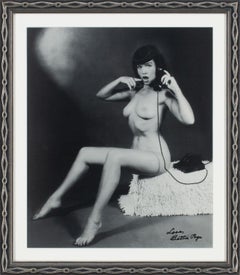
1990s Pop Art Nude Photography
Ink, Photographic Paper, Black and White

Recent Sales
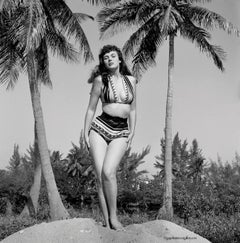
1950s Pop Art Portrait Photography
Silver Gelatin
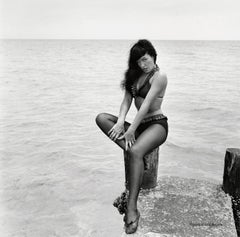
1950s Pop Art Figurative Photography
Silver Gelatin
People Also Browsed
2010s Conceptual Nude Photography
Archival Pigment
2010s Contemporary Figurative Photography
Archival Pigment
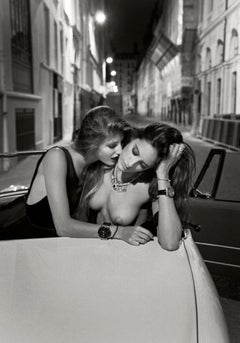
2010s Contemporary Figurative Photography
Archival Paper, Archival Pigment, Digital Pigment
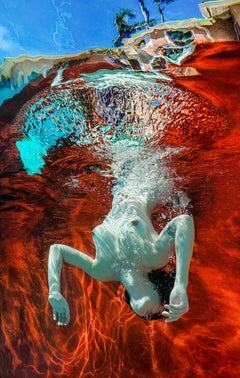
21st Century and Contemporary Contemporary Portrait Photography
Archival Pigment
2010s Conceptual Nude Photography
Archival Pigment
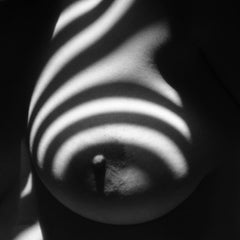
1970s Modern Nude Photography
Silver Gelatin
1990s Contemporary Nude Photography
Archival Pigment, Color
1970s Modern Nude Photography
Offset, C Print
1980s Contemporary Figurative Photography
Photographic Paper
Early 2000s Contemporary Black and White Photography
Archival Paper, Photographic Paper, C Print, Color, Polaroid
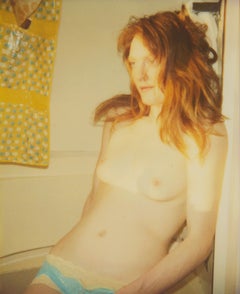
Early 2000s Contemporary Black and White Photography
Archival Paper, Photographic Paper, C Print, Color, Polaroid
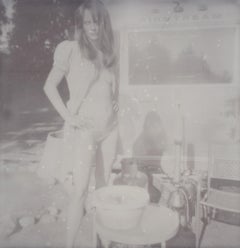
2010s Contemporary Nude Photography
Archival Paper, Photographic Paper, C Print, Color, Polaroid
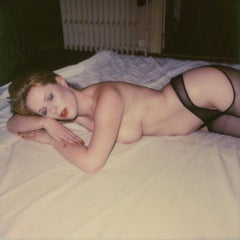
2010s Photorealist Nude Photography
Archival Pigment, Archival Paper
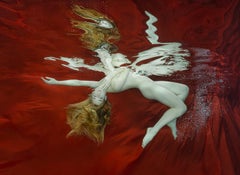
21st Century and Contemporary Nude Photography
Silver Gelatin
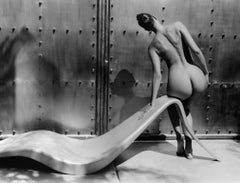
2010s Contemporary Nude Photography
Silver Gelatin
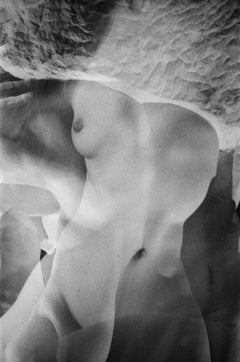
Lina ScheyniusUntitled (Touching) – Lina Scheynius, Black and White, Woman, Body, Nude, Female, 2021
2010s Contemporary Nude Photography
Archival Paper, C Print, Color, Polaroid, Photographic Paper
Bunny Yeager for sale on 1stDibs
Bunny Yeager was an American photographer and former pin-up model. Born Linnea Eleanor Yeager in Wilkinsburg, Pennsylvania, in 1929, Yeager became one of the most photographed models in Miami.
After retiring from modeling, Yeager began her career behind the camera. She met Bettie Page in 1954 and took most of the photographs of her that year. Along with photographer Irving Klaw, Yeager played a role in helping to make Page famous, particularly with her photos in Playboy magazine. Yeager is also credited with discovering the model Lisa Winters.
Following Page's retirement, Yeager remained a successful photographer. She took the well-known still images of Ursula Andress on the beach in the 1962 James Bond film Dr. No and discovered many other notable models. In 1968 she played the role of a Swedish masseuse opposite Frank Sinatra in Lady In Cement. Yeager was played by Sarah Paulson in the 2005 film The Notorious Bettie Page. She was also featured on a CNN story about the 60th anniversary of the bikini.
In the 1950s Yeager appeared on America's number one game show, What's My Line?, and she stumped the panel. In 2005, Cult Epics released the DVD 100 Girls by Bunny Yeager, a documentary with behind-the-scenes footage of Yeager's photo sessions with Page and other pin-up models.
In early 2010, the Warhol Museum held the first exhibition of Bunny's work. Most of the photographs in the exhibit came from Bunny's book How I Photograph Myself published by A.S. Barnes Co. in 1964. In 2011, Gallery Schuster (Berlin/Miami) became the official representative of Yeager's photographic artwork.
In November 2011, the Dezer Schauhalle in Miami FL hosted a retrospective exhibition of Yeager's work. Included were some never-before-seen photos of various models including the late Bettie Page. In 2012 the German Fashion Company bruno banani launched their new fashion Line " Bunny Yeager" and opened, together with Gallery Schuster, a permanent Bunny Yeager Lounge in Berlin.
Find original Bunny Yeager photography on 1stDibs.
(Biography provided by The Art Design Project)
A Close Look at Pop Art Art
Perhaps one of the most influential contemporary art movements, Pop art emerged in the 1950s. In stark contrast to traditional artistic practice, its practitioners drew on imagery from popular culture — comic books, advertising, product packaging and other commercial media — to create original Pop art paintings, prints and sculptures that celebrated ordinary life in the most literal way.
ORIGINS OF POP ART
- Started in Britain in the 1950s, flourished in 1960s-era America
- “This is Tomorrow,” at London's Whitechapel Gallery in 1956, was reportedly the first Pop art exhibition
- A reaction to postwar mass consumerism
- Transitioning away from Abstract Expressionism
- Informed by neo-Dada and artists such as Jasper Johns and Robert Rauschenberg; influenced postmodernism and Photorealism
CHARACTERISTICS OF POP ART
- Bold imagery
- Bright, vivid colors
- Straightforward concepts
- Engagement with popular culture
- Incorporation of everyday objects from advertisements, cartoons, comic books and other popular mass media
POP ARTISTS TO KNOW
- Richard Hamilton
- Andy Warhol
- Marta Minujín
- Claes Oldenburg
- Eduardo Paolozzi
- Rosalyn Drexler
- James Rosenquist
- Peter Blake
- Roy Lichtenstein
ORIGINAL POP ART ON 1STDIBS
The Pop art movement started in the United Kingdom as a reaction, both positive and critical, to the period’s consumerism. Its goal was to put popular culture on the same level as so-called high culture.
Richard Hamilton’s 1956 collage Just what is it that makes today’s homes so different, so appealing? is widely believed to have kickstarted this unconventional new style.
Pop art works are distinguished by their bold imagery, bright colors and seemingly commonplace subject matter. Practitioners sought to challenge the status quo, breaking with the perceived elitism of the previously dominant Abstract Expressionism and making statements about current events. Other key characteristics of Pop art include appropriation of imagery and techniques from popular and commercial culture; use of different media and formats; repetition in imagery and iconography; incorporation of mundane objects from advertisements, cartoons and other popular media; hard edges; and ironic and witty treatment of subject matter.
Although British artists launched the movement, they were soon overshadowed by their American counterparts. Pop art is perhaps most closely identified with American Pop artist Andy Warhol, whose clever appropriation of motifs and images helped to transform the artistic style into a lifestyle. Most of the best-known American artists associated with Pop art started in commercial art (Warhol made whimsical drawings as a hobby during his early years as a commercial illustrator), a background that helped them in merging high and popular culture.
Roy Lichtenstein was another prominent Pop artist that was active in the United States. Much like Warhol, Lichtenstein drew his subjects from print media, particularly comic strips, producing paintings and sculptures characterized by primary colors, bold outlines and halftone dots, elements appropriated from commercial printing. Recontextualizing a lowbrow image by importing it into a fine-art context was a trademark of his style. Neo-Pop artists like Jeff Koons and Takashi Murakami further blurred the line between art and popular culture.
Pop art rose to prominence largely through the work of a handful of men creating works that were unemotional and distanced — in other words, stereotypically masculine. However, there were many important female Pop artists, such as Rosalyn Drexler, whose significant contributions to the movement are recognized today. Best known for her work as a playwright and novelist, Drexler also created paintings and collages embodying Pop art themes and stylistic features.
Read more about the history of Pop art and the style’s famous artists, and browse the collection of original Pop art paintings, prints, photography and other works for sale on 1stDibs.
Finding the Right Photography for You
Find a broad range of photography on 1stDibs today.
The first permanent image created by a camera — which materialized during the 1820s — is attributed to Joseph Nicéphore Niépce. The French inventor was on to something for sure. Kodak introduced roll film in the 1880s, allowing photography to become more democratic, although cameras wouldn’t be universally accessible until several decades later.
Digital photographic techniques, software, smartphone cameras and social-networking platforms such as Instagram have made it even easier in the modern era for budding photographers to capture the world around them as well as disseminate their images far and wide.
What might leading figures of visual art such as Andy Warhol have done with these tools at their disposal?
Today, when we aren’t looking at the digital photos that inundate us on our phones, we look to the past to celebrate the photographers who have broken rules as well as records — provocative and prolific artists like Horst P. Horst, Lillian Bassman and Helmut Newton, who altered the face of fashion and portrait photography; visionary documentary photographers such as Gordon Parks, whose best-known work was guided by social justice; and pioneers of street photography such as Henri Cartier-Bresson, who shot for revolutionary travel magazines like Holiday with the likes of globetrotting society lensman Slim Aarons.
Find photographers you may not know in Introspective and The Study — where you’ll read about Berenice Abbott, who positioned herself atop skyscrapers for the perfect shot, or “conceptual artist-adventurer” Charles Lindsay, whose work combines scientific rigor with artistic expression, or Massimo Listri, known for his epic interiors of opulent Old World libraries. Photographer Jeannette Montgomery Barron was given a Kodak camera as a child. Later, she shot on Polaroid film before buying her first 35mm camera in her teens. Barron's stunning portraits of Jean-Michel Basquiat, Warhol and other artists chronicle a crucial chapter of New York’s cultural history.
Throughout the past two centuries, photographers have used their medium to create expressive work that has resonated for generations. Shop a voluminous collection of this powerful fine photography on 1stDibs. Search by photographer to find the perfect piece for your living room wall, or spend some time with the work organized under various categories, such as landscape photography, nude photography and more.