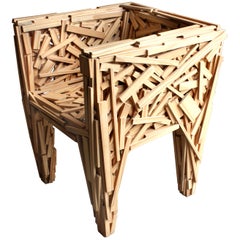
Campana Brother Favela Chair
1990s Italian Mid-Century Modern Armchairs
Pine

Recent Sales
Early 2000s Brazilian Post-Modern Armchairs
Pine
Early 2000s Italian Post-Modern Chairs
Wood
21st Century and Contemporary Italian Post-Modern Armchairs
Pine
21st Century and Contemporary Italian Post-Modern Armchairs
Pine
People Also Browsed
2010s Spanish Country Patio and Garden Furniture
Wrought Iron
Vintage 1960s German Mid-Century Modern Armchairs
Canvas, Wood
Vintage 1940s European Rustic Planters and Jardinieres
Metal, Zinc
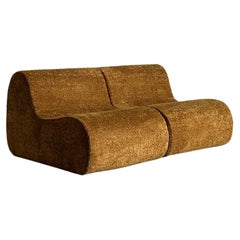
Vintage 1970s Italian Mid-Century Modern Loveseats
Bouclé, Foam, Wood
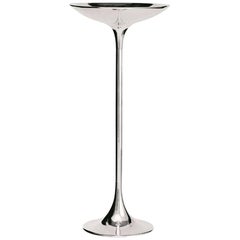
21st Century and Contemporary Italian Modern Gueridon
Aluminum
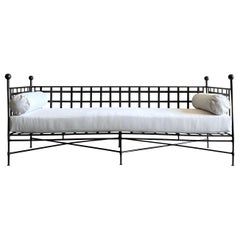
21st Century and Contemporary American Patio and Garden Furniture
Iron
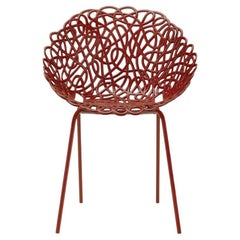
21st Century and Contemporary Italian Chairs
Plastic
Vintage 1970s Italian Mid-Century Modern Chairs
Pine
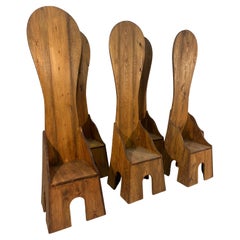
Vintage 1960s Italian Mid-Century Modern Lounge Chairs
Leather
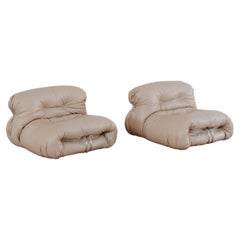
Antique Early 1900s French Baroque Table Mirrors
Bronze
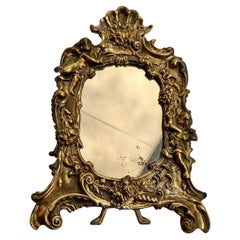
Antique Late 19th Century Sri Lankan British Colonial Lanterns
Brass
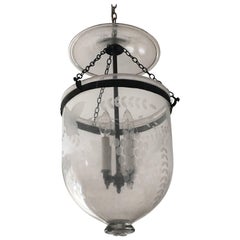
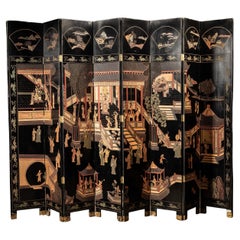
Early 20th Century Unknown Paintings and Screens
Wood
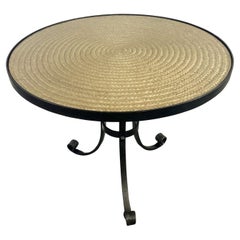
Late 20th Century American Modern Dining Room Tables
Wrought Iron
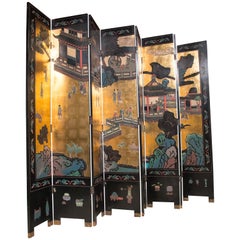
Vintage 1950s Asian Paintings and Screens
Wood
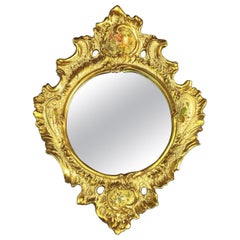
Vintage 1950s French Empire Wall Mirrors
Porcelain, Mirror
Campana Brothers for sale on 1stDibs
The Campana Brothers were among Brazil’s foremost contemporary furniture designers. Inspired by their country’s vernacular culture, Humberto and Fernando Campana (b. 1953; 1961–2022) combined everyday objects in unexpected ways — often waste materials like rope, cardboard, plastic tubing, and aluminum wire — to make their singular chairs, decor, lighting and other items. Their designs have been manufactured by such companies as Alessi, Swarovski and Cappellini. And they received numerous honors, including being named Designer of the Year both at Design Miami in 2008, and by Maison Objet in Paris in 2012.
Humberto Campana was born in Rio Claro in 1953 and earned a bachelor’s degree in law from the University of São Paulo. Fernando was born in 1961 in Brotas, and graduated from the São Paulo School of Fine Arts with a bachelor’s degree in architecture.
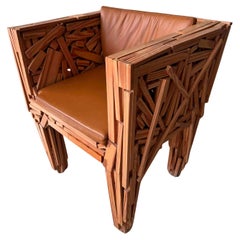
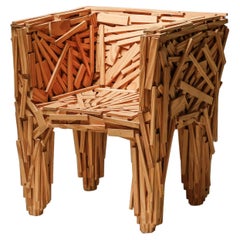
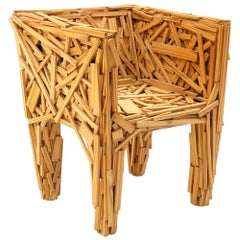
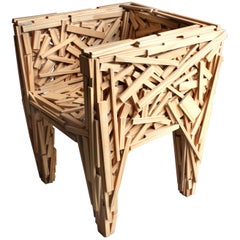
The Campana brothers started working together in 1983, crafting furniture using their signature method of adaptive reuse. Their pieces frequently refer to Brazilian social and cultural traditions and entities. Among these are the country’s favelas, or shantytowns, that have grown up around major cities. An homage to the resourcefulness with which the residents of São Paulo’s favelas make use of the materials at hand, repurposing cast-off objects in ingenious designs and constructions, their Favela armchair is made of cast-off strips of wood (the first one was made from discarded slats from a fruit market), which are glued and nailed together seemingly at random. The end result, however, is a compact, solid and well-proportioned chair.
By 1997, some of the Campanas’ pieces were being produced and sold in Italy, including the Edra Vermelha armchair, constructed of cord handwoven around a steel frame. In 1998, the brothers became the first Brazilian designers to have their work exhibited at the Museum of Modern Art in New York. Today their furniture is included in MoMA’s permanent collection and in those of numerous other major institutions, such as the Metropolitan Museum of Art, the Philadelphia Museum of Art, and the Vitra Design Museum.
On 1stDibs, find a collection of Campana Brothers armchairs, case pieces and other furniture.
A Close Look at Post-modern Furniture
Postmodern design was a short-lived movement that manifested itself chiefly in Italy and the United States in the early 1980s. The characteristics of vintage postmodern furniture and other postmodern objects and decor for the home included loud-patterned, usually plastic surfaces; strange proportions, vibrant colors and weird angles; and a vague-at-best relationship between form and function.
ORIGINS OF POSTMODERN FURNITURE DESIGN
- Emerges during the 1960s; popularity explodes during the ’80s
- A reaction to prevailing conventions of modernism by mainly American architects
- Architect Robert Venturi critiques modern architecture in his Complexity and Contradiction in Architecture (1966)
- Theorist Charles Jencks, who championed architecture filled with allusions and cultural references, writes The Language of Post-Modern Architecture (1977)
- Italian design collective the Memphis Group, also known as Memphis Milano, meets for the first time (1980)
- Memphis collective debuts more than 50 objects and furnishings at Salone del Milano (1981)
- Interest in style declines, minimalism gains steam
CHARACTERISTICS OF POSTMODERN FURNITURE DESIGN
- Dizzying graphic patterns and an emphasis on loud, off-the-wall colors
- Use of plastic and laminates, glass, metal and marble; lacquered and painted wood
- Unconventional proportions and abundant ornamentation
- Playful nods to Art Deco and Pop art
POSTMODERN FURNITURE DESIGNERS TO KNOW
- Ettore Sottsass
- Robert Venturi
- Alessandro Mendini
- Michele de Lucchi
- Michael Graves
- Nathalie du Pasquier
VINTAGE POSTMODERN FURNITURE ON 1STDIBS
Critics derided postmodern design as a grandstanding bid for attention and nothing of consequence. Decades later, the fact that postmodernism still has the power to provoke thoughts, along with other reactions, proves they were not entirely correct.
Postmodern design began as an architectural critique. Starting in the 1960s, a small cadre of mainly American architects began to argue that modernism, once high-minded and even noble in its goals, had become stale, stagnant and blandly corporate. Later, in Milan, a cohort of creators led by Ettore Sottsass and Alessandro Mendini — a onetime mentor to Sottsass and a key figure in the Italian Radical movement — brought the discussion to bear on design.
Sottsass, an industrial designer, philosopher and provocateur, gathered a core group of young designers into a collective in 1980 they called Memphis. Members of the Memphis Group, which would come to include Martine Bedin, Michael Graves, Marco Zanini, Shiro Kuramata, Michele de Lucchi and Matteo Thun, saw design as a means of communication, and they wanted it to shout. That it did: The first Memphis collection appeared in 1981 in Milan and broke all the modernist taboos, embracing irony, kitsch, wild ornamentation and bad taste.
Memphis works remain icons of postmodernism: the Sottsass Casablanca bookcase, with its leopard-print plastic veneer; de Lucchi’s First chair, which has been described as having the look of an electronics component; Martine Bedin’s Super lamp: a pull-toy puppy on a power-cord leash. Even though it preceded the Memphis Group’s formal launch, Sottsass’s iconic Ultrafragola mirror — in its conspicuously curved plastic shell with radical pops of pink neon — proves striking in any space and embodies many of the collective’s postmodern ideals.
After the initial Memphis show caused an uproar, the postmodern movement within furniture and interior design quickly took off in America. (Memphis fell out of fashion when the Reagan era gave way to cool 1990’s minimalism.) The architect Robert Venturi had by then already begun a series of plywood chairs for Knoll Inc., with beefy, exaggerated silhouettes of traditional styles such as Queen Anne and Chippendale. In 1982, the new firm Swid Powell enlisted a group of top American architects, including Frank Gehry, Richard Meier, Stanley Tigerman and Venturi to create postmodern tableware in silver, ceramic and glass.
On 1stDibs, the vintage postmodern furniture collection includes chairs, coffee tables, sofas, decorative objects, table lamps and more.
Finding the Right Armchairs for You
Armchairs have run the gamut from prestige to ease and everything in between, and everyone has an antique or vintage armchair that they love.
Long before industrial mass production democratized seating, armchairs conveyed status and power.
In ancient Egypt, the commoners took stools, while in early Greece, ceremonial chairs of carved marble were designated for nobility. But the high-backed early thrones of yore, elevated and ornate, were merely grandiose iterations of today’s armchairs.
Modern-day armchairs, built with functionality and comfort in mind, are now central to tasks throughout your home. Formal dining armchairs support your guests at a table for a cheery feast, a good drafting chair with a deep seat is parked in front of an easel where you create art and, elsewhere, an ergonomic wonder of sorts positions you at the desk for your 9 to 5.
When placed under just the right lamp where you can lounge comfortably, both elbows resting on the padded supports on each side of you, an upholstered armchair — or a rattan armchair for your light-suffused sunroom — can be the sanctuary where you’ll read for hours.
If you’re in the mood for company, your velvet chesterfield armchair is a place to relax and be part of the conversation that swirls around you. Maybe the dialogue is about the beloved Papa Bear chair, a mid-century modern masterpiece from Danish carpenter and furniture maker Hans Wegner, and the wingback’s strong association with the concept of cozying up by the fireplace, which we can trace back to its origins in 1600s-era England, when the seat’s distinctive arm protrusions protected the sitter from the heat of the period’s large fireplaces.
If the fireside armchair chat involves spirited comparisons, your companions will likely probe the merits of antique and vintage armchairs such as Queen Anne armchairs, Victorian armchairs or even Louis XVI armchairs, as well as the pros and cons of restoration versus conservation.
Everyone seems to have a favorite armchair and most people will be all too willing to talk about their beloved design. Whether that’s the unique Favela chair by Brazilian sibling furniture designers Fernando and Humberto Campana, who repurposed everyday objects to provocative effect; or Marcel Breuer’s futuristic tubular metal Wassily lounge chair; the functionality-first LC series from Charlotte Perriand, Le Corbusier and Pierre Jeanneret; or the Eames lounge chair of the mid-1950s created by Charles and Ray Eames, there is an iconic armchair for everyone and every purpose. Find yours on 1stDibs right now.