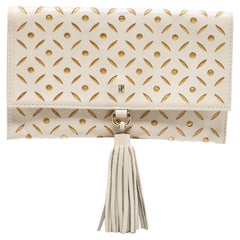
Carolina Herrera Clutch
Recent Sales
2010s Clutches
2010s Clutches
21st Century and Contemporary British Clutches
21st Century and Contemporary British Clutches
2010s Clutches
2010s Clutches
2010s Spanish Clutches


2010s Italian Clutches
2010s Italian Clutches
2010s Spanish Clutches
2010s Spanish Clutches
2010s Spanish Clutches
2010s Spanish Clutches

2010s Clutches
2010s Clutches
2010s Italian Clutches
2010s Spanish Clutches
2010s Clutches
2010s Italian Wallets
2010s Clutches
2010s Clutches
2010s Clutches
2010s Spanish Clutches
2010s Clutches
2010s Spanish Clutches
2010s Spanish Clutches
2010s Italian Clutches
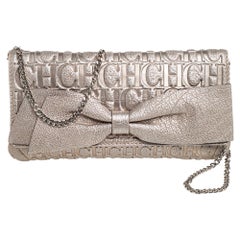
2010s Spanish Clutches
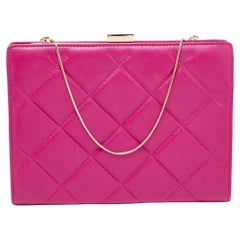
2010s Clutches
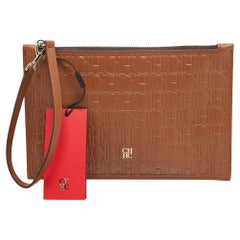
2010s Spanish Clutches
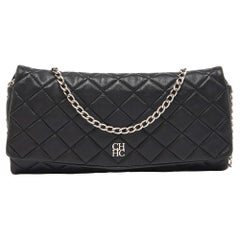
2010s Spanish Clutches
Carolina Herrera for sale on 1stDibs
Born into a family of wealth and sophistication in Caracas, Venezuela, but without a trace of design education, Carolina Herrera launched her eponymous fashion empire in 1981. Modeling her aesthetic on the principles of refined, simple elegance, she has gone on to defy all expectations.
Style, that elusive je ne sais quoi, is often hard-won, acquired over years of experimentation and missteps. Precious few are born with it. Carolina Herrera may well be one of them. And if she wasn’t born with it, she was most assuredly born into it, raised by wealthy and refined women in the most rarefied of circumstances back in Venezuela. Her mother and her grandmother were both perfectly put together, had their own dressmakers — even a live-in seamstress. Everything within Herrera’s reach at home was of the utmost quality. Hers was a privileged life, and no one appreciates that fact more than she.
Herrera brought that aesthetic to her first collection of clothing and accessories in 1981, encouraged by éminence grise Diana Vreeland, then the editor in chief of Vogue. Herrera was initially interested in designing textiles (she worked in a publicity role for Emilio Pucci — the iconic clothing and housewares maker — during the 1960s). It was Vreeland who planted the fashion seed. When it took root, Herrera returned to Caracas, and with the help of Guy Mellier, her personal couturier, she came up with a collection she felt was New York–ready. She never studied fashion and didn’t know how to cut or sew. “What I understood was proportion, and I had a good eye.” She knew not only what looked good on her but also on other women, too.
Herrera unveiled her first collection at the Metropolitan Club on Fifth Avenue. The fashion press was hard on her; “they didn’t have faith,” is how she explains it today. But how about the women in the audience, did they like what they saw? Herrera leans in and says with a smile, “A lot!” The buyers liked the collection, too — enough to place orders. (And they’re still placing orders.)
She quickly became synonymous with sophistication for her glamorous evening dresses, which eventually earned accolades in magazines, prime real estate in Manhattan boutique windows and a heavyweight client roster that included Jacqueline Kennedy Onassis.
As her business has evolved — in 2010 it reached $1 billion in sales — so has Herrera herself. In the 1970s and before she became a designer, she used to dance until the wee hours at Studio 54, pal around with Calvin Klein, Bianca Jagger, Halston and Andy Warhol. Through all the madness — every bit of which she enjoyed — she remained unscathed. No scandals, no gossip, no whispers. She’s been famously photographed by Robert Mapplethorpe, Arthur Elgort, Norman Parkinson, David Seidner, Mario Testino, Bruce Weber and, yes, Ron Galella. (“I’ve never said no to the paparazzi,” she explains. “I smile, let them take the picture and move on.”)
Find a collection of vintage Carolina Herrera shoes, shirts, day dresses, handbags and more on 1stDibs.
Finding the Right Clutches for You
Vintage and designer clutches are the perfect size to hold exactly what you need. While they’re typically small purses, Chanel clutches, Gucci clutches and other kinds of clutches can make a big impact on an outfit. They also have a fascinating history.
Clutches are handbags without handles that are carried by hand. One of the oldest known clutches was made in Mosul, Iraq, in the 14th century. It was made of brass and inlaid with gold and silver in geometric patterns. Although the loops on the side indicate it likely had handles to wear as a shoulder bag, manuscripts show a similar example being carried by hand.
Fashion designers often made clutches to reflect the wealth of the holder. In Medieval Europe, men and women securely carried items in small bags hidden inside their clothing as tie-on pockets. Women carried their possessions, scented and secreted, in the folds of their voluminous skirts. Pockets eventually became integral to garment design, but bigger sacks were needed to carry books and documents. When women’s clothing became lighter, consisting of fewer layers, it could no longer easily hide their handbags or pockets.
Changes in fashion led to handbags becoming a popular fashion accessory, and today, even as we’re overwhelmed by options from a variety of high-end brands, iconic luxury handbags still rule. The highly decorative bags of the 19th century faded from popularity when women entered the workforce and the clutch became the dominant business accessory. Flappers in the 1920s, clad in the dazzling Art Deco jewelry of the era, also loved the freedom of carrying clutches as they didn’t get in the way of dancing.
The simplicity of the clutch remains stylish today. Once made to be carried on special occasions, they are now an accessory for everyday use. Find a collection of vintage and designer clutches from Dior, Hermès, Louis Vuitton and more on 1stDibs.