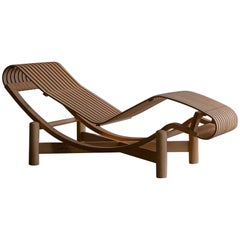
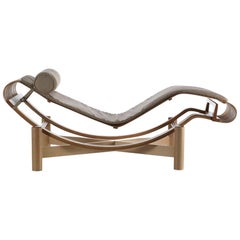
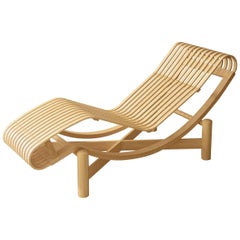
Charlotte Perriand Tokyo Chaise
2010s Italian Mid-Century Modern Chaise Longues
Bamboo
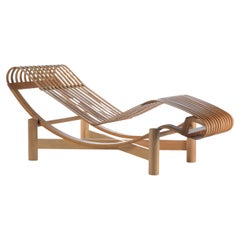

2010s Italian Mid-Century Modern Chaise Longues
Bamboo
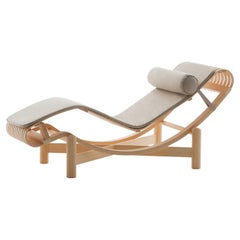
2010s Italian Mid-Century Modern Chaise Longues
Bamboo
2010s Italian Mid-Century Modern Chaise Longues
Bamboo
2010s Italian Mid-Century Modern Chaise Longues
Bamboo
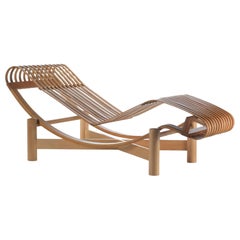
2010s Italian Mid-Century Modern Chaise Longues
Bamboo
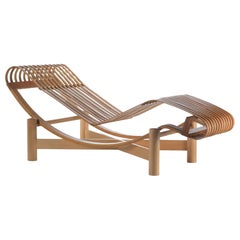
2010s Italian Mid-Century Modern Chaise Longues
Bamboo
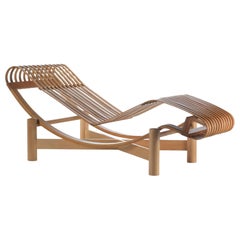
2010s Italian Mid-Century Modern Chaise Longues
Bamboo
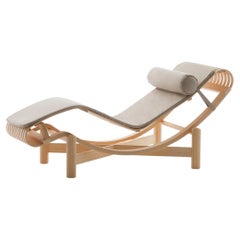
2010s Italian Mid-Century Modern Chaise Longues
Bamboo, Teak
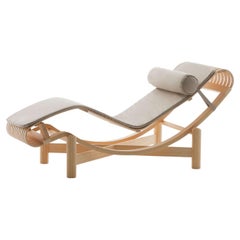
2010s Italian Mid-Century Modern Chaise Longues
Bamboo
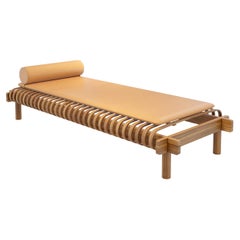
Recent Sales
2010s Italian Chaise Longues
Teak
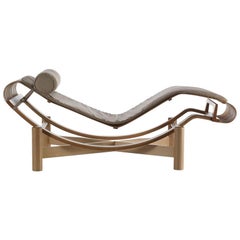
2010s Italian Mid-Century Modern Chaise Longues
Teak
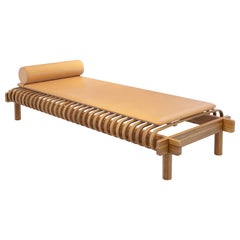
21st Century and Contemporary Italian Mid-Century Modern Chaise Longues
Bamboo
Vintage 1950s Italian Chaise Longues
Teak
2010s French Chaise Longues
Bamboo
People Also Browsed
2010s American Wall Lights and Sconces
Brass
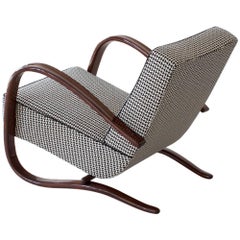
Vintage 1940s Czech Streamlined Moderne Armchairs
Upholstery, Bentwood
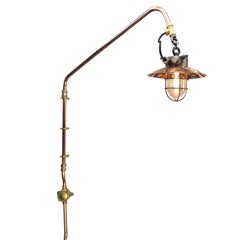
Vintage 1970s Japanese Industrial Wall Lights and Sconces
Brass, Copper, Iron
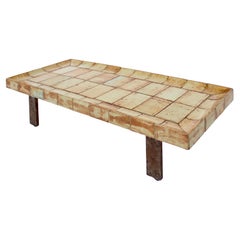
Vintage 1960s French Mid-Century Modern Coffee and Cocktail Tables
Ceramic
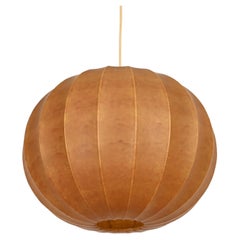
Vintage 1960s Italian Mid-Century Modern Chandeliers and Pendants
Metal, Steel
21st Century and Contemporary Belgian Modern Stools
Steel
Vintage 1980s Italian Post-Modern Wall Lights and Sconces
Murano Glass
Antique Late 19th Century French Louis XVI Doors and Gates
Pine
Antique Late 19th Century Japanese Showa Sofa Tables
Wood
Vintage 1970s Mid-Century Modern Chairs
Paper
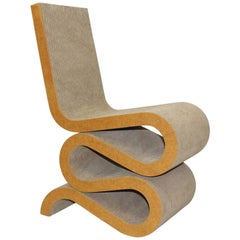
20th Century Italian Hollywood Regency Table Lamps
Brass
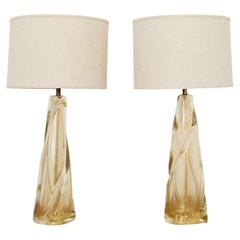
Vintage 1960s Italian Table Lamps
Murano Glass
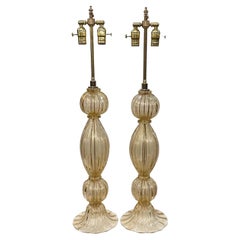
Vintage 1960s German Scandinavian Modern Credenzas
Metal, Chrome
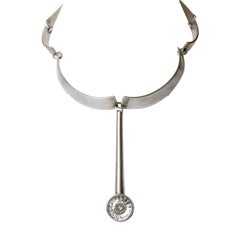
Mid-20th Century Scandinavian Scandinavian Modern Collectible Jewelry
Rock Crystal, Silver
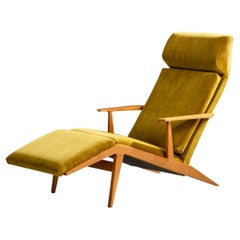
Vintage 1950s Swedish Mid-Century Modern Chaise Longues
Velvet, Wood, Beech
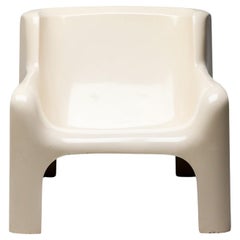
Vintage 1960s Italian Mid-Century Modern Lounge Chairs
Fiberglass
Charlotte Perriand Tokyo Chaise For Sale on 1stDibs
How Much is a Charlotte Perriand Tokyo Chaise?
Charlotte Perriand for sale on 1stDibs
A pioneer of modernism in France, Charlotte Perriand was one of the most influential figures in 20th-century design and architecture. In her long career, Perriand’s aesthetic grammar constantly evolved, moving from the tubular steel furniture of the Machine Age to a lyrical naturalism that is reflected in her enduring designs for chairs, sconces, daybeds and other works.
Perriand’s studies at the Ecole de L'Union Centrale de Arts Decoratifs left her enthralled by Charles-Édouard "Le Corbusier" Jeanneret and his vision of a new, rational architecture. In 1924, she joined his studio to design furniture along with Pierre Jeanneret, Corbu’s partner and cousin.
Together, they devised some of the finest examples of early modernist furniture, including two icons of the era: the B306 chaise — later renamed the LC4 — with its swooping frame and hide upholstery; and the chunky, steel-framed Grand Confort club chair. Both pieces were part of the LC line, which saw the trio of designers carrying out bold experiments with tubular chromed steel, just as architect and Bauhaus faculty member Marcel Breuer had executed with his cantilever Cesca chair around the same time. (Furniture created by Perriand, Le Corbusier and Pierre Jeanneret was originally produced by Austrian manufacturer Thonet but Italian firm Cassina acquired the production and sales rights to their works in 1964.)
Collaborative design produced another Perriand triumph: in the early 1950s, she and Jean Prouvé were engaged to produce desks, worktables and bookcases for the University of Paris. The bookcases — slim pine shelves with brightly painted aluminum dividers — are minimalist mid-century masterpieces.
By the end of that decade, Perriand’s aesthetic had changed completely from the earliest days of her career. She produced a series of furniture in ebonized wood: chairs with gentle S-curve legs, front and back; tables with elliptical tops. In the 1960s, Perriand pushed the boundaries of prefab to produce high-quality housing and furnishings at low cost for the French ski resort Les Arcs. She also adopted an almost rustic look at the time, designing simple chairs with dowel-cut frames and rush seats.
Everything in Perriand’s oeuvre is beautiful, whether it’s the centerpiece of a décor or an accent, and her work is in every great design collection, public and private.
The vintage Charlotte Perriand furniture for sale on 1stDibs includes stools, coffee tables, case pieces, lighting and more.
A Close Look at Mid-century Modern Furniture
Organically shaped, clean-lined and elegantly simple are three terms that well describe vintage mid-century modern furniture. The style, which emerged primarily in the years following World War II, is characterized by pieces that were conceived and made in an energetic, optimistic spirit by creators who believed that good design was an essential part of good living.
ORIGINS OF MID-CENTURY MODERN FURNITURE DESIGN
- Emerged during the mid-20th century
- Informed by European modernism, Bauhaus, International style, Scandinavian modernism and Frank Lloyd Wright’s architecture
- A heyday of innovation in postwar America
- Experimentation with new ideas, new materials and new forms flourished in Scandinavia, Italy, the former Czechoslovakia and elsewhere in Europe
CHARACTERISTICS OF MID-CENTURY MODERN FURNITURE DESIGN
- Simplicity, organic forms, clean lines
- A blend of neutral and bold Pop art colors
- Use of natural and man-made materials — alluring woods such as teak, rosewood and oak; steel, fiberglass and molded plywood
- Light-filled spaces with colorful upholstery
- Glass walls and an emphasis on the outdoors
- Promotion of functionality
MID-CENTURY MODERN FURNITURE DESIGNERS TO KNOW
- Charles and Ray Eames
- Eero Saarinen
- Milo Baughman
- Florence Knoll
- Harry Bertoia
- Isamu Noguchi
- George Nelson
- Danish modernists Hans Wegner and Arne Jacobsen, whose emphasis on natural materials and craftsmanship influenced American designers and vice versa
ICONIC MID-CENTURY MODERN FURNITURE DESIGNS
- Eames lounge chair
- Nelson daybed
- Florence Knoll sofa
- Egg chair
- Womb chair
- Noguchi coffee table
- Barcelona chair
VINTAGE MID-CENTURY MODERN FURNITURE ON 1STDIBS
The mid-century modern era saw leagues of postwar American architects and designers animated by new ideas and new technology. The lean, functionalist International-style architecture of Le Corbusier and Bauhaus eminences Ludwig Mies van der Rohe and Walter Gropius had been promoted in the United States during the 1930s by Philip Johnson and others. New building techniques, such as “post-and-beam” construction, allowed the International-style schemes to be realized on a small scale in open-plan houses with long walls of glass.
Materials developed for wartime use became available for domestic goods and were incorporated into mid-century modern furniture designs. Charles and Ray Eames and Eero Saarinen, who had experimented extensively with molded plywood, eagerly embraced fiberglass for pieces such as the La Chaise and the Womb chair, respectively.
Architect, writer and designer George Nelson created with his team shades for the Bubble lamp using a new translucent polymer skin and, as design director at Herman Miller, recruited the Eameses, Alexander Girard and others for projects at the legendary Michigan furniture manufacturer.
Harry Bertoia and Isamu Noguchi devised chairs and tables built of wire mesh and wire struts. Materials were repurposed too: The Danish-born designer Jens Risom created a line of chairs using surplus parachute straps for webbed seats and backrests.
The Risom lounge chair was among the first pieces of furniture commissioned and produced by celebrated manufacturer Knoll, a chief influencer in the rise of modern design in the United States, thanks to the work of Florence Knoll, the pioneering architect and designer who made the firm a leader in its field. The seating that Knoll created for office spaces — as well as pieces designed by Florence initially for commercial clients — soon became desirable for the home.
As the demand for casual, uncluttered furnishings grew, more mid-century furniture designers caught the spirit.
Classically oriented creators such as Edward Wormley, house designer for Dunbar Inc., offered such pieces as the sinuous Listen to Me chaise; the British expatriate T.H. Robsjohn-Gibbings switched gears, creating items such as the tiered, biomorphic Mesa table. There were Young Turks such as Paul McCobb, who designed holistic groups of sleek, blond wood furniture, and Milo Baughman, who espoused a West Coast aesthetic in minimalist teak dining tables and lushly upholstered chairs and sofas with angular steel frames.
Generations turn over, and mid-century modern remains arguably the most popular style going. As the collection of vintage mid-century modern chairs, dressers, coffee tables and other furniture for the living room, dining room, bedroom and elsewhere on 1stDibs demonstrates, this period saw one of the most delightful and dramatic flowerings of creativity in design history.
Materials: Bamboo Furniture
Bamboo — the reed-like, woody grass revered the world over for its attractiveness, durability and unbeatable versatility — has a purity and elegance that Ming Dynasty dignitaries, European royals and workaday folks alike have appreciated for centuries. Antique and vintage bamboo furniture can help introduce an air of relaxation in any space, and pairs well with chinoiserie decor and a range of porcelain decorative objects.
So why is bamboo — in its many forms — so enduringly popular? The grass itself is classic-looking and pleasingly geometric, and it evokes a subtle exoticism that’s both glamorous and (due in large part to its sustainability) highly attainable.
Bamboo is harder than mahogany. It’s a rigid and hollow reed, and as such it is not rattan, which is dense, steamable and bendable, and has become its own ultimate decorative-arts chameleon over the years. But like rattan, bamboo is an organic material that provides a link to nature, helping us to bring a bit of the outside in, in an elegant yet no-frills way that seems comforting and familiar. Plus, bamboo’s lightness and slight irregularities make it the perfect counterpoint to heavy-feeling interiors.
For organic modern interiors — or any space that would benefit from a dose of the natural world — a variety of vintage bamboo outdoor furniture, side tables, dining chairs and more can be found on 1stDibs.
Finding the Right Chaise-longues for You
Sit back, relax and get all of the ergonomic support you could ever need by introducing an alluring antique or vintage chaise longue in your living room or by your outdoor fire pit.
The chaise longue is an upholstered piece of furniture that was made popular in France in the early 16th century. This low reclining seat — a “long chair” in English — boasts an elongated form and low back that extends about half the length of the furnishing, affording the welcome opportunity for a sitter to put their feet up and relax. A comfortable common ground between sofas and daybeds, early iterations of chaise longues were discovered in Ancient Egypt and were later frequently used in both Greece and Rome.
In the late 1700s, the first chaise longues were imported to America, and English speakers have struggled with the name ever since. (In the United States, the term is frequently spelled “chaise lounge.”) So, how do you pronounce chaise longue? It sounds like “shayz lawng,” but limiting it to shayz is perfectly acceptable in the States.
Antique Victorian chaise longues and 19th-century chaise longues bring luxury and perhaps extravagance to your living space while mid-century modern chaise longues, designed by the likes of Adrian Pearsall, Vladimir Kagan or Milo Baughman, can alter an interior with dazzling geometric contours and richly varied textures.
On 1stDibs, find many kinds of chaise longues for your home — from sculptural works by Charlotte Perriand to plush and velvety Louis XVI pieces to minimalist contemporary versions to suit your understated decor.