Chinese And Porcelain And Phoenix

to
42
255
111
378
29
17
15
9
4
4
3
2
1
99
123
156
46
68
34
12
1
2
6
4
1
1
2
1
387
357
37
20
14
377
361
306
35
28
424
420
420
5
2
2
2
1
Sort By
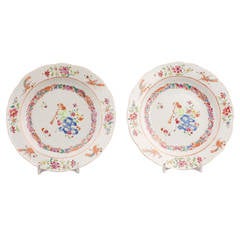
Pair Chinese export porcelain soup plates with trumpet players, mid 18th century
Located in London, GB
in The Chinese Porcelain Company exhibition of Important Chinese Export Porcelain, 1995, no. 19, p.28
Category

Antique Mid-18th Century Chinese Qing Ceramics

Materials

Ceramic

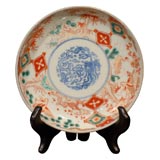
19th Century Imari Sauce Plate with Dragon Phoenix Center
Located in Chamblee, GA
Porcelain Imari sauce plate with crane, prunas & bamboo border, and dragon & phoenix center
Category

Antique 19th Century Chinese Serving Bowls

Materials

Porcelain

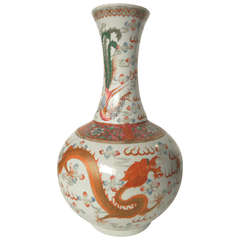
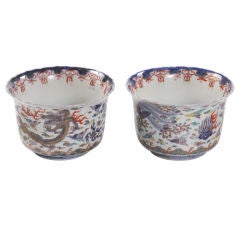
Chinese Polychrome Dragon Vase
Located in Houston, TX
Chinese polychrome and gold enamel vase with dragon and phoenix decoration separated by a band of
Category

Antique 19th Century Chinese More Asian Art, Objects and Furniture

Materials

Porcelain

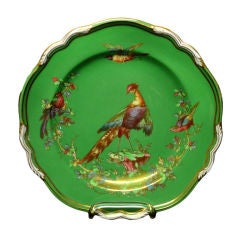
Set of Twelve Spode Copeland s Phoenix Dinner Plates
Located in Dallas, TX
Just in time for the holidays: A Set of Twelve Spode Copeland's Phoenix Dinner Plates, Pattern Y
Category

Early 20th Century English Dinner Plates

Materials

Porcelain

Rare Antique Pair of Imari Porcelain Cache Pots
Located in San Francisco, CA
porcelain during the Ming Dynasty in China.
Category

Antique 19th Century Japanese Ceramics

Materials

Porcelain

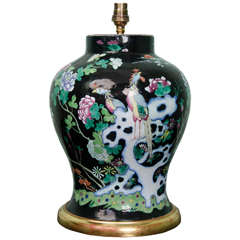
Chinese Famille Noire Porcelain Lamped Baluster Vase, circa 1850
Located in London, GB
A beautiful Chinese porcelain Famille Noire baluster vase decoratd with phoenixes, rockwork
Category

Antique 19th Century Chinese Table Lamps

Materials

Metal

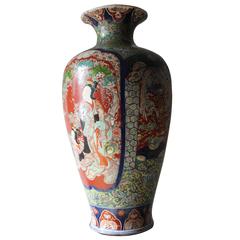
Large Mid-18th Century Japanese Porcelain Kutani Vase, circa 1740
Located in Bedford, Bedfordshire
China, the mythical Phoenix which we see to two sides of this vase was adopted as a symbol of the
Category

Antique Mid-18th Century Japanese Edo Ceramics

Materials

Porcelain

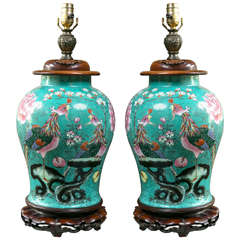
Pair of 19th Century Chinese Porcelain Lamps of Baluster Shape
Located in Woodbury, CT
bases. They are hand decorated with phoenix birds, peonies and other flowers. The blue background is
Category

Antique Late 19th Century Chinese Table Lamps

Materials

Porcelain

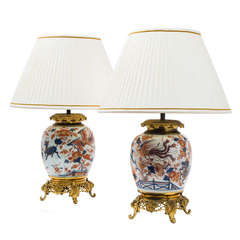
Pair 18thC Chinese Imari Porcelain Vases with later French Gilt Bronze Mounts
Located in London, GB
. The ovoid porcelain jars are decorated with mythical beasts including dragons and phoenix amongst a
Category

Antique 18th Century and Earlier Chinese Table Lamps

Materials

Porcelain

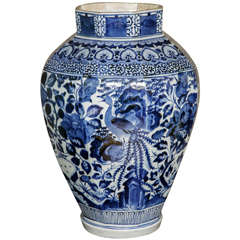
A Huge 17th Century Japanese Octagonal Arita Blue White Vase, circa 1680
Located in London, GB
octagonal baluster form, boldly painted with phoenixes and large blossoming foliage around the body within
Category

Antique 18th Century and Earlier Japanese Ceramics

Materials

Porcelain

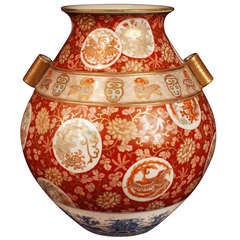
Japan, Large Imari Kutani Vase, Meiji Period
Located in Paris, FR
This large Globular porcelain vase painted in the Imari style, has two tubular handles. The
Category

Antique 19th Century Ceramics

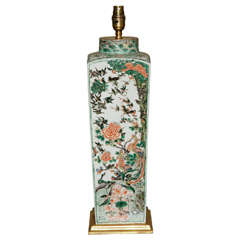
A Tall Famille Verte Square Vase, Lamped
Located in London, GB
landscape with phoenixes, peonies and birds and another side of courtesans playing games, the flat shoulder
Category

Antique 18th Century and Earlier Chinese Table Lamps

Materials

Metal

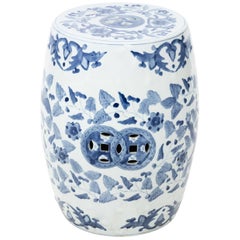
Blue and White Chinese Porcelain Garden Seat with Phoenix Motif
Located in Stamford, CT
Blue and white Chinese porcelain garden seat with flower, phoenix, and dragon motifs, circa 20th
Category

20th Century Chinese Chinese Export Patio and Garden Furniture

Materials

Porcelain

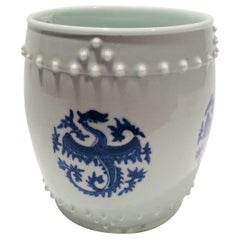
Ching Dynasty Blue and White Phoenix Design Porcelain Planter
Located in Santa Fe, NM
White background with dimensional bands and four nicely painted phoenixes in blue. The holes on
Category

Antique 19th Century Chinese Ming Ceramics

Materials

Porcelain

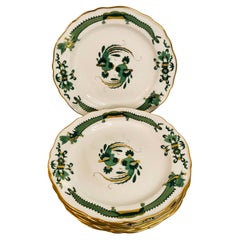
Six Meissen Green Court Dragon Dessert Plates With Phoenix Birds and Dragons
By Meissen Porcelain
Located in Boston, MA
1880s-1890s. These plates are beautifully decorated with phoenix birds and dragons with gold accents and
Category

Antique 1880s German Chinese Export Tableware

Materials

Porcelain

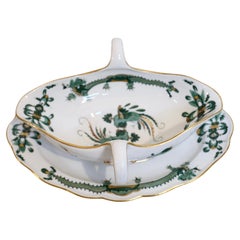
Meissen Green Court Dragon Gravy Painted With Dragon and Phoenix Bird Decoration
By Meissen Porcelain
Located in Boston, MA
bird. The dragon represents the emperor of China and the phoenix bird represents the empress, who was
Category

Antique 1890s German Chinese Export More Dining and Entertaining

Materials

Porcelain

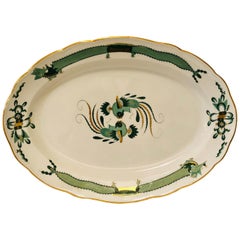
Large Meissen Green Court Dragon Platter Painted with Dragons and Phoenix Birds
By Meissen Porcelain
Located in Boston, MA
dragons and the phoenix birds and the rich gold accents on this Meissen platter. The original Meissen
Category

Antique 1880s German Other Platters and Serveware

Materials

Porcelain

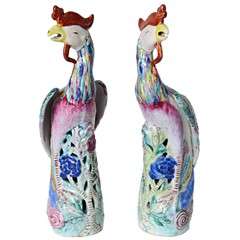
Pair of Chinese Porcelain Phoenix Birds, 8.25"h, 19th Century
Located in West Palm Beach, FL
Pair of Chinese Porcelain Phoenix Birds, export, pierced base, finely painted, original condition
Category

Antique 19th Century Chinese Figurative Sculptures

Materials

Porcelain

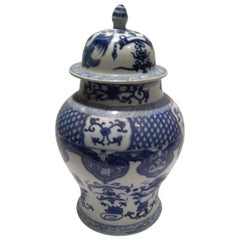
Ching Dynasty Blue and White Lidded Porcelain Ginger Jar
Located in Santa Fe, NM
Nicely painted with figures of Dragons and Phoenixes. From the estate of an esteemed interior
Category

Antique Late 19th Century Chinese Ceramics

Materials

Porcelain

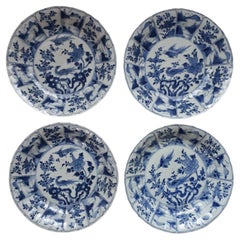
Four Chinese Blue White Dishes, China Kangxi Period
Located in Saverne, Grand Est
Set of four lobed dishes in twelve brackets, with slightly flared rim, decorated with phoenixes
Category

Antique Late 17th Century Chinese Ceramics

Materials

Porcelain

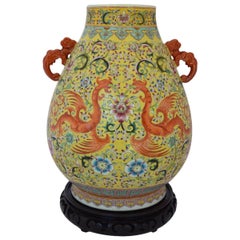
Large Qianlong Style Chinese Enameled Vase
Located in Laguna Beach, CA
Large Chinese Qianlong style enameled porcelain vase of taped globular from with model handles to
Category

Mid-20th Century Chinese Chinese Export Ceramics

Materials

Enamel

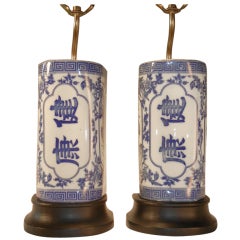
Pair of Chinese Porcelain Pillows Converted to Lamps
Located in Quechee, VT
Pair of Chinese blue and white porcelain pillows converted into lamps without drilling, and mounted
Category

20th Century Chinese Table Lamps

Materials

Brass

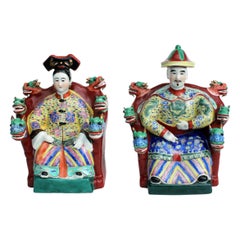
Antique Chinese Emperor Empress Statues / Fujian Huiguan Seal Mark Ca. 1940
By Fujian
Located in Firenze, FI
Antique pair of high-quality collectable Mid republic period - Chinese Emperor & Empress statues
Category

Vintage 1930s Chinese Ceramics

Materials

Porcelain

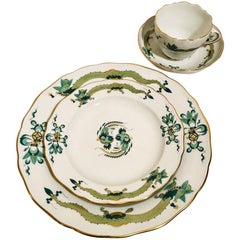
Meissen Green Court Dragon Dinner Service for Fourteen People Having 56 Pieces
Located in Boston, MA
the dragons and the phoenix birds and the rich gold accents on each piece. The original Meissen court
Category

Late 20th Century German Other Tableware

Materials

Porcelain

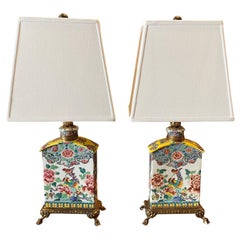
Pair of Antique French Chinoiserie Tea Caddy Lamps
Located in Sarasota, FL
This pair of Chinese tea caddy table lamps where brought to French and mounted into bronze dore
Category

Antique 1860s French Chinoiserie Table Lamps

Materials

Porcelain

  • 1
Get Updated with New Arrivals
Save "Chinese And Porcelain And Phoenix", and we’ll notify you when there are new listings in this category.

Chinese And Porcelain And Phoenix For Sale on 1stDibs

With a vast inventory of beautiful furniture at 1stDibs, we’ve got just the Chinese and porcelain and phoenix you’re looking for. Each Chinese and porcelain and phoenix for sale was constructed with extraordinary care, often using ceramic, porcelain and metal. You’ve searched high and low for the perfect Chinese and porcelain and phoenix — we have versions that date back to the 18th Century alongside those produced as recently as the 21st Century are available. When you’re browsing for the right Chinese and porcelain and phoenix, those designed in Art Deco, Georgian and Hollywood Regency styles are of considerable interest.

How Much is a Chinese And Porcelain And Phoenix?

The average selling price for a Chinese and porcelain and phoenix at 1stDibs is $1,480, while they’re typically $300 on the low end and $8,500 for the highest priced.
Questions About Chinese And Porcelain And Phoenix
  • 1stDibs ExpertApril 5, 2022
    Chinese Canton porcelain is a type of decorative hand-painted ceramic ware produced during the 18th, 19th and 20th centuries in China. Its name comes from the region where it originated. You will sometimes see it referred to as Cantonese porcelain. On 1stDibs, find a selection of Chinese Canton porcelain.

  • Lotus Gallery
    Lotus GallerySeptember 15, 2020

    Chinese porcelain can usually be dated by form and decoration. However, copies and forgeries abound, so you should have an expert such as an appraiser, reputable dealer or auction house, or museum examine your porcelain to accurately date it.

  • PAGODA RED
    PAGODA REDOctober 7, 2020

    True porcelain ware was developed in the 11th century at the imperial kilns of Jingdezhen, Jiangxi province, China. These early porcelains of the Song and Yuan dynasties are known as Qingbai or Yingqing ware, defined by a light blue-grey glaze. Later forms of Chinese porcelain include blue and white underglaze ware, Celadon ware, Jun ware, Famille Verte ware, Wucai (Five Color) ware, and Dehua ware, also known as Blanc de Chine.

    Lotus Gallery
    Lotus GalleryMarch 17, 2021
    In China, porcelain is referred to a "cíqì" 瓷器.
  • 1stDibs ExpertApril 5, 2022
    A Chinese porcelain pillow is a type of ceramic object produced by Chinese artisans. They normally have highly decorative rectangular designs and feature curved tops. Historically, they functioned as headrests, but today they normally serve purely as decorations. On 1stDibs, shop a wide variety of Chinese porcelain ware.
  • 1stDibs ExpertApril 5, 2022
    To identify Chinese export porcelain, first look for a mark. Most pieces made after 1891 feature a maker's mark that you can research using authoritative online resources. Identifying older porcelain ware is more difficult. A licensed appraiser can provide assistance. You'll find a range of expertly vetted Chinese export porcelain on 1stDibs.
  • 1stDibs ExpertApril 5, 2022
    You can sell old Chinese porcelain in a few ways. You can advertise the piece locally or work with an antique shop or auction house. There are also reputable online platforms available for selling online. Shop a collection of Chinese porcelain on 1stDibs.
  • 1stDibs ExpertAugust 20, 2024
    To identify Chinese porcelain marks, consult trusted online resources. Most markings on Chinese porcelain consist of four to six characters, and the last two often represent when a piece was produced. Since there is a lot of variation in the markings, looking at images shared on trustworthy websites is the best way to make an identification. Alternatively, you can use the services of a certified appraiser or knowledgeable antique dealer. On 1stDibs, explore a wide range of Chinese porcelain.
  • PAGODA RED
    PAGODA REDOctober 21, 2020

    For thousands of years, China’s court-sponsored porcelain industry has been at the forefront of technical innovation and aesthetic refinement. Exquisite finishes and precision of form gave China an international reputation for fine ceramic wares. Age, shape, glaze, motif, and reign mark are all factors contributing to the value of a ceramic piece, indicative of the maker and the dynastic reign under which the object was created.

  • 1stDibs ExpertApril 5, 2022
    Chinese Kangxi porcelain was popular because of its particular blue colorings. The blue was made using cobalt ore which was imported from Persia. As cobalt ore was a scarce ingredient, the rarity made the porcelain items highly sought after. Shop a collection of Chinese Kangxi porcelain from some of the world’s top sellers on 1stDibs.
  • 1stDibs ExpertApril 5, 2022
    Chinese blue and white porcelain is the most common type of decorated porcelain. Its name in Chinese is qinghua. On 1stDibs, you’ll find a collection of antique and modern Chinese blue and white porcelain from some of the world’s top sellers.
  • Lotus Gallery
    Lotus GallerySeptember 23, 2020

    The best way to know is to take it to an expert, such as an appraiser, reputable dealer or auction house, or museum

  • 1stDibs ExpertMarch 22, 2022
    Chinese blue and white porcelain is called qinghua, pronounced “CHING-hwa.” Artisans first began producing the porcelain during the Tang and Song dynasties ranging from 609 to 1279. However, the techniques the pottery is most well known for weren't developed until the subsequent Ming era, which lasted until 1644. You'll find a collection of Chinese porcelain on 1stDibs.