Chinese Calligraphy Art
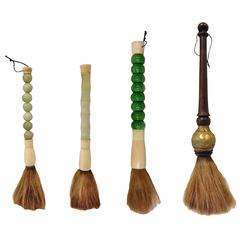
20th Century Chinese Scholar s Objects
Bamboo, Bone, Wood
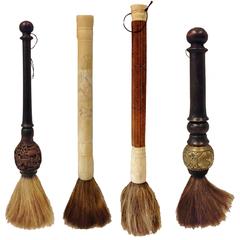

Antique 19th Century Chinese More Asian Art, Objects and Furniture
Agate
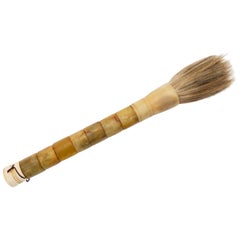
20th Century Chinese Chinese Export Furniture
Wood
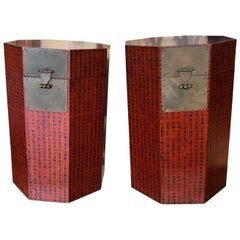
20th Century Chinese Scholar s Objects
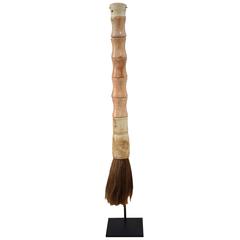
20th Century Chinese Scholar s Objects
Bone, Porcelain
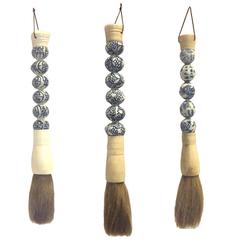
Antique 19th Century Chinese Decorative Art
Poplar, Wood
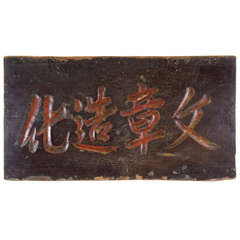
20th Century Chinese Scholar s Objects
Jade
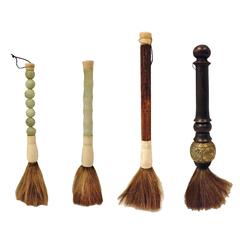
20th Century Chinese Scholar s Objects
Jade
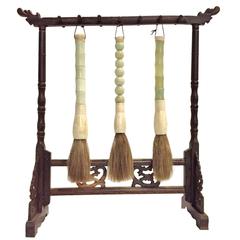
20th Century Chinese Scholar s Objects
Jade, Brass
1980s Contemporary Figurative Paintings
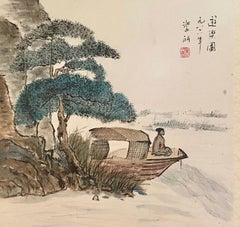
Silk, Ink
- 1
Chinese Calligraphy Art For Sale on 1stDibs
How Much is a Chinese Calligraphy Art?
- What is Chinese calligraphy art?1 Answer1stDibs ExpertApril 5, 2022Chinese calligraphy is a supreme form of Chinese art. It is the stylized artistic way of writing Chinese characters, and is considered one of four most-sought after skills of ancient Chinese scholars. Shop a selection of Chinese calligraphy art pieces from some of the world’s top art dealers on 1stDibs.
- 1stDibs ExpertApril 5, 2022The five types of Chinese calligraphy styles are the seal script, cursive script, running script, clerical script and the standard script. The tradition of Chinese calligraphy has spanned over 3,000 years. On 1stDibs, find a collection of Chinese calligraphy designs from some of the world’s top sellers.
- What is Chinese art called?1 Answer
 Lotus GallerySeptember 23, 2020
The most common Chinese scroll art is in the “shan shui” (山水) style ink painting. Literally translated as “Mountain and Water”, these paintings evoke dreamy landscapes.
- 1stDibs ExpertApril 5, 2022Chinese painting is known as guó huà, which translates to “national painting” or “native painting.” Traditionally, this style of art is created on paper or silk and uses calligraphy techniques as well as a brush dipped in pigment. Shop a collection of authentic guó huà art pieces from verified sellers on 1stDibs.
- 1stDibs ExpertOctober 15, 2024To tell if art is Japanese or Chinese, study the piece's characteristics. With paintings, Chinese artists often use more color and tend to fill their entire canvases, while Japanese artists often include more negative space and choose subtler colors. There are also differences between the brushstrokes typical of traditional Chinese and Japanese art. In Japanese paintings, brushstrokes are often short and sharp. On the other hand, Chinese paintings often display longer, more fluid brushstrokes. Learning about the defining features of various art forms and periods and looking at examples of pieces made by Japanese and Chinese artists can help you learn to spot subtle differences. Explore a diverse assortment of Japanese and Chinese art on 1stDibs.
- 1stDibs ExpertApril 5, 2022The red seal on Chinese art is a way of communicating information about the piece. Depending on the artwork, the seal may say who produced it or who originally owned it. On 1stDibs, shop a wide range of Chinese art.
Read More
Symbols of Happiness and Rebirth Adorn This Japanese Satsuma Bowl
Decorated with white cranes and the sought-after thousand-butterflies motif, the Meiji-period vessel offers both a celebration of traditional aesthetics and a clear reflection of the era’s appetite for exquisite export pieces.
Chicago’s Pagoda Red Has a Spirited Mix of Asian Antiques and Bold New Art
For 25 years, gallerist Betsy Nathan has leveraged her keen eye and key connections to bring a unique selection of rare finds to the market.
In L.A., Gallerist JF Chen Has Long Championed Eclectic Blue-Chip Design
Now working alongside his daughter Bianca, dealer Joel Chen has presented a most covetable array of antiques, art and contemporary creations for more than 40 years.
12 Calming Spaces Inspired by Japanese Design
From cherry-blossom-adorned walls paired with glamorous lighting to wood-paneled ceilings above checkerboard-patterned chairs, these 12 spaces seamlessly blend Eastern and Western aesthetics.
Rodrigo Rivero Lake’s Mexico City Showroom Is a Museum-Worthy Trove of Spanish Colonial and Asian Antiques
The dealer and curator has spent the past 50 years amassing a collection of exceptional art, furniture and architectural elements that trace the cultural influence of the Spanish empire from Europe to the Americas and beyond.
16 Refined Asian-Inspired Interiors
These spaces exemplify how Eastern elements elevate a home's decor.