Chinese Export Jade
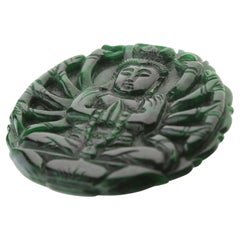
Late 20th Century Chinese Chinese Export Sculptures and Carvings
Jade

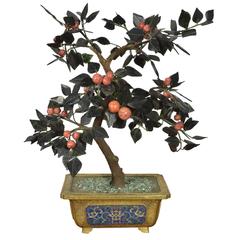
Early 20th Century Chinese Chinese Export More Asian Art, Objects and Fu...
Stone, Jade, Bronze
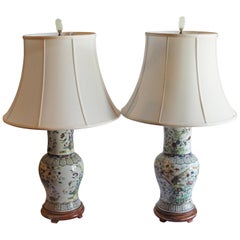
20th Century Chinese Chinese Export Table Lamps
Porcelain
Early 20th Century Chinese Chinese Export Collectible Jewelry
Stone, Jade
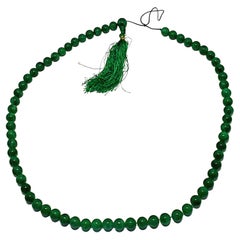
Early 20th Century Burmese Chinese Export Collectible Jewelry
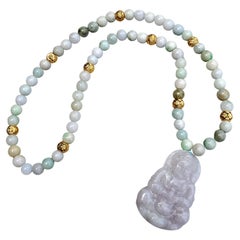
Jade, Gold, Gold Plate
- 1
Chinese Export Jade For Sale on 1stDibs
How Much is a Chinese Export Jade?
A Close Look at Chinese-export Furniture
Expanded trade between Europe and East Asia, starting in the 16th century, led to a booming market for exported goods, particularly furniture. This was bolstered by the establishment of the Dutch and English East India Companies at the beginning of the 17th century. From folding screens and chairs to lacquer tables and silver, Chinese Export furniture was in demand and regularly copied and imitated, leading to styles like chinoiserie and Chinese Chippendale.
The expansion of exporting that had strengthened the arts during the Ming dynasty continued into the Qing dynasty era — Chinese designers made many furniture pieces specifically for export, resulting in distinctive designs that mixed traditional techniques with forms appealing to foreign buyers. For instance, cabinetmakers in Canton (modern-day Guangzhou) were prolific in crafting hardwood furniture for export in European styles that involved the expert joinery techniques of Chinese furniture. Designs for Chinese Export porcelain, cabinets, decorative objects and other furniture were often more ornately adorned than they would be for a local audience, such as with mother-of-pearl overlays or surfaces featuring lavish pictorial scenes or gold on black motifs. Some were even commissioned by wealthy European families to be adorned with their coat of arms.
Because lacquer furniture was especially prized, and the resin used to create it was difficult to import as it would harden during the long voyage, artisans in China and Japan exported numerous lacquer pieces. Long before lacquer made its way to Japan, the Chinese treated the material differently. They used it to create smooth, glossy surfaces, but also for carving, an art that began in the 12th century and is exclusively Chinese. These pieces are called cinnabar lacquer after the powdered mercury sulfide (cinnabar) employed to produce their characteristic red hue. A popular form for export was a compact cabinet with drawers, usually displayed on a small table. Undecorated furniture built in Europe was also shipped to China to be lacquered. The international exchange of design would influence furniture into the 19th century and later, informing styles such as Art Deco and Art Nouveau.
Find a collection of antique Chinese Export tables, beds, cupboards, table lamps and more furniture on 1stDibs.
- Is Chinese jade real jade?1 Answer1stDibs ExpertApril 5, 2022Yes, Chinese jade is indeed real jade, and refers to the type of jade mined in China. During the neolithic period onward, Chinese jade was primarily used for sculptures. You’ll find a variety of Chinese jade products from some of the world’s top sellers on 1stDibs.
- 1stDibs ExpertApril 5, 2022To identify Chinese export porcelain, first look for a mark. Most pieces made after 1891 feature a maker's mark that you can research using authoritative online resources. Identifying older porcelain ware is more difficult. A licensed appraiser can provide assistance. You'll find a range of expertly vetted Chinese export porcelain on 1stDibs.
 PAGODA REDOctober 21, 2020
Valued for its rarity and lustrous appearance, jade has been thought to symbolize excellence and purity of human virtue. When worn as jewelry or as a protective charm, the stone was thought to imbue a person with a clear mind and pure spirit, and to guard against evil spirits or illness.
- Is jade Japanese or Chinese?1 Answer
 Lotus GallerySeptember 23, 2020
While both the Chinese and Japanese use jade, it is more commonly used in China.