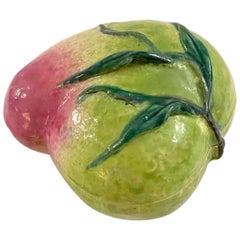
Chinese Famille Rose Altar Fruit Peach Form Box

Chinese Export Famille Rose Diminutive Altar Fruit Peach Box, Rare
Located in West Palm Beach, FL
Chinese Export Famille Rose Diminutive Altar Fruit 'Peach' Box, Rare China, Late Qing period 1890
Category

Antique Late 19th Century Chinese Chinese Export Ceramics

Materials

Porcelain

Chinese Export Famille Rose Diminutive Altar Fruit 
Peach
 Box, Rare
Chinese Export Famille Rose Diminutive Altar Fruit 
Peach
 Box, Rare
$556 Sale Price
20% Off
H 2.25 in W 3.25 in D 3.25 in

People Also Browsed

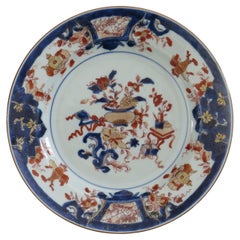
Chinese Kangxi period Plate porcelain Finely Hand Decorated, circa 1700
Located in Lincoln, Lincolnshire
This is a beautifully hand painted Chinese Export porcelain Plate from the Qing, Kangxi period, (1662-1722), circa 1700. The plate is of large dinner plate size with a 10 inch di...
Category

Antique Early 18th Century Chinese Chinese Export Ceramics

Materials

Porcelain

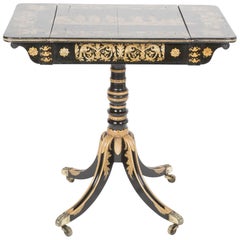
English Regency Penwork Games Table
Located in Stamford, CT
Penwork games table with pedestal on four legs and wheeled feet, English, circa 1810.
Category

Antique 1810s English Regency Game Tables

Materials

Wood

English Regency Penwork Games Table
$5,900
H 29.5 in W 30.25 in D 20 in
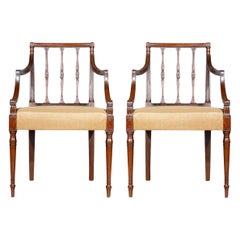
18th Century George III Armchairs Circa 1780
By Thomas Sheraton
Located in Richmond, London
An extremely elegant, rare quality pair of George III period armchairs. English, circa 1780. Why we like them Wonderfully elegant model, looking very delicate but in fact unusually...
Category

Antique Late 18th Century European George III Armchairs

Materials

Upholstery

18th Century George III Armchairs Circa 1780
$10,229 / set
H 35.24 in W 22.84 in D 22.05 in
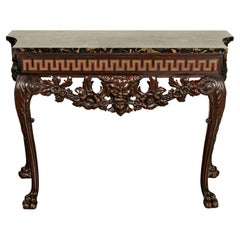
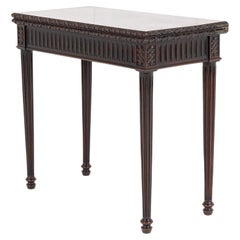
Antique English Georgian Carved Mahogany Portoro Marble Console Side Table 1820
By Thomas Hope
Located in Portland, OR
A fine & rare antique English Georgian carved mahogany Neo-Classical console table, with a Nero Portoro gold veined marble top, in the manner of Thomas Hope (1769–1831), circa 1820....
Category

Antique 1820s English Regency Console Tables

Materials

Marble

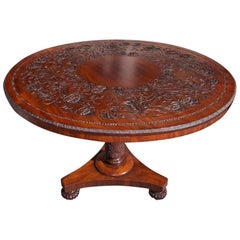
English Mahogany Decorative Carved Hibiscus Centre Table, Circa 1815
Located in Charleston, SC
English mahogany center table with a decorative carved hibiscus floral top, spiral bulbous filigree carved pedestal and terminating on a tripod base with the original melon feet, Ear...
Category

Antique 1810s English George III Center Tables

Materials

Mahogany, Oak

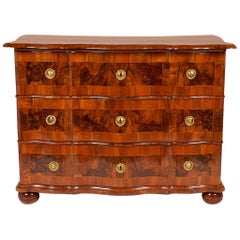
18th Century Baroque Commode, Germany, 1750-1760
Located in Belmont, MA
18th century Baroque commode, probably Mainz (Germany), 1750. Body on flattened ball feet, serpentine front with three drawers, each of them with escutcheons and ring handles. Molded...
Category

Antique 1750s German Baroque Commodes and Chests of Drawers

Materials

Walnut

18th Century Baroque Commode, Germany, 1750-1760
$11,000
H 33.47 in W 45.28 in D 26.38 in
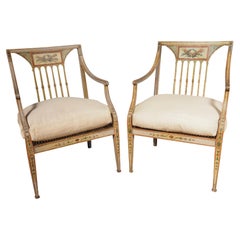
Pair Of George III Painted Armchairs
Located in Essex, MA
Each with straight back and pierced splat with classical painted decoration over a caned seat with loose cushion. Square tapered legs. Seat Depth 18.75
Category

Antique 1790s English George III Armchairs

Materials

Pine

Pair Of George III Painted Armchairs
$5,800 / set
H 34 in W 24 in D 22 in
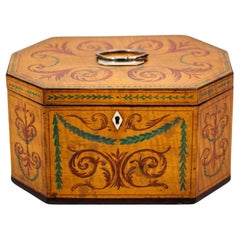
Georgian Original Painted Sycamore Tea Caddy
Located in Northampton, GB
George III Circa 1785 From our Tea Caddy collection, we are delighted to offer this Rare Original Hand-Painted Sycamore Tea Caddy. The Tea Caddy of Octagonal form veneered in Sycamo...
Category

Antique Late 18th Century George III Tea Caddies

Materials

Sycamore

Georgian Original Painted Sycamore Tea Caddy
$3,065
H 4.93 in W 9.06 in D 6.5 in
18th Century George III Mahogany Tea Table
Located in Gloucestershire, GB
A Beautifully Carved English George III Period Mahogany Tea Table. This fine table opens on a single gate leg mechanism, meaning that one of the back legs swings out of the table fr...
Category

Antique 18th Century Card Tables and Tea Tables

Materials

Mahogany

18th Century George III Mahogany Tea Table
$5,313
H 29.53 in W 32.88 in D 16.15 in
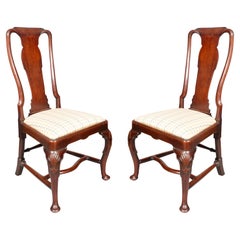
Pair Of George II Mahogany Side Chairs
Located in Essex, MA
With slightly arched crestrail with central vasiform splat with a drop in upholstered seat, raised on cabriole legs with shell knees with bellflower joined by a shaped H form stretch...
Category

Antique 1750s English George II Side Chairs

Materials

Mahogany

Pair Of George II Mahogany Side Chairs
$3,800 / set
H 40.5 in W 21 in D 21.5 in
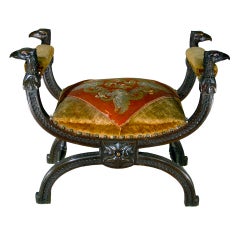
A Rare Regency Walnut X Frame Window Seat Early 19th Century, Possibly Russ
Located in Sheffield, MA
A Rare Regency Walnut X Frame Window Seat Possibly Russian Early 19th Century With carved eagle heads over a X stretcher with guilloche carvings and a central medallion. Height 27...
Category

Antique 19th Century English Regency Benches
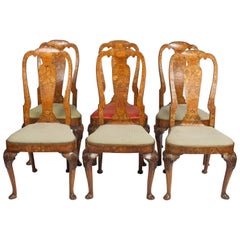
Set of Six 18th Century Dutch Marquetry Chairs
Located in Brighton, Sussex
A good quality set of six 18th century Dutch marquetry chairs, each having flowers, leaves, birds and urns inlaid to the backs and apron. Drop in seats and raised on carved cabriole ...
Category

Antique 18th Century Dutch Side Chairs

Materials

Walnut

Set of Six 18th Century Dutch Marquetry Chairs
$12,944 / set
H 42.13 in W 22.05 in D 20.87 in
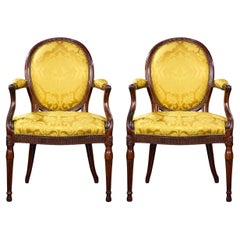
Pair Of Carved Mahogany Armchairs By Thomas Chippendale
By Thomas Chippendale
Located in New Orleans, LA
This set of two carved mahogany chairs was crafted by the inimitable and famed Thomas Chippendale. The yellow upholstered seats complement the deep mahogany beautifully, creating an ...
Category

Antique 18th Century English Chippendale Armchairs

Materials

Upholstery, Mahogany

Pair Of Carved Mahogany Armchairs By Thomas Chippendale
$94,500 / set
H 35.5 in W 24 in D 18 in
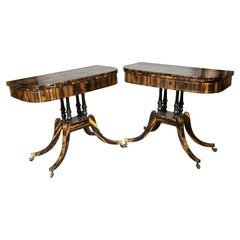
Pair Of Regency Calamander And Brass Inlaid Games Tables
Located in Essex, MA
Each with a hinged top with crossbanded edge with brass star inlays. Green felt lined playing surface, conforming frieze, ebonized spindle supports joining four saber legs with brass...
Category

Antique Early 19th Century English Regency Game Tables

Materials

Brass

Pair Of Regency Calamander And Brass Inlaid Games Tables
$22,500 / set
H 29.5 in W 36 in D 34.25 in
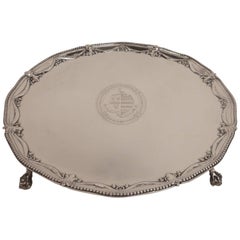
Large George III Sterling Silver Salver by John Carter, circa 1776
By John Carter II
Located in Pittsburgh, PA
This large footed salver by John Carter is finely executed in sterling, and engraved this motto "In Deo Confido". Carter has a specialist candlestick and salver marker, many of his w...
Category

Antique Late 18th Century English Adam Style Serving Pieces

Materials

Sterling Silver

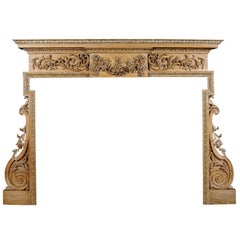
Carved English George III Style Pine Fireplace
Located in London, GB
An English George III style pine fireplace, with carved festoon centre of leaves, fruit and flowers, scrolled and leaf side panels, acanthus leaf cornice and leg moulding. Carved scr...
Category

Antique 19th Century English George III Architectural Elements

Materials

Pine

Carved English George III Style Pine Fireplace
$21,175
H 52.75 in W 64 in D 5 in
Get Updated with New Arrivals
Save "Chinese Famille Rose Altar Fruit Peach Form Box", and we’ll notify you when there are new listings in this category.

A Close Look at Chinese-export Furniture

Expanded trade between Europe and East Asia, starting in the 16th century, led to a booming market for exported goods, particularly furniture. This was bolstered by the establishment of the Dutch and English East India Companies at the beginning of the 17th century. From folding screens and chairs to lacquer tables and silver, Chinese Export furniture was in demand and regularly copied and imitated, leading to styles like chinoiserie and Chinese Chippendale.

The expansion of exporting that had strengthened the arts during the Ming dynasty continued into the Qing dynasty era — Chinese designers made many furniture pieces specifically for export, resulting in distinctive designs that mixed traditional techniques with forms appealing to foreign buyers. For instance, cabinetmakers in Canton (modern-day Guangzhou) were prolific in crafting hardwood furniture for export in European styles that involved the expert joinery techniques of Chinese furniture. Designs for Chinese Export porcelain, cabinets, decorative objects and other furniture were often more ornately adorned than they would be for a local audience, such as with mother-of-pearl overlays or surfaces featuring lavish pictorial scenes or gold on black motifs. Some were even commissioned by wealthy European families to be adorned with their coat of arms.

Because lacquer furniture was especially prized, and the resin used to create it was difficult to import as it would harden during the long voyage, artisans in China and Japan exported numerous lacquer pieces. Long before lacquer made its way to Japan, the Chinese treated the material differently. They used it to create smooth, glossy surfaces, but also for carving, an art that began in the 12th century and is exclusively Chinese. These pieces are called cinnabar lacquer after the powdered mercury sulfide (cinnabar) employed to produce their characteristic red hue. A popular form for export was a compact cabinet with drawers, usually displayed on a small table. Undecorated furniture built in Europe was also shipped to China to be lacquered. The international exchange of design would influence furniture into the 19th century and later, informing styles such as Art Deco and Art Nouveau.

Find a collection of antique Chinese Export tables, beds, cupboards, table lamps and more furniture on 1stDibs.

Finding the Right Ceramics for You

With their rich and diverse history, antique, new and vintage Asian ceramics offer colorful and sophisticated ways to add flair to any space.

Japanese pottery dates back at least 13,000 years to the Jōmon period. Pieces from the Late Jōmon era display a rope-cord pattern encircling a pot or jug. During the Muromachi period, potters created simple bowls and utensils frequently used in tea ceremonies and were made as both functional and aesthetic objects.

Ceramics made during Japan’s Meiji period, from 1868 to 1912, reflected an explosion of artistic expression propelled by new access to international trade. Details became more intricate and refined, and colors were enhanced with new glazing practices.

Chinese porcelain, meanwhile, is often identified by its shape. Each reign and dynasty had specific shapes and styles that were encouraged by the imperial ruler. During the Song dynasty, for instance, there were four dominant types of ceramic vase shapes: plum-shaped, pear-shaped, cong-shaped (tall and square) and double-gourd.

Chinese ceramics that were made during the Qing dynasty were demonstrative of an expanded artistic expression, with more delicate shapes and a focus on intricate detailing. The shapes of ceramics from this era are thinner, taller and have subtle features like a gentle flare, such as on the mallet-shaped vase.

Later, the 17th- and 18th-century interior design trend of chinoiserie brought Asian paintings and screens, textiles and other art and furniture from the continent into many European homes.

Explore an extensive range of antique, new and vintage Asian ceramics on 1stDibs to find the perfect piece for your home.