Chinese Painting 1900s
Recent Sales
Vintage 1930s American Chinese Export Paintings and Screens
Giltwood, Canvas
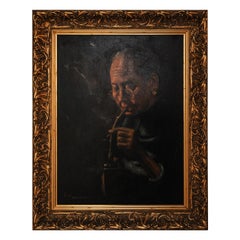

Early 20th Century Chinese Paintings and Screens
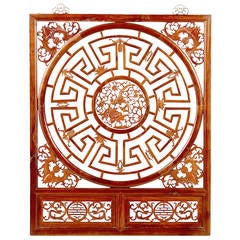
20th Century Chinese Chinese Export Paintings and Screens
Wood
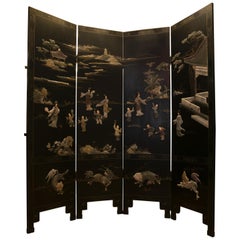
Chinese Painting 1900s For Sale on 1stDibs
How Much are Chinese Painting 1900s?
Finding the Right Paintings-screens for You
Traditional Asian paintings were often created on scrolls and folding screens. Artisans made screens that could be folded up or spread out by connecting several panels using hinges. Today, antique Asian folding screens and paintings are sophisticated decorative accents that can serve as makeshift partitions to ensure privacy.
The original folding screens were created by Chinese artists. The earliest record of screens comes from the 2nd century B.C., and surviving examples date back to the Ming dynasty. Chinese painting utilizes many of the same tools as calligraphy — these screens were crafted from wood with painted panels featuring striking art or calligraphy that told cultural stories or represented nature and life in the area.
The practice was introduced to Japan, where paintings for screens were made on paper and silk, in the 8th century. These paintings frequently feature subjects such as landscapes, animals, flowers and Buddhist religious themes. Along with screens for tea ceremonies and dance backgrounds, there were screens for use in Shinto and Buddhist temples.
In the 17th century, screens began to be imported to Europe where their popularity grew. Coco Chanel famously collected Coromandel folding screens.
Traditional Asian paintings can make a tasteful addition to any wall, and screens can be used as decoration or, in the case of larger iterations, as an aesthetic way to divide a large room. Browse the selection of antique Asian paintings and screens from a variety of styles and eras on 1stDibs.
- Can I paint my Chinese cabinet?1 Answer
 Lotus GallerySeptember 23, 2020
Yes, you can paint your Chinese cabinet, though unless it is in poor condition, doing so is usually frowned upon. You will have to sand down the surface beforehand, as most Chinese cabinets have a lacquer finish.
- 1stDibs ExpertApril 5, 2022Chinese ancestor paintings are portraits of the deceased ancestors of a Chinese family. These portraits would be done by an artist to honor and remember their ancestors, and legend had it that if these paintings were properly cared for, the ancestors would bring fortune to the family. Shop an array of Chinese ancestor paintings on 1stDibs.
- 1stDibs ExpertJune 15, 2023In the 1900s, wedding dresses typically looked like full, floor-length garments. Brides wore S-shaped corsets below the usually ruffled bodices, and most designs included large puff sleeves. On 1stDibs, shop a variety of vintage wedding dresses from some of the world's top boutiques.
- 1stDibs ExpertNovember 21, 2023In the early 1900s, engagement rings often looked like other jewelry from the Edwardian era, which coincided with the reign of King Edward VII in the United Kingdom from 1901 to 1910. Cutters used new diamond saws and jewelry lathes to refine the old European cut. The resulting stones, designed to sparkle in the light from candles and gas lamps, are beloved by connoisseurs for their inner fire and romantic glow. The invention of the oxyacetylene torch enabled jewelers to use platinum, which had previously been too challenging to work with. This technological advancement made it possible for Edwardian rings to show off lacy filigree and milgrain work. Nature also influenced jewelry in the early 1900s. Flowing and floral garland motifs were so popular that the Edwardian age is sometimes called the "garland era." Find a selection of Edwardian engagement rings on 1stDibs.
 PAGODA REDOctober 7, 2020
One of the esteemed pursuits of the traditional Chinese scholar was landscape painting, known generally as shān shuǐ. Capturing the beauty of nature within a balanced composition is considered a conceptual feat achieved only by the hand of a master.
- Which artist became famous for his series of black paintings in the late 1950s and early 1960s?1 Answer1stDibs ExpertJanuary 27, 2025Frank Stella is the artist who became famous for his series of black paintings in the late 1950s and early 1960s. These works featured bands of black paint separated by thin, precise stripes of bare canvas. At a time when contemporary painting was all about wild gestures, thick paint and formal abandon, the “Black Paintings” created a sensation. Explore a range of Frank Stella art on 1stDibs.
- 1stDibs ExpertJanuary 10, 2025The artist George Catlin's paintings from the 1800s are considered a form of artistic documentation because he depicted what he saw during his travels across North America. Catlin produced many images of Native Americans living their daily lives. In so doing, he provided a glimpse of what life was like for Indigenous people before the rapid westward expansion of settlers forcibly disrupted their traditions and culture. On 1stDibs, shop a variety of George Catlin art.
Read More
Symbols of Happiness and Rebirth Adorn This Japanese Satsuma Bowl
Decorated with white cranes and the sought-after thousand-butterflies motif, the Meiji-period vessel offers both a celebration of traditional aesthetics and a clear reflection of the era’s appetite for exquisite export pieces.
Chicago’s Pagoda Red Has a Spirited Mix of Asian Antiques and Bold New Art
For 25 years, gallerist Betsy Nathan has leveraged her keen eye and key connections to bring a unique selection of rare finds to the market.
In L.A., Gallerist JF Chen Has Long Championed Eclectic Blue-Chip Design
Now working alongside his daughter Bianca, dealer Joel Chen has presented a most covetable array of antiques, art and contemporary creations for more than 40 years.
12 Calming Spaces Inspired by Japanese Design
From cherry-blossom-adorned walls paired with glamorous lighting to wood-paneled ceilings above checkerboard-patterned chairs, these 12 spaces seamlessly blend Eastern and Western aesthetics.
Rodrigo Rivero Lake’s Mexico City Showroom Is a Museum-Worthy Trove of Spanish Colonial and Asian Antiques
The dealer and curator has spent the past 50 years amassing a collection of exceptional art, furniture and architectural elements that trace the cultural influence of the Spanish empire from Europe to the Americas and beyond.
16 Refined Asian-Inspired Interiors
These spaces exemplify how Eastern elements elevate a home's decor.