Chinese Wanli Porcelain
Antique 18th Century and Earlier Chinese Ceramics
Porcelain
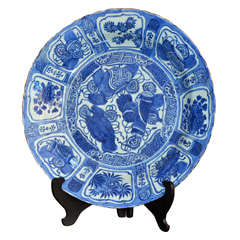

Antique 1690s Chinese Ceramics
Porcelain
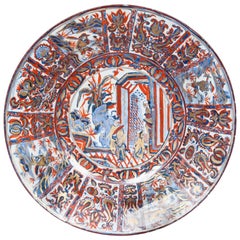
Antique 16th Century Chinese Ming Ceramics
Ceramic, Porcelain
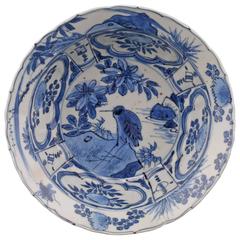
Antique Early 17th Century Chinese Chinese Export Vases
Porcelain
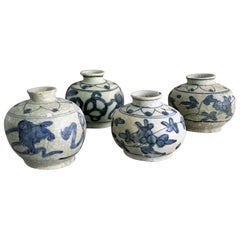
- 1
Chinese Wanli Porcelain For Sale on 1stDibs
How Much is a Chinese Wanli Porcelain?
- 1stDibs ExpertApril 5, 2022Chinese Canton porcelain is a type of decorative hand-painted ceramic ware produced during the 18th, 19th and 20th centuries in China. Its name comes from the region where it originated. You will sometimes see it referred to as Cantonese porcelain. On 1stDibs, find a selection of Chinese Canton porcelain.
- 1stDibs ExpertApril 5, 2022A Chinese porcelain pillow is a type of ceramic object produced by Chinese artisans. They normally have highly decorative rectangular designs and feature curved tops. Historically, they functioned as headrests, but today they normally serve purely as decorations. On 1stDibs, shop a wide variety of Chinese porcelain ware.
- What is Chinese porcelain called?2 Answers
 PAGODA REDOctober 7, 2020
True porcelain ware was developed in the 11th century at the imperial kilns of Jingdezhen, Jiangxi province, China. These early porcelains of the Song and Yuan dynasties are known as Qingbai or Yingqing ware, defined by a light blue-grey glaze. Later forms of Chinese porcelain include blue and white underglaze ware, Celadon ware, Jun ware, Famille Verte ware, Wucai (Five Color) ware, and Dehua ware, also known as Blanc de Chine.
 Lotus GalleryMarch 17, 2021In China, porcelain is referred to a "cíqì" 瓷器.
 - Lotus GallerySeptember 15, 2020
Chinese porcelain can usually be dated by form and decoration. However, copies and forgeries abound, so you should have an expert such as an appraiser, reputable dealer or auction house, or museum examine your porcelain to accurately date it.
- 1stDibs ExpertApril 5, 2022To identify Chinese export porcelain, first look for a mark. Most pieces made after 1891 feature a maker's mark that you can research using authoritative online resources. Identifying older porcelain ware is more difficult. A licensed appraiser can provide assistance. You'll find a range of expertly vetted Chinese export porcelain on 1stDibs.
- 1stDibs ExpertApril 5, 2022You can sell old Chinese porcelain in a few ways. You can advertise the piece locally or work with an antique shop or auction house. There are also reputable online platforms available for selling online. Shop a collection of Chinese porcelain on 1stDibs.
- 1stDibs ExpertApril 5, 2022Chinese blue and white porcelain is the most common type of decorated porcelain. Its name in Chinese is qinghua. On 1stDibs, you’ll find a collection of antique and modern Chinese blue and white porcelain from some of the world’s top sellers.
- 1stDibs ExpertApril 5, 2022Chinese Kangxi porcelain was popular because of its particular blue colorings. The blue was made using cobalt ore which was imported from Persia. As cobalt ore was a scarce ingredient, the rarity made the porcelain items highly sought after. Shop a collection of Chinese Kangxi porcelain from some of the world’s top sellers on 1stDibs.
- PAGODA REDOctober 21, 2020
For thousands of years, China’s court-sponsored porcelain industry has been at the forefront of technical innovation and aesthetic refinement. Exquisite finishes and precision of form gave China an international reputation for fine ceramic wares. Age, shape, glaze, motif, and reign mark are all factors contributing to the value of a ceramic piece, indicative of the maker and the dynastic reign under which the object was created.
- 1stDibs ExpertAugust 20, 2024To identify Chinese porcelain marks, consult trusted online resources. Most markings on Chinese porcelain consist of four to six characters, and the last two often represent when a piece was produced. Since there is a lot of variation in the markings, looking at images shared on trustworthy websites is the best way to make an identification. Alternatively, you can use the services of a certified appraiser or knowledgeable antique dealer. On 1stDibs, explore a wide range of Chinese porcelain.
- Lotus GallerySeptember 23, 2020
The best way to know is to take it to an expert, such as an appraiser, reputable dealer or auction house, or museum
- 1stDibs ExpertMarch 22, 2022Chinese blue and white porcelain is called qinghua, pronounced “CHING-hwa.” Artisans first began producing the porcelain during the Tang and Song dynasties ranging from 609 to 1279. However, the techniques the pottery is most well known for weren't developed until the subsequent Ming era, which lasted until 1644. You'll find a collection of Chinese porcelain on 1stDibs.