Dansk Tapestries
Recent Sales
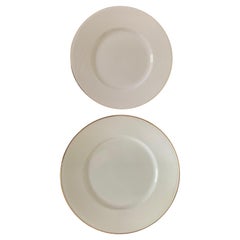
Vintage 1980s Japanese Minimalist Dinner Plates
Gold

Dansk for sale on 1stDibs
Ironically, Dansk Designs, the tableware company practically synonymous with Danish design (“Dansk,” in fact, translates to “Danish”), was the brainchild of an American couple, Ted and Martha Nierenberg.
The Nierenbergs, who founded the business in 1954, initially worked out of the garage of their Great Neck, Long Island, home and marketed their serveware, tables, decorative objects and other products largely in the United States. But they had a secret weapon: Jens Quistgaard.
After demonstrating artistic talent at a young age, the Copenhagen native was gifted a forge and anvil so that he could work in his mother’s kitchen. Quistgaard built toys, jewelry and hunting knives under his father’s tutelage. Later, he spent years learning from local artisans how to produce wood, metal, ceramic and glass models. Quistgaard’s career path solidified during his apprenticeship as a silversmith with legendary Danish silver firm Georg Jensen.
The Nierenbergs discovered the sculptor and designer on their honeymoon, which they’d spent traveling through Europe searching for top-quality goods that might form the basis of a business.
After they hired Quistgaard and launched Dansk, their products swiftly came to epitomize the best of accessible Scandinavian design for mid-century American consumers, who fell for the firm’s staved-teak salad bowls, colorful casseroles and stainless-steel flatware, all of which managed to look handmade despite being mass-produced.
The long-distance relationship flourished for 30 years, during which millions of Quistgaard pieces were manufactured in the company's factories.
The designs for Quistgaard’s Købenstyle line and other collections during the mid-1950s were revolutionary, with bowls built like barrels and charming, lightweight monochrome tableware in enameled steel. Quistgaard’s work married function with striking, sophisticated form. He utilized exceptional materials in the creation of his coveted cookware, barware and serving pieces, opting for warm teak and exotic woods and reintroducing steel as a go-to option for kitchen wares.
Quistgaard’s postwar-era Scandinavian modernist work is still exceedingly popular in living rooms, dining rooms and kitchens in the United States, Europe and Japan, particularly in the homes of mid-century design enthusiasts.
Find vintage Dansk Designs furniture and decorative objects on 1stDibs.
A Close Look at Minimalist Furniture
A revival in the popularity of authentic Minimalist furniture is rooted in history while reflecting the needs and tastes of the 21st century. Designer Ludwig Mies van der Rohe’s aphorism that “less is more” influenced the evolution of 20th-century interiors with an emphasis on function and order. This was a shift from the 19th century, with its lavish Victorian decorating, and was spread around the world through design styles including Bauhaus and brutalism.
Yet Minimalism was present in furniture design long before the clean lines of modernism, such as in the simple and elegant utility of Shaker furniture. Although the Minimalist art movement of the 1960s and ’70s had little crossover with furniture design, artist Donald Judd was inspired by the Shakers in creating his own spare daybeds and tables from sturdy wood. (Judd, whose advocacy of symmetry also informed his architectural projects, furnished his Manhattan loft with unassuming but poetic works by iconic modernist designers such as Gerrit Rietveld and Alvar Aalto.)
Understatement rather than ornamentation and open space instead of clutter are central themes for a Minimalist living room and bedroom. As opposed to Maximalism, the focus for Minimalist furniture and decor is on simplicity and considering the design and purpose of every object.
Furnishings are usually made in neutral or monochrome colors and pared down to their essentials — think nesting coffee tables, sectional sofas and accent pieces such as ottomans. And Minimalist ceramics can help achieve a decor that is both timeless and of the moment. The organic textures and personalization of handmade craftsmanship associated with these works have served as a sort of anti-Internet to screen-weary decorators. That said, while the thoughtful ergonomics of Scandinavian modern furniture, with its handcrafted teak frames, are at home in Minimalist spaces, so are the quietly striking pieces by Japanese designer Naoto Fukasawa that employ industrial materials like stainless steel, aluminum and plastic.
Minimalist furniture is not for making flashy statements; it boasts subdued appeal and excels at harmonizing with any room. And, as it encompasses many different movements and eras of design, it also never goes out of style, owing to its tasteful refinement.
Find a collection of Minimalist tables, seating, lighting and more furniture on 1stDibs.
Finding the Right Dinner-plates for You
Set the mood when you’re setting the table. The right antique and vintage dinner plates for the meals in your home can truly elevate the dining experience.
We haven’t had our own plate at dinner for very long. It wasn’t until the middle of the 19th century in Europe that individual dinner plates had become the norm, replacing the platters that diners had shared before them. Innovations at the dining table are believed to have been introduced by Italian noblewoman Catherine de’ Medici, who, when she married King Henry II of France in 1533, brought with her decorative table adornments for meals and fine tableware such as silver forks, replacing the fingers and knives utilized during dinner before her arrival. Italy was a bit faster on table settings, and, thanks to Catherine, tableware such as dinner plates would also replace the wooden trenchers and flat slabs of days-old bread that preceded them.
Today, while enthusiasts of mid-century modern furnishings might pine for vintage mismatched dinner plates — a mix of old and new can be refreshing — presenting ceramic vessels, glassware and decorative centerpieces that matched was once actually part of the point as setting the table became more refined during the late 19th and early 20th centuries. And as Fornasetti dinner plates and Chinese porcelain tableware have long held weight as collector’s items and status symbols, your dinner dishes haven’t ever really been merely functional. From antique metal dishes and ornamental earthenware designed by celebrated English ceramics makers Wedgwood, dinner plates are statement-making works that bring elegance and likely stir conversation at your table.
Entertaining is an art form, and the kitchen bar island and dining room table in your space are cherished gathering places where families and friends convene and grow closer over good meals. Browse an extensive collection of antique and vintage dinner plates to pair with these important events today on 1stDibs.