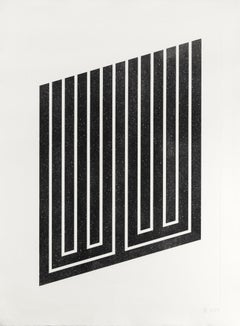
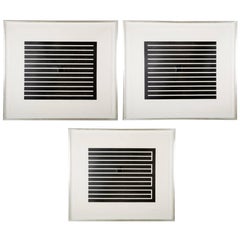
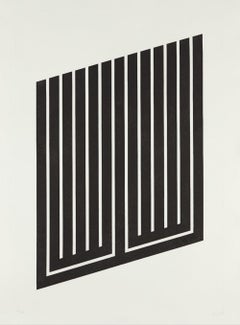
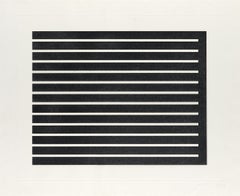
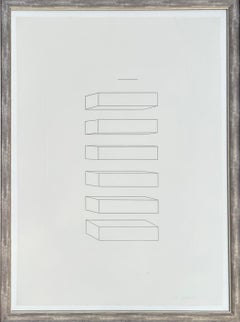
Donald Judd Aquatint
Vintage 1970s American Minimalist Prints
Paper
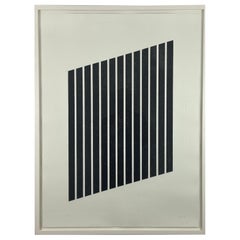

1970s Minimalist Abstract Prints
Aquatint
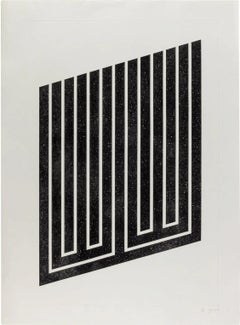
1980s Minimalist Abstract Prints
Paper, Etching, Aquatint
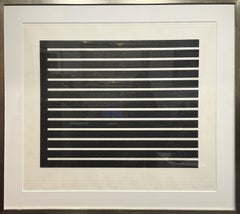
20th Century Abstract Prints
Aquatint
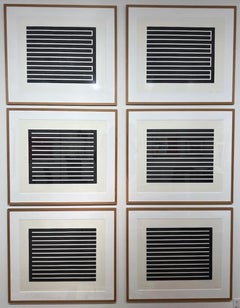
Late 20th Century Contemporary Abstract Prints
Aquatint
Recent Sales
Vintage 1980s American Minimalist Prints
Paper
1970s Contemporary Abstract Prints
Etching, Aquatint
1980s Contemporary Abstract Prints
Etching, Aquatint
1970s Contemporary Abstract Prints
Etching, Aquatint
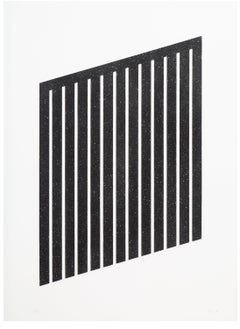
20th Century Contemporary Abstract Prints
Aquatint, Paper
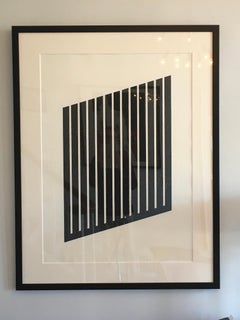
1970s Contemporary Abstract Prints
Aquatint
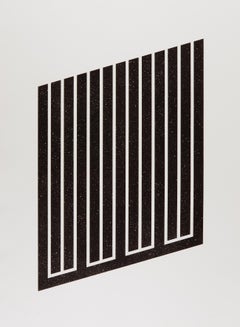
1980s Minimalist Abstract Prints
Aquatint
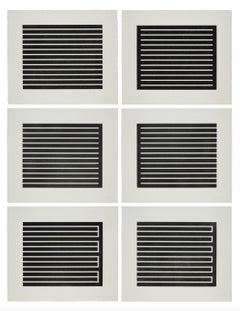
1970s Minimalist Abstract Prints
Aquatint
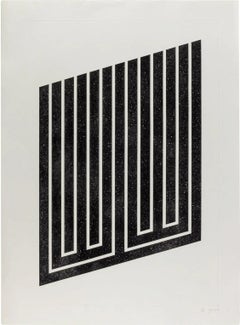
Vintage 1970s American Prints
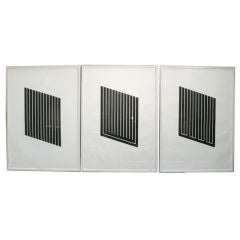
21st Century and Contemporary Contemporary Abstract Prints
Aquatint
People Also Browsed
21st Century and Contemporary Spanish Art Nouveau Doors and Gates
Brass
1990s Minimalist Abstract Prints
Vellum, Lithograph
Mid-20th Century Rustic Stools
Oak
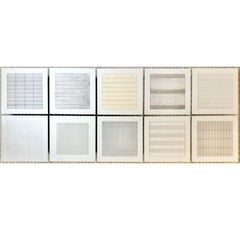
20th Century Abstract Prints
Lithograph
Early 20th Century Spanish Baroque Console Tables
Walnut
2010s South African Minimalist Pedestals
Hardwood
2010s Contemporary Landscape Paintings
Canvas, Oil
Early 20th Century French Planters and Jardinieres
Oak
1970s Abstract Abstract Prints
Lithograph
1970s Abstract Geometric Abstract Prints
Screen
21st Century and Contemporary British Jacobean Console Tables
Oak, Yew
1970s Abstract Geometric Abstract Prints
Screen
2010s Contemporary Color Photography
Photographic Paper, C Print, Color, Silver Gelatin
1970s Minimalist Abstract Prints
Etching
Antique 1880s American Victorian Windsor Chairs
Brass, Steel
Vintage 1940s Swedish Art Deco Sofas
Velvet, Birch
Donald Judd for sale on 1stDibs
Many consider Donald Judd one of the most influential artists of the 20th century. Three decades after death, his ideas still hold a strong influence in the fields of architecture, interior design, criticism and art.
Judd was the voice of minimalism, rejecting through his art expressions of metaphysical and metaphorical symbolism. He sought to convey the literal, physical characteristics of each project he worked on. Judd's fascination with hard-edged imagery — especially squares and boxes — is prevalent through many of his sculptures, prints and paintings, and perfectly expresses his pragmatic artistic vision.
Even though he was a minimalist in practice, Judd appreciated various forms and styles of art, with a special fondness for Abstract Expressionism. He spent many years writing as an art critic and spoke extensively on behalf of artist culture.
Born in Excelsior Springs, Missouri, Judd joined the U.S. Army in 1946 and served in Korea until 1947. After returning home, he attended Columbia University, where he studied art history and philosophy while concurrently painting at the Art Students League.
Judd continued to paint until the early 1960s, when he abandoned the practice entirely in favor of sculpture. He found painting to be too illusionary and preferred the tactility of working in three dimensions.
As a strong proponent for art permanency, Judd purchased and refurbished many properties in Manhattan from the 1970s to the 1990s — primarily for the purpose of providing space to permanently hold and display his work and that of his colleagues. He obtained buildings throughout the downtown Cast Iron District. Other artists with the means to do so followed suit and helped develop the area, which is now known as SoHo — world-famous for cultivating artistic culture. Judd headed other political actions aimed at fostering artistic community and maintaining a healthy environment throughout New York City, especially in Manhattan.
In 1981, Judd moved with his wife, Julie Finch, to Marfa, Texas, where they established the Chinati Foundation. The 340-acre foundation site holds many of his own permanent installations and those of a number of his contemporaries, including American artists Dan Flavin, Carl Andre and John Wesley, as well as Russian artist Ilya Kabakov and many others.
Judd died from lymphoma in 1994, but a magnificent body of his work remains for all to relish for generations to come.
On 1stDibs, find a selection of Donald Judd abstract prints, interior prints and sculptures.
Finding the Right Abstract-prints-works-on-paper for You
Explore a vast range of abstract prints on 1stDibs to find a piece to enhance your existing collection or transform a space.
Unlike figurative paintings and other figurative art, which focuses on realism and representational perspectives, abstract art concentrates on visual interpretation. An artist may use a single color or simple geometric forms to create a world of depth. Printmaking has a rich history of abstraction. Through materials like stone, metal, wood and wax, an image can be transferred from one surface to another.
During the 19th century, iconic artists, including Edvard Munch, Paul Cézanne, Georgiana Houghton and others, began exploring works based on shapes and colors. This was a departure from the academic conventions of European painting and would influence the rise of 20th-century abstraction and its pioneers, like Pablo Picasso and Piet Mondrian.
Some leaders of European abstraction, including Franz Kline, were influenced by the gestural shapes of East Asian calligraphy. Calligraphy interprets poetry, songs, symbols or other means of storytelling into art, from works on paper in Japan to elements of Islamic architecture.
Bold, daring and expressive, abstract art is constantly evolving and dazzling viewers. And entire genres have blossomed from it, such as Color Field painting and Minimalism.
The collection of abstract art prints on 1stDibs includes etchings, lithographs, screen-prints and other works, and you can find prints by artists such as Joan Miró, Alexander Calder and more.