Earings Garrard
Recent Sales
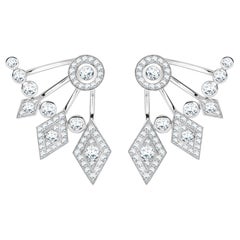
21st Century and Contemporary British Modern Stud Earrings
White Diamond, Diamond, 18k Gold, White Gold

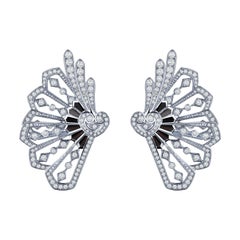
21st Century and Contemporary British Modern More Earrings
Diamond, White Diamond, Onyx, 18k Gold, White Gold
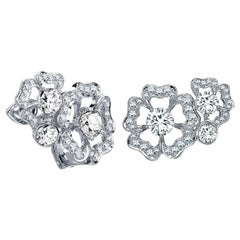
21st Century and Contemporary British Modern Lever-Back Earrings
Diamond, White Diamond, 18k Gold, White Gold
21st Century and Contemporary British Modern More Earrings
White Diamond, Sapphire, Diamond, 18k Gold, White Gold, Gold
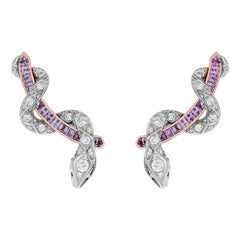
21st Century and Contemporary British Modern More Earrings
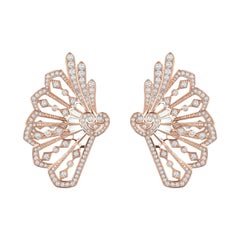
Diamond, White Diamond, 18k Gold, Rose Gold
Garrard Co. Ltd. for sale on 1stDibs
The first official Crown Jeweler for the British royal family, Garrard Co. Limited has crafted iconic and historically celebrated rings, watches, necklaces and other jewelry for centuries.
Master silversmith George Wickes founded Garrard in 1735 and quickly gained a regal platform with patronage from Frederick, Prince of Wales. The company underwent a range of name changes and shifts in leadership over the years, with Robert Garrard becoming a partner in 1792. He assumed sole control of the firm a decade later and eventually passed the company down to his sons — James, Sebastian and Robert Garrard II — where it would remain in the Garrard family until 1946 with the death of Robert’s great-grandson.
Garrard Co. Ltd registered its current name in 1909 and, despite a temporary merger and relocation with Asprey, the firm still operates out of its original location on Albermarle St. in London. It was acquired by American private equity firm Yucaipa Companies in 2006.
Garrard created silver, tableware and decorative objects for the royal family as well as the Crown Jewels for a range of coronations beginning with King Edward VII’s in 1902. The esteemed luxury house created Queen Victoria's Small Diamond Crown, which featured colorless stones and was suitable to be worn while she mourned the passing of her last husband, Prince Albert. Later, for the coronation of Queen Elizabeth II in 1953, Garrard provided a pair of gold armlets. The company’s 1893 Girls of Great Britain and Ireland tiara adorns Queen Elizabeth II on British banknotes.
Among Garrard’s best known works is undoubtedly Princess Diana’s engagement ring — a 12-carat blue sapphire surrounded by 14 diamonds, set in 18-karat white gold. Unlike most royal engagement rings, the one Princess Diana chose wasn’t a one-of-a-kind piece commissioned from the Crown Jeweler, but rather a catalog offering for anyone who could swing the $60,000 price tag. As a result, this was a matter of controversy within the royal family. It is now Kate Middleton’s ring.
Garrard is committed to ethical sourcing and sustainable practices. Today, its all-female design team — led by creative director Sara Prentice — continues to merge ageless techniques with modern technology to uphold the firm’s legacy in the creation of precious handcrafted engagement rings, brooches and other adornments.
While Garrard and the royal family parted ways in 2007, the house still produces pieces that captivate new generations of jewelry wearers all over the world, just as it has for hundreds of years.
Find antique Garrard Co. Ltd jewelry on 1stDibs.
A Close Look at Modern Jewelry
Rooted in centuries of history of adornment dating back to the ancient world, modern jewelry reimagines traditional techniques, forms and materials for expressive new pieces. As opposed to contemporary jewelry, which responds to the moment in which it was created, modern jewelry often describes designs from the 20th to 21st centuries that reflect movements and trends in visual culture.
Modern jewelry emerged from the 19th-century shift away from jewelry indicating rank or social status. The Industrial Revolution allowed machine-made jewelry using electric gold plating, metal alloys and imitation stones, making beautiful jewelry widely accessible. Although mass production deemphasized the materials of the jewelry, the vision of the designer remained important, something that would be furthered in the 1960s with what’s known as the “critique of preciousness.”
A design fair called the “Exposition Internationale des Arts Décoratifs et Industriels Modernes” brought global attention to the Art Deco style in 1925 and gathered a mix of jewelry artists alongside master jewelers like Van Cleef Arpels, Mauboussin and Boucheron. Art Deco designs from Cartier and Van Cleef Arpels unconventionally mixed gemstones like placing rock crystals next to diamonds while borrowing motifs from eclectic sources including Asian lacquer and Persian carpets. Among Cartier’s foremost design preoccupations at the time were high-contrast color combinations and crisp, geometric forms and patterns. In the early 20th century, modernist jewelers like Margaret De Patta and artists such as Alexander Calder — who is better known for his kinetic sculptures than his provocative jewelry — explored sculptural metalwork in which geometric shapes and lines were preferred over elaborate ornamentation.
Many of the innovations in modern jewelry were propelled by women designers such as Wendy Ramshaw, who used paper to craft her accessories in the 1960s. During the 1970s, Elsa Peretti created day-to-night pieces for Tiffany Co. while designers like Lea Stein experimented with layering plastic, a material that had been employed in jewelry since the mid-19th century and had expanded into Bakelite, acrylics and other unique materials.
Find a collection of modern watches, bracelets, engagement rings, necklaces, earrings and other jewelry on 1stDibs.
The Legacy of Diamond in Jewelry Design
Antique diamond rings, diamond tiaras and dazzling vintage diamond earrings are on the wish lists of every lover of fine jewelry. And diamonds and diamond jewelry are primarily associated with storybook engagements and red-carpet grand entrances — indeed, this ultra-cherished gemstone has a dramatic history on its hands.
From “A Diamond Is Forever” to “Diamonds Are a Girl’s Best Friend,” pop culture has ingrained in our minds that diamonds are the most desired, the most lasting and the most valuable gemstone. But what makes the diamond so special? Each stone — whether it’s rubies, sapphires or another stone — is unique and important in its own right. April babies might claim diamonds for themselves, but just about everyone wants this kind of sparkle in their lives!
There are several factors that set diamonds apart from other stones, and these points are important to our gem education.
Diamonds are minerals. They are made up of almost entirely of carbon (carbon comprises 99.95 percent; the remainder consists of various trace elements). Diamonds are the hardest gemstones, ranking number 10 on the Mohs Hardness Scale. Even its name, diamond, is rooted in the Greek adamas, or unconquerable. The only object that can scratch a diamond is another diamond. Diamonds are formed deep within the earth at very high temperatures (1,652–2,372 degrees Fahrenheit at depths between 90 and 120 miles beneath the earth’s surface) and are carried up by volcanic activity. Diamonds are quite rare, according to the Gemological Institute of America, and only 30 percent of all the diamonds mined in the world are gem quality.
In the 1950s, the Gemological Institute of America developed the 4Cs grading system to classify diamonds: clarity, color, cut and carat weight. Not all diamonds are created equal (there are diamonds, and then there are diamonds). The value of the diamond depends on the clarity (flawless diamonds are very rare but a diamond's value decreases if there are many blemishes or inclusions), color (the less color the higher the grade), cut (how the diamond’s facets catch the light, certain cuts of diamonds show off the stone better than others) and carat weight (the bigger, the better).
When you start shopping for a diamond engagement ring, always prioritize the cut, which plays the largest role in the diamond's beauty (taking the time to clean your diamond ring at least every six months or so plays a role in maintaining said beauty). And on 1stDibs, a range of buying guides can be found for those in the market for antique engagement rings, vintage engagement rings or Art Deco engagement rings.
Shop antique and vintage diamond rings, diamond necklaces and other extraordinary diamond jewelry on 1stDibs.
Finding the Right Earrings for You
In the United States, ear piercing didn’t really become popular until the 1950s and ‘60s, but our desire for a dazzling pair of vintage earrings has deeper roots than that. In fact, wearing earrings actually goes back thousands of years, and you can find many tangible connections between now and then in how we continue to talk about these treasured accessories.
Women wore ornamental earrings — studs and hoops at the very least — in Ancient Egypt, which is home to mines that are among the earliest sources of emeralds in the world. Emerald earrings are highly prized today, and their quality lies in their rich, saturated color. The highest-quality emeralds are green or bluish-green. Earrings worn by the affluent in early Roman civilizations were set with precious stones such as diamonds and pearls, and a clean-looking pop of pearl on the front of the lobe is as timeless as ever. Hoop earrings are imbued with symbolism and cultural significance for many, and on view in the Metropolitan Museum of Art’s Ancient Near Eastern Art Gallery is a pair of simple gold hoops from Mesopotamia dating to between 2600 and 2500 B.C.
Today, ear piercing is very popular all over the world, and, as a result, it is difficult to overstate how much everyone pines for a good pair of earrings — modernist drop earrings, glamorous Victorian hoops, geometrically complex chandelier earrings, you name it. Sure, jewelry trends and the fashion darlings of social media come and go, but earrings have a staying power that seems impenetrable: The still-strong love affair between British royals and Cartier earrings is more than a century old, glossy 1970s hoops from legacy houses such as Bulgari and Van Cleef Arpels remain the statement makers they’ve always been and although people have been stacking earrings for many moons, the allure of an expertly mismatched stack of charms and studs still feels fresh and new.
While there is no shortage of modern earring designs to choose from, the classics, like coral earrings, Art Deco–style earrings and diamond drop earrings are still heavy hitters. On 1stDibs, find a wide range of antique, new and vintage earrings today.