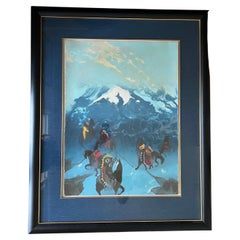
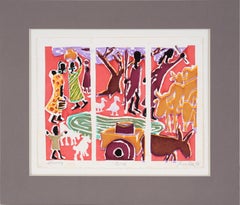
Earl Bliss
Late 20th Century American Native American Prints
Paper

People Also Browsed
20th Century Impressionist Landscape Paintings
Oil
1930s Post-Impressionist Landscape Paintings
Canvas, Oil
Early 20th Century French Art Nouveau Table Lamps
Alabaster, Bronze
20th Century Post-Impressionist Landscape Paintings
Canvas, Oil
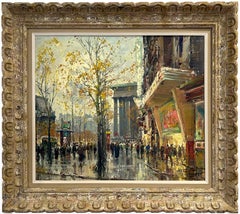
Mid-20th Century Still-life Paintings
Canvas, Oil
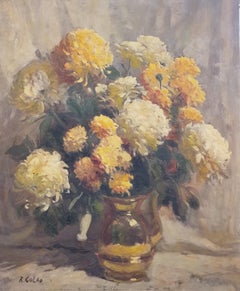
Mid-20th Century Post-Impressionist Landscape Paintings
Canvas, Oil
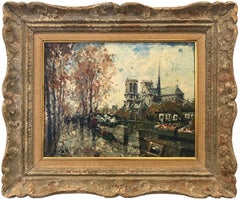
Vintage 1920s Barbizon School Paintings
Masonite
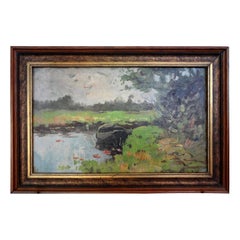
20th Century Realist Landscape Paintings
Oil, Canvas
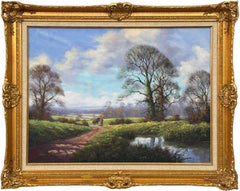
20th Century English School Landscape Paintings
Oil, Board
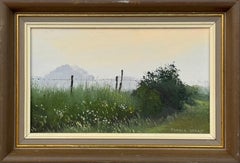
Late 20th Century Impressionist Figurative Prints
Screen
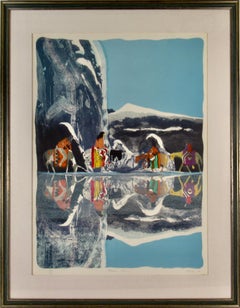
1960s American Impressionist Landscape Paintings
Canvas, Oil, Cardboard
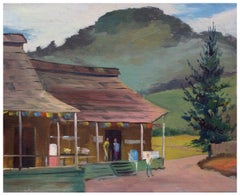
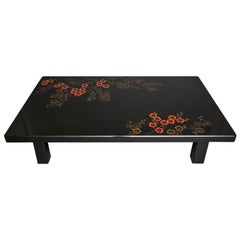
Vintage 1930s Japanese Furniture
Lacquer
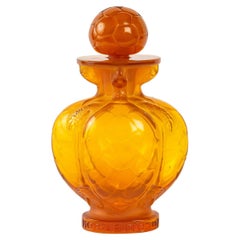
Vintage 1950s French Art Deco Bottles
Blown Glass
Early 2000s Country Paintings
Canvas, Wood, Paint
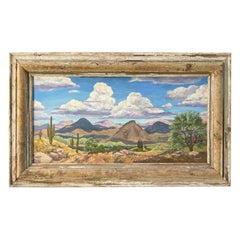
20th Century English School Landscape Paintings
Oil, Board
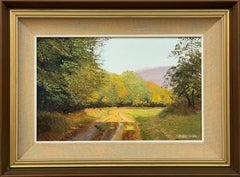
1980s American Impressionist Figurative Prints
Paper, Ink, Screen
A Close Look at Native-american Furniture
Native American broadly describes any Indigenous people in North America and encompasses hundreds of tribes and groups, all with distinct cultures. Native American–style furniture and decor likewise varies widely, from pieces created by Indigenous people to those appropriated by non-native designers.
Indigenous furniture’s rich heritage includes the bentwood boxes of the Northwest Coast carved from cedar for storing household or ceremonial objects. Generations of Native American people have made baskets for holding household items, with those in the Northeast using sweetgrass and those in the Southeast using pine needles and wicker. Artisans in the Plateau region wove watertight pieces like cradles from plant materials. Although these objects were intricately made, they were usually utilitarian rather than decorative.
The colonization of North America and the removal of Indigenous people from their lands led to the suppression of these practices. Many styles that used Native American motifs — such as Southwestern style, which was heavily influenced by the geometric patterns of Navajo textiles — have historically not involved Indigenous creators and, instead, have taken their traditions without their tribal context.
When decorating a home with Native American–style furniture, it is important to do so respectfully, by understanding the origins of motifs and objects and examining who profits from their sale. There are now Indigenous-led companies, such as Cherokee designer Cray Bauxmont-Flynn’s Amatoya and Totem House Design, promoting Indigenous work in furniture and home decor. Supporting Indigenous artists and artisans is essential to confronting the still pervasive issue of cultural appropriation in design.
Find a collection of Native American living room furniture, folk art, rugs and carpets, decorative objects and other items on 1stDibs.
Finding the Right Prints for You
Prints are works of art produced in multiple editions. Though several copies of a specific artwork can exist, collectors consider antique and vintage prints originals when they have been manually created by the artist or are “impressions” that are part of the artist’s intent for the work.
Modern artists use a range of printmaking techniques to produce different types of prints such as relief, intaglio and planographic. Relief prints are created by cutting away a printing surface to leave only a design. Ink or paint is applied to the raised parts of the surface, and it is used to stamp or press the design onto paper or another surface. Relief prints include woodcuts, linocuts and engravings.
Intaglio prints are the opposite of relief prints in that they are incised into the printing surface. The artist cuts the design into a block, plate or other material and then coats it with ink before wiping off the surface and transferring the design to paper through tremendous pressure. Intaglio prints have plate marks showing the impression of the original block or plate as it was pressed onto the paper.
Artists create planographic prints by drawing a design on a stone or metal plate using a grease crayon. The plate is washed with water, then ink is spread over the plate and it adheres to the grease markings. The image is then stamped on paper to make prints.
All of these printmaking methods have an intricate process, although each can usually transfer only one color of ink. Artists use separate plates or blocks for multiple colors, and together these create one finished work of art.
Find prints ranging from the 18th- and 19th-century bird illustrations by J.C. Sepp to mid-century modern prints, as well as numerous other antique and vintage prints at 1stDibs. Browse the collection today and read about how to arrange wall art in your space.