Escultura Art Deco
20th Century French Art Deco Animal Sculptures
Bronze


Vintage 1920s French Art Deco Animal Sculptures
Ceramic
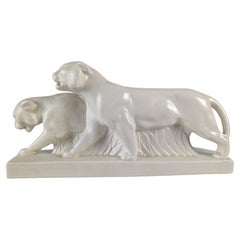
Vintage 1930s Italian Art Deco Figurative Sculptures
Art Glass, Blown Glass
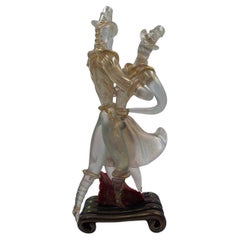
20th Century Mexican Art Deco Photography
Wood, Mahogany
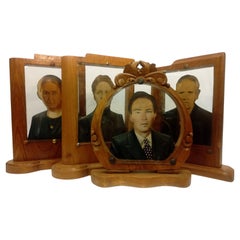
Recent Sales
Antique Early 1900s Spanish Art Deco Animal Sculptures
Metal
People Also Browsed
2010s Danish Scandinavian Modern Dining Room Chairs
Oak

2010s Mexican Brutalist Contemporary Art
Wood
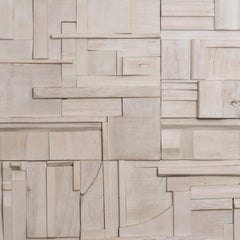
2010s American Organic Modern End Tables
Maple
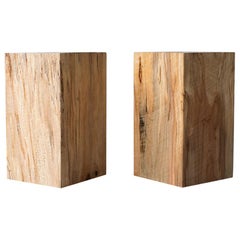
Antique 19th Century French Belle Époque Animal Sculptures
Bronze
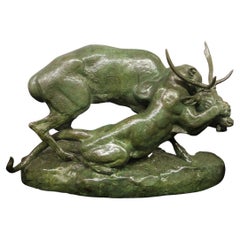
21st Century and Contemporary Italian Modern Bottles
Glass
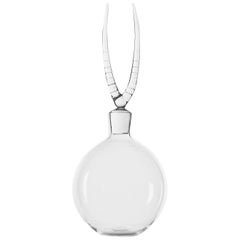
Antique Mid-19th Century English High Victorian Taxidermy
Other
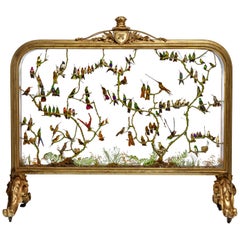
21st Century and Contemporary American Edwardian Books
Gold Leaf

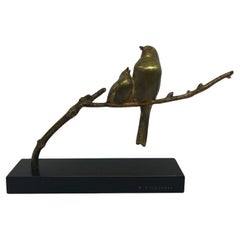
Mid-20th Century French Art Deco Animal Sculptures
Marble, Bronze
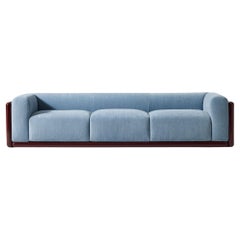
2010s Italian Mid-Century Modern Armchairs
Metal
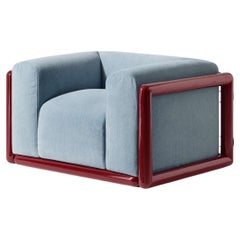
2010s Italian Mid-Century Modern Armchairs
Metal
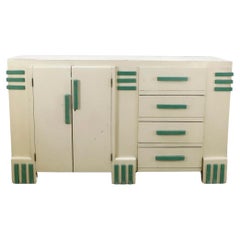
Vintage 1930s Mexican Art Deco Credenzas
Pine
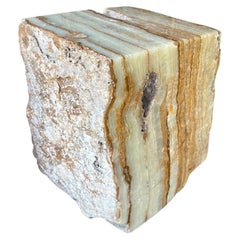
21st Century and Contemporary Organic Modern Side Tables
Onyx, Marble
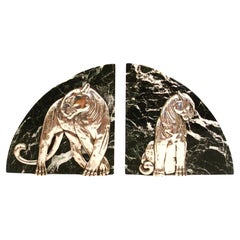
Early 20th Century French Art Deco Bookends
Marble, Bronze
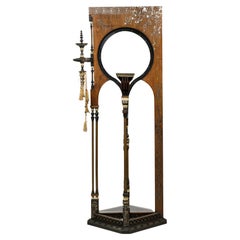
20th Century Italian Art Nouveau Hat Racks and Stands
Metal, Silver
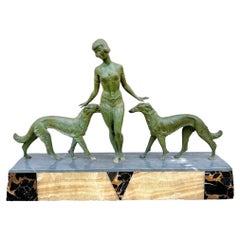
Vintage 1920s Figurative Sculptures
Bronze
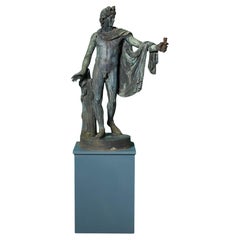
Antique Late 19th Century Italian Neoclassical Figurative Sculptures
Metal, Bronze
A Close Look at Art-deco Furniture
Art Deco furniture is characterized by its celebration of modern life. More than its emphasis on natural wood grains and focus on traditional craftsmanship, vintage Art Deco dining chairs, tables, desks, cabinets and other furniture — which typically refers to pieces produced during the 1920s and 1930s — is an ode to the glamour of the “Roaring Twenties.”
ORIGINS OF ART DECO FURNITURE DESIGN
- Emerged in the 1920s
- Flourished while the popularity of Art Nouveau declined
- Term derives from 1925’s Exposition Internationale des Arts Décoratifs et Industriels Modernes (International Exhibition of Modern Decorative and Industrial Arts) in Paris, France
- Informed by Ancient Egypt, Cubism, Futurism, Louis XVI, De Stijl, modernism and the Vienna Secession; influenced Streamline Moderne and mid-century modernism
CHARACTERISTICS OF ART DECO FURNITURE DESIGN
- Bold geometric lines and forms, floral motifs
- Use of expensive materials such as shagreen or marble as well as exotic woods such as mahogany, ebony and zebra wood
- Metal accents, shimmering mirrored finishes
- Embellishments made from exotic animal hides, inlays of mother-of-pearl or ivory
ART DECO FURNITURE DESIGNERS TO KNOW
VINTAGE ART DECO FURNITURE ON 1STDIBS
Few design styles are as universally recognized and appreciated as Art Deco. The term alone conjures visions of the Roaring Twenties, Machine Age metropolises, vast ocean liners, sleek typography and Prohibition-era hedonism. The iconic movement made an indelible mark on all fields of design throughout the 1920s and ’30s, celebrating society’s growing industrialization with refined elegance and stunning craftsmanship.
Widely known designers associated with the Art Deco style include Émile-Jacques Ruhlmann, Eileen Gray, Maurice Dufrêne, Paul Follot and Jules Leleu.
The term Art Deco derives from the name of a large decorative arts exhibition held in Paris in 1925. “Art Deco design” is often used broadly, to describe the work of creators in associated or ancillary styles. This is particularly true of American Art Deco, which is also called Streamline Moderne or Machine Age design. (Streamline Moderne, sometimes known as Art Moderne, was a phenomenon largely of the 1930s, post–Art Nouveau.)
Art Deco textile designers employed dazzling floral motifs and vivid colors, and while Art Deco furniture makers respected the dark woods and modern metals with which they worked, they frequently incorporated decorative embellishments such as exotic animal hides as well as veneers in their seating, case pieces, living room sets and bedroom furniture.
From mother-of-pearl inlaid vitrines to chrome aviator chairs, bold and inventive works in the Art Deco style include chaise longues (also known as chaise lounges) and curved armchairs. Today, the style is still favored by interior designers looking to infuse a home with an air of luxury and sophistication.
The vintage Art Deco furniture for sale on 1stDibs includes dressers, coffee tables, decorative objects and more.
Finding the Right Sculptures for You
Styling your home with vintage, new and antique sculptures means adding a touch that can meaningfully transform the space. By introducing a sculptural work as a decorative finish to any interior, you’re making a statement, whether you tend toward the dramatic or prefer to keep things casual with modest, understated art.
A single, one-of-a-kind three-dimensional figurative sculpture mounted on your dining room wall is a guaranteed conversation piece, while a trio of abstract works arranged on your living room bookshelves can add spontaneity to the collection of first-edition novels or artist monographs you’re displaying as well as draw attention to them. Figurative sculptures are representational works that portray a specific person, animal or object. And while decorating with busts, which are sculpted or cast figurative works, hasn’t exactly topped the list of design trends every year, busts are back. According to designer Timothy Corrigan, “They give humanity in a way that a more abstract sculpture can’t give.” Abstract sculptures, on the other hand, are not meant to show something specific. Instead, they invoke a mood or scene without directly stating what they are portraying.
Busts made of stone or metal may not seem like a good fit for your existing decor. Fortunately, there are many ways for a seemingly incongruous piece to fit in with the rest of your room’s theme. You can embrace a dramatic piece by making it the focal point of the room, or you can choose to incorporate several elements made out of the same material to create harmony in your space. If an antique or more dramatic piece doesn’t feel like you, why not opt for works comprising plastic, fiberglass or other more modern materials?
When incorporating sculpture into the design of your home — be it the playful work of auction hero and multimedia visionary KAWS, contemporary fiber art from Connecticut dealer browngrotta arts or still-life sculpture on a budget — consider proper lighting, which can bring out the distinctive aspects of your piece that deserve attention. And make sure you know how the size and form of the sculpture will affect your space in whole. If you choose a sculpture with dramatic design elements, such as sharp angles or bright colors, for example, try to better integrate this new addition by echoing those elements in the rest of your room’s design.
Get started on decorating with sculpture now — find figurative sculptures, animal sculptures and more on 1stDibs today.
- What was the Art Deco movement?1 Answer1stDibs ExpertMay 30, 2024The Art Deco movement was a decorative style popular during the 1920s and ’30s. Few design styles are as universally recognized and appreciated as Art Deco. The term alone conjures visions of the Roaring Twenties, Machine Age metropolises, vast ocean liners, sleek typography and Prohibition-era hedonism. The iconic movement made an indelible mark on all fields of design, celebrating society's growing industrialization with refined elegance and stunning craftsmanship. Widely known designers associated with the Art Deco style include Émile-Jacques Ruhlmann, Eileen Gray, Maurice Dufrêne, Paul Follot and Jules Leleu. The term Art Deco derives from the name of a large decorative arts exhibition held in Paris in 1925. On 1stDibs, shop a wide range of Art Deco furniture and decorative objects.
- What is an art deco watch?1 Answer1stDibs ExpertApril 5, 2022An art deco watch is defined by its geometric case, which is either circular or rectangular. The watch style was highly popular between 1920 and 1950, and is still sought after today. You’ll find a collection of art deco watches from some of the world’s top sellers on 1stDibs
- What is art deco jewelry?1 Answer1stDibs ExpertFebruary 22, 2021Art Deco jewelry was popular during the design movement of the 1920s and 30s. Art Deco jewelry is typically characterized by geometric patterns and gemstones of contrasting colors.
- What is the history of Art Deco?1 Answer1stDibs ExpertMarch 25, 2024The history of Art Deco begins in the early 20th century.
Art Deco emerged as a global design style around the start of World War I, during the last years of Art Nouveau's popularity. The style conjures visions of the Roaring Twenties, Machine Age metropolises, vast ocean liners, sleek typography and Prohibition-era hedonism. Its hallmarks include the use of geometric designs influenced by Cubism. Major discoveries of Egyptian tombs during the era also influenced the movement.
The term Art Deco derives from the name of a large decorative arts exhibition, the Exposition Internationale des Arts Décoratifs et Industriels Modernes, held in Paris in 1925. After World War II, tastes shifted toward more functional, less ornate modernism, but today, the Art Deco style is still favored for its luxurious sophistication. On 1stDibs, shop a large selection of vintage Art Deco furniture. - How do I identify Art Deco?1 Answer1stDibs ExpertApril 5, 2022To identify Art Deco, look for the characteristics of the period. Furniture produced at the time is generally lacquered metal with a mirror-like glossy finish. Wooden items should be an exotic wood. Most items feature symmetrical designs, and geometric forms were popular motifs during the period. In addition, Art Deco often shows the influence of Hellenistic, Egyptian and Asian designs. Shop a variety of Art Deco furniture and decorative objects on 1stDibs.
- When did Art Deco originate?1 Answer1stDibs ExpertFebruary 1, 2024The Art Deco period originated in France. Its name comes from the title of a large decorative arts exhibition held in Paris in 1925, credited with introducing the style to the world. It was informed by ancient Egypt, Cubism, Futurism, Louis XVI, De Stijl, modernism and the Vienna Secession and went on to influence the Streamline Moderne and mid-century modern movements. Shop a wide range of Art Deco furniture, decorative objects and jewelry on 1stDibs.
- What defines Art Deco?1 Answer1stDibs ExpertApril 5, 2024A few things define Art Deco. Date is one factor, as the style emerged in the 1920s and remained popular during the 1930s. Art Deco design usually includes bold geometric lines and forms or intricate repeating floral motifs. Designers working in this style tended to use expensive materials, such as shagreen or marble, as well as exotic woods like mahogany, ebony and zebra wood. Furniture often featured metal accents, mirrored finishes and embellishments made from exotic animal hides and inlays of mother-of-pearl or ivory. Shop a wide range of Art Deco furniture on 1stDibs.
- What was Art Deco influenced by?1 Answer1stDibs ExpertMay 3, 2024Art Deco was influenced by a number of things. The discovery of ancient tombs around the turn of the century led to a renewed interest in Egyptian furniture and architecture that inspired Art Deco designers. Art Deco was also informed by Cubism, Futurism, Louis XVI style, De Stijl, modernism and the Vienna Secession. Shop a large collection of Art Deco furniture, decorative objects and jewelry on 1stDibs.
- What is art deco ring?1 Answer1stDibs ExpertAugust 17, 2021Art Deco rings were made during the early 20th century. Named for a design movement that originated at a large decorative arts exhibition held in Paris in 1925, Art Deco rings are generally quite geometric, symmetrical and incorporate a variety of gemstones — especially sapphires and emeralds. Find a wide variety of Art Deco rings for sale on 1stDibs.
- What is an Art Deco lamp?1 Answer1stDibs ExpertApril 5, 2022An Art Deco lamp is any lamp that’s made in the styles of the Art Deco movement, which was dominant in the 1920s and 1930s. On 1stDibs, you’ll find a collection of Art Deco lamps from some of the world’s top sellers.
- 1stDibs ExpertAugust 15, 2019
The main difference between Art Nouveau and Art Deco is that the former is detailed and ornate, and the latter is sharp and geometrical. When the movement started at the end of the 19th century, Art Nouveau was heavily influenced by nature and the curved lines of flowers. Art Deco, which became popular in the beginning of the 20th century, was inspired by the geometric abstraction of cubism.
- Are Art Deco rings timeless?1 Answer1stDibs ExpertOctober 30, 2023Yes, Art Deco rings are timeless by many people's standards. Inspired by architecture, Art Deco jewelry pieces show off intricate geometric designs that have remained stylish decade after decade. Plus, the most commonly used materials during the Art Deco period, like platinum and 14-karat yellow gold, are classics. Shop a variety of Art Deco rings on 1stDibs.
- 1stDibs ExpertApril 5, 2022There are a few tell-tale signs you can look for to determine if a ring is from the Art Deco period. The first big sign is if it has a geometric element to it, as this was a big element of all Art Deco designs. Colored stones were also very popular in the period and it’s not uncommon to see sapphires or rubies taking center stage, rather than a diamond. During the Art Deco period, yellow gold was not very common, instead, jewelers crafted pieces of white gold or platinum. Shop a collection of authentic Art Deco jewelry from some of the world’s top boutiques on 1stDibs.
- 1stDibs ExpertMarch 31, 2023The simplest way to make an Art Deco bedroom is to purchase authentic furniture and decorative accents from the 1920s and ‘30s. Top designers from the period include Émile-Jacques Ruhlmann, Eileen Gray, Maurice Dufrêne and Jules Leleu. Pair authentic Art Deco pieces with a bedding set in a colorful, intricate floral print, or dress up the walls with wallpaper in a geometric motif with hints of gold. The iconic Art Deco movement made an indelible mark on all fields of design throughout the 1920s and ’30s, celebrating society’s growing industrialization with refined elegance and stunning craftsmanship. Find a selection of Art Deco furniture and decor from some of the world's top sellers on 1stDibs.
- What does Art Deco ring mean?1 Answer1stDibs ExpertFebruary 17, 2023The term Art Deco ring means a ring produced in the Art Deco style. Most Art Deco jewelry dates back to the 1920s and 30s and features defined lines and geometric motifs. While a lot of Art Deco rings were black and white — the black coming from the use of onyx or black enamel and the white from rock crystal and diamonds — there is plenty of color in jewelry of the era. A perfect accent to diamonds in platinum settings were blue sapphires, emeralds and rubies, and these stones were also used in combination with each other. On 1stDibs, find a variety of Art Deco rings.
- What era was Art Deco rings?1 Answer1stDibs ExpertJune 30, 2023Art Deco rings are from the era of the 1920s and 1930s. While Art Deco began to emerge a bit earlier than that, the style truly gained momentum after the end of World War I. Rings from the time period often feature geometric motifs, bold colors and designs that were influenced by Cubism, Futurism and other movements in visual art. Diamonds were exceptionally popular, while accent gems such as sapphires, emeralds and rubies brought vivid color to engagement rings and added sophistication and glamour. On 1stDibs, shop a variety of Art Deco rings.
- 1stDibs ExpertAugust 26, 2024The difference between Memphis and Art Deco is that the terms refer to two different design styles. Art Deco emerged in the 1920s, and its pieces often flaunt bold geometric lines and forms, floral motifs and ornamental details, such as mirrored finishes and inlays of mother-of-pearl or ivory. Named after the Memphis Group, which formed in 1980, Memphis design emphasizes freedom of expression, dizzying patterns and off-the-wall colors. Some people describe it as Art Deco meets Pop art. On 1stDibs, find a collection of Art Deco and Memphis design furniture.
- What is Art Deco’s time period?1 Answer1stDibs ExpertSeptember 25, 2019
The Art Deco era is 1925 to 1940.
- 1stDibs ExpertFebruary 27, 2024In its time, Art Deco went out of style due to shifts in trends. After World War II, designers became more interested in modernism and creating pieces with an emphasis on function and simplicity, a move away from the embellishment and adornment that characterized the Art Deco style. It's important to note that Art Deco never fully disappeared. In fact, many present-day collectors have a passion for pieces produced during the 1920s and ’30s. Shop a large selection of Art Deco furniture on 1stDibs.
- 1stDibs ExpertFebruary 1, 2024The years between 1920 and 1939 are generally considered to be the age of Art Deco. However, the name of the movement didn't arrive until 1925, when the Exposition Internationale des Arts Décoratifs et Industriels Modernes in Paris, France, introduced Art Deco design to the world. After the 1930s, Art Deco continued to have an impact, influencing the Streamline Moderne and mid-century modern styles. On 1stDibs, explore a large selection of Art Deco jewelry, furniture and decorative objects.