Fornasetti Sardine
21st Century and Contemporary Italian Modern Pillows and Throws
Silk

21st Century and Contemporary Italian Modern Pillows and Throws
Silk
Recent Sales
21st Century and Contemporary Italian Modern Pillows and Throws
Silk
21st Century and Contemporary Italian Modern Tray Tables
Wood
People Also Browsed
2010s Books
Paper
Mid-20th Century Italian Mid-Century Modern Wall Mirrors
Brass
Vintage 1950s Italian Mid-Century Modern Ceramics
Porcelain
2010s American Modern Screens and Room Dividers
Hardwood
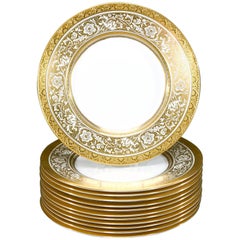
Mid-20th Century English Dinner Plates
Porcelain
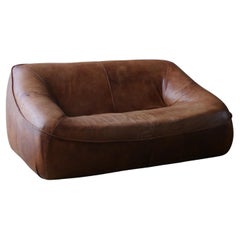
Vintage 1970s Dutch Mid-Century Modern Loveseats
Leather
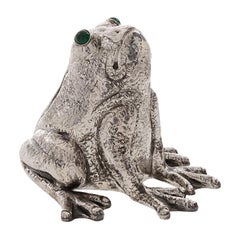
2010s Italian Sterling Silver
Sterling Silver
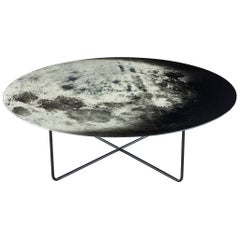
21st Century and Contemporary Italian Modern Center Tables
Steel
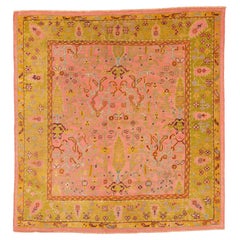
Early 20th Century Turkish Adirondack Turkish Rugs
Wool
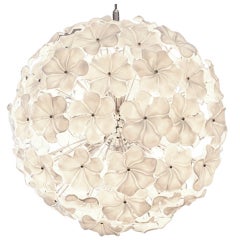
21st Century and Contemporary Italian Chandeliers and Pendants
Murano Glass
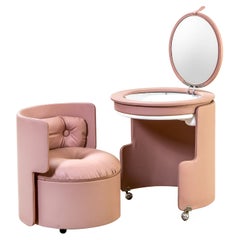
Vintage 1960s Italian Mid-Century Modern Vanities
Metal
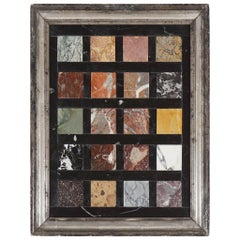
Antique Mid-19th Century Italian Grand Tour Collectibles and Curiosities
Marble
Vintage 1960s French Mid-Century Modern Commodes and Chests of Drawers
Brass
Vintage 1980s Dinner Plates
Porcelain
Vintage 1950s Italian Mid-Century Modern Wall Lights and Sconces
Opal, Metal
Mid-20th Century Scandinavian Scandinavian Modern Collectible Jewelry
Rock Crystal, Silver
Fornasetti for sale on 1stDibs
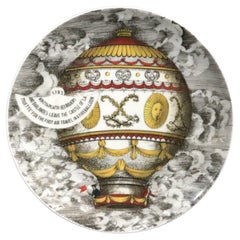
The Italian artist, illustrator and furniture maker Piero Fornasetti was one of the wittiest and most imaginative design talents of the 20th century. He crafted an inimitable decorative style from a personal vocabulary of images that included birds, butterflies, hot-air balloons, architecture and — most frequently, and in some 500 variations — an enigmatic woman’s face based on that of the 19th-century opera singer Lina Cavalieri. Fornasetti used transfer prints of these images, rendered in the style of engravings, to decorate an endless variety of furnishings and housewares that ranged from chairs, tables and desks to dinner plates, lamps and umbrella stands. His work is archly clever, often surreal and always fun.
Fornasetti was born in Milan, the son of an accountant, and he lived his entire life in the city. He showed artistic talent as a child and enrolled at Milan’s Brera Academy of Fine Art in 1930, but was expelled after two years for consistently failing to follow his professors’ orders. A group of his hand-painted silk scarves, displayed in the 1933 Triennale di Milano, caught the eye of the architect and designer Gio Ponti, who, in the 1940s, became Fornasetti’s collaborator and patron. Beginning in the early 1950s, they created a striking a series of desks, bureaus and secretaries that pair Ponti’s signature angular forms with Fornasetti’s decorative motifs — lighthearted arrangements of flowers and birds on some pieces, austere architectural imagery on others. The two worked together on numerous commissions for interiors, though their greatest project has been lost: the first-class lounges and restaurants of the luxury ocean liner Andrea Doria, which sank in 1956.
Fornasetti furnishings occupy an unusual and compelling niche in the decorative arts: they are odd yet pack a serious punch. They act, essentially, as functional sculpture. A large Fornasetti piece such as a cabinet or a desk can change the character of an entire room; his smaller works have the aesthetic power of a vase of flowers, providing a bright and alluring decorative note. The chimerical, fish-nor-fowl nature of Fornasetti’s work may be its greatest strength. It stands on its own. Bringing the Fornasetti look into the future is Barnaba Fornasetti, who took the reins of the company after his father's death.
A Close Look at Modern Furniture
The late 19th and early 20th centuries saw sweeping social change and major scientific advances — both of which contributed to a new aesthetic: modernism. Rejecting the rigidity of Victorian artistic conventions, modernists sought a new means of expression. References to the natural world and ornate classical embellishments gave way to the sleek simplicity of the Machine Age. Architect Philip Johnson characterized the hallmarks of modernism as “machine-like simplicity, smoothness or surface [and] avoidance of ornament.”
Early practitioners of modernist design include the De Stijl (“The Style”) group, founded in the Netherlands in 1917, and the Bauhaus School, founded two years later in Germany.
Followers of both groups produced sleek, spare designs — many of which became icons of daily life in the 20th century. The modernists rejected both natural and historical references and relied primarily on industrial materials such as metal, glass, plywood, and, later, plastics. While Bauhaus principals Marcel Breuer and Ludwig Mies van der Rohe created furniture from mass-produced, chrome-plated steel, American visionaries like Charles and Ray Eames worked in materials as novel as molded plywood and fiberglass. Today, Breuer’s Wassily chair, Mies van der Rohe’s Barcelona chair — crafted with his romantic partner, designer Lilly Reich — and the Eames lounge chair are emblems of progressive design and vintage originals are prized cornerstones of collections.
It’s difficult to overstate the influence that modernism continues to wield over designers and architects — and equally difficult to overstate how revolutionary it was when it first appeared a century ago. But because modernist furniture designs are so simple, they can blend in seamlessly with just about any type of décor. Don’t overlook them.