French Carved Footstool
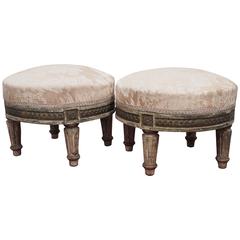
Antique Early 19th Century French Louis XVI Footstools
Wood

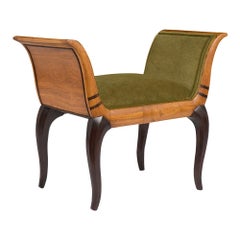
Vintage 1940s French Art Deco Benches
Mohair, Velvet, Wood, Walnut
- 1
French Carved Footstool For Sale on 1stDibs
How Much is a French Carved Footstool?
Finding the Right Footstools for You
Antique and vintage footstools might add a dose of fun to your living room, but they’re also hard workers.
Even as they’ve morphed into objects with plenty of functions over time, the footstool has a royal past. In Ancient Egypt, a footstool was used to climb onto an elevated chair or placed under someone’s feet as he or she was seated in a temple or private residence. Footstools were also in use during the Ottoman Empire. In fact, the ottoman, an upholstered seat or small bench that initially had no back or arms, was the main seating furniture in a home. Ottomans were a way to merge floor seating with cushions and mats.
Poufs, which originated in France, are also thought of as convenient seating furniture as well as occasionally serving as a side table, if needed. (Although, a pouf is typically not as firm as an ottoman.)
Over the years, footstools have taken on varying purposes. They have been used as small portable chairs, for example.
During the 18th century, a footstool might have been long with a low profile, which rendered it perfect for fireside seating. Victorian footstools were small but not unassuming, as furniture makers of the era would upholster the pieces so that they paired with the nearby sofa or wingback chairs. Footstools have even become a storage solution at home, with designers outfitting them with compartments. Today, a footstool might be used to organize quilts and blankets or other textiles, especially if you’re trying to keep things uncluttered in a small apartment.
Footstools are now available in all sorts of provocative colors, upholstery and more. No one is going to put a velvet footstool out on the curb, right? When shopping for your own footstool, try to find one that meets the height of your sofa or other seating (or is a tad lower). It should also be sturdy but not a heavy, clunky piece that’s a chore to move around.
The footstool is both decorative and functional. Not unlike a good throw pillow, interior designers have found numerous uses for this versatile, vibrant furnishing. Find yours in the growing collection of antique and vintage footstools today on 1stDibs.
Read More
All the Furniture in This Organic Modern Soho Loft Can Be Yours
Andrianna Shamaris has filled her epic new home with pieces of her own design.
20 Inviting Dining Rooms Perfectly Arranged for Entertaining
Top interior designers show — and tell — us how to create delectable spaces for hosting dinner parties.
Nobody Puts This Sunny Sofa in a Corner
With its plush cushions, cane details and dazzlingly colorful back, it’s inviting from every angle.
The 21 Most Popular Mid-Century Modern Chairs
You know the designs, now get the stories about how they came to be.
Fred Rigby’s Modular Seating Can Be Configured in So Many Handy Ways
The plush Cove Slipper 2.5 Seater sofa is just one of many convenient combinations from the London-based maker.
This Chubby-Chic Quilted Stool Stands on Its Own Two Feet
Sam Klemick's cool stool is edgy, cozy and environmentally sustainable all at once.
Is Lionel Jadot the Willy Wonka of Upcycled Belgian Design?
From his massive collaborative workshop in a former paper factory, the designer concocts funky furniture from disused materials, as well as luxe hotel interiors like the new Mix Brussels.
Rock Your Cares Away on This Sunny Hand-Crocheted Swing
The boho-chic Enchanted Forest Swing, handmade by marginalized women from Turkey and Syria, is uplifting in every way.