German Teak Cabinet
Vintage 1960s German Mid-Century Modern Shelves
Teak
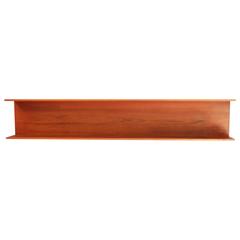

Vintage 1960s German Mid-Century Modern Shelves
Teak
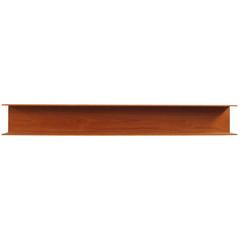
Vintage 1950s German Mid-Century Modern Commodes and Chests of Drawers
Metal
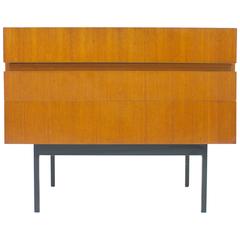
Vintage 1960s German Mid-Century Modern Sideboards
Metal
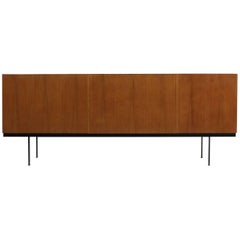
Vintage 1960s German Bauhaus Shelves and Wall Cabinets
Metal, Brass
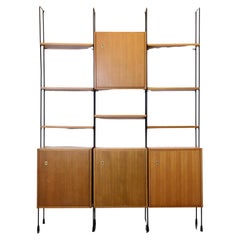
Mid-20th Century German Mid-Century Modern Sideboards
Steel
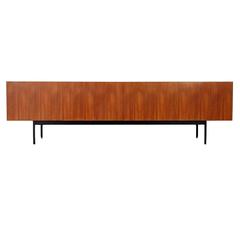
- 1
German Teak Cabinet For Sale on 1stDibs
How Much is a German Teak Cabinet?
A Close Look at Mid-century-modern Furniture
Organically shaped, clean-lined and elegantly simple are three terms that well describe vintage mid-century modern furniture. The style, which emerged primarily in the years following World War II, is characterized by pieces that were conceived and made in an energetic, optimistic spirit by creators who believed that good design was an essential part of good living.
ORIGINS OF MID-CENTURY MODERN FURNITURE DESIGN
- Emerged during the mid-20th century
- Informed by European modernism, Bauhaus, International style, Scandinavian modernism and Frank Lloyd Wright’s architecture
- A heyday of innovation in postwar America
- Experimentation with new ideas, new materials and new forms flourished in Scandinavia, Italy, the former Czechoslovakia and elsewhere in Europe
CHARACTERISTICS OF MID-CENTURY MODERN FURNITURE DESIGN
- Simplicity, organic forms, clean lines
- A blend of neutral and bold Pop art colors
- Use of natural and man-made materials — alluring woods such as teak, rosewood and oak; steel, fiberglass and molded plywood
- Light-filled spaces with colorful upholstery
- Glass walls and an emphasis on the outdoors
- Promotion of functionality
MID-CENTURY MODERN FURNITURE DESIGNERS TO KNOW
- Charles and Ray Eames
- Eero Saarinen
- Milo Baughman
- Florence Knoll
- Harry Bertoia
- Isamu Noguchi
- George Nelson
- Danish modernists Hans Wegner and Arne Jacobsen, whose emphasis on natural materials and craftsmanship influenced American designers and vice versa
ICONIC MID-CENTURY MODERN FURNITURE DESIGNS
- Eames lounge chair
- Nelson daybed
- Florence Knoll sofa
- Egg chair
- Womb chair
- Noguchi coffee table
- Barcelona chair
VINTAGE MID-CENTURY MODERN FURNITURE ON 1STDIBS
The mid-century modern era saw leagues of postwar American architects and designers animated by new ideas and new technology. The lean, functionalist International-style architecture of Le Corbusier and Bauhaus eminences Ludwig Mies van der Rohe and Walter Gropius had been promoted in the United States during the 1930s by Philip Johnson and others. New building techniques, such as “post-and-beam” construction, allowed the International-style schemes to be realized on a small scale in open-plan houses with long walls of glass.
Materials developed for wartime use became available for domestic goods and were incorporated into mid-century modern furniture designs. Charles and Ray Eames and Eero Saarinen, who had experimented extensively with molded plywood, eagerly embraced fiberglass for pieces such as the La Chaise and the Womb chair, respectively.
Architect, writer and designer George Nelson created with his team shades for the Bubble lamp using a new translucent polymer skin and, as design director at Herman Miller, recruited the Eameses, Alexander Girard and others for projects at the legendary Michigan furniture manufacturer.
Harry Bertoia and Isamu Noguchi devised chairs and tables built of wire mesh and wire struts. Materials were repurposed too: The Danish-born designer Jens Risom created a line of chairs using surplus parachute straps for webbed seats and backrests.
The Risom lounge chair was among the first pieces of furniture commissioned and produced by celebrated manufacturer Knoll, a chief influencer in the rise of modern design in the United States, thanks to the work of Florence Knoll, the pioneering architect and designer who made the firm a leader in its field. The seating that Knoll created for office spaces — as well as pieces designed by Florence initially for commercial clients — soon became desirable for the home.
As the demand for casual, uncluttered furnishings grew, more mid-century furniture designers caught the spirit.
Classically oriented creators such as Edward Wormley, house designer for Dunbar Inc., offered such pieces as the sinuous Listen to Me chaise; the British expatriate T.H. Robsjohn-Gibbings switched gears, creating items such as the tiered, biomorphic Mesa table. There were Young Turks such as Paul McCobb, who designed holistic groups of sleek, blond wood furniture, and Milo Baughman, who espoused a West Coast aesthetic in minimalist teak dining tables and lushly upholstered chairs and sofas with angular steel frames.
Generations turn over, and mid-century modern remains arguably the most popular style going. As the collection of vintage mid-century modern chairs, dressers, coffee tables and other furniture for the living room, dining room, bedroom and elsewhere on 1stDibs demonstrates, this period saw one of the most delightful and dramatic flowerings of creativity in design history.
Finding the Right Storage-case-pieces for You
Of all the vintage storage cabinets and antique case pieces that have become popular in modern interiors over the years, dressers, credenzas and cabinets have long been home staples, perfect for routine storage or protection of personal items.
In the mid-19th century, cabinetmakers would mimic styles originating in the Louis XIV, Louis XV and Louis XVI eras for their dressers, bookshelves and other structures, and, later, simpler, streamlined wood designs allowed these “case pieces” or “case goods” — any furnishing that is unupholstered and has some semblance of a storage component — to blend into the background of any interior.
Mid-century modern furniture enthusiasts will cite the tall modular wall units crafted in teak and other sought-after woods of the era by the likes of George Nelson, Poul Cadovius and Finn Juhl. For these highly customizable furnishings, designers of the day delivered an alternative to big, heavy bookcases by considering the use of space — and, in particular, walls — in new and innovative ways. Mid-century modern credenzas, which, long and low, evolved from tables that were built as early as the 14th century in Italy, typically have no legs or very short legs and have grown in popularity as an alluring storage option over time.
Although the name immediately invokes images of clothing, dressers were initially created in Europe for a much different purpose. This furnishing was initially a flat-surfaced, low-profile side table equipped with a few drawers — a common fixture used to dress and prepare meats in English kitchens throughout the Tudor period. The drawers served as perfect utensil storage. It wasn’t until the design made its way to North America that it became enlarged and equipped with enough space to hold clothing and cosmetics. The very history of case pieces is a testament to their versatility and well-earned place in any room.
In the spirit of positioning your case goods center stage, decluttering can now be design-minded.
A contemporary case piece with open shelving and painted wood details can prove functional as a storage unit as easily as it can a room divider. Alternatively, apothecary cabinets are charming case goods similar in size to early dressers or commodes but with uniquely sized shelving and (often numerous) drawers.
Whether you’re seeking a playful sideboard that features colored glass and metal details, an antique Italian hand-carved storage cabinet or a glass-door vitrine to store and show off your collectibles, there are options for you on 1stDibs.