Gio Ponti Luggage Racks
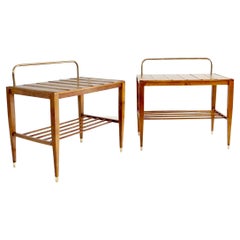
Vintage 1950s Italian Mid-Century Modern Side Tables
Brass

Recent Sales
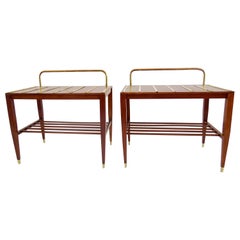
Vintage 1950s Italian Mid-Century Modern Side Tables
Brass
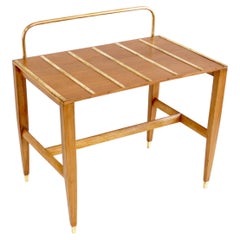
Vintage 1950s Italian Mid-Century Modern Side Tables
Brass
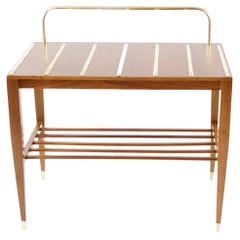
Vintage 1950s Italian Mid-Century Modern End Tables
Brass
Vintage 1920s European Modern Balustrades and Fixtures
Brass
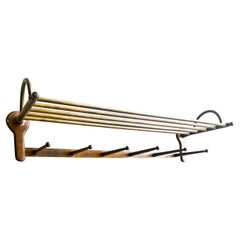
People Also Browsed
Vintage 1960s German Mid-Century Modern Chandeliers and Pendants
Resin
Vintage 1970s French Art Deco Game Tables
Felt, Oak
Mid-20th Century French Mid-Century Modern Chairs
Ash
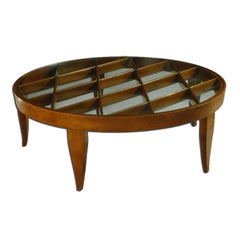
Vintage 1940s Italian Coffee and Cocktail Tables
Glass, Fruitwood
21st Century and Contemporary Danish Mid-Century Modern Wall Mirrors
Brass

Vintage 1950s Brazilian Mid-Century Modern Coffee and Cocktail Tables
Glass, Wood
Vintage 1950s Coffee and Cocktail Tables
Glass, Walnut
Mid-20th Century French Mid-Century Modern Dining Room Tables
Steel
2010s Austrian Jugendstil Table Lamps
Brass
Mid-20th Century Indian Mid-Century Modern Desks and Writing Tables
Teak
Early 2000s British Console Tables
Resin, Polyester
Vintage 1940s French Mid-Century Modern Coat Racks and Stands
Brass
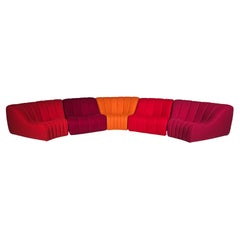
Vintage 1970s European Mid-Century Modern Sectional Sofas
Fabric
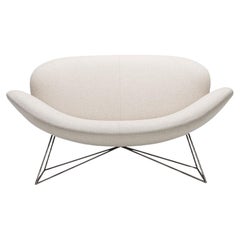
2010s Italian Modern Settees
Metal
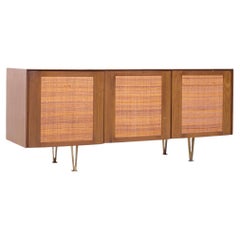
Vintage 1970s Italian Mid-Century Modern Credenzas
Brass
Giordano Chiesa for sale on 1stDibs
As a master cabinetmaker and furniture craftsman, Giordano Chiesa produced beautiful mid-century modern pieces, largely in collaboration with Italian starchitect and designer Gio Ponti.
Although the pair had a long history of collaboration, their work for stylish mid-century Italian hotels stands out. In the mid-1950s, Ponti and Chiesa teamed up with manufacturer Dassi Lissone to create streamlined walnut and brass furniture for the Royal Hotel in Naples, including headboards, side tables and wardrobe doors for each room. A decade later, the duo designed sleek, blue formica-surfaced ashwood writing desks, dressers and headboards, for the Hotel Parco dei Principi in Rome.
Chiesa produced Ponti’s sculptural glass-topped coffee table, which features artistically aligned maple legs and slats to form a sort of grid as its base. Similar to Ponti’s no. 1101 coffee table for Singer and Sons, Chiesa and Ponti’s table rivals the more famous design in its eloquence and craftsmanship.
On 1stDibs, find a collection of Giordano Chiesa tables, storage case pieces and other furniture and collectibles.
A Close Look at Mid-century Modern Furniture
Organically shaped, clean-lined and elegantly simple are three terms that well describe vintage mid-century modern furniture. The style, which emerged primarily in the years following World War II, is characterized by pieces that were conceived and made in an energetic, optimistic spirit by creators who believed that good design was an essential part of good living.
ORIGINS OF MID-CENTURY MODERN FURNITURE DESIGN
- Emerged during the mid-20th century
- Informed by European modernism, Bauhaus, International style, Scandinavian modernism and Frank Lloyd Wright’s architecture
- A heyday of innovation in postwar America
- Experimentation with new ideas, new materials and new forms flourished in Scandinavia, Italy, the former Czechoslovakia and elsewhere in Europe
CHARACTERISTICS OF MID-CENTURY MODERN FURNITURE DESIGN
- Simplicity, organic forms, clean lines
- A blend of neutral and bold Pop art colors
- Use of natural and man-made materials — alluring woods such as teak, rosewood and oak; steel, fiberglass and molded plywood
- Light-filled spaces with colorful upholstery
- Glass walls and an emphasis on the outdoors
- Promotion of functionality
MID-CENTURY MODERN FURNITURE DESIGNERS TO KNOW
- Charles and Ray Eames
- Eero Saarinen
- Milo Baughman
- Florence Knoll
- Harry Bertoia
- Isamu Noguchi
- George Nelson
- Danish modernists Hans Wegner and Arne Jacobsen, whose emphasis on natural materials and craftsmanship influenced American designers and vice versa
ICONIC MID-CENTURY MODERN FURNITURE DESIGNS
- Eames lounge chair
- Nelson daybed
- Florence Knoll sofa
- Egg chair
- Womb chair
- Noguchi coffee table
- Barcelona chair
VINTAGE MID-CENTURY MODERN FURNITURE ON 1STDIBS
The mid-century modern era saw leagues of postwar American architects and designers animated by new ideas and new technology. The lean, functionalist International-style architecture of Le Corbusier and Bauhaus eminences Ludwig Mies van der Rohe and Walter Gropius had been promoted in the United States during the 1930s by Philip Johnson and others. New building techniques, such as “post-and-beam” construction, allowed the International-style schemes to be realized on a small scale in open-plan houses with long walls of glass.
Materials developed for wartime use became available for domestic goods and were incorporated into mid-century modern furniture designs. Charles and Ray Eames and Eero Saarinen, who had experimented extensively with molded plywood, eagerly embraced fiberglass for pieces such as the La Chaise and the Womb chair, respectively.
Architect, writer and designer George Nelson created with his team shades for the Bubble lamp using a new translucent polymer skin and, as design director at Herman Miller, recruited the Eameses, Alexander Girard and others for projects at the legendary Michigan furniture manufacturer.
Harry Bertoia and Isamu Noguchi devised chairs and tables built of wire mesh and wire struts. Materials were repurposed too: The Danish-born designer Jens Risom created a line of chairs using surplus parachute straps for webbed seats and backrests.
The Risom lounge chair was among the first pieces of furniture commissioned and produced by celebrated manufacturer Knoll, a chief influencer in the rise of modern design in the United States, thanks to the work of Florence Knoll, the pioneering architect and designer who made the firm a leader in its field. The seating that Knoll created for office spaces — as well as pieces designed by Florence initially for commercial clients — soon became desirable for the home.
As the demand for casual, uncluttered furnishings grew, more mid-century furniture designers caught the spirit.
Classically oriented creators such as Edward Wormley, house designer for Dunbar Inc., offered such pieces as the sinuous Listen to Me chaise; the British expatriate T.H. Robsjohn-Gibbings switched gears, creating items such as the tiered, biomorphic Mesa table. There were Young Turks such as Paul McCobb, who designed holistic groups of sleek, blond wood furniture, and Milo Baughman, who espoused a West Coast aesthetic in minimalist teak dining tables and lushly upholstered chairs and sofas with angular steel frames.
Generations turn over, and mid-century modern remains arguably the most popular style going. As the collection of vintage mid-century modern chairs, dressers, coffee tables and other furniture for the living room, dining room, bedroom and elsewhere on 1stDibs demonstrates, this period saw one of the most delightful and dramatic flowerings of creativity in design history.
Materials: Brass Furniture
Whether burnished or lacquered, antique, new and vintage brass furniture can elevate a room.
From traditional spaces that use brass as an accent — by way of brass dining chairs or brass pendant lights — to contemporary rooms that embrace bold brass decor, there are many ways to incorporate the golden-hued metal.
“I find mixed metals to be a very updated approach, as opposed to the old days, when it was all shiny brass of dulled-out silver tones,” says interior designer Drew McGukin. “I especially love working with brass and blackened steel for added warmth and tonality. To me, aged brass is complementary across many design styles and can trend contemporary or traditional when pushed either way.”
He proves his point in a San Francisco entryway, where a Lindsey Adelman light fixture hangs above a limited-edition table and stools by Kelly Wearstler — also an enthusiast of juxtapositions — all providing bronze accents. The walls were hand-painted by artist Caroline Lizarraga and the ombré stair runner is by DMc.
West Coast designer Catherine Kwong chose a sleek brass and lacquered-parchment credenza by Scala Luxury to fit this San Francisco apartment. “The design of this sideboard is reminiscent of work by French modernist Jean Prouvé. The brass font imbues the space with warmth and the round ‘portholes’ provide an arresting geometric element.”
Find antique, new and vintage brass tables, case pieces and other furnishings now on 1stDibs.
Finding the Right Side-tables for You
While the range of styles and variety of materials have broadened over time, the priceless functionality of side tables has held true.
Antique and vintage side tables are an integral accent to our seating and provide additional, necessary storage in our homes. They can be a great foundation for that perfect focal piece of art that you want all your guests to see as you congregate for cocktails in the living room. Side tables are indeed ideal as a stage for your decorative objects or plants in your library or your study, and they are a practical space for the novel or stack of design magazines you keep close to your sofa.
Sure, owning a pair of side tables isn’t as imperative as having a coffee table in the common area, though most of us would struggle without them. Those made of metal, stone or wood are frequently featured in stylish interiors, and if you’re shopping for side tables, there are a couple of things to keep in mind.
With respect to the height of your side tables, a table that is as high as your lounge chair or the arm of your couch is best.
Some folks are understandably fussy about coherence in a living room area, but coherence doesn’t necessarily mean you can’t mix and match. Feel free to introduce minimalist mid-century modern wooden side tables designed by Paul McCobb alongside your contemporary metal coffee table. If you think it isn’t possible to pair a Hollywood Regency–style side table with a contemporary sofa, we’re here to tell you that it is. Even a leggy side table can balance a chunky sofa well. Try to keep a limited color palette in mind if you’re planning on mixing furniture styles and materials, and don’t be afraid to add a piece of abstract art to shake things up.
As far as the objects you’re planning to place on your side tables, if you have heavy items such as stone or sculptures to display, a fragile glass-top table would not be an ideal choice. Think about what material would best support your collectibles and go with that. If it’s a particularly small side table, along with a tall, sleek floor lamp, it can make for a great way to fill a corner of the room you wouldn’t otherwise easily be able to populate.
Whether you are looking for an antique 19th-century carved oak side table or a vintage rattan side table (because rattan never went away!), the collection on 1stDibs has you covered — find Art Deco side tables, bamboo side tables, travertine side tables and more today.