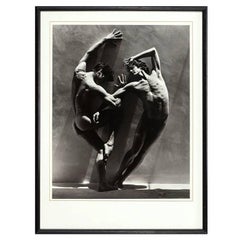
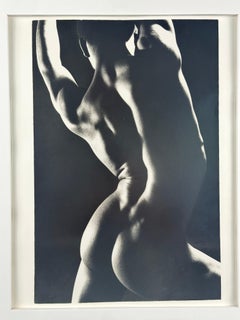
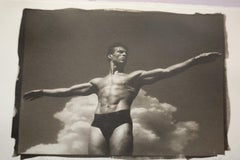
Greg Gorman Male Nude
Vintage 1980s American Modern Photography
Glass, Wood, Paper

People Also Browsed
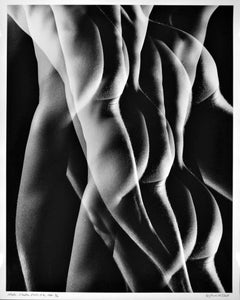
1990s Black and White Photography
Silver Gelatin
Antique Late 19th Century British Neoclassical Revival Pottery
Earthenware, Pearlware
20th Century European Other Musical Instruments
Other
Antique 1890s English Arts and Crafts Doors and Gates
Wrought Iron

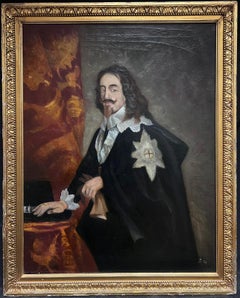
Early 1900s Old Masters Portrait Paintings
Oil, Canvas
21st Century and Contemporary Portuguese Modern Figurative Sculptures
Gold

Antique Late 19th Century Italian Figurative Sculptures
Bronze

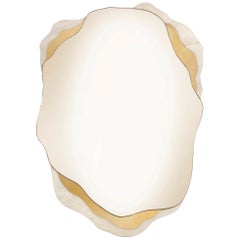
21st Century and Contemporary Portuguese Modern Wall Mirrors
Marble, Brass
1970s Realist Black and White Photography
Photographic Paper
20th Century Italian Neoclassical Umbrella Stands
Iron
21st Century and Contemporary Table Lamps
Rock Crystal
17th Century Baroque Portrait Paintings
Copper
Vintage 1910s French Bird Cages
Pine
Vintage 1970s American Games
Acrylic

1980s Contemporary Figurative Photography
Platinum
Antique 18th Century and Earlier Austrian Paintings
Greg Gorman for sale on 1stDibs
Born in Kansas City, Missouri in 1949, Greg attended the University of Kansas and majored in photojournalism. He completed his studies at the University of Southern California, graduating with a master of fine arts in cinematography in 1972. Although Gorman studied photojournalism in college, it was circumstance rather than a clear direction that took Mr. Gorman into photography as a profession. It all began with a series of images taken at rock concerts in the late '60s. Afterward, he made the rounds in Los Angeles until he got noticed. For over four decades, Gorman has continued to master the art of photography. From celebrity portraits and advertising campaigns to magazine layouts and fine artwork, Gorman has developed and showcased a discriminating and unique style in his profession. Gorman’s photography is timeless and not confined to has-beens, hot properties and wannabes. Each shot gives a picture of human nature in its infinite range. Each picture is also a testament to the individual character. “For me, a photograph is most successful when it doesn’t answer all the questions”, says Gorman, “but leaves something to the imagination”. In 1985, through the advice of illustrator Antonio Lopez, Gorman realized that he needed a creative outlet in addition to the commercial work that launched his career. He then began to expand his work exploring the human form and became a notable photographer for not only his celebrity portraiture but also his figure studies of the male and female nude. While continually expanding his archive with new work, Gorman works on compilations of his imagery for publication. In the fall of 2009, Damiani Editore released In Their Youth: Early Portraits, which incorporates 40 years of unpublished work. A book of his photos for the award-winning L.A.Eyeworks campaign, entitled Framed was released in 2012. These join Gorman’s previously published books Greg Gorman, Volume I, Greg Gorman, Volume II, Inside Life, Perspectives, As I See It, Just Between Us and a book of platinum prints entitled Odes to Pindar, published by the Journal of the 21st Century. Over the past 30 years, Gorman’s work has been exhibited in galleries and museums throughout the world, including the Helmut Newton Foundation in Berlin. When not shooting famous faces, Gorman travels for specialized photographic projects and is one of the most sought-after speakers in the photographic community. Gorman shares his expertise in hands-on photographic workshops worldwide, most notably his workshops at his studio in Northern California. Gorman has been recognized for his contributions to the world of photography with the Lifetime Achievement Award from the Professional Photographers of America, the Achievement in Portraiture Award from The Lucie Foundation and the Pacific Design Center, Stars of Design award. He has also been acknowledged for his charitable works for many organizations, including The Elton John AIDS Foundation, The Oscar De La Hoya Foundation, PETA, Angel Art and PAWS LA. Gorman is also one of the most well-known and sought-after celebrity photographers, having photographed countless stars, such as Al Pacino, Mark Wahlberg, Sophia Loren, Michael Jackson and Kevin Costner. Greg Gorman also has expanded his interests into winemaking and divides his time between his two California homes in Los Angeles and Mendocino.
A Close Look at Modern Furniture
The late 19th and early 20th centuries saw sweeping social change and major scientific advances — both of which contributed to a new aesthetic: modernism. Rejecting the rigidity of Victorian artistic conventions, modernists sought a new means of expression. References to the natural world and ornate classical embellishments gave way to the sleek simplicity of the Machine Age. Architect Philip Johnson characterized the hallmarks of modernism as “machine-like simplicity, smoothness or surface [and] avoidance of ornament.”
Early practitioners of modernist design include the De Stijl (“The Style”) group, founded in the Netherlands in 1917, and the Bauhaus School, founded two years later in Germany.
Followers of both groups produced sleek, spare designs — many of which became icons of daily life in the 20th century. The modernists rejected both natural and historical references and relied primarily on industrial materials such as metal, glass, plywood, and, later, plastics. While Bauhaus principals Marcel Breuer and Ludwig Mies van der Rohe created furniture from mass-produced, chrome-plated steel, American visionaries like Charles and Ray Eames worked in materials as novel as molded plywood and fiberglass. Today, Breuer’s Wassily chair, Mies van der Rohe’s Barcelona chair — crafted with his romantic partner, designer Lilly Reich — and the Eames lounge chair are emblems of progressive design and vintage originals are prized cornerstones of collections.
It’s difficult to overstate the influence that modernism continues to wield over designers and architects — and equally difficult to overstate how revolutionary it was when it first appeared a century ago. But because modernist furniture designs are so simple, they can blend in seamlessly with just about any type of décor. Don’t overlook them.
Finding the Right Wall-decorations for You
An empty wall in your home is a blank canvas, and that’s good news. Whether you’ve chosen to arrange a collage of paintings in a hallway or carefully position a handful of wall-mounted sculptures in your dining room, there are a lot of options for beautifying your space with the antique and vintage wall decor and decorations available on 1stDibs.
If you’re seeking inspiration for your wall decor, we’ve got some ideas (and we can show you how to arrange wall art, too).
“I recommend leaving enough space above the piece of furniture to allow for usable workspace and to protect the art from other items damaging it,” says Susana Simonpietri, of Brooklyn home design studio Chango Co.
Hanging a single attention-grabbing large-scale print or poster over your bar or bar cart can prove intoxicating, but the maximalist approach of a salon-style hang, a practice rooted in 17th-century France, can help showcase works of various shapes, styles and sizes on a single wall or part of a wall.
If you’re planning on creating an accent wall — or just aiming to bring a variety of colors and textures into a bedroom — there is more than one way to decorate with wallpaper. Otherwise, don’t overlook what textiles can introduce to a space. A vintage tapestry can work wonders and will be easy to move when you’ve found that dream apartment in another borough.
Express your taste and personality with the right ornamental touch for the walls of your home or office — find a range of contemporary art, vintage photography, paintings and other wall decor and decorations on 1stDibs now.