H Herrmann Furniture
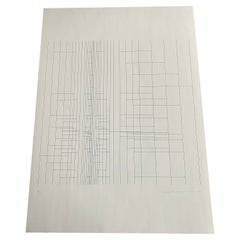
Vintage 1970s German Space Age Prints
Paper

People Also Browsed
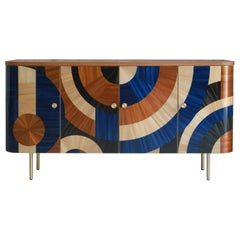
21st Century and Contemporary Ukrainian Art Deco Cabinets
Brass
21st Century and Contemporary Danish Mid-Century Modern Sofas
Fabric, Wood
Antique Mid-18th Century Night Stands
Wood
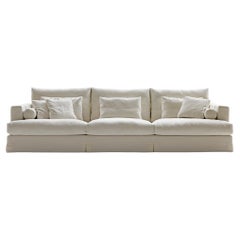
21st Century and Contemporary Italian Modern Sofas
Upholstery
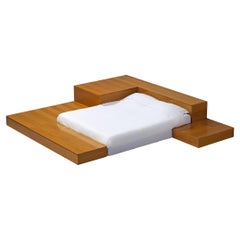
Vintage 1970s Italian Post-Modern Beds and Bed Frames
Oak
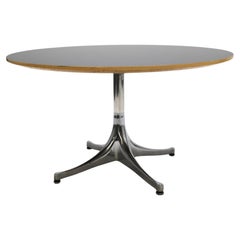
21st Century and Contemporary American Mid-Century Modern Coffee and Coc...
Aluminum
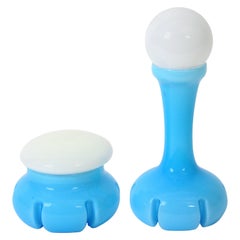
Mid-20th Century Italian Space Age Decorative Bowls
Art Glass, Opaline Glass, Glass, Blown Glass
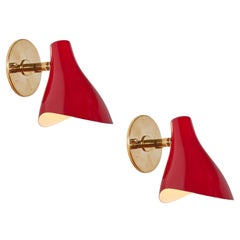
Vintage 1950s Italian Mid-Century Modern Wall Lights and Sconces
Brass, Aluminum
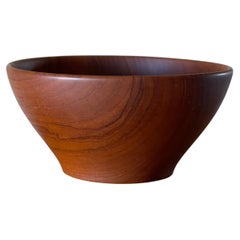
Vintage 1960s Danish Mid-Century Modern Serving Bowls
Teak
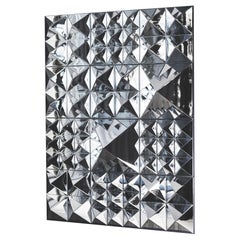
21st Century and Contemporary Danish Mid-Century Modern Wall-mounted Scu...
Acrylic
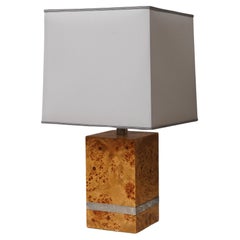
Vintage 1980s Italian Mid-Century Modern Table Lamps
Maple
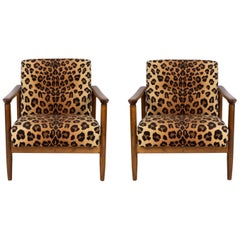
20th Century Polish Mid-Century Modern Armchairs
Textile, Beech
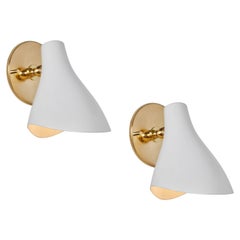
Vintage 1950s Italian Mid-Century Modern Wall Lights and Sconces
Brass, Aluminum
Antique Early 1900s Japanese Meiji Sculptures and Carvings
Porcelain

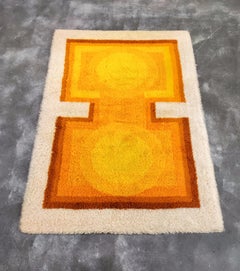
Vintage 1970s Dutch Space Age Western European Rugs
Wool
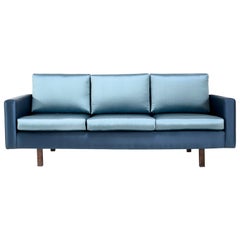
Vintage 1950s Brazilian Sofas
Fabric, Jacaranda
H Herrmann Furniture For Sale on 1stDibs
How Much is an H Herrmann Furniture?
A Close Look at Space-age Furniture
Vintage Space Age furniture captured post–World War II optimism with swooping shapes, bowed lines and experimentation with new materials including plastic and fiberglass.
From the launch of the Sputnik 1 satellite in 1957 to the landing of Apollo 11 astronauts on the moon in 1969, the space race between the Soviet Union and the United States propelled advancements in technology that transformed culture. Space Age design encompassed fashion, architecture, cars, furniture and objects for the home, bringing wonder and hope for the future into everyday life.
Coinciding with Pop art, Space Age style featured bold colors and forms. Eero Aarnio’s Ball chair, which debuted in 1966, used molded fiberglass for a capsule-like space while Verner Panton’s 1959 Panton chair was a single piece of molded plastic for a gravity-defying S shape. Red versions of Olivier Mourgue’s 1964 Djinn chair were futuristic enough to appear on the space station in Stanley Kubrick’s 1968 film 2001: A Space Odyssey. Today, Joe Colombo is revered as a master of modern Italian design thanks to the provocative modular furniture pieces he created, such as the Tube chair and the Elda armchair, both of which embody the future-forward spirit of the Space Age.
The Space Age spirit extended to home building too. The futuristic Case Study Houses, which were designed by the likes of Pierre Koenig, Charles and Ray Eames, Richard Neutra and Whitney R. Smith, are considered a high point of modernism and the Southern California lifestyle.
Sometimes the nods to space exploration were more literal, like moon and star motifs or the 1965 Eclisse lamp by Vico Magistretti that saw the mid-century Italian designer integrating a movable inner shade to “eclipse” the light source. Alongside the pioneering moon missions, JVC manufactured the Videosphere portable television reminiscent of the Apollo 11 space helmets.
Although the style faded in the 1970s — with the 1975 joining of the Apollo and Soyuz spacecrafts signaling a new era of cooperation and the global oil crisis impacting the availability of plastics — the era’s innovations influenced designers into the 21st century such as Zaha Hadid and Djivan Schapira.
Find a collection of vintage Space Age seating, tables, lighting and other furniture on 1stDibs.
Finding the Right Prints for You
Prints are works of art produced in multiple editions. Though several copies of a specific artwork can exist, collectors consider antique and vintage prints originals when they have been manually created by the artist or are “impressions” that are part of the artist’s intent for the work.
Modern artists use a range of printmaking techniques to produce different types of prints such as relief, intaglio and planographic. Relief prints are created by cutting away a printing surface to leave only a design. Ink or paint is applied to the raised parts of the surface, and it is used to stamp or press the design onto paper or another surface. Relief prints include woodcuts, linocuts and engravings.
Intaglio prints are the opposite of relief prints in that they are incised into the printing surface. The artist cuts the design into a block, plate or other material and then coats it with ink before wiping off the surface and transferring the design to paper through tremendous pressure. Intaglio prints have plate marks showing the impression of the original block or plate as it was pressed onto the paper.
Artists create planographic prints by drawing a design on a stone or metal plate using a grease crayon. The plate is washed with water, then ink is spread over the plate and it adheres to the grease markings. The image is then stamped on paper to make prints.
All of these printmaking methods have an intricate process, although each can usually transfer only one color of ink. Artists use separate plates or blocks for multiple colors, and together these create one finished work of art.
Find prints ranging from the 18th- and 19th-century bird illustrations by J.C. Sepp to mid-century modern prints, as well as numerous other antique and vintage prints at 1stDibs. Browse the collection today and read about how to arrange wall art in your space.