Hartman Copper
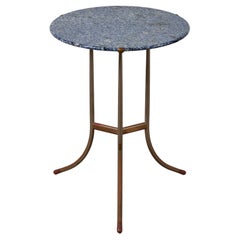
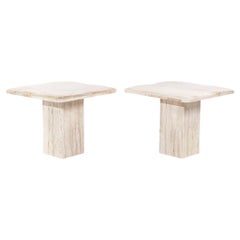
Vintage 1970s American Mid-Century Modern Side Tables
Granite, Copper

Recent Sales
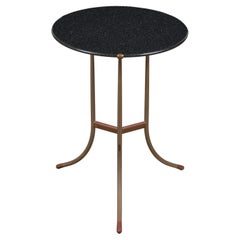
Vintage 1970s American Mid-Century Modern Side Tables
Granite, Copper
People Also Browsed
Vintage 1950s American Mid-Century Modern Table Lamps
Ceramic, Walnut

2010s Wall Lights and Sconces
Aluminum, Steel
21st Century and Contemporary Italian Mid-Century Modern Wall Mirrors
Mirror, Murano Glass
Vintage 1970s Italian Mid-Century Modern Side Tables
Marble
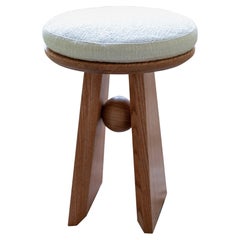
2010s Mexican Mid-Century Modern Stools
Hardwood


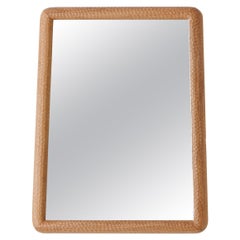
21st Century and Contemporary Portuguese Modern Wall Mirrors
Mirror, Oak
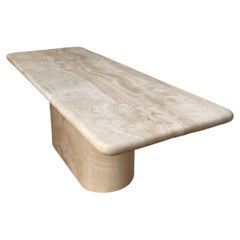
2010s Organic Modern Dining Room Tables
Travertine
2010s Italian Mid-Century Modern Wall Lights and Sconces
Aluminum
Early 20th Century Swedish Art Deco Coffee and Cocktail Tables
Mahogany
Vintage 1970s Italian Mid-Century Modern Tables
Metal
2010s Italian Other Side Tables
Marble
2010s French Minimalist Chandeliers and Pendants
Alabaster, Brass
Vintage 1980s English Benches
Leather
2010s French Other Side Tables
Stone
21st Century and Contemporary Vietnamese Art Deco Wall Mirrors
Brass
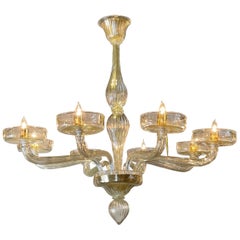
21st Century and Contemporary Italian Chandeliers and Pendants
Murano Glass
Cedric Hartman for sale on 1stDibs
Cedric Hartman stated that the sole purpose of his floor lamps and table lamps was illumination, not noticeability. The result of this function-first philosophy has been a masterful collection of subtle mid-century modern and modern lighting fixtures that shine with simple but undeniable beauty. Hartman brought the same approach to his sleek and elegant side tables, which can blend into space while elevating an interior.
Hartman was born in Lincoln, Nebraska, in 1929. In the late 1940s, he began a career as an architect; it was put on pause while he served in the Korean War. After the war, he spent time in Chicago, Paris and New York studying art and design. Hartman moved to Omaha in the early 1960s and started designing lamps. His dream was to create a lamp that would provide ample lighting without any imposition on a room.
Hartman’s ambitions were realized in 1966 with the design of the 1UWV floor lamp. While sleek lamp designs are easier to make today due to LED technology, Hartman’s lamp was revolutionary for its time. The slim and unimposing metal lamp with its thin triangular shade contrasted with the bold, bulky and decorative lights of the day.
The 1UWV lamp was an instant success. It was acquired by the Museum of Modern Art in New York and displayed in its 1967 “Recent Acquisitions: Design Collection” exhibition. It also became a favorite of architects and decorators and was featured prominently in design magazines.
Hartman created many more floor and table lamp designs, including the 1H floor lamp, another low-profile luminaire added to the Museum of Modern Art collections. In 1968, Hartman began designing sofas, and in 1973, he branched out into table design.
While the 1UWV floor lamp remains his most famous work, Hartman’s illustrious furniture career spans over 40 years of thoughtful design.
On 1stDibs, find a collection of Cedric Hartman lighting and tables.
A Close Look at Mid-century-modern Furniture
Organically shaped, clean-lined and elegantly simple are three terms that well describe vintage mid-century modern furniture. The style, which emerged primarily in the years following World War II, is characterized by pieces that were conceived and made in an energetic, optimistic spirit by creators who believed that good design was an essential part of good living.
ORIGINS OF MID-CENTURY MODERN FURNITURE DESIGN
- Emerged during the mid-20th century
- Informed by European modernism, Bauhaus, International style, Scandinavian modernism and Frank Lloyd Wright’s architecture
- A heyday of innovation in postwar America
- Experimentation with new ideas, new materials and new forms flourished in Scandinavia, Italy, the former Czechoslovakia and elsewhere in Europe
CHARACTERISTICS OF MID-CENTURY MODERN FURNITURE DESIGN
- Simplicity, organic forms, clean lines
- A blend of neutral and bold Pop art colors
- Use of natural and man-made materials — alluring woods such as teak, rosewood and oak; steel, fiberglass and molded plywood
- Light-filled spaces with colorful upholstery
- Glass walls and an emphasis on the outdoors
- Promotion of functionality
MID-CENTURY MODERN FURNITURE DESIGNERS TO KNOW
- Charles and Ray Eames
- Eero Saarinen
- Milo Baughman
- Florence Knoll
- Harry Bertoia
- Isamu Noguchi
- George Nelson
- Danish modernists Hans Wegner and Arne Jacobsen, whose emphasis on natural materials and craftsmanship influenced American designers and vice versa
ICONIC MID-CENTURY MODERN FURNITURE DESIGNS
- Eames lounge chair
- Nelson daybed
- Florence Knoll sofa
- Egg chair
- Womb chair
- Noguchi coffee table
- Barcelona chair
VINTAGE MID-CENTURY MODERN FURNITURE ON 1STDIBS
The mid-century modern era saw leagues of postwar American architects and designers animated by new ideas and new technology. The lean, functionalist International-style architecture of Le Corbusier and Bauhaus eminences Ludwig Mies van der Rohe and Walter Gropius had been promoted in the United States during the 1930s by Philip Johnson and others. New building techniques, such as “post-and-beam” construction, allowed the International-style schemes to be realized on a small scale in open-plan houses with long walls of glass.
Materials developed for wartime use became available for domestic goods and were incorporated into mid-century modern furniture designs. Charles and Ray Eames and Eero Saarinen, who had experimented extensively with molded plywood, eagerly embraced fiberglass for pieces such as the La Chaise and the Womb chair, respectively.
Architect, writer and designer George Nelson created with his team shades for the Bubble lamp using a new translucent polymer skin and, as design director at Herman Miller, recruited the Eameses, Alexander Girard and others for projects at the legendary Michigan furniture manufacturer.
Harry Bertoia and Isamu Noguchi devised chairs and tables built of wire mesh and wire struts. Materials were repurposed too: The Danish-born designer Jens Risom created a line of chairs using surplus parachute straps for webbed seats and backrests.
The Risom lounge chair was among the first pieces of furniture commissioned and produced by celebrated manufacturer Knoll, a chief influencer in the rise of modern design in the United States, thanks to the work of Florence Knoll, the pioneering architect and designer who made the firm a leader in its field. The seating that Knoll created for office spaces — as well as pieces designed by Florence initially for commercial clients — soon became desirable for the home.
As the demand for casual, uncluttered furnishings grew, more mid-century furniture designers caught the spirit.
Classically oriented creators such as Edward Wormley, house designer for Dunbar Inc., offered such pieces as the sinuous Listen to Me chaise; the British expatriate T.H. Robsjohn-Gibbings switched gears, creating items such as the tiered, biomorphic Mesa table. There were Young Turks such as Paul McCobb, who designed holistic groups of sleek, blond wood furniture, and Milo Baughman, who espoused a West Coast aesthetic in minimalist teak dining tables and lushly upholstered chairs and sofas with angular steel frames.
Generations turn over, and mid-century modern remains arguably the most popular style going. As the collection of vintage mid-century modern chairs, dressers, coffee tables and other furniture for the living room, dining room, bedroom and elsewhere on 1stDibs demonstrates, this period saw one of the most delightful and dramatic flowerings of creativity in design history.
Materials: Copper Furniture
From cupolas to cookware and fine art to filaments, copper metal has been used in so many ways since prehistoric times. Today, antique, new and vintage copper coffee tables, mirrors, lamps and other furniture and decor can bring a warm metallic flourish to interiors of any kind.
In years spanning 8,700 BC (the time of the first-known copper pendant) until roughly 3,700 BC, it may have been the only metal people knew how to manipulate.
Valuable deposits of copper were first extracted on the Mediterranean island of Cyprus around 4,000 BC — well before Europe’s actual Bronze Age (copper + tin = bronze). Tiny Cyprus is even credited with supplying all of Egypt and the Near East with copper for the production of sophisticated currency, weaponry, jewelry and decorative items.
In the 15th, 16th and 17th centuries, master painters such as Leonardo da Vinci, El Greco, Rembrandt and Jan Brueghel created fine works on copper. (Back then, copper-based pigments, too, were all the rage.) By the late 19th and early 20th centuries, decorative items like bas-relief plaques, trays and jewelry produced during the Art Deco, Arts and Crafts and Art Nouveau periods espoused copper. These became highly valuable and collectible pieces and remain so today.
Copper’s beauty, malleability, conductivity and versatility make it perhaps the most coveted nonprecious metal in existence. In interiors, polished copper begets an understated luxuriousness, and its reflectivity casts bright, golden and earthy warmth seldom realized in brass or bronze. (Just ask Tom Dixon.)
Outdoors, its most celebrated attribute — the verdigris patina it slowly develops from exposure to oxygen and other elements — isn’t the only hue it takes. Architects often refer to shades of copper as russet, ebony, plum and even chocolate brown. And Frank Lloyd Wright, Renzo Piano and Michael Graves have each used copper in their building projects.
Find antique, new and vintage copper furniture and decorative objects on 1stDibs.
Finding the Right End-tables for You
Beyond just providing additional tabletop space for your living room, an attractive vintage end table can help you organize as well as display books and decorative objects.
The term “end table” is frequently used interchangeably with “coffee table,” and while these two furnishings have much in common, each offers their own distinctive benefits in your space.
Your end table is likely going to stand as tall as the arms of your sofa, and its depth will match the seating. These attributes allow for tucking the table neatly at the end of your sofa in order to provide an elevated surface between your seating and the wall. End tables are accent pieces — they’re a close cousin to side tables, but side tables, not unlike the show-stealing low-profile coffee table, are intended to be positioned prominently and have more to do with the flow and design of a room than an end table, which does a great job but does it out of the way of everything else.
End tables with a drawer or a shelf can easily stow away books or television remotes. Living-room end tables frequently assist with lighting, specifically as they’re often positioned adjacent to a wall. Their height and compact tabletop render them ideal for table lamps and plants, particularly if parked near a window.
And given their practicality, there is no shortage of simple, streamlined end tables from mid-century modern favorites such as Baker Furniture Company, Dunbar and Knoll that will serve your clutter-clearing minimalist efforts or wide-open loft space well. But over the years, furniture designers have taken to venturesome experimentation, crafting tables from fallen trees, introducing organic shapes and playing with sculptural forms, so much so that your understated end table might eventually become the centerpiece of a room, no matter where you choose to place it. One-of-a-kind contemporary designs prove that there are endless options for what an end table can be, while furniture makers working in the Art Deco style have proven that end tables can be stacked, staggered and nested at will, creating all kinds of variations on this popular home accent.
Find an extraordinary variety of antique, new and vintage end tables on 1stDibs today.