Heaven Gaia
Recent Sales
Vintage 1970s French Renaissance Wall Mirrors
Art Glass
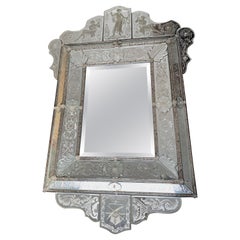

Heaven Gaia For Sale on 1stDibs
How Much is a Heaven Gaia?
A Close Look at Renaissance Furniture
Spanning an era of cultural rebirth in Europe that harkened back to antiquity, the Renaissance was a time of change in design. From the late 1400s to the early 1600s, Rome, Venice and Florence emerged as artistic centers through the expansion of global trade and a humanist belief in the arts being central to society. Antique Renaissance furniture was ornately carved from sturdy woods like walnut, its details standing out against the tapestries and stained glass adorning the walls.
Renaissance chests, which were frequently commissioned for marriages, were often decorated with gilding or painted elements. Those that were known as cassoni were crafted in shapes based on classical sarcophagi. As opposed to the medieval era, when furniture was pared down to the necessities, a wide range of Renaissance chairs, tables and cabinets were created for the home, and the designs regularly referenced ancient Rome.
Large torchères of the Renaissance era that were used as floor lamps were inspired by classical candelabras, while marble surfaces evoked frescoes. The inlaid boxes being imported from the Middle East informed the intarsia technique, which involved varying hues of wood in mosaic-like patterns, such as those by architect Giuliano da Maiano in the Florence Cathedral.
Tapestry-woven cushion covers accented the variety of Renaissance seating — from conversation to study chairs — while bookcases for secular use reflected the migration of culture and knowledge from the church into the home. The aesthetics of the Italian Renaissance later spread to France through the publishing of work by renowned designers, including Hugues Sambin and Jacques Androuet du Cerceau. Centuries later, the 19th-century Renaissance Revival would see a return to this influential style.
Find a collection of antique Renaissance case pieces, decorative objects and other furniture on 1stDibs.
Finding the Right Wall-mirrors for You
Vintage and antique wall mirrors add depth and openness to a space — they can help create the illusion that a narrow hallway isn’t so narrow. But you don’t need hundreds of enormous arched French or Italian mirrors framed in gilded bronze to dress up your home (maybe just a few).
A few well-placed large wall mirrors and other types of mirrors can amplify lighting and help showcase the decorative and architectural features of your home. For the Palace of Versailles during the 17th century, French King Louis XIV ordered the construction of the Hall of Mirrors after spending millions of dollars importing expensive Venetian mirrors from the revered glass-blowing factories on the island of Murano. A mirror-manufacturing rivalry between Paris and Venice took shape, and soon, across from 17 large windows that open out over the adjacent Palace Gardens on one side of the Hall, more than 350 mirrors — large mirrors made of groupings of small panes — were installed, effectively bringing the radiant colors of the outdoors into the opulent corridor.
Wall mirrors for your living room can work miracles — pull your landscaping’s colors and textures indoors, Louis XIV–style, by covering the length of an interior wall across from your living-room windows with wall mirrors.
For a similar effect, surrounding your mid-century modern wall mirror with leafy air plants and fern floor plants can amplify the sense of serenity that greenery offers in your home. Choose wall mirror frame styles to match your home’s decor, or shop for a frameless, organically shaped mirror that’s cut or beveled for a clean yet distinctive showpiece. For a free-spirited Bohemian feel, create a cluster of mismatched antique wall mirrors — an arrangement of circular Art Deco wall mirrors, Rococo-style silver leaf mirrors and decorative oval Victorian mirrors could add spice to an otherwise unadorned dining-room wall.
Elsewhere, there’s nothing vain about buying a full-length mirror for your bedroom, bathroom or walk-in closet to help you perfect your look for the day. Another may be needed in your entryway for a last-minute ensemble inspection. In fact, a shimmering 18th-century hall of mirrors awaits visitors behind the steel door of Stephen Cavallo’s atelier in Manhattan.
“We like to see the look on people’s faces when they walk in,” says Cavallo.
Decorating your home and office with wall mirrors is an art form in and of itself — get started today with the variety of antique and vintage wall mirrors on 1stDibs.