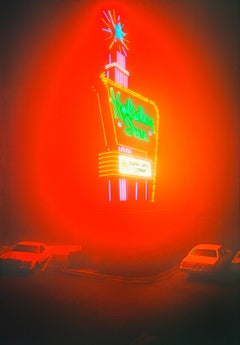
Holiday Inn Retro Sign
1970s Post-Impressionist Holiday Inn Retro Sign
Archival Ink, Archival Paper, Inkjet, Archival Pigment

People Also Browsed
20th Century Hong Kong Chinoiserie Holiday Inn Retro Sign
Leather, Wood
21st Century and Contemporary German Mid-Century Modern Holiday Inn Retro Sign
Metal, Iron
21st Century and Contemporary American Modern Holiday Inn Retro Sign
Brass
19th Century Chinese Qing Holiday Inn Retro Sign
Glass, Rosewood
2010s Contemporary Holiday Inn Retro Sign
Stainless Steel
Late 19th Century Balinese Other Holiday Inn Retro Sign
Teak
1970s Italian Mid-Century Modern Holiday Inn Retro Sign
Velvet
Early 2000s Post-Impressionist Holiday Inn Retro Sign
Archival Ink, Archival Paper, Archival Pigment

2010s Contemporary Holiday Inn Retro Sign
C Print

1960s Surrealist Holiday Inn Retro Sign
Photographic Film, Archival Ink, Archival Paper, Archival Pigment
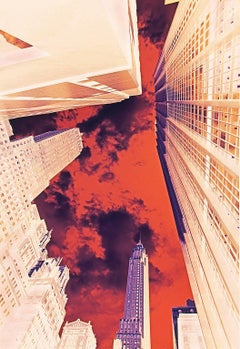
1970s Color-Field Holiday Inn Retro Sign
Photographic Paper
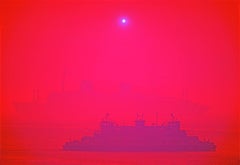
1940s Abstract Expressionist Holiday Inn Retro Sign
Acrylic, Pencil
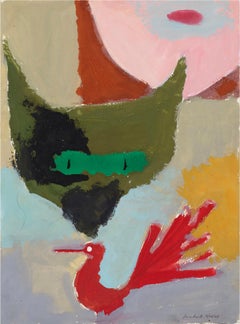
2010s Pop Art Holiday Inn Retro Sign
Neon Light, Mixed Media, Acrylic, Wood Panel, Stencil
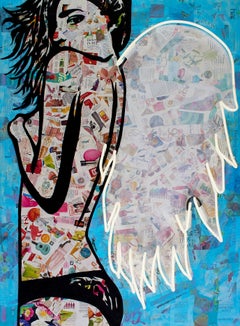
1970s Impressionist Holiday Inn Retro Sign
Inkjet, Archival Ink, Archival Paper, Archival Pigment

2010s Contemporary Holiday Inn Retro Sign
Digital
1990s Post-Impressionist Holiday Inn Retro Sign
Archival Pigment

Holiday Inn Retro Sign For Sale on 1stDibs
How Much is a Holiday Inn Retro Sign?
Mitchell Funk for sale on 1stDibs
Mitchell Funk is a pioneer of color photography. In 1970, he participated in one of the first color photography shows at the Brooklyn Museum titled “Images en Couleur." In 1971, he was included in the visionary books Frontiers of Photography and Color (Life Library of Photography), both published by Time-Life. He has done more than 50 photography magazine covers, including covers for Newsweek and Life.
A Close Look at Post-impressionist Art
In the revolutionary wake of Impressionism, artists like Vincent van Gogh, Georges Seurat, Paul Cézanne and Paul Gauguin advanced the style further while firmly rejecting its limitations. Although the artists now associated with Postimpressionist art did not work as part of a group, they collectively employed an approach to expressing moments in time that was even more abstract than that of the Impressionists, and they shared an interest in moving away from naturalistic depictions to more subjective uses of vivid colors and light in their paintings.
The eighth and final Impressionist exhibition was held in Paris in 1886, and Postimpressionism — also spelled Post-Impressionism — is usually dated between then and 1905. The term “Postimpressionism” was coined by British curator and art critic Roger Fry in 1910 at the “Manet and the Postimpressionists” exhibition in London that connected their practices to the pioneering modernist art of Édouard Manet. Many Postimpressionist artists — most of whom lived in France — utilized thickly applied, vibrant pigments that emphasized the brushstrokes on the canvas.
The Postimpressionist movement’s iconic works of art include van Gogh’s The Starry Night (1889) and Seurat’s A Sunday on La Grande Jatte (1884). Seurat’s approach reflected the experimental spirit of Postimpressionism, as he used Pointillist dots of color that were mixed by the eye of the viewer rather than the hand of the artist. Van Gogh, meanwhile, often based his paintings on observation, yet instilled them with an emotional and personal perspective in which colors and forms did not mirror reality. Alongside Mary Cassatt, Cézanne, Henri Matisse and Gauguin, the Dutch painter was a pupil of Camille Pissarro, the groundbreaking Impressionist artist who boldly organized the first independent painting exhibitions in late-19th-century Paris.
The boundary-expanding work of the Postimpressionist painters, which focused on real-life subject matter and featured a prioritization of geometric forms, would inspire the Nabis, German Expressionism, Cubism and other modern art movements to continue to explore abstraction and challenge expectations for art.
Find a collection of original Postimpressionist paintings, mixed media, prints and other art on 1stDibs.
Finding the Right Color-photography for You
Color photography evokes emotion that can bring a viewer into the scene. It can transport one to faraway places or back into the past.
The first color photograph, taken in 1861, was more of an exercise in science than art. Photographer Thomas Sutton and physicist James Clerk Maxwell used three separate exposures of a tartan ribbon — filtered through red, green and blue — and composited them into a single image, resulting in the first multicolor representation of an object.
Before this innovation, photographs were often tinted by hand. By the 1890s, color photography processes were introduced based on that 1860s experiment. In the early 20th century, autochromes brought color photography to a commercial audience.
Now color photography is widely available, with these historic photographs documenting moments and scenes that are still vivid generations later. Photographers in the 20th and 21st centuries have offered new perspectives in the evolving field of modern color photography with gripping portraiture, snow-capped landscapes, stunning architecture and lots more.
In the voluminous collection of photography on 1stDibs, find vibrant full-color images by Slim Aarons, Helen Levitt, Gordon Parks, Stefanie Schneider, Steve McCurry and other artists. Bring visual interest to any corner of your home with color photography — introduce a salon-style gallery hang or another arrangement that best fits your space.