J B Hunter
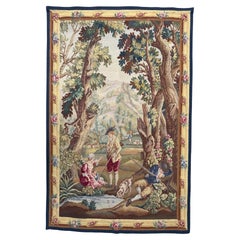
Mid-20th Century French Aubusson Tapestries
Wool, Silk

People Also Browsed
Antique 19th Century Japanese Meiji Prints
Paper
Antique 19th Century Italian Empire Armchairs
Velvet, Mahogany
Late 20th Century Balinese Other Paintings and Screens
Canvas
Antique Mid-19th Century English High Victorian Taxidermy
Other
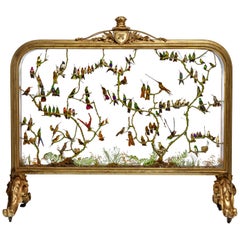
Antique Late 19th Century Japanese Meiji Ceramics
Ceramic, Earthenware, Pottery

Vintage 1950s Japanese Japonisme Tea Sets
Porcelain
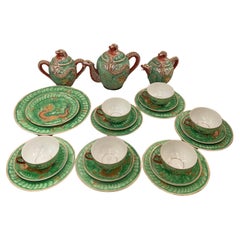
20th Century Japanese Ceramics
Porcelain
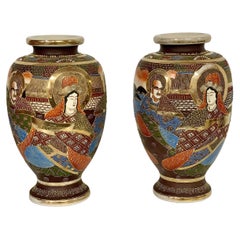
Antique 19th Century Japanese Meiji Tapestries
Silk, Glass, Wood
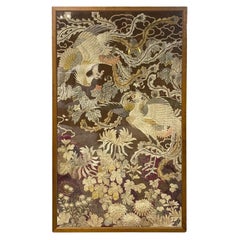
Antique 19th Century Japanese Meiji Lacquer
Lacquer
2010s Ukrainian Art Deco Cabinets
Brass
21st Century and Contemporary Chinese Aesthetic Movement Turkish Rugs
Wool
Early 20th Century Japanese Taisho Paintings and Screens
Silk
2010s Contemporary Figurative Paintings
Oil, Panel
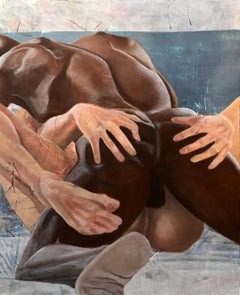
2010s Spanish Arts and Crafts Tapestries
Silk
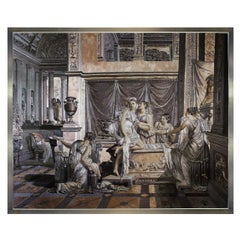
Antique Late 19th Century Abstract Sculptures
Porcelain
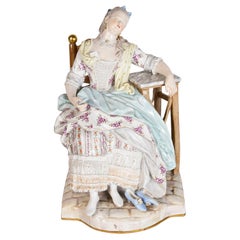
2010s Canadian Modern Coffee and Cocktail Tables
Maple, Walnut
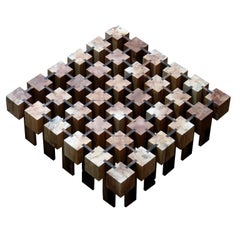
J B Hunter For Sale on 1stDibs
How Much is a J B Hunter?
Royal Manufacture of Aubusson for sale on 1stDibs
Favorites of European nobility and royalty for more than 300 years, the tapestries and textiles made by the Royal Manufacture of Aubusson remain legendary for their exceptional quality and grand designs.
The origins of Aubusson’s textiles date back to the 14th century, when residents of the town of Aubusson, located at the base of the Creuse river in France, started small weaving workshops. When skilled weavers from Flanders, Belgium, arrived in Aubusson, seeking refuge and settlement, the town’s weaving industry flourished.
Aubusson was granted the Royal Manufacture title by King Louis XIV in 1665. Along with pieces by rival workshops such as Gobelins and Beauvais, Aubusson’s textiles, carpets and tapestries were prized for their meticulous designs. Early Royal Manufacture of Aubusson works resemble Turkish rugs and Asian textiles, which were popular with European royalty. In later years, though, Aubusson’s weavers shifted their style to reflect Western European and Caucasian rugs as well as Italian Renaissance style, incorporating floral, religious and pastoral themes into the tapestries.
Throughout the 18th century, Aubusson’s tapestries and rugs remained among the most desired by the European aristocracy. An inventory compiled in 1786 listed more than 100 Aubusson carpets at the Palace of Versailles. After the French Revolution, many workshops, including those of Aubusson, lost their Royal Manufacture status. Upholstered and machine-made carpets also became more dominant in the industry.
In 1869, the establishment of the École Nationale des Arts Décoratifs d’Aubusson sparked a renewed interest in Aubusson tapestries, which the school still produces today. Although the advent of wallpaper during the late 19th and early 20th century reduced consumer demand for tapestries as wall decor, Aubusson adapted to the shift towards modernist style. Artists like Henri Matisse and Pablo Picasso often had their artworks translated into tapestries.
Aubusson’s carpets and tapestries continue to be coveted by interior designers and collectors of 18th-century, mid-19th-century and Napoleon III textiles and furniture. Aubusson’s history of weaving, wool production, spinning and dyeing is on UNESCO’s list of Intangible Cultural Heritage of Humanity.
On 1stDibs, find a range of antique Royal Manufacture of Aubusson wall decorations, Asian-inspired art and furniture, carpets and more.
A Close Look at Aubusson Furniture
Although the production of authentic Aubusson textiles and other furniture is based in Aubusson, France, and at just a handful of small weaving workshops in nearby Felletin, the exceptionally detailed tapestries are renowned throughout the world as wall hangings, carpets and upholstery for a range of seating including sofas and armchairs.
Aubusson’s centuries-old tapestry production industry was inscribed on the Representative List of the Intangible Cultural Heritage of Humanity in 2009 by UNESCO, affirming its importance in European decorative arts. The complex and labor-intensive process of weaving images involves hand-dyed wool to achieve specific hues, giving landscapes, scenes and floral patterns a distinctive realism.
Dating back at least to the 16th century, the Aubusson style has changed over time, with early work influenced by Turkish rugs that were popular with the European elite before the rise of the Italian Renaissance with its natural motifs. In 1665, the Aubusson workshops received the Manufacture Royale title, raising their visibility in France and beyond during the 17th century, with many authentic Aubusson tapestries produced for royal palaces and other prominent residences.
In the 18th century, the design of Aubusson textiles reflected the fad for chinoiserie. During the Arts and Crafts movement of the late 19th century, artisans from Aubusson were involved with the Old Windsor Tapestry Manufactory in England. In the 20th century, now-iconic artists such as Alexander Calder and Joan Miró worked with Aubusson weavers on pieces.
The Cité Internationale de la Tapisserie complex, which features a museum, opened in 2016 in Aubusson to recognize and preserve this heritage.
Find a collection of authentic Aubusson rugs and carpets, pillows, wall decorations and other furniture on 1stDibs.
Finding the Right Rugs-carpets for You
Good antique rugs and vintage rugs have made their way into homes across the globe, becoming fixtures used for comfort, prayer and self-expression, so choosing the right area rug is officially a universal endeavor.
In modern usage, “carpet” typically denotes a wall-to-wall floor cushioning that is fixed to the floor. Rugs, on the other hand, are designed to cover a specific area and can easily be moved to new locations. However, the terms are interchangeable in many parts of the world, and, in the end, it won’t matter what you decide to call it.
It’s well known that a timeless Persian rug or vintage Turkish rug can warm any interior, but there are lots of other styles of antique rugs to choose from when you're endeavoring to introduce fresh colors and textures to a bedroom or living room.
Moroccan Berber rugs are not all about pattern. In fact, some of the most striking examples are nearly monochrome. But what these rugs lack in complexity, they make up for in brilliant color and subtle variation. Moroccan-style interiors can be mesmerizing — a sitting room of this type might feature a Moroccan rug, carved wooden screens and a tapestry hung behind the sofa.
Handwoven kilim rugs, known for their wealth of rich colors and unique weaving tradition, are pileless: Whereas the Beni Ourain rugs of Morocco can be described as dense with a thick surface or pile, an authentic kilim rug is thin and flat. (The term “kilim” is Turkish in origin, but this type of textile artistry is practiced all across the Balkans, throughout the Arab world and elsewhere.)
When it comes to eye-catching floor coverings, the distinctive “medallion” pattern of Oushak rugs has two types of rounded shapes alternating against a rich red or blue background created with natural dyes, while the elaborate “star” pattern involves large eight-pointed shapes in diagonal rows alternating with diamonds.
If you’re looking for something unexpected, find a runner rug that pops in your hallway or on your stairs. Dig for dazzling geometric patterns in our inventory of mid-century modern rugs and carpets, which includes works designed by the likes of Swedish textile masters Märta Måås-Fjetterström, Marianne Richter and other artisans.
Carpets and rugs have been around for thousands of years. Prehistoric humans turned to animal skin, wool and fur to craft simple fabrics to soften hard terrain. A 2016 study suggests that "cave lions" were hunted for exactly this purpose, and that decorating your cave with their pelts may have conferred strength and prestige. Although many of these early textiles are still in existence, tracing their precise origins is difficult. Carpets quickly became such a valuable trade commodity that the weavings could easily travel far from their places of origin.
The oldest known carpet was found in southern Siberia. (It may have traveled there from Persepolis in Iran.) For the flat-weave floor rugs crafted by Native Americans, cotton was the primary material before sheep’s wool was introduced in the 16th century. In Europe, carpet-making was fundamental to folk art, and Asian carpets imported to European countries were at one time considered a precious luxury and not intended to remain permanently on the floor.
With the variety of area rugs and carpets rolled out for you on 1stDibs — a collection that includes traditional, modern, minimalist rugs and other coverings of all kinds — things will be looking up whenever you’re looking down.