Japanese Fan Art
Antique 19th Century Japanese Paintings and Screens

Antique 19th Century Japanese Decorative Art
Paint, Walnut
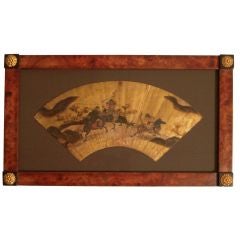
Antique 18th Century and Earlier Japanese Paintings and Screens
Wood
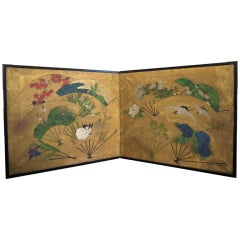
Early 20th Century Japanese Folk Art Wall-mounted Sculptures
Elm, Cypress
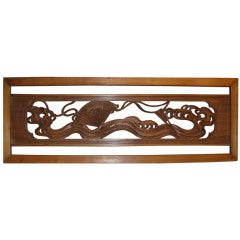
Antique 19th Century Japanese Paintings and Screens
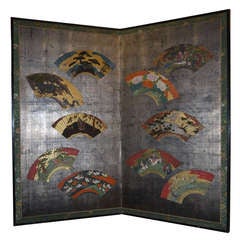
Antique 19th Century Japanese Paintings and Screens
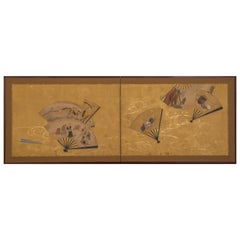
Antique 19th Century Japanese Paintings and Screens
Gold Leaf
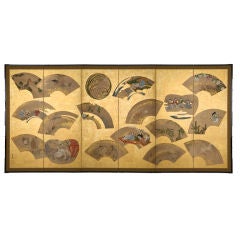
Early 20th Century Japanese Textiles
Silk
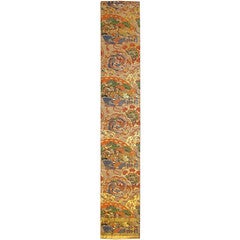

Antique 19th Century Japanese Textiles
Brocade, Silk
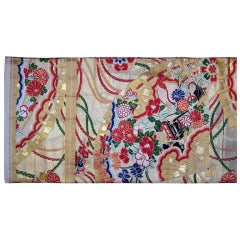
Antique Mid-18th Century Japanese Lacquer
Wood
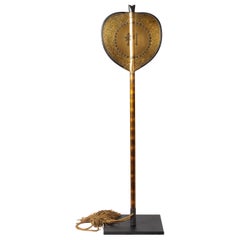
Antique Late 18th Century Japanese More Asian Art, Objects and Furniture
Iron
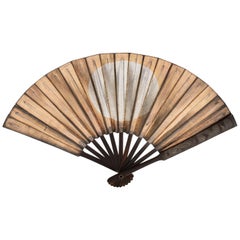
- 1
Japanese Fan Art For Sale on 1stDibs
How Much is a Japanese Fan Art?
- What are Japanese fans called?1 Answer1stDibs ExpertApril 5, 2022A folding fan from Japan is called a “sensu” or “o-gi” while a non-folding fan is called an “uchiwa.” Both styles of hand fans were used as a material to write and communicate through as well as showcase social status. Browse a selection of authentic Japanese fans on 1stDibs.
- 1stDibs ExpertApril 5, 2022There are three types of Japanese fans. The uchiwa is a fixed fan that is used practically to create a breeze and stay cool. The sensu or ogi fan is a folding fan that is a fashion accessory as well as cooling the user. The gunsen fan is a war fan that was used during war times for signaling and also occasionally as a weapon. Shop an array of authentic Japanese fans on 1stDibs.
- 1stDibs ExpertApril 16, 2024The focus of Japanese art varies. Many traditional Japanese artists sought to capture the beauty of nature in their works. However, other Japanese artists have produced work with Buddhist themes, and contemporary artists working in the country have been inspired by a range of subjects, from socioeconomic and political issues to pop culture. On 1stDibs, explore a large selection of Japanese art.
- 1stDibs ExpertApril 5, 2022The writing on Japanese art is calligraphy art called shodo. It uses Japanese kanji and kana characters. There are a variety of different shodo styles of art, including Kaisho, which is the basic, foundational form of the art. On 1stDibs, find a range of Japanese calligraphy art from top sellers..
- 1stDibs ExpertApril 5, 2022There are a variety of different types of Japanese art. One of the oldest and most admired forms of Japanese art is the art of calligraphy, which originated in the sixth or seventh century. Another type of art, ukiyo-e, is the art of the woodblock print, which depicts scenes of female beauties; kabuki actors, sumo wrestlers and more. You’ll find a variety of Japanese artwork from some of the world’s top art dealers on 1stDibs.
- 1stDibs ExpertApril 5, 2022Many art styles originated in Japan and grew in popularity over the years. Some of the most popular styles include shodo (calligraphy), ikebana, kanou and yamato-e. You’ll find a wide variety of authentic Japanese art from some of the world’s top dealers on 1stDibs.
- 1stDibs ExpertApril 5, 2022What Japanese wall art is called depends on its type. There are numerous kinds of Japanese paintings and prints, including nihonga and ukiyo-e. A Japanese wall scroll is known as a kakejiku or kakemono. On 1stDibs, find a variety of Japanese wall art.
- 1stDibs ExpertSeptember 23, 2024What the Japanese sea art is called depends on its type. Many examples of sea art from Japan are called ukiyo-e. This term refers to woodblock prints made during the 17th, 18th and 19th centuries. The Great Wave off Kanagawa by Katsushika Hokusai is arguably the most famous ukiyo-e print depicting the sea. On 1stDibs, find a wide variety of Japanese woodblock prints.
- 1stDibs ExpertOctober 15, 2024To tell if art is Japanese or Chinese, study the piece's characteristics. With paintings, Chinese artists often use more color and tend to fill their entire canvases, while Japanese artists often include more negative space and choose subtler colors. There are also differences between the brushstrokes typical of traditional Chinese and Japanese art. In Japanese paintings, brushstrokes are often short and sharp. On the other hand, Chinese paintings often display longer, more fluid brushstrokes. Learning about the defining features of various art forms and periods and looking at examples of pieces made by Japanese and Chinese artists can help you learn to spot subtle differences. Explore a diverse assortment of Japanese and Chinese art on 1stDibs.
Read More
Symbols of Happiness and Rebirth Adorn This Japanese Satsuma Bowl
Decorated with white cranes and the sought-after thousand-butterflies motif, the Meiji-period vessel offers both a celebration of traditional aesthetics and a clear reflection of the era’s appetite for exquisite export pieces.
Chicago’s Pagoda Red Has a Spirited Mix of Asian Antiques and Bold New Art
For 25 years, gallerist Betsy Nathan has leveraged her keen eye and key connections to bring a unique selection of rare finds to the market.
In L.A., Gallerist JF Chen Has Long Championed Eclectic Blue-Chip Design
Now working alongside his daughter Bianca, dealer Joel Chen has presented a most covetable array of antiques, art and contemporary creations for more than 40 years.
12 Calming Spaces Inspired by Japanese Design
From cherry-blossom-adorned walls paired with glamorous lighting to wood-paneled ceilings above checkerboard-patterned chairs, these 12 spaces seamlessly blend Eastern and Western aesthetics.
Rodrigo Rivero Lake’s Mexico City Showroom Is a Museum-Worthy Trove of Spanish Colonial and Asian Antiques
The dealer and curator has spent the past 50 years amassing a collection of exceptional art, furniture and architectural elements that trace the cultural influence of the Spanish empire from Europe to the Americas and beyond.
16 Refined Asian-Inspired Interiors
These spaces exemplify how Eastern elements elevate a home's decor.