Japanese Folding Screens

to
30
273
192
580
61
6
8
5
3
2
2
1
66
191
323
67
72
100
20
6
10
6
6
4
4
6
2
1
359
307
281
231
214
609
589
552
36
8
647
641
643
22
2
2
1
1
Sort By
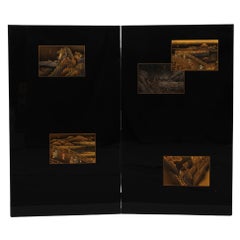
Tall, Japanese lacquer byôbu 屏風 (folding screen) by Mitsuo Takana 高名光夫 (1956)
By Mitsuo Takana
Located in Amsterdam, NL
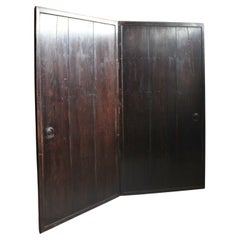
Refined, tall two-panel byôbu (folding screen) completely adorned with ‘Wajima Ryûsaku’ lacquer by
Category

Late 20th Century Japanese Paintings and Screens

Materials

Wood, Giltwood, Lacquer

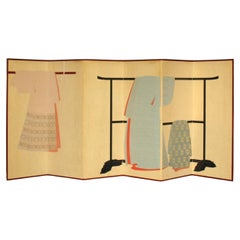
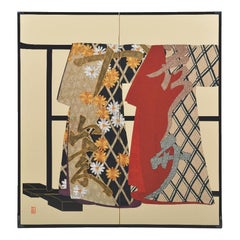
B32 Old Japanese 6panels, paper, folding Screen Dagasode 誰が袖 Byobu Kimono
Located in Niiza, JP
Dagasode 誰が袖 folding screen Material: Paper & cloth pasted on paper, wooden frame 1 piece: Width
Category

20th Century Paintings and Screens

Materials

Paper

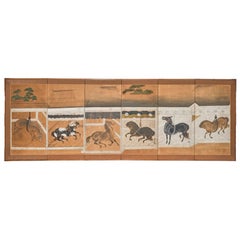
Japanese Six Panel Screen: Horses in Stable
Located in Hudson, NY
This is a beautiful and evocative antique Japanese six-panel folding screen (Byōbu), a classic
Category

Antique Early 19th Century Japanese Paintings and Screens

Materials

Brocade, Silk, Paper

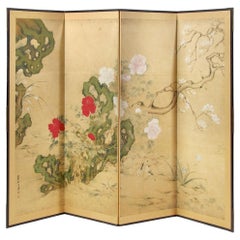
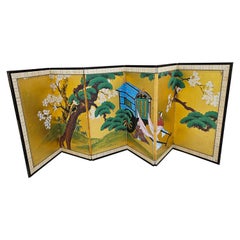
Vintage Japanese Byobu Red Floral Gold Screen
Located in Locust Valley, NY
A vintage Japanese folding four panel screen showcases a serene hand-painted landscape set against
Category

20th Century Japanese Japonisme Paintings and Screens

Materials

Silk, Paint, Paper

A two-panel folding screen with a naturalistic scene
Located in Milano, IT
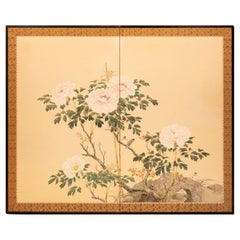
A Japanese two-panel folding screen with floral decoration depicting blooming peonies, sparrows and
Category

Early 20th Century Japanese Paintings and Screens

Materials

Paper

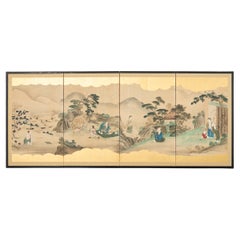
Japanese Meiji Six-Panel Folding Screen with Courtly Landscape and Pavilion
Located in Yonkers, NY
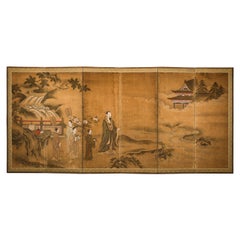
A Japanese Meiji period six-panel folding screen, late 19th century, showcasing an exquisitely
Category

Antique 19th Century Japanese Meiji Screens and Room Dividers

Materials

Silk, Wood, Paper

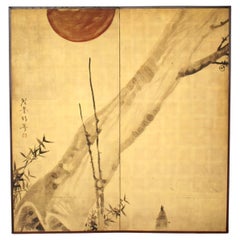
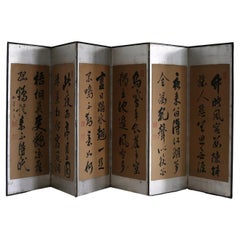
Japanese Calligraphy Two-Panel Folding Shodō Screen with Gold Leaf Accents
Located in Yonkers, NY
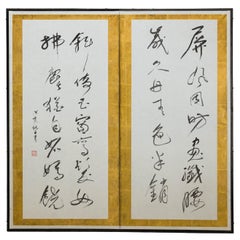
folding screen is a masterful representation of shodō, the Japanese art of calligraphy. Bold, flowing
Category

Mid-20th Century Japanese Screens and Room Dividers

Materials

Paper

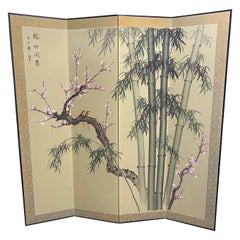
Japanese Showa Four Panel Screen Spring Bamboo Landscape
Located in Rio Vista, CA
Serene mid-20th century Showa period Japanese four-panel folding byobu screen made in the Nihonga
Category

20th Century Japanese Showa Paintings and Screens

Materials

Brass

8 Panel Japanese Cherry Blossom Painting Byobu Folding Screen Room Divider
Located in Philadelphia, PA
Large Vintage 8 Panel Japanese Cherry Blossom Painting Byobu Folding Screen Room Divider. Item
Category

Mid-20th Century Anglo-Japanese Screens and Room Dividers

Materials

Wood, Paint, Paper

Japanese Hand Painted Four Panel Screen
Located in Douglas Manor, NY
1861 Japanese hand painted and signed folding screen
Category

Vintage 1940s Paintings and Screens

Materials

Fruitwood

Vintage Gold Leaf Lacquer Asian-Inspired Four-Panel Folding Screen
Located in Sheridan, CO
Vintage Black and Gold Leaf Lacquer Asian-Inspired Four-Panel Folding Screen. An Asian-Inspired
Category

Vintage 1950s Japanese Japonisme Paintings and Screens

Materials

Gold Leaf

“Kiku Byobu”, a six-panel chrysanthemum folding screen, Rinpa School
Located in Point Richmond, CA
“Kiku Byobu”, a six-panel chrysanthemum folding screen, Rinpa School, Meiji Period (1869-1912
Category

Antique Late 19th Century Japanese Meiji Paintings and Screens

Materials

Paper

East Asian Extra Wide Folding Low Six Panel Landscape Divider Screen
Located in Germantown, MD
A 95 inches East Asian Extra Wide Folding Low Six Panel Landscape Divider Screen with beautiful
Category

Mid-20th Century Japanese Anglo-Japanese Paintings and Screens

Materials

Metal

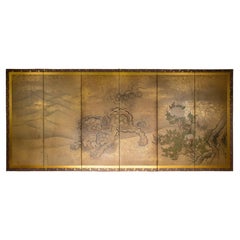
A six-panel folding screen depicting a shishi, signed Kano Tsunenobu
Located in Milano, IT
A six-panel folding screen painted in ink and pigments on paper. At the center of the composition
Category

Antique 19th Century Japanese Paintings and Screens

Materials

Paper

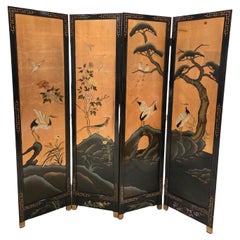
Hand Painted, 4 Panel Folding Screen with Crane Birds, Room Divider
Located in Waasmunster, BE
Hand Painted, 4 Panel Folding Screen with Crane Birds, Room Divider
Category

Vintage 1970s Japanese Japonisme Paintings and Screens

Materials

Gold Leaf

Japanese Edo Four Panel Screen Paragons of Filial Piety
Located in Rio Vista, CA
Late 19th century Edo period Japanese four panel folding byobu screen depicting four of the twenty
Category

Antique 19th Century Japanese Edo Paintings and Screens

Materials

Brass, Gold Leaf

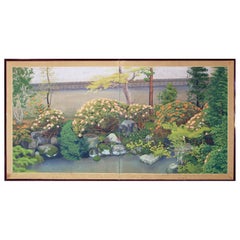
20th Century Showa Period Beautiful Spring Garden Folding Screen Two Panels
Located in Brescia, IT
Japanese screen with two doors painted with mineral pigments on rice paper. Early Showa period.
Category

Late 20th Century Japanese Showa Paintings and Screens

Materials

Paper

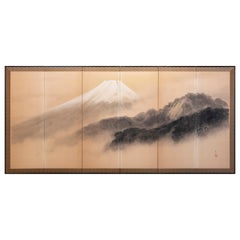
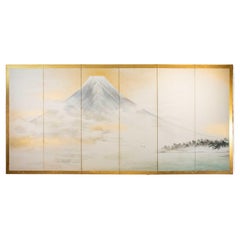
A six-panel paper folding screen of Mount Fuji shrouded in mist
Located in Milano, IT
A Japanese six-panel screen painted on paper, depicting Mount Fuji emerging from the clouds, its
Category

Antique Late 19th Century Japanese Paintings and Screens

Materials

Paper

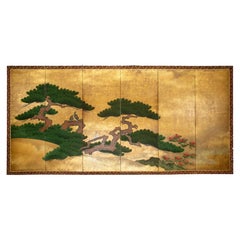
A pair of six-panel folding screens depicting two pine trees (matsu)
Located in Milano, IT
A pair of six-panel folding screens from the Kano school, painted in ink and pigments on paper. The
Category

Antique 19th Century Japanese Paintings and Screens

Materials

Paper

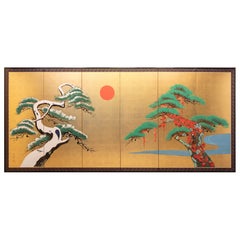
A six-panel folding screen with pine trees beneath the red sun
Located in Milano, IT
A six-panel folding screen with a gold-leaf ground, depicting two pine trees with a red sun at the
Category

Antique Late 19th Century Japanese Paintings and Screens

Materials

Gold Leaf

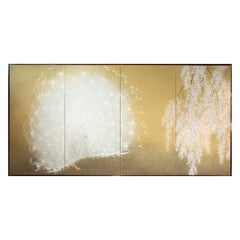
A four-panel folding screen depicting a white peacock, signed Yukihiko Kurihara
Located in Milano, IT
An unusual four-panel folding screen depicting a majestic white peacock and a flowering cherry tree
Category

Mid-20th Century Japanese Paintings and Screens

Materials

Gold Leaf

A six-panel folding screen depicting Mount Fuji seen from Lake Kawaguchi
Located in Milano, IT
A Japanese six-panel screen painted on paper and gold powder, depicting the majestic Mount Fuji
Category

Antique Late 19th Century Japanese Paintings and Screens

Materials

Gold Leaf

19th Century Japanese Screen with Sumiyoshi Shrine on Gold Leaf
Located in New York, NY
This is a beautiful antique six-fold Japanese screen. The design is beautifully detailed with
Category

Antique Late 18th Century Japanese Paintings and Screens

Materials

Gold Leaf

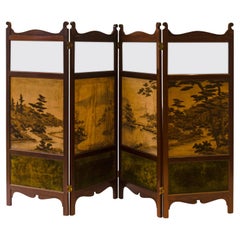
E. W. Godwin, Attri An Anglo-Japanese Four-Fold Screen With Japanese Silk Scenes
By Edward William Godwin
Located in London, GB
Edward William Godwin (attributed), a walnut four-fold screen, bevel glazed, with woven silk and
Category

Antique Late 19th Century Arts and Crafts Screens and Room Dividers

Materials

Walnut

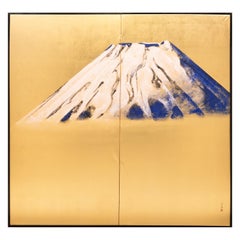
A two-panel folding screen on gold leaf depicting snow-covered Mount Fuji
Located in Milano, IT
A Japanese two-panel folding screen painted on paper with applied gold leaf, depicting Mount Fuji
Category

Mid-20th Century Japanese Paintings and Screens

Materials

Paper

Two-panel folding screen, Nihonga, Hirai Baisen (1889–1969), early Shōwa era (19
Located in PARIS, FR
Two-panel folding screen, Nihonga, Hirai Baisen (1889–1969), early Shōwa era (1940s) This two
Category

20th Century Japanese Paintings and Screens

Materials

Paper

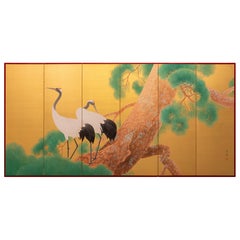
A six-panel folding screen with a pair of Manchurian cranes on gilt silk
Located in Milano, IT
A Japanese six-panel folding screen painted on silk with a golden ground, depicting two Manchurian
Category

Early 20th Century Japanese Paintings and Screens

Materials

Silk, Paper

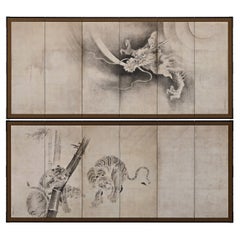
17th Century Japanese Screen Pair. Tiger Dragon by Kaiho Yusetsu
Located in Kyoto, JP
Japanese Screens. Ink and slight color on paper. Dimensions: Each screen: H. 171 cm x W. 380 cm (67.5
Category

Antique Mid-17th Century Japanese Edo Paintings and Screens

Materials

Silk, Wood, Paper

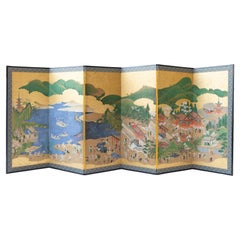
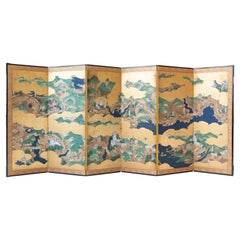
Early 19th century Japanese Screen with Village Scenes, on Gold Leaf
Located in New York, NY
A striking antique six-fold Japanese screen. This is one of a pair. See other listing. The
Category

Antique Early 19th Century Japanese Paintings and Screens

Materials

Gold Leaf

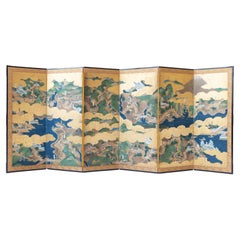
Early 19th century Japanese Screen with Village Scenes on Gold Leaf
Located in New York, NY
A striking antique six-fold Japanese screen. This is one of a pair. The subject is "Tokaido
Category

Antique Early 19th Century Japanese Paintings and Screens

Materials

Gold Leaf

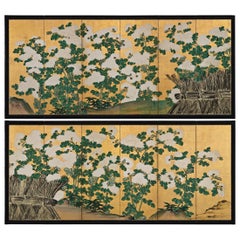
Mid-18th Century Japanese Screen Pair, One Hundred Flowers, Chrysanthemums
Located in Kyoto, JP
Omori Soun (b. 1704) Chrysanthemums - One Hundred Flowers A Pair of Six-fold Japanese Screens
Category

Antique Mid-18th Century Japanese Edo Paintings and Screens

Materials

Gold Leaf

Japanese Asian Signed Large Four-Panel Byobu Screen Bamboo Cherry Blossoms Birds
Located in Studio City, CA
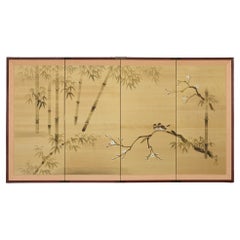
A gorgeous large/tall four-panel Japanese Byobu folding screen depicting a nature scene/landscape
Category

20th Century Japanese Showa Paintings and Screens

Materials

Silk

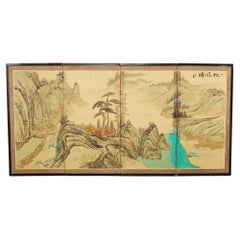
Japanese Style Four Panel Screen Turquoise River Landscape
Located in Rio Vista, CA
Distinctive Japanese style four panel folding Byobu screen depicting a turquoise river mountain
Category

20th Century Korean Showa Paintings and Screens

Materials

Wood, Paper

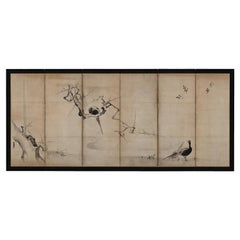
17th Century Japanese Screen. Ink Plum Tree Birds by Kano Naonobu.
Located in Kyoto, JP
Kano Naonobu (1607-1650) Plum Tree and Birds Six-fold Japanese Screen. Ink and slight color on
Category

Antique 17th Century Japanese Edo Paintings and Screens

Materials

Wood, Paper

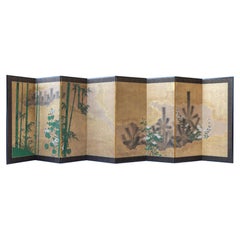
19th century Japanese Eight Panel Screen with Bamboo, Pines and Gold Clouds
Located in New York, NY
Japanese Edo Period (1603-1868) folding screen, (Byōbu) featuring bamboo, flowers and pines on
Category

Antique Early 19th Century Japanese Paintings and Screens

Materials

Wood, Paper

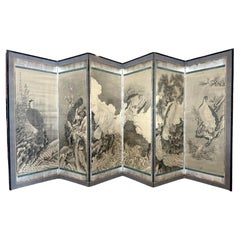
Rare Japanese Floor Screen of Perched Eagles Soga Shohaku Edo period
Located in Atlanta, GA
A rare six-panel Japanese folding floor screen (Byōbu) by Soga Shōhaku (1730-1781) from Edo period
Category

Antique 18th Century Japanese Edo Paintings and Screens

Materials

Brocade, Wood, Paper

JapaneseAntiques Terasaki kogyo, Gold background, Bamboo and plum folding screen
Located in Niiza, JP
, folds, and sun damage on the paper. *The joints of the folding screen are not strong, so please be
Category

20th Century Paintings and Screens

Materials

Paper

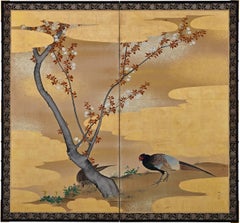
Early 19th Century Japanese Screen. Cherry Blossom Pheasants by Mori Tetsuzan
Located in Kyoto, JP
Mori Tetsuzan (1775-1841) Pheasants and Cherry Blossoms Two-fold Japanese screen. Ink, color
Category

Antique Early 19th Century Japanese Edo Paintings and Screens

Materials

Gold Leaf

Mid 19th Century Japanese Screen Pair. Flowers Birds of the Four Seasons.
Located in Kyoto, JP
of smaller Japanese six-fold screens by the Nanpin school artist Shioka Sorin (1781-1850). The highly
Category

Antique Mid-19th Century Japanese Edo Paintings and Screens

Materials

Silk

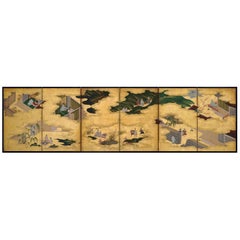
Japanese Screen Painting, Circa 1700 Tales of Ise by Tosa Mitsusuke
By Tosa Mitsusuke 1
Located in Kyoto, JP
A six-fold Japanese screen by Tosa Mitsusuke (1675-1710), Japan 17th-18th century, Edo period. The
Category

Antique Late 17th Century Japanese Edo Paintings and Screens

Materials

Gold Leaf

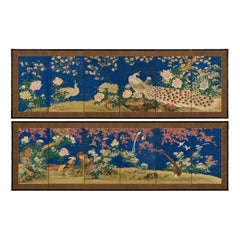
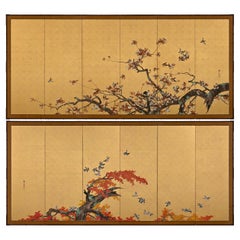
Meiji Era, Circa 1900 Japanese Screen Pair, Flowers Birds of Spring Autumn
Located in Kyoto, JP
) A pair of six-fold Japanese flower and bird screens from the late Meiji period. The cherry blossom
Category

Antique 1890s Japanese Meiji Paintings and Screens

Materials

Gold Leaf

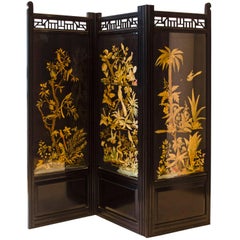
E W Godwin, Attri An Anglo-Japanese Three-Fold Screen with Birds Amidst Foliage
By Edward William Godwin
Located in London, GB
Edward William Godwin (attributed), an Aesthetic Movement ebonised and needlework three-fold screen
Category

Antique Late 19th Century British Anglo-Japanese Screens and Room Dividers

Materials

Walnut

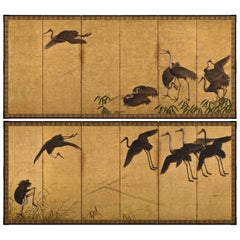
17th Century Japanese Screen Pair. Flock of Cranes. Ink and color on gold leaf.
Located in Kyoto, JP
A pair of six-fold Japanese screens from the 17th century depicting a flock of cranes arriving at
Category

Antique 17th Century Japanese Edo Paintings and Screens

Materials

Gold Leaf

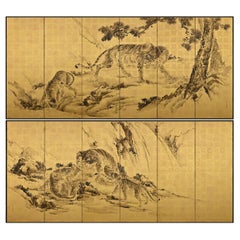
Japanese Screen Pair, Tigers by Kishi Renzan, Late Edo Period
Located in Kyoto, JP
paper. In this monochromatic pair of six-fold Japanese screens painted on gold-leaf, Kishi Renzan has
Category

Antique Mid-19th Century Asian Edo Paintings and Screens

Materials

Gold Leaf

Mid-Century Japanese 4-Panel Folding Room Divider/Separè 1940s
Located in Palermo, IT
Mid-Century Japanese 4-panel folding room divider 1940s Purchased from a Sicilian merchant. Good
Category

Vintage 1940s Japanese Screens and Room Dividers

Materials

Wood

Japanese Floor Screen Shoji Paper Natural Elements Elmwood Frame, 1950-1960
Located in Camden, ME
A Japanese three panel folding floor screen framed in Japanese Elmwood each panel encasing a large
Category

Mid-20th Century Japanese Mid-Century Modern Screens and Room Dividers

Materials

Elm, Paper

Circa 1700 Japanese Sliding Door (Fusuma) Set. Pine Trees on the Seashore.
Located in Kyoto, JP
culturally significant locations in Japan. These sliding doors and folding screens served both artistic and
Category

Antique Late 17th Century Japanese Edo Paintings and Screens

Materials

Gold Leaf

Late 19th century (Meiji period) painting depicting tiger
Located in Fukuoka, JP
and signed by the artist. This work was originally part of a Japanese byobu folding screen and can now
Category

Antique Late 19th Century Japanese Meiji Paintings and Screens

Materials

Gold Leaf

Taisho Period Japanese Room Divider with Silver Leaf Border
Located in London, England
Stunning 1920s Japanese room divider / folding screen. Decorated with bold calligraphy, usually a
Category

Early 20th Century Art Deco Screens and Room Dividers

Materials

Silver Leaf

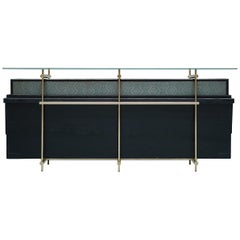
Contemporary Japanese Console with Folding Screen Zen Japanese Modern
By Ryosuke Harashima
Located in Shibuya-ku, Tokyo
Japanese gold folding screens. It is a new history of the tool was used in Japanese night culture. If you
Category

2010s Japanese Edo Console Tables

Materials

Brass

Japanese Contemporary Red Black Silk Folding Screen, 2
Located in Takarazuka, JP
Outstanding Japanese contemporary two panel "byobu" or folding screen featuring genryoku style
Category

21st Century and Contemporary Japanese Meiji Ceramics

Materials

Gold

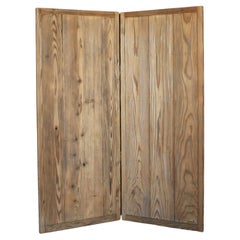
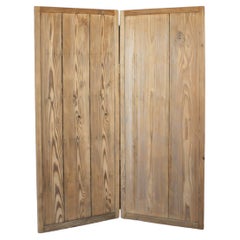
B47 Japanese antique, cedar Byobu folding screen, room dividers
Located in Niiza, JP
sandwiched): 15 cm x 75 cm x 180 cm, weight 20 kg A cedar folding screen with a lovely worn wood grain. Only
Category

Antique 19th Century Japanese Antiquities

Materials

Wood, Cedar

B40 Japanese antique, cedar Byobu folding screen, room dividers
Located in Niiza, JP
): 15 cm x 75 cm x 180 cm, weight 20 kg A cedar folding screen with a lovely worn wood grain. Only the
Category

Antique 19th Century Japanese Furniture

Materials

Cedar, Wood

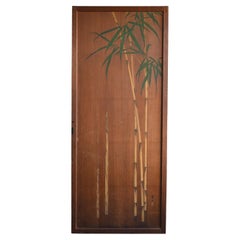
Wooden door with old Japanese bamboo painting/Wall hanging painting/Wooden door
Located in Sammu-shi, Chiba
a work of art, as if it were a cutout of a Japanese folding screen. The size is 75.5cm wide
Category

20th Century Japanese Taisho Paintings

Materials

Cedar

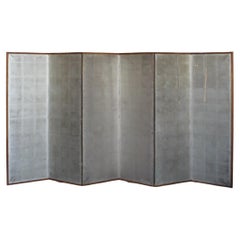
B46 Old Japanese 6panels, Silver Paper, folding Screen, brown-rimmed
Located in Niiza, JP
thick plywood sandwiched): 20 cm x 55 cm x 150 cm, weight 25 kg A simple silver foil folding screen. It
Category

20th Century Japanese Antiquities

Materials

Paper

B43 Japanese antique, pine, cedar Byobu folding screen, room dividers
Located in Niiza, JP
mm Folded size: Width 900 x Height 1740 x Depth 60 mm, weight 14 kg Packaging (4-5 mm thick plywood
Category

Antique 19th Century Japanese Furniture

Materials

Cedar, Pine

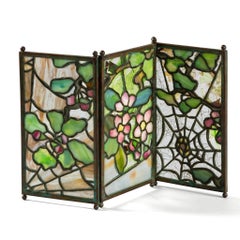
Tiffany Studios New York "Cobweb and Apple Blossom" Tea Screen
By Tiffany Studios
Located in New York, NY
ornamental piece, inspired by the byōbu, or traditional Japanese folding screen. It represents a rare and
Category

Early 20th Century American Art Nouveau Centerpieces

Materials

Bronze

  • 1
  • ...
Get Updated with New Arrivals
Save "Japanese Folding Screens", and we’ll notify you when there are new listings in this category.

Japanese Folding Screens For Sale on 1stDibs

Find a variety of Japanese folding screens available on 1stDibs. Frequently made of paper, metal and wood, all Japanese folding screens available were constructed with great care. Find 148 antique and vintage Japanese folding screens at 1stDibs now, or shop our selection of 43 modern versions for a more contemporary example of this long-cherished furniture. Japanese folding screens have been made for many years, and versions that date back to the 18th Century alongside those produced as recently as the 21st Century. Japanese folding screens made by Art Deco designers — as well as those associated with Arts and Crafts — are very popular at 1stDibs. Japanese School, Ryosuke Harashima and Kano Tanshin each produced beautiful Japanese folding screens that are worth considering.

How Much are Japanese Folding Screens?

Japanese folding screens can differ in price owing to various characteristics — the average selling price at 1stDibs is $7,850, while the lowest priced sells for $248 and the highest can go for as much as $198,390.

Finding the Right Paintings-screens for You

Traditional Asian paintings were often created on scrolls and folding screens. Artisans made screens that could be folded up or spread out by connecting several panels using hinges. Today, antique Asian folding screens and paintings are sophisticated decorative accents that can serve as makeshift partitions to ensure privacy.

The original folding screens were created by Chinese artists. The earliest record of screens comes from the 2nd century B.C., and surviving examples date back to the Ming dynasty. Chinese painting utilizes many of the same tools as calligraphy — these screens were crafted from wood with painted panels featuring striking art or calligraphy that told cultural stories or represented nature and life in the area.

The practice was introduced to Japan, where paintings for screens were made on paper and silk, in the 8th century. These paintings frequently feature subjects such as landscapes, animals, flowers and Buddhist religious themes. Along with screens for tea ceremonies and dance backgrounds, there were screens for use in Shinto and Buddhist temples.

In the 17th century, screens began to be imported to Europe where their popularity grew. Coco Chanel famously collected Coromandel folding screens.

Traditional Asian paintings can make a tasteful addition to any wall, and screens can be used as decoration or, in the case of larger iterations, as an aesthetic way to divide a large room. Browse the selection of antique Asian paintings and screens from a variety of styles and eras on 1stDibs.

Questions About Japanese Folding Screens
  • 1stDibs ExpertApril 5, 2022
    Japanese screen painting is the art of creating byōbu, or Japanese screens. Byōbu vary in subject matter and style. The screens are free-standing, portable and decorated with symbolic images or calligraphy. It is common to find byōbu in pairs with at least two panels. Shop a selection of byōbu on 1stDibs.
  • 1stDibs ExpertAugust 17, 2021
    Japanese screens are called Byōbu and are made from many panels with beautiful calligraphy and paintings. These folding screens can be a decorative and interesting way to separate rooms in a living space. Find a collection of Japanese screens for sale on 1stDibs.

  • Lotus Gallery
    Lotus GalleryMarch 17, 2021
    A Japanese low screen was traditionally used while seated upon the floor. The low screen would block wind and drafts, provide limited privacy, and are often decorated with seasonal themes.