Japanese Painted Screen

to
160
917
316
803
573
253
253
199
150
131
98
75
52
47
45
39
37
27
25
18
18
17
17
16
15
15
12
11
10
9
8
7
5
5
5
4
4
4
4
3
3
3
3
3
2
2
2
1
1
1
1
65
21
12
4
3
Sort By
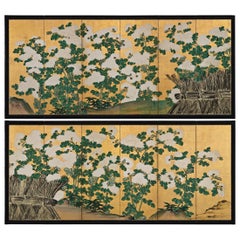
Mid-18th Century Japanese Screen Pair, One Hundred Flowers, Chrysanthemums
Located in Kyoto, JP
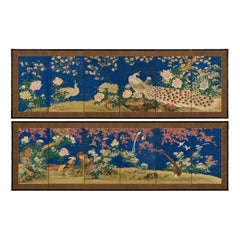
Omori Soun (b. 1704) Chrysanthemums - One Hundred Flowers A Pair of Six-fold Japanese Screens
Category

Antique Mid-18th Century Japanese Edo Paintings and Screens

Materials

Gold Leaf

Pair of Japanese Edo Six Panel Screens the Seven Sages
Located in Rio Vista, CA
Fantastic pair of 19th century Japanese late Edo/early Meiji period six-panel screens titled The
Category

Antique 19th Century Japanese Edo Paintings and Screens

Materials

Brass, Gold Leaf

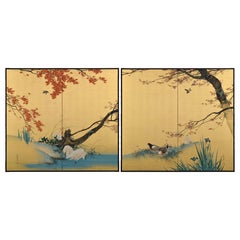
Meiji era Japanese Screen Pair, Two-panel. Spring Autumn Birds Flowers.
Located in Kyoto, JP
pair of two-panel Japanese screens, painted around 1900 by Hasegawa Gyokujun, presents a richly
Category

Early 20th Century Japanese Meiji Paintings and Screens

Materials

Gold Leaf

Japanese screen two-panel
By Japanese Studio
Located in Brescia, IT
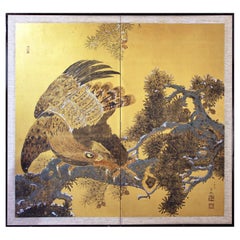
Eagle on a pine branch with traces of white snow. A rare subject for this mid-century two-panel screen, painted in mineral pigments on gilded paper. The screen is a nice size and is ...
Category

20th Century Japanese Showa Paintings and Screens

Materials

Paper

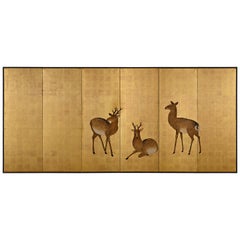
19th Century Japanese Screen, Deer in Spring, Maruyama Shijo School
Located in Kyoto, JP
A six-panel Japanese folding screen from the leading Maruyama-Shijo artist Okamoto Toyohiko (1773
Category

Antique Early 19th Century Japanese Edo Paintings and Screens

Materials

Gold Leaf

Early 20th Century Japanese Cherry Blossom Screen by Kano Sanrakuki
Located in Kyoto, JP
Cherry Blossoms Kano Sanrakuki (1898-1981) Showa period, circa 1930 2-panel Japanese
Category

Early 20th Century Japanese Showa Paintings and Screens

Materials

Gold Leaf

Japanese Asian Signed Four Panel Folding Byobu Cherry Blossom Pine Tree Screen
Located in Studio City, CA
A gorgeous four-panel Showa Period Japanese Byobu folding screen featuring luminous cherry blossoms
Category

Mid-20th Century Japanese Showa Paintings and Screens

Materials

Silk, Paint

Japanese Screen, Early 20th Century Wagtail Chrysanthemum by Ishizaki Koyo
Located in Kyoto, JP
screen (furosaki byobu), was made for use during the Japanese tea-ceremony. In keeping with the seasonal
Category

Early 20th Century Japanese Taisho Paintings and Screens

Materials

Gold Leaf

Circa 1920 Japanese Screen. Cat Mouse Harvest Scene on Gold Silk.
Located in Kyoto, JP
The narrative playfulness of the scene depicted on this Japanese screen sets alight what is at its
Category

Early 20th Century Japanese Taisho Paintings and Screens

Materials

Gold

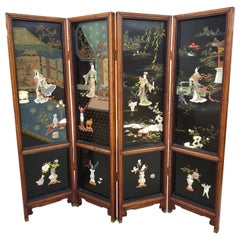
Japanese Polychrome Oak Lacquer Painted Carved Stone Figures Four-Panel Screen
Located in Germantown, MD
A stunning Japanese Polychrome Solid Oak Lacquered, Painted and Carved Stone figures Four-Panel
Category

Mid-20th Century Unknown Anglo-Japanese Screens and Room Dividers

Materials

Stone

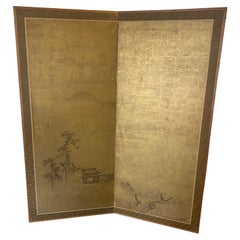
Japanese Asian Signed Two Panel Meiji Edo Folding Byobu Landscape House Screen
Located in Studio City, CA
A gorgeous, large two-panel antique Japanese Byobu folding screen depicting a nature landscape
Category

Antique 19th Century Japanese Meiji Paintings and Screens

Materials

Gold Leaf

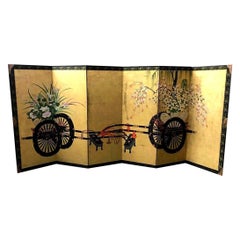
Japanese Asian Large Six-Panel Folding Byobu Flower Cart Screen, 19th Century
Located in Studio City, CA
A gorgeous six-panel Japanese Byobu folding screen. Listing as Meiji period but could very possibly
Category

Antique 19th Century Japanese Meiji Paintings and Screens

Materials

Gold Leaf

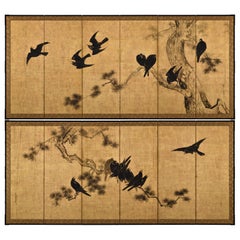
Mid 18th Century Japanese Screen Pair. Crows Pines by Unkoku Toshuku.
Located in Kyoto, JP
Unkoku Toshuku (1722-1779) Crows and Pines A pair of six-panel Japanese Screens. Ink and gold
Category

Antique Mid-18th Century Japanese Edo Paintings and Screens

Materials

Gold Leaf

Two-panel screen
By Japanese Studio
Located in Brescia, IT
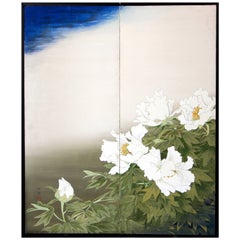
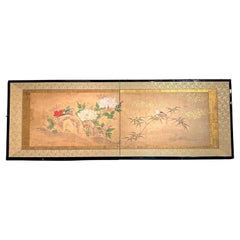
Modern two-panel screen with white peonies. Hand-painted on vegetable paper. Very fresh work that is easy to incorporate into design furniture. Very good state of preservation, sig...
Category

20th Century Japanese Showa Paintings and Screens

Materials

Wood, Paper

Paravento Giapponese a due pannelli
By Japanese Studio
Located in Brescia, IT
Sempre alla ricerca di cose particolari abbiamo acquistato questo paravento giapponese da una collezionista di Osaka. Un esempio di arte del novecento che si ispira alla scuola di Ka...
Category

20th Century Japanese Showa Paintings and Screens

Materials

Gold

Japanese screen
By Japanese Studio
Located in Brescia, IT
Two-panel screen of Rinpa school painted with mineral pigments on silk and rice paper. It depicts colorful peony flowers. This is the flower of spring, symbolizing success and pro...
Category

20th Century Japanese Showa Paintings and Screens

Materials

Silk, Paper

Japanese Asian Pair of Large Six-Panel Folding Byobu Screens Mythical Landscape
Located in Studio City, CA
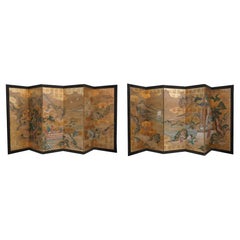
Japanese/Asian Byobu folding screens depicting an almost magical/ mythical village scene with floating
Category

Antique 18th Century Japanese Meiji Paintings and Screens

Materials

Gold Leaf

Japanese Asian Two Panel Meiji Edo Byobu Cherry Blossom Tree Folding Screen
Located in Studio City, CA
A gorgeous, large two-panel antique Japanese Byobu folding screen depicting a nature landscape
Category

Antique 19th Century Japanese Meiji Paintings and Screens

Materials

Silver Leaf

B3 Japanese Antiques 6-panel, gold back, flower bird duck, folding screen
Located in Niiza, JP
flower and bird painting is drawn on paper on a folding screen with gold paper base. Representing the
Category

Antique 19th Century Japanese Paintings and Screens

Materials

Paper

B2 Japanese Antiques Kano School, 6panel folding screen, Pine Tree and Pheasant
Located in Niiza, JP
painted plants and birds on a background dotted with gold-painted pear-grained fabric. Probably the work
Category

Antique 19th Century Japanese Paintings and Screens

Materials

Paper

17th Century Japanese Screen. Ink Plum Tree Birds by Kano Naonobu.
Located in Kyoto, JP
Kano Naonobu (1607-1650) Plum Tree and Birds Six-fold Japanese Screen. Ink and slight color on
Category

Antique 17th Century Japanese Edo Paintings and Screens

Materials

Wood, Paper

Japanese Asian Two Panel Meiiji Edo Folding Byobu Screen Landscape with Birds
Located in Studio City, CA
A gorgeous two-panel Japanese Byobu folding screen depicting a nature landscape scene with a two
Category

Antique 19th Century Japanese Meiji Paintings and Screens

Materials

Wood, Paper

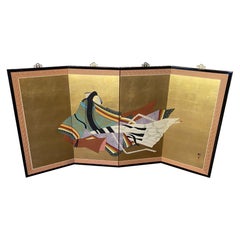
Japanese Asian Signed Four-Panel Folding Byobu Showa Genji Screen Lady Murasaki
Located in Studio City, CA
A gorgeous and quite striking four-panel Japanese Byobu folding screen featuring an elegantly clad
Category

Mid-20th Century Japanese Showa Paintings and Screens

Materials

Gold Leaf

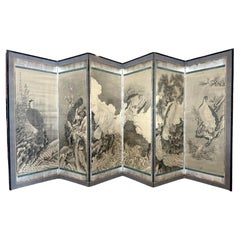
Rare Japanese Floor Screen of Perched Eagles Soga Shohaku Edo period
Located in Atlanta, GA
A rare six-panel Japanese folding floor screen (Byōbu) by Soga Shōhaku (1730-1781) from Edo period
Category

Antique 18th Century Japanese Edo Paintings and Screens

Materials

Brocade, Wood, Paper

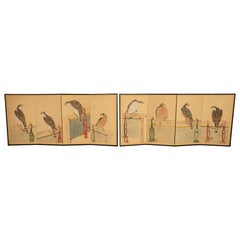
Pair Antique Japanese Edo Falcon Hawk Birds of Prey Handpainted Screens 1860
By Soga Nichokuan 1
Located in Portland, OR
backing. Condition is very good, this beautiful pair of antique hand-painted Japanese screens from the
Category

Antique Late 19th Century Japanese Edo Paintings and Screens

Materials

Paper, Wood

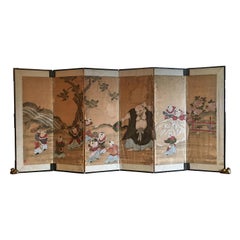
Japanese Six Panel Screen with Hotei, Edo Period, Early 19th Century
Located in Austin, TX
A delightful Japanese six panel painted paper screen featuring the beloved figure Hotei, Edo Period
Category

Antique Early 19th Century Japanese Edo Paintings and Screens

Materials

Silk, Paper

Paravento giapponese a sei pannelli dipinto su foglia d argento
By Japanese Studio
Located in Brescia, IT
Paesaggio giapponese: paravento a sei pannelli dipinto a pigmenti minerali su foglia d'argento. Elegante e moderno esempio di arte orientale senza figure uccelli o fiori. Paravento b...
Category

Mid-20th Century Japanese Showa Paintings and Screens

Materials

Silver Leaf

Paravento Giapponese a sei pannelli su foglia d oro.
By Japanese Studio
Located in Brescia, IT
Paravento giapponese a sei pannelli , opera di un pittore della prima metà del 19° secolo, di scuola Rinpa. Sei pannelli dipinti con inchiostro su foglia oro e "gofun" su carta veget...
Category

Antique Early 19th Century Japanese Edo Paintings and Screens

Materials

Gold Leaf

Two-panel screen of " Rinpa School"
By Japanese Studio
Located in Brescia, IT
Floral scene of a Rimpa School garden with polychrome chrysanthemum flowers. Two-panel screen painted in pigment on gilded rice paper of beautiful size and well preserved. Bold color...
Category

20th Century Japanese Showa Paintings and Screens

Materials

Gold Leaf

19th century Japanese Eight Panel Screen with Bamboo, Pines and Gold Clouds
Located in New York, NY
Japanese Edo Period (1603-1868) folding screen, (Byōbu) featuring bamboo, flowers and pines on
Category

Antique Early 19th Century Japanese Paintings and Screens

Materials

Wood, Paper

Japanese Four Panel Paper Screen
Located in Essex, MA
Pair of two panel screens with a rooster and a hen in amongst bamboo. Signed by the artist Ema
Category

Antique 1850s Japanese Screens and Room Dividers

Materials

Paper

Late 17th Century Japanese Screen. Puppy and Kittens on Gold Leaf.
Located in Kyoto, JP
Anonymous Late 17th century Puppy & Kittens A six-panel Japanese screen. Ink, color, gofun, gold
Category

Antique Late 17th Century Japanese Edo Paintings and Screens

Materials

Gold Leaf

Six-panel gold leaf screen
By Japanese Studio
Located in Brescia, IT
Large Japanese six-panel screen, ink, color, gold, and gold leaf on paper, depicting three scenes from Genji monogatari (The Tale of Genji), the vignettes punctuated by raised golden...
Category

Antique Early 19th Century Japanese Edo Paintings and Screens

Materials

Gold Leaf

Large Japanese 6-panel byôbu 屏風 (folding screen) with chrysanthemum garden
Located in Amsterdam, NL
A very colourful and captivating large six-panel byôbu (folding screen) with a refined continuous
Category

Antique Late 19th Century Japanese Paintings and Screens

Materials

Gold Leaf

Japanese Asian Four-Panel Folding Byobu Showa Screen Tale of Genji Cherry Tree
Located in Studio City, CA
A gorgeous four-panel Japanese Byobu folding screen depicting a scene from the Classic Japanese
Category

20th Century Japanese Showa Paintings and Screens

Materials

Gold Leaf

Mid 19th Century Japanese Screen Pair. Flowers Birds of the Four Seasons.
Located in Kyoto, JP
Shioka Sorin (1781-1850) Flowers & Birds of the Four Seasons Pair of six-panel Japanese Screens
Category

Antique Mid-19th Century Japanese Edo Paintings and Screens

Materials

Silk

Japanese Screen Painting, Early 19th Century, Autumn Flowers by Sakai Hoitsu
Located in Kyoto, JP
, Edo period. This small Japanese folding screen painted by Sakai Hoitsu was originally designed as a
Category

Antique Early 19th Century Japanese Edo Paintings and Screens

Materials

Wood, Silk

Early 20th Century Japanese Screen Pair - Ink Pine Trees on Gold
Located in Kyoto, JP
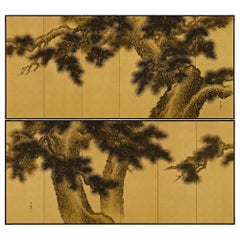
monumental six-panel Japanese pine screens by the renowned Nihonga artist Imao Keisho. Here Keisho entirely
Category

Early 20th Century Japanese Showa Paintings and Screens

Materials

Gold Leaf

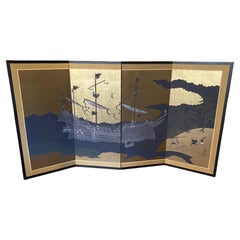
Japanese Asian Signed Four Panel Folding Byobu Nanban Ship at Sea Arrival Screen
Located in Studio City, CA
Europeans) in Japan. These type screens, painted in the Nihonga school style, served not only as works of
Category

Mid-20th Century Japanese Showa Paintings and Screens

Materials

Gold Leaf

Japanese "Magpie and Peony" Two Panel Screen, Edo Period, 18th/19th century
Located in Austin, TX
A sublime Japanese two panel "Magpie and Peony" screen, ink and color on paper, Edo Period, late
Category

Antique Early 19th Century Japanese Edo Paintings and Screens

Materials

Copper

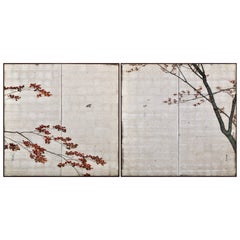
1895 Meiji Japanese Screen Pair. Cherry Blossoms Autumn Maples on Silver Leaf
Located in Kyoto, JP
two-panel Japanese screens; ink and pigments on silver leaf This refined pair of screens by Isobe
Category

Antique Late 19th Century Japanese Meiji Paintings and Screens

Materials

Silver Leaf

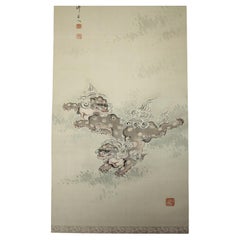
K18 Japanese Antiques A Silk hanging scroll, Lion painted
Located in Niiza, JP
items, please request a quote from 1stdibs via "Shipping & Returns Ships from Japan: Rates vary Details".
Category

20th Century Japanese Paintings and Screens

Materials

Silk

Hand Painted, 4 Panel Folding Screen with Crane Birds, Room Divider
Located in Waasmunster, BE
Hand Painted, 4 Panel Folding Screen with Crane Birds, Room Divider
Category

Vintage 1970s Japanese Japonisme Paintings and Screens

Materials

Gold Leaf

Japanese Asian Signed Four Panel Folding Byobu Screen of Mount MT Fuji Landscape
Located in Studio City, CA
A gorgeous four-panel Showa Period Japanese Byobu folding screen featuring a luminous Mount (Mt
Category

20th Century Japanese Showa Paintings and Screens

Materials

Gold Leaf

Japanese Screen Painting, Circa 1700 Tales of Ise by Tosa Mitsusuke
By Tosa Mitsusuke 1
Located in Kyoto, JP
A six-fold Japanese screen by Tosa Mitsusuke (1675-1710), Japan 17th-18th century, Edo period. The
Category

Antique Late 17th Century Japanese Edo Paintings and Screens

Materials

Gold Leaf

Early 19th Century Japanese Screen. Cherry Blossom Pheasants by Mori Tetsuzan
Located in Kyoto, JP
Mori Tetsuzan (1775-1841) Pheasants and Cherry Blossoms Two-fold Japanese screen. Ink, color
Category

Antique Early 19th Century Japanese Edo Paintings and Screens

Materials

Gold Leaf

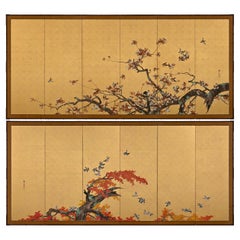
Meiji Era, Circa 1900 Japanese Screen Pair, Flowers Birds of Spring Autumn
Located in Kyoto, JP
) A pair of six-fold Japanese flower and bird screens from the late Meiji period. The cherry blossom
Category

Antique 1890s Japanese Meiji Paintings and Screens

Materials

Gold Leaf

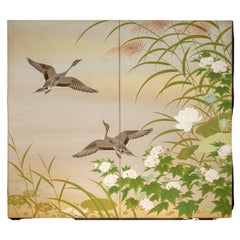
A Two-panel Screen Painted On Paper Depicting A Naturalistic Scene
Located in Milano, IT
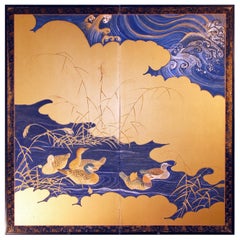
Two-panel screen painted on paper, depicting a naturalistic scene with two pintail ducks in flight
Category

Vintage 1920s Japanese Paintings and Screens

Materials

Paper

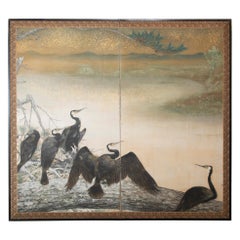
Taisho Period Painted Silk Screen Depicting Nesting Cormorants by Asami Joujou
Located in Stamford, CT
An exquisite Taisho period screen depicting nesting cormorants painted on raw silk with gold fleck
Category

Vintage 1920s Japanese Taisho Paintings and Screens

Materials

Silk

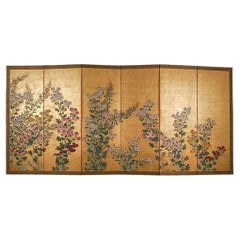
Japanese Six-Panel Screen Byobu With Chrysanthemums And Autumn Grass and Flower
Located in Torino, IT
The 19th Century Six-Panel Japanese folding screen "Byōbu" usually used in the most important
Category

Antique Mid-19th Century Japanese Edo Paintings and Screens

Materials

Gold Leaf

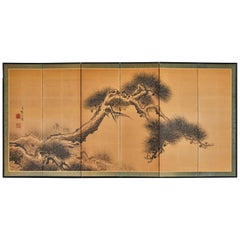
Japanese Six Panel Screen: Ink Painting of a Weathered Pine Tree
Located in Hudson, NY
Meiji period (1868 - 1912) sumi-e (or ink painting) on paper of a venerable pine tree with limbs stretching out over a bluff. Beautiful signature and seal read: Biei. Ink on paper ...
Category

Antique 19th Century Japanese Paintings and Screens

Materials

Brocade, Silk, Paper

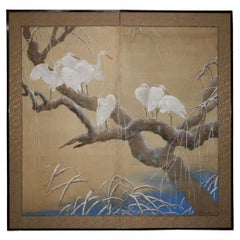
Japanese Two-Panel Screen with Snow Cranes on a Willow Tree, 19th C
Located in New York, NY
This great masterpiece is one of the most amazing screen paintings we have seen, each snow crane is
Category

Antique 1860s Japanese Japonisme Paintings and Screens

Materials

Brocade, Wood

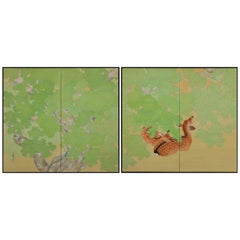
Early 20th Century Pair of Japanese Folding Screens, Deer Under Maple Trees
Located in Kyoto, JP
pigment on silk. Signature: Goho Seal: Goho A pair of two-fold Japanese silk screens from the
Category

Vintage 1920s Japanese Taisho Paintings and Screens

Materials

Wood, Paper, Silk

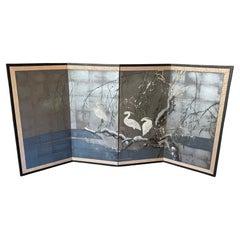
Japanese Asian Signed Four Panel Folding Byobu Screen Herons in the Winter Snow
Located in Studio City, CA
A gorgeous four-panel Showa Period Japanese Byobu folding screen depicting a nature landscape scene
Category

Mid-20th Century Japanese Showa Paintings and Screens

Materials

Silver Leaf

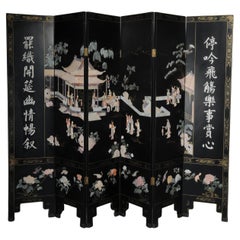
Exclusive Japanese screen/room divider made of black lacquer, painted and inlaid
Located in Berlin, DE
Exclusive Japanese screen/room divider made of black lacquer, painted and inlaid Carved in wood
Category

20th Century Japanese Screens and Room Dividers

Materials

Stone, Quartz

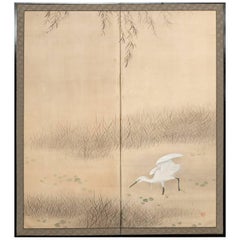
Japanese Two Panel Screen, Heron In Water Lily Pond Under Willow
Located in Hudson, NY
Japanese Screen painted with Heron In Water Lily Pond Under Willow. Meiji period (1868 - 1912
Category

Early 20th Century Japanese Meiji Paintings and Screens

Materials

Wood, Paper

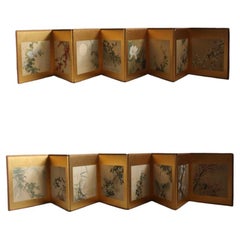
B02 Japanese Antiques 8 panels, set of 2, flowers and birds, gold folding screen
Located in Niiza, JP
panels. A set of 2 folding screens, with a total of 16 paintings to enjoy. A serious Japanese painting
Category

Antique 19th Century Japanese Paintings and Screens

Materials

Paper

  • 1
  • ...
Get Updated with New Arrivals
Save "Japanese Painted Screen", and we’ll notify you when there are new listings in this category.

Japanese Painted Screen For Sale on 1stDibs

With a vast inventory of beautiful furniture at 1stDibs, we’ve got just the Japanese painted screen you’re looking for. Frequently made of paper, fabric and wood, every Japanese painted screen was constructed with great care. Find 635 options for an antique or vintage Japanese painted screen now, or shop our selection of 8 modern versions for a more contemporary example of this long-cherished piece. You’ve searched high and low for the perfect Japanese painted screen — we have versions that date back to the 18th Century alongside those produced as recently as the 21st Century are available. A Japanese painted screen is a generally popular piece of furniture, but those created in Mid-Century Modern, Modern and Art Deco styles are sought with frequency. A well-made Japanese painted screen has long been a part of the offerings for many furniture designers and manufacturers, but those produced by Japanese School, Takakura Zaiko and Mitani Toshuku are consistently popular.

How Much is a Japanese Painted Screen?

Prices for a Japanese painted screen can differ depending upon size, time period and other attributes — at 1stDibs, they begin at $72 and can go as high as $198,390, while the average can fetch as much as $2,842.

Finding the Right Paintings-screens for You

Traditional Asian paintings were often created on scrolls and folding screens. Artisans made screens that could be folded up or spread out by connecting several panels using hinges. Today, antique Asian folding screens and paintings are sophisticated decorative accents that can serve as makeshift partitions to ensure privacy.

The original folding screens were created by Chinese artists. The earliest record of screens comes from the 2nd century B.C., and surviving examples date back to the Ming dynasty. Chinese painting utilizes many of the same tools as calligraphy — these screens were crafted from wood with painted panels featuring striking art or calligraphy that told cultural stories or represented nature and life in the area.

The practice was introduced to Japan, where paintings for screens were made on paper and silk, in the 8th century. These paintings frequently feature subjects such as landscapes, animals, flowers and Buddhist religious themes. Along with screens for tea ceremonies and dance backgrounds, there were screens for use in Shinto and Buddhist temples.

In the 17th century, screens began to be imported to Europe where their popularity grew. Coco Chanel famously collected Coromandel folding screens.

Traditional Asian paintings can make a tasteful addition to any wall, and screens can be used as decoration or, in the case of larger iterations, as an aesthetic way to divide a large room. Browse the selection of antique Asian paintings and screens from a variety of styles and eras on 1stDibs.

Questions About Japanese Painted Screen
  • 1stDibs ExpertApril 5, 2022
    Japanese screen painting is the art of creating byōbu, or Japanese screens. Byōbu vary in subject matter and style. The screens are free-standing, portable and decorated with symbolic images or calligraphy. It is common to find byōbu in pairs with at least two panels. Shop a selection of byōbu on 1stDibs.
  • 1stDibs ExpertAugust 17, 2021
    Japanese screens are called Byōbu and are made from many panels with beautiful calligraphy and paintings. These folding screens can be a decorative and interesting way to separate rooms in a living space. Find a collection of Japanese screens for sale on 1stDibs.

  • Lotus Gallery
    Lotus GalleryMarch 17, 2021
    A Japanese low screen was traditionally used while seated upon the floor. The low screen would block wind and drafts, provide limited privacy, and are often decorated with seasonal themes.
  • 1stDibs ExpertMarch 22, 2022
    Japanese paintings have many names, based on their style. Works produced after 1900 are known as Nihonga and combine traditional techniques with modern themes. Sumi-e are traditional Japanese ink paintings, while Ukiyo-e are figure and landscape paintings from the 17th to 19th centuries. On 1stDibs, find a range of Japanese art.
  • 1stDibs ExpertApril 5, 2022
    Japanese painting is called “nihonga”. This style of painting is characterized by a reduced color palette, a lack of shadows and simple expression. Works in this style are often created with mineral-based paints on scrolls and screens and depict landscapers, women and scenes from Japanese history and culture. You’ll find a wide range of nihonga art on 1stDibs.
  • 1stDibs ExpertApril 5, 2022
    A Japanese silk painting is identifiable by its depictions of everyday life and scenes that are abundant with detail. The red seal or chop can also help you determine the artist of the piece. You can shop a collection of expertly vetted Japanese silk paintings from some of the world’s top sellers on 1stDibs.