Japanese Panel Art

to
55
1,313
194
1,559
25
1
22
13
13
5
2
2
1
140
530
889
26
312
211
26
34
3
30
22
10
16
12
7
2
887
781
714
707
645
1,529
1,524
1,495
25
6
1,585
1,578
1,581
25
3
2
2
2
Sort By
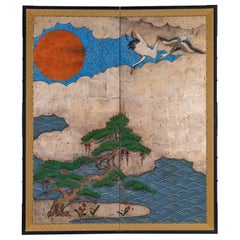
Japanese Two Panel Screen: Cranes Beneath an Orange Sun
Located in Hudson, NY
Two Cranes flying beneath an orange sun approaching Hamamatsu (Pine Tree Island). Mineral pigments on silver leaf with brocade trim.
Category

Early 20th Century Japanese Paintings and Screens

Materials

Silver Leaf

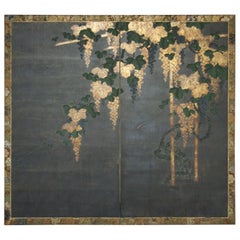
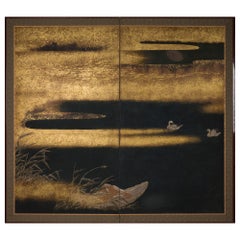
Japanese Two Panel Screen, Moonlit Grape Vine and Arbor
Located in Hudson, NY
Interesting and unusual technique of an oxidized background, likely representing night time, giving the grapes and leaves a luminous quality, catching the moonlight. Delicately paint...
Category

Antique Early 1800s Japanese Edo Paintings and Screens

Materials

Gold Leaf

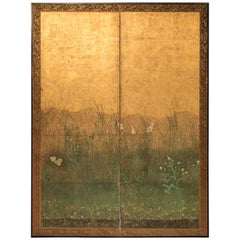
Japanese Two-Panel Screen "Autumn Flower Design on Gold"
Located in Hudson, NY
Mineral pigments, gold leaf and gold dust on mulberry paper.
Category

Antique 18th Century Japanese Paintings and Screens

Materials

Gold Leaf

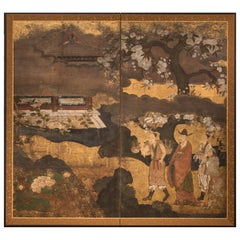
Japanese Two-Panel Screen "Court Figures in a Garden"
Located in Hudson, NY
Under a cherry tree in bloom. Kano school painting in mineral pigments with gold dust on gold leaf and mulberry paper with a silk brocade border. Good early painting.
Category

Antique 17th Century Japanese Edo Paintings and Screens

Materials

Gold Leaf

Japanese Old "Shunga" Two-Panel Hand Painted Screen, a First
Located in South Burlington, VT
panels opened, 74 inches wide History of Japanese Shunga Art: Shunga is a Japanese term for erotic art
Category

Mid-20th Century Japanese Showa Paintings and Screens

Materials

Paper

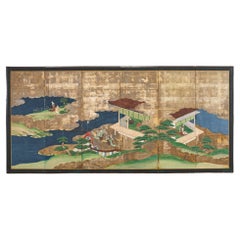
Japanese Meiji Six Panel Screen Tale of Genji Episodes
Located in Rio Vista, CA
Large early 20th century Japanese late Meiji period six-panel folding byobu screen depicting
Category

20th Century Japanese Meiji Paintings and Screens

Materials

Brass, Gold Leaf

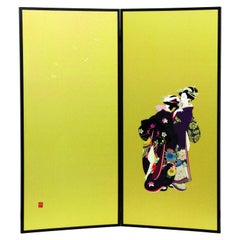
Traditional Japanese Silk Brocade Black Gold Two-Panel Folding Screen
Located in Takarazuka, JP
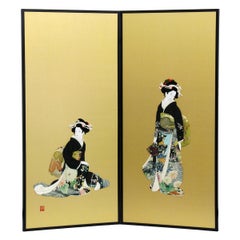
Exceptional Japanese contemporary two-panel "byobu" or folding screen featuring two graceful ladies
Category

21st Century and Contemporary Japanese Paintings and Screens

Materials

Brocade, Silk

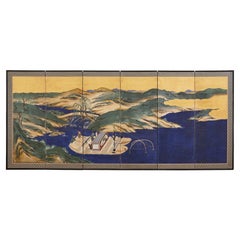
Japanese Edo Six Panel Screen Chinese Fishing Boat Landscape
Located in Rio Vista, CA
Captivating 19th century Japanese Edo period six-panel byobu screen depicting a fishing boat
Category

Antique 19th Century Japanese Edo Paintings and Screens

Materials

Brass, Gold Leaf

Japanese Two-Panel Screen, Autumnal Screen of Grape Arbor with Squirrel
Located in Hudson, NY
Japanese two-panel screen, autumnal screen of grape arbor with squirrel. Artist seal reads: Seiei.
Category

Antique 1880s Japanese Paintings and Screens
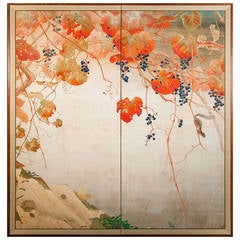
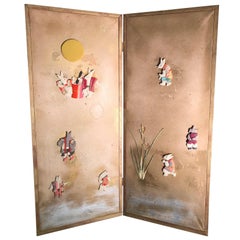
Important Japanese "Moon Rabbits" Two-Panel Screen Taisho Period, 1915
Located in South Burlington, VT
Japan, a beautiful and unusual two-panel screen Byobu with nine hand embroidered Rabbits including
Category

Early 20th Century Japanese Taisho Paintings and Screens

Materials

Fabric

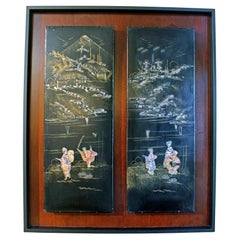
Pair of Black Lacquer Panels Mounted in a Shadowbox Frame, Japanese
Located in Chapel Hill, NC
Circa 1900 pair of black lacquer panels mounted in a shadowbox frame, Japanese. Elegant, later
Category

Antique Early 1900s Japanese Meiji Lacquer

Materials

Mother-of-Pearl, Lacquer

Japanese Six Panel Screen Moon Over the Plains of Musashino
Located in Hudson, NY
Japanese six panel screen: Moon over the plains of Musashino. A modern rendition of the classic
Category

Vintage 1920s Japanese Taisho Paintings and Screens

Materials

Gold Leaf

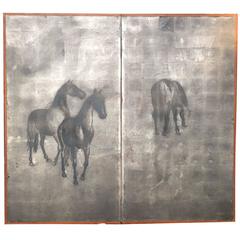
Japan Silver Leaf Two-Panel Screen Grazing Horses, Taisho Period
Located in South Burlington, VT
Japan folding two-panel tea screen byobu depicting "Grazing Horses," silver leaf and mineral ink
Category

Early 20th Century Japanese Taisho Paintings and Screens

Materials

Paper

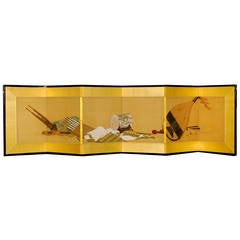
Antique Japanese Small Six-Panel Screen, Meiji Period circa 1900
Located in Prahran, Victoria
6 panel screen of unusual size depicting traditional musical instruments, flutes drum, koto and
Category

Early 20th Century Japanese Meiji Paintings and Screens

Materials

Gold Leaf

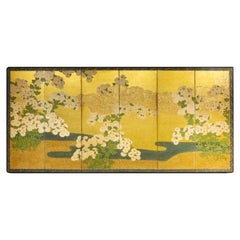
Japanese Six-Panel Screen, Rimpa School Chrysanthemums on Gold
Located in Hudson, NY
Late Edo period (1614-1868) painting with an abundant use of gold with beautifully draped chrysanthemums and gold flake clouds. Mineral pigments, go fun, and gold leaf on mulberry pa...
Category

Antique 19th Century Japanese Edo Paintings and Screens

Materials

Gold Leaf

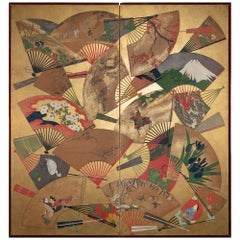
Japanese Two-Panel Screen Rimpa Painting of Fans on Gold
Located in Hudson, NY
Japanese two-panel screen: Rimpa painting of fans on gold. A beautifully painted Edo period (early
Category

Antique Early 19th Century Japanese Edo Paintings and Screens

Materials

Gold Leaf

Japan Small Gold Folding Two-Panel Tea Screen "Majestic Mountainsides"
Located in South Burlington, VT
Japan folding two-panel tea screen furosaki byobu depicting "Majestic Mountainsides ," mineral ink
Category

Mid-20th Century Japanese Showa Paintings and Screens

Materials

Paper

Japan Small Folding Two-Panel Furosaki Tea Screen "Contemporary Simplicity"
Located in South Burlington, VT
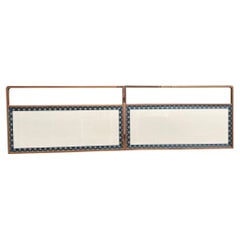
Japan folding two-panel tea screen furosaki byobu depicting a simple cream colored back ground with
Category

Mid-20th Century Japanese Showa Paintings and Screens

Materials

Paper

Japan Small Folding Two-Panel Furosaki Tea Screen "Contemporary Simplicity"
Located in South Burlington, VT
Japan folding two-panel tea screen furosaki byobu depicting a simple cream colored back ground with
Category

Mid-20th Century Japanese Showa Paintings and Screens

Materials

Paper

Japanese Antique Evergreen Mountains and Lakes Screen Byobu, Six Panels
Located in South Burlington, VT
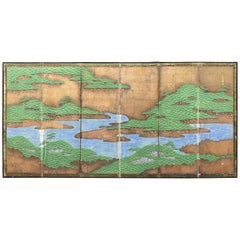
Japan, a fine six-panel screen Byobu of bold and precise brush strokes on paper, in a serene
Category

Antique Late 19th Century Japanese Meiji Paintings and Screens

Materials

Paper

Japanese Contemporary Black Green Silk Brocade Two Panel Folding Screen
Located in Takarazuka, JP
Extraordinary Japanese contemporary two panel "byobu" or folding screen featuring two graceful
Category

21st Century and Contemporary Japanese Edo Paintings and Screens

Materials

Brocade, Silk

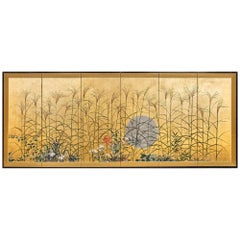
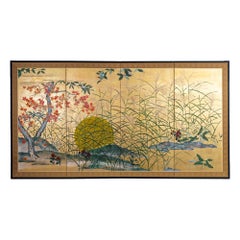
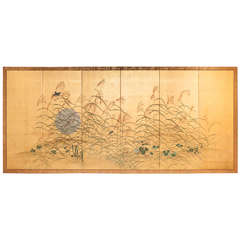
Six-Panel Japanese Screen "Moon and Wild Grasses on Gold"
Located in Hudson, NY
Mineral pigments on gold leaf. Signature reads: Keibun (Matsumira). One of a pair with S1429, sold separately.
Category

Early 20th Century Japanese Paintings and Screens
Antique Japanese Four-Panel Folding Screen with Hand-Painted Cranes
Located in New York, NY
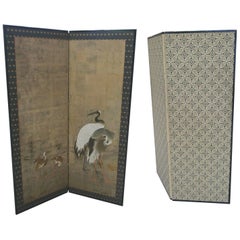
These two-panel Japanese antique folding screens can come together to form a longer four-panel room
Category

Antique Late 19th Century Japanese Paintings and Screens
Materials

Gold Leaf

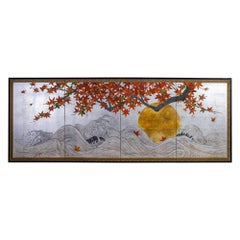
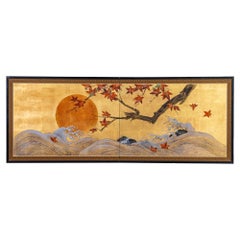
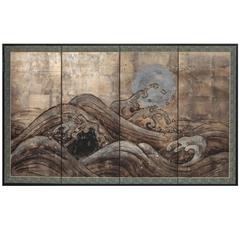
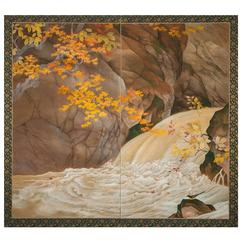
Japanese Four Panel Screen, Golden Sun Through Turbulent Surf
Located in Hudson, NY
Golden sun viewed through red maple above turbulent waves. Mineral pigments on gold and silver ground with silk brocade border.
Category

Mid-20th Century Japanese Paintings and Screens
Materials

Gold Leaf, Silver Leaf

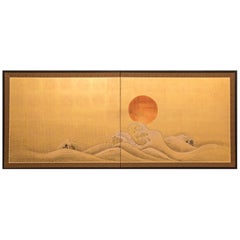
Japanese Two-Panel Screen, Setting Sun Over Cresting Waves
Located in Hudson, NY
Meiji period (1868 - 1912) painting of Hokusai-style waves with a setting sun. Painted with mineral pigments on gold leaf with a silk brocade border.
Category

Early 20th Century Japanese Meiji Paintings and Screens

Materials

Gold Leaf

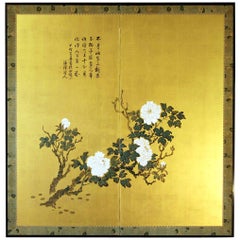
XX°th Century Japanese Folding Screen Two Panels Gold Leaf
Located in Brescia, IT
Showa period Japanese two panel folding screen only gold leaf with white peony flowers.
Category

20th Century Japanese Showa Paintings and Screens

Materials

Gold Leaf

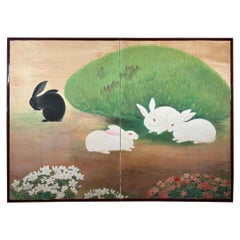
Japanese Antique Playful Rabbit Family Amidst Flowers Two Panel Screen
Located in South Burlington, VT
Japan, a small and unusual two panel tea screen of four playful rabbits amidst pink and white
Category

Early 20th Century Japanese Taisho Sculptures and Carvings

Materials

Silk, Wood

Japanese Four-Panel Screen "Ocean Wave and Silver Moon on Silver"
Located in Hudson, NY
Japanese four-panel screen: Ocean wave and silver moon on silver. Early Showa period (1926-1989
Category

Mid-20th Century Japanese Paintings and Screens

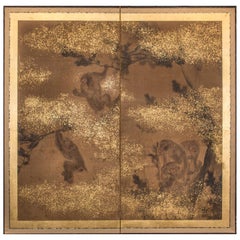
Japanese Two-Panel Screen Troop of Monkeys in a Tree
Located in Hudson, NY
Japanese Two Panel Screen: Troop of Monkeys in a Tree. Edo period (Mid 19th century) ink painting
Category

Antique Mid-19th Century Japanese Edo Paintings and Screens

Materials

Gold Leaf

Japanese Six-Panel Screen, Silver Moon and Bamboo on Gold
Located in Hudson, NY
Japanese six-panel screen, silver moon and bamboo on gold, a silver leaf moon seen through a bamboo
Category

Antique Late 19th Century Japanese Paintings and Screens

Materials

Gold Leaf

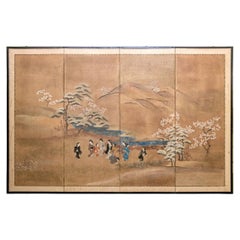
Vintage Japanese Four Panel Hand Painted Byobu Screen
Located in Locust Valley, NY
A four-panel Japanese hand-painted byobu screen depicting an elegant landscape scene with figures
Category

20th Century Chinoiserie Paintings and Screens

Materials

Silk, Paint, Paper

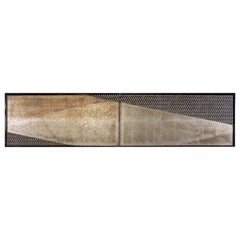
Japanese Two-Panel Screen, Modern, Abstract Furosaki Screen Tea Screen
Located in Hudson, NY
Japanese two panel screen: Modern, abstract Furosaki screen (Tea Screen), made with handmade and
Category

Mid-20th Century Japanese Showa Paintings and Screens

Materials

Silver Leaf

Japanese Two-Panel Screen "Waterfall and Maple Tree in Autumn Scenery"
Located in Hudson, NY
Japanese two-panel screen: Waterfall and maple tree in autumn scenery. Taisho painting (1912-1926
Category

Early 20th Century Japanese Paintings and Screens

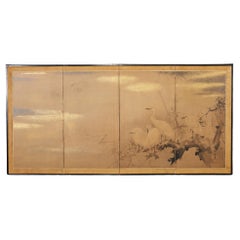
Japanese Meiji Four Panel Screen White Egrets in Winter Landscape
Located in Rio Vista, CA
Late 19th century serene Japanese Meiji period four panel folding byobu screen featuring a flock of
Category

Antique 19th Century Japanese Meiji Paintings and Screens

Materials

Silk, Wood, Paper

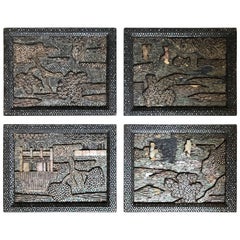
Japan Antique Instant Collection 4 Inlaid Mother-of-Pearl Panels, Chinese Manner
Located in South Burlington, VT
Here's a fine instant collection of four Japan antique mother-of-pearl inlaid wooden panels in the
Category

Early 20th Century Japanese Taisho Furniture

Materials

Mother-of-Pearl, Wood

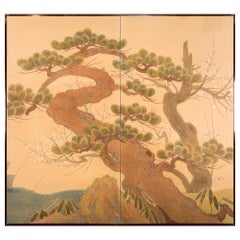
Japanese Two-Panel Screen, Embroidered Pine at Water s Edge
Located in Hudson, NY
Masterfully executed embroidery over painted silk renders a beautifully shaped venerable pine. Extraordinary details such as pine needles, lichen, ripples in the water, and texture o...
Category

Mid-20th Century Japanese Showa Paintings and Screens

Materials

Gold Leaf

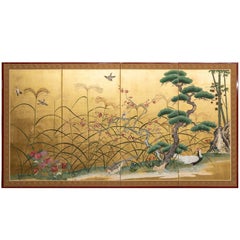
Japanese Four-Panel Screen, Pine, Plum and Bamboo with Pheasant
Located in Hudson, NY
Mineral pigments on gold paper.
Category

Mid-20th Century Japanese Paintings and Screens

Materials

Paper

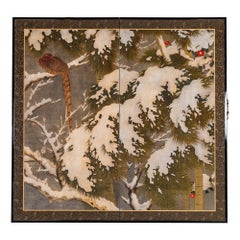
Japanese Two Panel Screen: Recumbant Pheasant in Snow Laden Pine
Located in Hudson, NY
The harmony of pine, plumb and bamboo with a splash of camillias in mineral pigmants on silk with a brocade border and silk backing in a gloss black frame. Excellent condition.
Category

Antique 1880s Japanese Paintings and Screens

Materials

Brocade, Silk

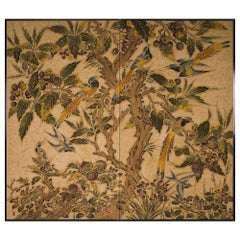
Japanese Two Panel Screen Exotic Birds in a Fruit Tree
Located in Hudson, NY
Mounted (batik) fabric. Signature reads: Toshihiro.
Category

Mid-20th Century Japanese Paintings and Screens

Materials

Fabric

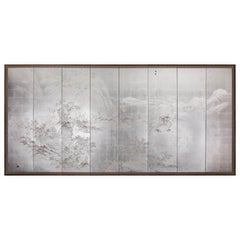
Japanese Eight Panel Screen, Modern Chinese School Coastal Mountain Landscape
Located in Hudson, NY
Difficult to read in photograph, stunning in person. Artist signature reads: Idzuka Tekishu. Beautifully painted gofun on silver, with silk brocade border. Calligraphy reads: Sno...
Category

Mid-20th Century Japanese Paintings and Screens

Materials

Paper

Japanese Two Panel Screen, Sun and Cresting Waves Through Maple
Located in Hudson, NY
Maple, sun and waves in mineral pigments on gold leaf.
Category

Vintage 1950s Japanese Paintings and Screens

Materials

Gold Leaf

Japanese Two Panel Screen Beautifully Colored, Wooded and Floral Landscape
Located in Hudson, NY
Lovely trees with pine and azelea. Mineral pigment on paper. Showa period (1926-1989).
Category

Mid-20th Century Japanese Paintings and Screens

Materials

Paper

Japanese Two Panel Screen Moonlit Snow Scene Over Lake Biwa
Located in Hudson, NY
Snow covered wild grasses on the shoreline. Sumptuous amount of gold applied in different techniques and mineral pigment on mulberry paper.
Category

Antique Mid-18th Century Japanese Paintings and Screens

Materials

Paper

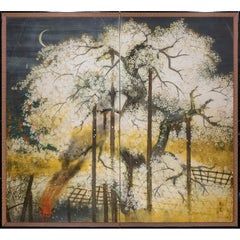
Japanese Two Panel Screen: Yozakura (Cherry Blossom Viewing at Night)
Located in Hudson, NY
support the weight of its branches. Yozakura is the ancient Japanese tradition of viewing illuminated
Category

Antique Early 1900s Japanese Meiji Paintings and Screens

Materials

Silk, Wood, Paper

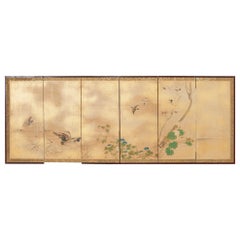
Japanese Meiji Period Six Panel Screen Ducks in Water Landscape
Located in Rio Vista, CA
19th century Japanese Meiji period six-panel screen depicting a serene water landscape with ducks
Category

Antique 19th Century Japanese Meiji Paintings and Screens

Materials

Silk, Wood, Paper

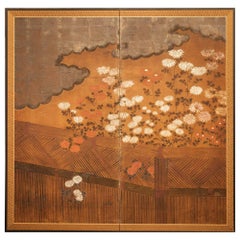
Japanese Two-Panel Screen Chrysanthemums Over a Woven Reed Fence
Located in Hudson, NY
Japanese two-panel screen: Chrysanthemums over a woven reed fence, chrysanthemums growing behind
Category

Antique Mid-19th Century Japanese Edo Paintings and Screens

Materials

Silver Leaf

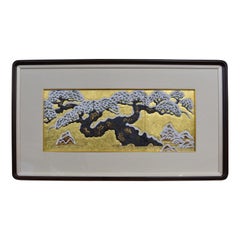
Japanese Gold Leaf Hand Painted Framed Porcelain Panel by Master Artist
Located in Takarazuka, JP
Extraordinary Japanese large contemporary museum quality framed porcelain panel in three pieces
Category

21st Century and Contemporary Japanese Meiji Decorative Art

Materials

Gold Leaf

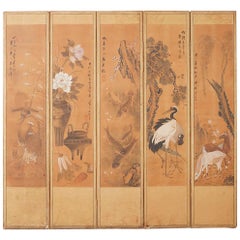
Japanese Korean Meiji Period Five-Panel Screen
Located in Rio Vista, CA
Late 19th-early 20th century five-panel painted screen. Meiji period paintings from Japanese
Category

Antique 19th Century Korean Meiji Paintings and Screens

Materials

Grasscloth, Silk, Wood, Paper

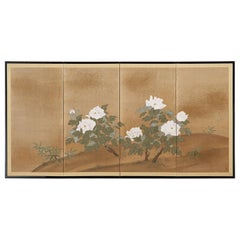
Japanese Showa Four-Panel Screen Flowering Peonies
Located in Rio Vista, CA
Lovely Japanese Showa period four-panel screen depicting white flowering peonies. Made in the
Category

20th Century Chinese Showa Paintings and Screens

Materials

Brass

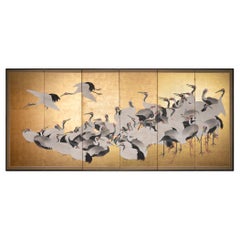
Japanese Six Panel Screen Dance of 50 Cranes on Gold Leaf
Located in Hudson, NY
. In Japan the crane signifies fidelity, good luck, love and long life. Seal reads: Joshun.
Category

Antique 19th Century Japanese Paintings and Screens

Materials

Paper

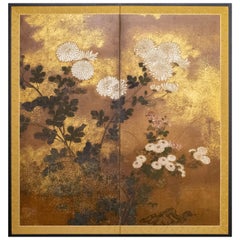
18th Century Japanese Two-Panel Screen, Rimpa Painting of Chrysanthemums
Located in Hudson, NY
condition and mounting fresh. Signature reads, Shucho Sadayoshi. Japan, second half of the 18th century.
Category

Antique Late 18th Century Japanese Paintings and Screens

Materials

Gold Leaf

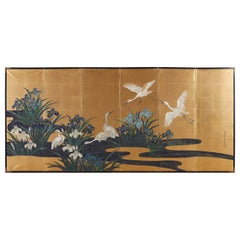
Japanese Six-Panel Meiji Screen of Egrets on Gold Leaf
Located in Rio Vista, CA
Captivating Japanese six-panel late Meiji/early Taisho Showa period screen featuring five egrets or
Category

20th Century Japanese Meiji Paintings and Screens

Materials

Brass

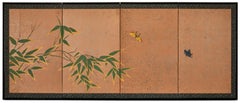
Japanese Four Panel Screen, Bamboo and Butterflies with Silver Dust
Located in Hudson, NY
Meiji period screen (1868 - 1912) in mineral pigments and ink with silver dust on mulberry paper with a silk brocade border.
Category

Antique Late 19th Century Japanese Paintings and Screens

Materials

Silver

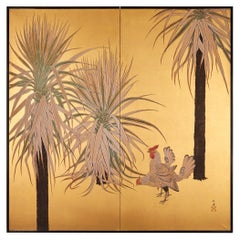
Japanese Two-Panel Screen, Palm Tree Design by Sho Sho
Located in Hudson, NY
Minimal design of palm trees accompanied by a rooster and hen. Mineral pigments and gold on Mulberry paper with a black lacquer trim. Osaka artist, signature and seal read: Sho Sho.
Category

Early 20th Century Japanese Paintings and Screens

Materials

Gold

Japanese Four Panel Screen: Autumn Flowers and Moon on Gold
Located in Hudson, NY
Mineral pigments on gold leaf.
Category

Early 20th Century Japanese Paintings and Screens

Materials

Gold Leaf

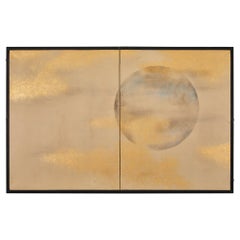
Japanese Two Panel Screen: Full Moon Through Gold Dust Clouds
Located in Hudson, NY
Mineral pigments and gold on mulberry paper with black lacquer trim.
Category

Mid-20th Century Japanese Paintings and Screens

Materials

Gold

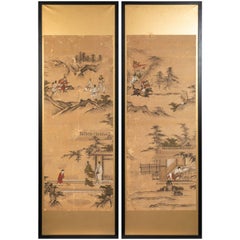
Antique Narrative Japanese Screen Panels on Gold Leaf, c. 1850-60
Located in Pasadena, CA
Antique Japanese screen panels hand-painted on rice paper with gold leaf, circa 1850-1860. Panels
Category

Antique Mid-19th Century Japanese Paintings and Screens

Materials

Gold Leaf

  • 1
  • ...
Get Updated with New Arrivals
Save "Japanese Panel Art", and we’ll notify you when there are new listings in this category.

Japanese Panel Art For Sale on 1stDibs

Find many varieties of an authentic piece of Japanese panel art available at 1stDibs. Frequently made of paper, wood and metal, every item from our selection of Japanese panel art was constructed with great care. Find 1490 options for an antique or vintage choice in our collection of Japanese panel art now, or shop our selection of 25 modern versions for a more contemporary example of this long-cherished piece. There are many kinds of the object in our assortment of Japanese panel art you’re looking for, from those produced as long ago as the 18th Century to those made as recently as the 21st Century. When you’re browsing for the right option in this array of Japanese panel art, those designed in mid-century modern, Art Deco and modern styles are of considerable interest. You’ll likely find more than one piece of Japanese panel art that is appealing in its simplicity, but Japanese Studio, Mitani Toshuku and Bunto Hayashi produced versions that are worth a look.

How Much is a Japanese Panel Art?

A piece of Japanese panel art can differ in price owing to various characteristics — the average selling price 1stDibs is $4,195, while the lowest priced sells for $1 and the highest can go for as much as $5,807,050.

Finding the Right Paintings-screens for You

Traditional Asian paintings were often created on scrolls and folding screens. Artisans made screens that could be folded up or spread out by connecting several panels using hinges. Today, antique Asian folding screens and paintings are sophisticated decorative accents that can serve as makeshift partitions to ensure privacy.

The original folding screens were created by Chinese artists. The earliest record of screens comes from the 2nd century B.C., and surviving examples date back to the Ming dynasty. Chinese painting utilizes many of the same tools as calligraphy — these screens were crafted from wood with painted panels featuring striking art or calligraphy that told cultural stories or represented nature and life in the area.

The practice was introduced to Japan, where paintings for screens were made on paper and silk, in the 8th century. These paintings frequently feature subjects such as landscapes, animals, flowers and Buddhist religious themes. Along with screens for tea ceremonies and dance backgrounds, there were screens for use in Shinto and Buddhist temples.

In the 17th century, screens began to be imported to Europe where their popularity grew. Coco Chanel famously collected Coromandel folding screens.

Traditional Asian paintings can make a tasteful addition to any wall, and screens can be used as decoration or, in the case of larger iterations, as an aesthetic way to divide a large room. Browse the selection of antique Asian paintings and screens from a variety of styles and eras on 1stDibs.

Questions About Japanese Panel Art
  • 1stDibs ExpertMarch 22, 2022
    Japanese panels are components of large decorative folding screens called byōbu, which translates to “wind wall.” The screens traditionally function as room dividers and feature calligraphy and decorative painting. On 1stDibs, you can shop a range of decorative Japanese panels.
  • 1stDibs ExpertApril 5, 2022
    The writing on Japanese art is calligraphy art called shodo. It uses Japanese kanji and kana characters. There are a variety of different shodo styles of art, including Kaisho, which is the basic, foundational form of the art. On 1stDibs, find a range of Japanese calligraphy art from top sellers..
  • 1stDibs ExpertApril 16, 2024
    The focus of Japanese art varies. Many traditional Japanese artists sought to capture the beauty of nature in their works. However, other Japanese artists have produced work with Buddhist themes, and contemporary artists working in the country have been inspired by a range of subjects, from socioeconomic and political issues to pop culture. On 1stDibs, explore a large selection of Japanese art.
  • 1stDibs ExpertApril 5, 2022
    There are a variety of different types of Japanese art. One of the oldest and most admired forms of Japanese art is the art of calligraphy, which originated in the sixth or seventh century. Another type of art, ukiyo-e, is the art of the woodblock print, which depicts scenes of female beauties; kabuki actors, sumo wrestlers and more. You’ll find a variety of Japanese artwork from some of the world’s top art dealers on 1stDibs.
  • 1stDibs ExpertApril 5, 2022
    Many art styles originated in Japan and grew in popularity over the years. Some of the most popular styles include shodo (calligraphy), ikebana, kanou and yamato-e. You’ll find a wide variety of authentic Japanese art from some of the world’s top dealers on 1stDibs.
  • 1stDibs ExpertApril 5, 2022
    What Japanese wall art is called depends on its type. There are numerous kinds of Japanese paintings and prints, including nihonga and ukiyo-e. A Japanese wall scroll is known as a kakejiku or kakemono. On 1stDibs, find a variety of Japanese wall art.
  • 1stDibs ExpertSeptember 23, 2024
    What the Japanese sea art is called depends on its type. Many examples of sea art from Japan are called ukiyo-e. This term refers to woodblock prints made during the 17th, 18th and 19th centuries. The Great Wave off Kanagawa by Katsushika Hokusai is arguably the most famous ukiyo-e print depicting the sea. On 1stDibs, find a wide variety of Japanese woodblock prints.
  • 1stDibs ExpertOctober 15, 2024
    To tell if art is Japanese or Chinese, study the piece's characteristics. With paintings, Chinese artists often use more color and tend to fill their entire canvases, while Japanese artists often include more negative space and choose subtler colors. There are also differences between the brushstrokes typical of traditional Chinese and Japanese art. In Japanese paintings, brushstrokes are often short and sharp. On the other hand, Chinese paintings often display longer, more fluid brushstrokes. Learning about the defining features of various art forms and periods and looking at examples of pieces made by Japanese and Chinese artists can help you learn to spot subtle differences. Explore a diverse assortment of Japanese and Chinese art on 1stDibs.