Japanese Panel Art

to
55
1,315
194
1,561
25
1
22
13
13
5
2
2
1
140
532
889
26
312
211
26
34
3
30
22
10
16
12
7
2
888
782
716
708
646
1,531
1,526
1,497
25
6
1,587
1,580
1,583
25
3
2
2
2
Sort By
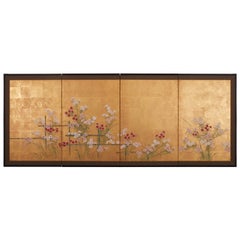
Japanese Four Panel Screen: Nadeshiko on Bamboo Trellis on Gold Leaf
Located in Hudson, NY
Nadeshiko, also known as fringed pinks is a flowering plant native to Japan. Ink, mineral pigments
Category

Antique 18th Century Japanese Paintings and Screens
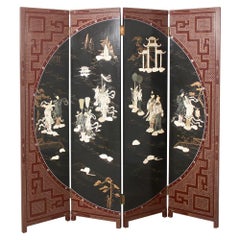
Materials

Gold, Bronze, Gold Leaf

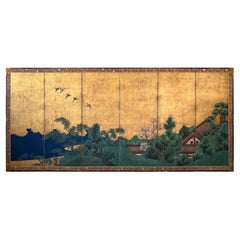
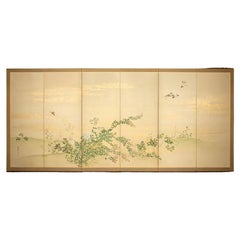
Japanese six-panel folding screen with gold-leaf depicting an idyllic landscape
Located in Milano, IT
A Japanese six-panel folding screen, decorated with gold leaf and gold powder, depicting a
Category

Antique 18th Century Japanese Paintings and Screens

Materials

Gold Leaf

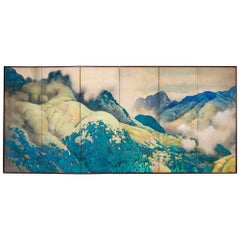
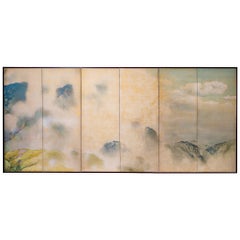
Japanese Six Panel Screen: Mountains in the Mist with Tree-Lined Foothills
Located in Hudson, NY
Verdant landscape of mountains and rolling foothills shrouded in mist. Mineral pigments on silk with gold dust. Raw silk backing. Signature reads: Shuntei.
Category

Early 20th Century Japanese Paintings and Screens

Materials

Gold

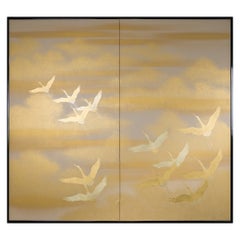
Japanese Two Panel Screen Cranes in Flight over Golden Clouds on Paper
Located in Hudson, NY
Unusual embroidered silk backing with gilded bronze hardware. Unsigned, from family collection.
Category

Mid-20th Century Japanese Paintings and Screens

Materials

Paper

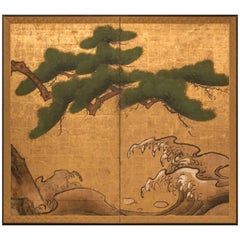
Japanese Two-Panel Screen "Craggy Coast Line with Waves and Pine"
Located in Hudson, NY
Edo period (c. 1800) painting of a pine tree over waves crashing into a bluff. Mineral pigments painted on gold leaf with a silk brocade border.
Category

Antique Early 19th Century Japanese Edo Paintings and Screens

Materials

Gold Leaf

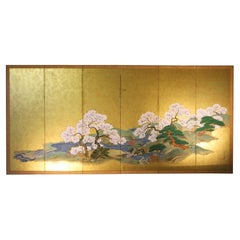
19th Century Japanese Landscape Rinpa School Folding Screen Six Panels Gold Left
Located in Brescia, IT
Landscape with flowering sakura trees of the Edo period. Six-panel screen painted with mineral
Category

Antique 1840s Japanese Edo Paintings and Screens

Materials

Gold Leaf

Edo Byobu Screen, Japanese Hand Painted and Gilded Six Paper Panels
Located in Valladolid, ES
. This kind of Byobu can be easily mounted flat on a wall to be presented as one impressive work of art
Category

Mid-20th Century Japanese Showa Paintings and Screens

Materials

Gold Leaf

Japanese Six Panel Screen: Mountains in the Mist with Tree-Lined Foothills
Located in Hudson, NY
Verdant landscape of mountains and rolling foothills shrouded in mist. Mineral pigments on silk with gold dust. Raw silk backing.
Category

Early 20th Century Japanese Paintings and Screens

Materials

Gold

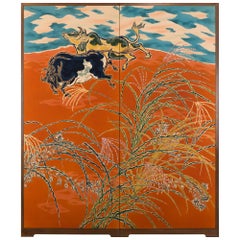
Japanese Two Panel Screen Romping Steers in a Pasture of Wild Grasses
Located in Hudson, NY
type of resist dying similar to batik. The dyed silk painting was mounted in a traditional Japanese
Category

Vintage 1940s Japanese Showa Paintings and Screens

Materials

Wood, Silk

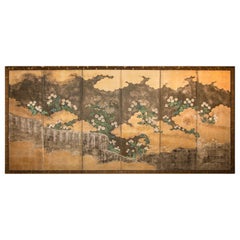
Japanese Six-Panel Screen Rimpa School Chrysanthemums on Silver and Gold
Located in Hudson, NY
With twig fence, raised painted flowers, gold leaf clouds and silver dust. Mineral pigments on paper with a silk brocade border. Seal reads: Toshimitsu, Pair available, sold separat...
Category

Antique Mid-19th Century Japanese Edo Paintings and Screens

Materials

Gold Leaf, Silver Leaf

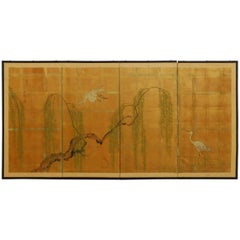
Japanese Four-Panel Byobu Screen of Cranes and Willow on Gold Leaf
Located in Rio Vista, CA
Early 20th century Japanese Meiji four-panel screen featuring cranes and a willow tree. Painted on
Category

20th Century Japanese Meiji Paintings and Screens

Materials

Brass, Gold Leaf

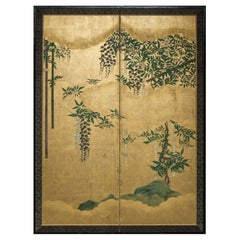
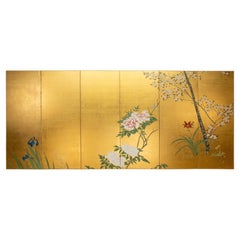
Japanese Two Panel Screen, Wisteria Vine on Bamboo Arbor on Quality Gold
Located in Hudson, NY
Rimpa School painting in mineral pigments on gold leaf. Beautiful overlapping gold clouds.
Category

Antique Early 19th Century Japanese Paintings and Screens

Materials

Gold Leaf

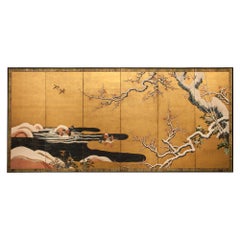
Japanese Six Panel Screen: Mandarin Ducks in Snowy Pond in Early Spring
Located in Hudson, NY
Kano School painting of a craggy plum tree with branches over a pond with stylized ripples in the water. Some early spring flowers by pond's edge. Mineral pigments on gold leaf with ...
Category

Antique Late 19th Century Japanese Paintings and Screens

Materials

Gold Leaf

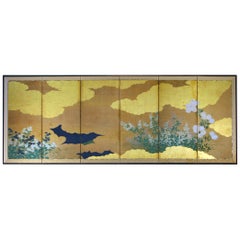
Edo Period 19th Century Japanese Folding Screen Six Panels Flowers on Gold Leaf
By Rimpa School
Located in Brescia, IT
Clouds of gold, water and many colorful flowers: Japanese six-panel folding screen by Rimpa School
Category

Antique Early 19th Century Japanese Edo Paintings and Screens

Materials

Gold Leaf

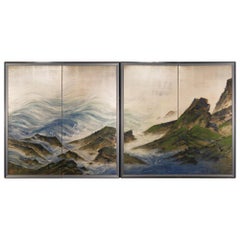
Pair of Japanese Two Panel Screens with Rocky Coastal Landscape on Silver Design
Located in Hudson, NY
Japanese two panel screen: Rocky coastal landscape on silver, Meiji period (1868-1912) dramatic
Category

Antique 1880s Japanese Meiji Paintings and Screens

Materials

Silver Leaf

Meiji Period Japanese Two Panel Screen Painted on Rice Paper with Gold Grains
Located in Brescia, IT
". Japanese screen with two doors, painted on rice paper with gold grains.
Category

Early 20th Century Japanese Meiji Paintings and Screens

Materials

Gold

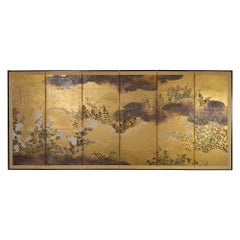
Japanese Six Panel Screen: Rimpa Painting of Autumn Flowers and Grasses on Gold
Located in Hudson, NY
Rimpa School. Ink, colors and gold on mulberry paper with a silk brocade border and black trim.
Category

Antique Early 18th Century Japanese Paintings and Screens

Materials

Paper

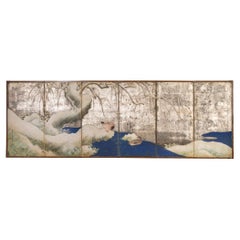
Japanese Six Panel Screen, Snowy Landscape with Wood Ducks and Willow on Silver
Located in Hudson, NY
Mineral pigments on silver leaf.
Category

Antique Mid-19th Century Japanese Paintings and Screens

Materials

Paper

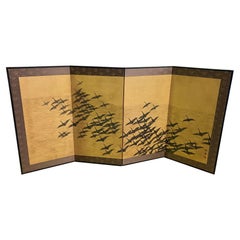
Japanese Asian Signed Four-Panel Folding Byobu Screen Cranes in Flight over Sea
Located in Studio City, CA
A gorgeous four-panel Japanese Byobu folding screen depicting a flock of silhouetted cranes/birds
Category

Mid-20th Century Japanese Showa Paintings and Screens

Materials

Wood, Paper

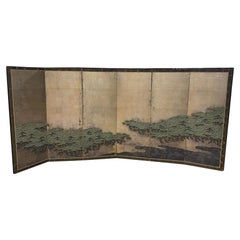
Japanese Asian Large Edo Six-Panel Folding Byobu Screen Forest Tree Landscape
Located in Studio City, CA
A beautiful, wonderfully composed (with fabulous use of negative space) quite large six-panel Sea
Category

Antique Early 19th Century Japanese Edo Paintings and Screens

Materials

Gold Leaf, Silver Leaf

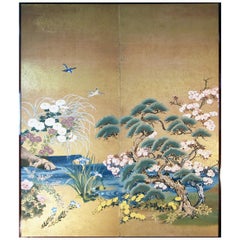
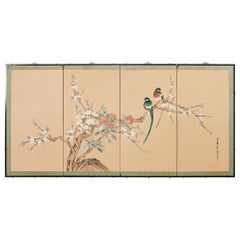
Japanese Style Four Panel Screen Birds with Flowering Prunus
Located in Rio Vista, CA
Colorful Japanese style four-panel byobu screen depicting a pair of parrot like birds amid
Category

20th Century Chinese Showa Paintings and Screens

Materials

Brass

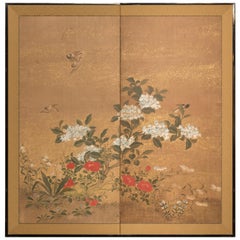
Japanese Two-Panel Screen Hydrangea and Camelia Flowers with Sparrows in Flight
Located in Hudson, NY
Meiji period (1868-1912) painting, with a lovely softness, celebrating spring. Painted in mineral pigments on mulberry paper with gold dust and a silk brocade border.
Category

Antique Late 19th Century Japanese Meiji Paintings and Screens

Materials

Gold Leaf

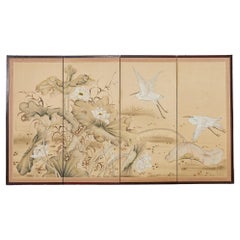
Japanese Style Four Panel Screen Lotus with Snowy Egrets
Located in Rio Vista, CA
Charming Japanese style Showa period four panel byobu screen depicting white snowy egrets at a
Category

20th Century Chinese Showa Paintings and Screens

Materials

Brass

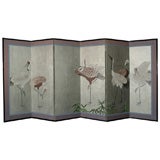
Japanese style six panel paper screen crane birds silver leaf
Located in Yonkers, NY
Japanese style, Chinese made six panel screen with crane birds decorated around the screen. The
Category

21st Century and Contemporary Chinese Decorative Art

Materials

Silver Leaf

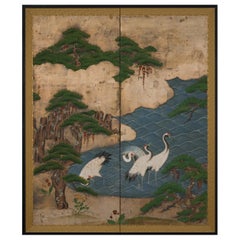
Japanese Two Panel Screen Manchurian Cranes in Water Landscape
Located in Hudson, NY
Cranes wading in the water surrounded by a pine grove and silver leafs clouds.      
Category

Early 20th Century Paintings and Screens

Materials

Paint

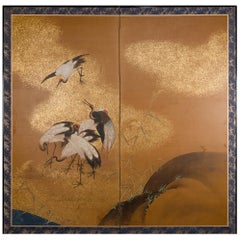
Japanese Two Panel Screen Sedge of Cranes in Rolling Landscape with Gold Clouds
Located in Hudson, NY
Meiji period (1868-1912) painting of a group of cranes gathering next to water's edge with gold dust clouds in the background. The scene is accented by wild grasses and lichen on the...
Category

Antique Late 19th Century Japanese Meiji Paintings and Screens

Materials

Gold

Vintage Japanese 3 Panel Room Divider Privacy Screen Geishas Chrysanthemum
Located in Dayton, OH
Vintage Japanese three panel room divider screen featuring Geishas sitting outside a Pagoda garden
Category

Late 20th Century Japonisme Paintings and Screens

Materials

Hardwood, Paper

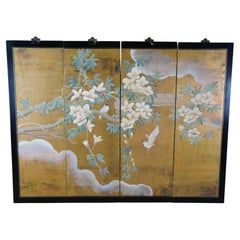
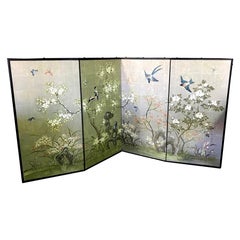
Japanese Style Four Panel Screen Songbirds in Flowering White Lily
Located in Rio Vista, CA
Colorful Japanese style four panel byobu screen depicting blue songbirds in a flowering white lily
Category

20th Century Chinese Chinese Export Paintings and Screens

Materials

Brass

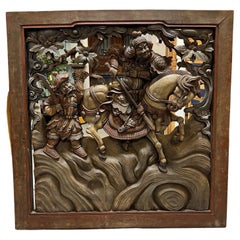
Early 20th Century Antique Hand Carved Wooden Panel of Japanese Warriors
Located in Stamford, CT
Early 20th-century hand-carved wooded panel of a warrior king and an attendant, one on a horse
Category

Early 20th Century Chinese Antiquities

Materials

Wood

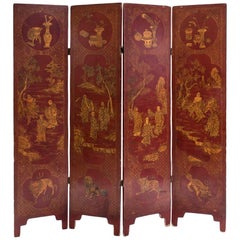
Red Japanese Lacquer Four-Panels Folding Screen, Meiji Period, 1868-1912
Located in Saint-Ouen, FR
Red Japanese lacquer four panels folding screen "{yonkyoku byobu}". The panels are decorated with
Category

Antique Late 19th Century Paintings and Screens

Materials

Lacquer

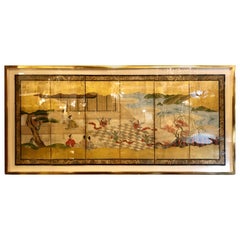
Japanese Brilliant Silk Gilt Screen Six-Panel Under Glass Gold Framed
Located in Manhasset, NY
Japanese brilliant silk gilt screen six-panel under glass, superior details abound in this one of a
Category

Early 20th Century Japonisme Paintings and Screens

Materials

Glass, Giltwood, Silk

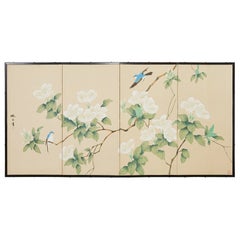
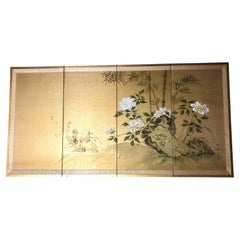
Vintage 4-Panel Silk Japanese Byobu Folding Screen with White Peonies
Located in Sheridan, CO
, closed 36 x 18. Vintage 4-Panel Hand-Painted Silk Japanese Byobu Folding Screen ~71" x 36". Hand painted
Category

Early 20th Century Chinese Chinese Export Paintings and Screens

Materials

Metal, Metallic Thread

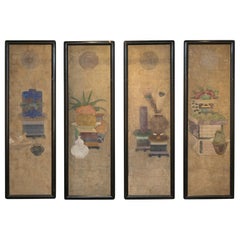
Japanese Style Panels (Set of 4), 23" x 72" each, Bunny Williams Collection
Located in New York, NY
A set of 4 framed panels in the Japanese style, created by a decorative painter who'd worked on
Category

Late 20th Century American Japonisme Decorative Art

Materials

Paint

Vintage Japanese 4 Panel Black Lacquer Floral Bird Folding Screen Byobu 36"
Located in Dayton, OH
Vintage Japanese Chinoiserie four panel folding screen featuring black lacquer and gold painted
Category

Late 20th Century Japonisme Paintings and Screens

Materials

Hardwood, Lacquer

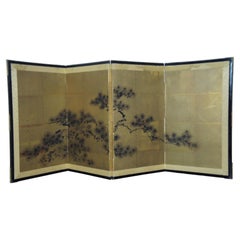
Mid-Century Japanese Hand Painted Byobu 4 Panel Silk Folding Screen Gold
Located in Dayton, OH
Vintage hand painted Japanese byobu four panel folding screen featuring a gnarled pine tree on a
Category

Mid-20th Century Japonisme Paintings and Screens

Materials

Silk, Lacquer, Paint

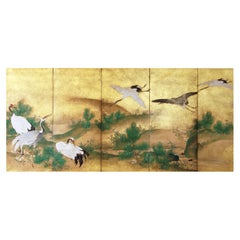
19th Century, Japanese Screen 8 Panels Flying Cranes over the Golden Landscape
Located in Brescia, IT
Rare Edo Japanese eight-panel screen painted with mineral pigments on rice paper and golden specks
Category

Antique Early 19th Century Edo Paintings and Screens

Materials

Gold Leaf

Robert Crowder Hand Painted Four-Panel Japanese Asian Byobu Screen Playful Birds
By Robert Crowder
Located in Studio City, CA
An exquisite work of art by American artist Robert Crowder. Crowder lived in Japan in the 1930s
Category

Vintage 1960s American Showa Paintings and Screens

Materials

Paint, Wood

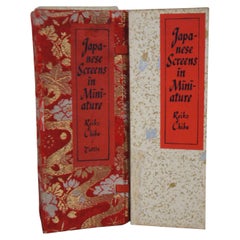
6 Mid Century Miniature Japanese Panel Screens Reiko Chiba Tuttle Prints MCM
Located in Dayton, OH
Vintage set of 6 Japanese Screens in Miniature book set: Six Masterpieces of the Momoyama Period
Category

Vintage 1960s Japonisme Paintings and Screens

Materials

Paper

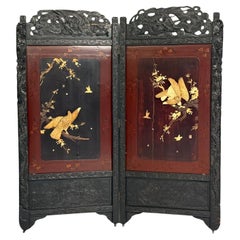
Shibayama Art, Meiji Era, Ebonized Wood, Lacquer, Two Panel Screen, Japan, 1890s
Located in Manhasset, NY
Shibayama Art, Meiji Era, Ebonized Wood, Lacquer, Japanese Two Panel Screen, Room Divider, Japan
Category

Antique Late 19th Century Japanese Meiji Screens and Room Dividers

Materials

Wood, Lacquer

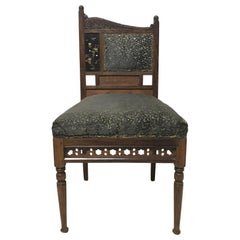
Bombay Art Furniture Anglo-Japanese Side Chair with a Lacquer Floral Panel
By Bombay Furniture Co.
Located in London, GB
Bombay Art Furniture Co. An Anglo-Japanese side chair with turned finials at different heights and
Category

Antique 1880s English Anglo-Japanese Dining Room Chairs

Materials

Mother-of-Pearl, Walnut

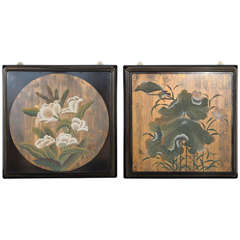
Fine Set of Two Decorative Wall Panels
Located in Los Angeles, CA
Fine set of two decorative wall panels.
Category

Early 20th Century Japanese Decorative Art

Materials

Wood

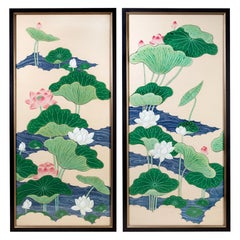
Pair of Painted Panels, Lotus in Bloom
Located in Hudson, NY
Pair of framed Japanese paintings. Originally architectual panels removed from an interior
Category

Early 20th Century Japanese Paintings and Screens

Materials

Paper

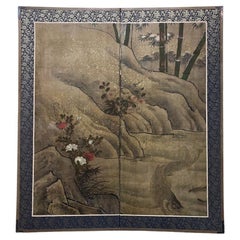
17-18 th century, zTwo panel with fish17th-18th Century Rinpa School Two-Panel S
Located in Fukuoka, JP
classic example of the Rinpa school of Japanese art. The school was founded in the 17th century by Hon'ami
Category

Antique Late 17th Century Japanese Edo Paintings and Screens

Materials

Wood, Paper

Four-Panel Asian Lacquer and Carved Stone Screen
Located in Vancouver, British Columbia
A vintage Japanese four-panel lacquer screen, the front with mother of pearl and carved semi
Category

Mid-20th Century Japanese Paintings and Screens

A Six-panel Naturalistic Folding Screen
Located in Milano, IT
Six-panel folding nature screen, made on paper decorated with pigments and gold dust. The panels are framed by light silk borders, with lacquered wood frame and metal corners. Sign...
Category

Antique Mid-19th Century Japanese Paintings and Screens

Materials

Paper

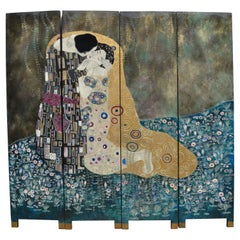
Four Panel Carved Lacquer Screen after The Kiss by Gustav Klimt
Located in Vancouver, British Columbia
decadence days of fin-de-siècle Vienna before the onset of World War I. This contemporary four panel
Category

Late 20th Century Japanese Art Nouveau Paintings and Screens

Materials

Wood

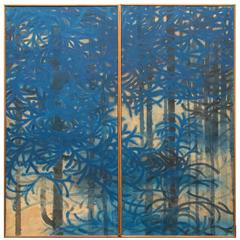
Pair of Fusuma ‘Sliding Door’ Panels, Blue Spruce
Located in Hudson, NY
reverse side, by Susumu Tsushima (1923-2012) Each panel measures 33 inches high x 16 1/2 inches wide.
Category

20th Century Japanese Paintings and Screens

Materials

Mulberry Paper

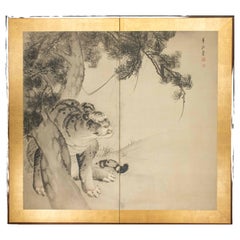
A Two-panel Screen Depicting A Tiger Under A Matsu
Located in Milano, IT
Two-panel screen depicting a scene capturing a tiger under a Japanese Matsu pine with gold leaf
Category

Antique Early 19th Century Japanese Japonisme Paintings and Screens

Materials

Paper

Six-Panel Painted Hanging Screen with Wild Flowers in Gold Leaf
Located in Denton, TX
Six-panel painted screen with wild flowers in gold leaf. Classic Japanese garden scene.
Category

Early 20th Century Japanese Japonisme Decorative Art

Materials

Gold Leaf

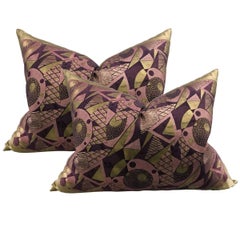
Outstanding Pair of Japanese Art Deco Pillows
Located in Chicago, IL
An outstanding pair of pillows constructed from early 20th century Japanese Art Deco velvet panels
Category

Vintage 1920s Japanese Art Deco Pillows and Throws

Materials

Silk, Velvet

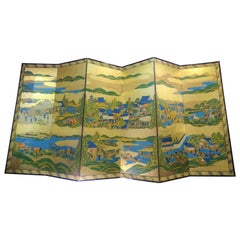
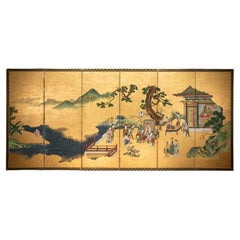
A six-panel folding screen depicting the Chinese imperial court
Located in Milano, IT
A Japanese six-panel screen made of paper, decorated with gold leaf and polychrome pigments
Category

Antique Mid-19th Century Japanese Paintings and Screens

Materials

Paper

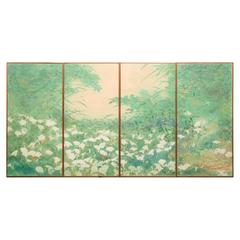
Set of Four Fusuma, Sliding Door Panels: Wild Lily Patch
Located in Hudson, NY
Remounted as single panels and displayed accordingly. Mineral pigments on mulberry paper. Seal on
Category

Vintage 1960s Japanese Paintings and Screens

Materials

Mulberry Paper

A six-panel folding screen depicting a garden of flowers
Located in Milano, IT
Six-panel screen painted on paper with pigments, gofun and gold leaf, featuring a refined
Category

Antique Late 19th Century Japanese Paintings and Screens

Materials

Paper

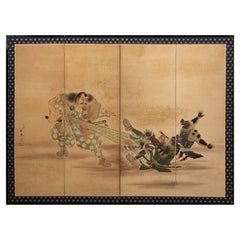
A four-panel folding screen depicting a Yamabushi and two Samurai
Located in Milano, IT
A Japanese four-panel screen painted on paper and enriched with gold powder, depicting a dramatic
Category

Early 20th Century Japanese Paintings and Screens

Materials

Paper

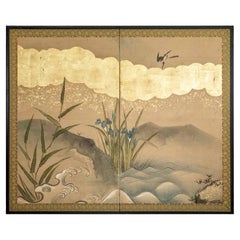
A two-panel screen depicting blooming irises and a sparrow
Located in Milano, IT
Two-panel paper folding screen with gold leaf applications, depicting a naturalistic scene of blue
Category

Antique Late 19th Century Japanese Japonisme Paintings and Screens

Materials

Paper

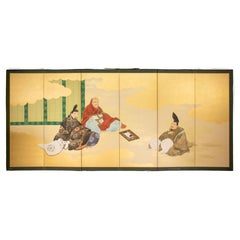
A six-panel folding screen inspired by the Tales of Genji
Located in Milano, IT
Six-panel folding screen, made of painted paper, embellished with gold dust and gold leaf
Category

Antique Late 19th Century Japanese Paintings and Screens

Materials

Paper

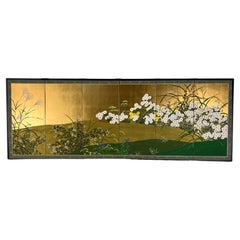
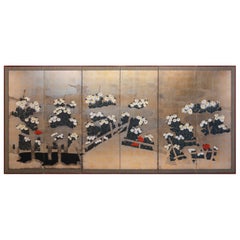
A six-panel paper folding screen depicting a chrysanthemum garden
Located in Milano, IT
A Japanese six-panel paper folding screen depicting a garden of white and yellow chrysanthemums
Category

Antique Late 19th Century Japanese Paintings and Screens

Materials

Gold Leaf, Silver Leaf

  • 1
  • ...
Get Updated with New Arrivals
Save "Japanese Panel Art", and we’ll notify you when there are new listings in this category.

Japanese Panel Art For Sale on 1stDibs

Find many varieties of an authentic piece of Japanese panel art available at 1stDibs. Frequently made of paper, wood and metal, every item from our selection of Japanese panel art was constructed with great care. Find 1490 options for an antique or vintage choice in our collection of Japanese panel art now, or shop our selection of 25 modern versions for a more contemporary example of this long-cherished piece. There are many kinds of the object in our assortment of Japanese panel art you’re looking for, from those produced as long ago as the 18th Century to those made as recently as the 21st Century. When you’re browsing for the right option in this array of Japanese panel art, those designed in mid-century modern, Art Deco and modern styles are of considerable interest. You’ll likely find more than one piece of Japanese panel art that is appealing in its simplicity, but Japanese Studio, Mitani Toshuku and Bunto Hayashi produced versions that are worth a look.

How Much is a Japanese Panel Art?

A piece of Japanese panel art can differ in price owing to various characteristics — the average selling price 1stDibs is $4,195, while the lowest priced sells for $1 and the highest can go for as much as $5,807,050.

Finding the Right Paintings-screens for You

Traditional Asian paintings were often created on scrolls and folding screens. Artisans made screens that could be folded up or spread out by connecting several panels using hinges. Today, antique Asian folding screens and paintings are sophisticated decorative accents that can serve as makeshift partitions to ensure privacy.

The original folding screens were created by Chinese artists. The earliest record of screens comes from the 2nd century B.C., and surviving examples date back to the Ming dynasty. Chinese painting utilizes many of the same tools as calligraphy — these screens were crafted from wood with painted panels featuring striking art or calligraphy that told cultural stories or represented nature and life in the area.

The practice was introduced to Japan, where paintings for screens were made on paper and silk, in the 8th century. These paintings frequently feature subjects such as landscapes, animals, flowers and Buddhist religious themes. Along with screens for tea ceremonies and dance backgrounds, there were screens for use in Shinto and Buddhist temples.

In the 17th century, screens began to be imported to Europe where their popularity grew. Coco Chanel famously collected Coromandel folding screens.

Traditional Asian paintings can make a tasteful addition to any wall, and screens can be used as decoration or, in the case of larger iterations, as an aesthetic way to divide a large room. Browse the selection of antique Asian paintings and screens from a variety of styles and eras on 1stDibs.

Questions About Japanese Panel Art
  • 1stDibs ExpertMarch 22, 2022
    Japanese panels are components of large decorative folding screens called byōbu, which translates to “wind wall.” The screens traditionally function as room dividers and feature calligraphy and decorative painting. On 1stDibs, you can shop a range of decorative Japanese panels.
  • 1stDibs ExpertApril 5, 2022
    The writing on Japanese art is calligraphy art called shodo. It uses Japanese kanji and kana characters. There are a variety of different shodo styles of art, including Kaisho, which is the basic, foundational form of the art. On 1stDibs, find a range of Japanese calligraphy art from top sellers..
  • 1stDibs ExpertApril 16, 2024
    The focus of Japanese art varies. Many traditional Japanese artists sought to capture the beauty of nature in their works. However, other Japanese artists have produced work with Buddhist themes, and contemporary artists working in the country have been inspired by a range of subjects, from socioeconomic and political issues to pop culture. On 1stDibs, explore a large selection of Japanese art.
  • 1stDibs ExpertApril 5, 2022
    There are a variety of different types of Japanese art. One of the oldest and most admired forms of Japanese art is the art of calligraphy, which originated in the sixth or seventh century. Another type of art, ukiyo-e, is the art of the woodblock print, which depicts scenes of female beauties; kabuki actors, sumo wrestlers and more. You’ll find a variety of Japanese artwork from some of the world’s top art dealers on 1stDibs.
  • 1stDibs ExpertApril 5, 2022
    Many art styles originated in Japan and grew in popularity over the years. Some of the most popular styles include shodo (calligraphy), ikebana, kanou and yamato-e. You’ll find a wide variety of authentic Japanese art from some of the world’s top dealers on 1stDibs.
  • 1stDibs ExpertApril 5, 2022
    What Japanese wall art is called depends on its type. There are numerous kinds of Japanese paintings and prints, including nihonga and ukiyo-e. A Japanese wall scroll is known as a kakejiku or kakemono. On 1stDibs, find a variety of Japanese wall art.
  • 1stDibs ExpertSeptember 23, 2024
    What the Japanese sea art is called depends on its type. Many examples of sea art from Japan are called ukiyo-e. This term refers to woodblock prints made during the 17th, 18th and 19th centuries. The Great Wave off Kanagawa by Katsushika Hokusai is arguably the most famous ukiyo-e print depicting the sea. On 1stDibs, find a wide variety of Japanese woodblock prints.
  • 1stDibs ExpertOctober 15, 2024
    To tell if art is Japanese or Chinese, study the piece's characteristics. With paintings, Chinese artists often use more color and tend to fill their entire canvases, while Japanese artists often include more negative space and choose subtler colors. There are also differences between the brushstrokes typical of traditional Chinese and Japanese art. In Japanese paintings, brushstrokes are often short and sharp. On the other hand, Chinese paintings often display longer, more fluid brushstrokes. Learning about the defining features of various art forms and periods and looking at examples of pieces made by Japanese and Chinese artists can help you learn to spot subtle differences. Explore a diverse assortment of Japanese and Chinese art on 1stDibs.