Japanese Panel Art

to
55
1,315
194
1,561
25
1
22
13
13
5
2
2
1
140
532
889
26
312
211
26
34
3
30
22
10
16
12
7
2
888
782
716
708
646
1,531
1,526
1,497
25
6
1,587
1,580
1,583
25
3
2
2
2
Sort By
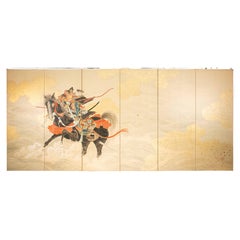
A pair of six-panel screens depicting two samurai archers on horseback
Located in Milano, IT
Pair of six-panel screens depicting a scene in which two samurai archers on horseback are in the
Category

Antique Late 19th Century Japanese Paintings and Screens
Materials

Paper

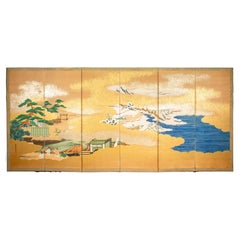
A six-panel folding screen depicting scenes from the Tales of Genji
Located in Milano, IT
Six-panel folding screen painted on paper, with pigments, gold dust and gold leaf, depicting two
Category

Antique 19th Century Japanese Paintings and Screens
Materials

Paper

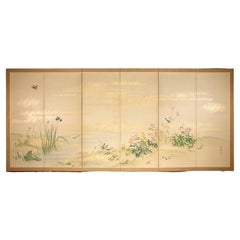
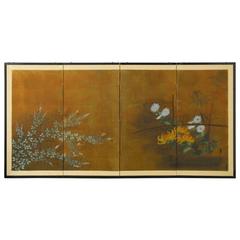
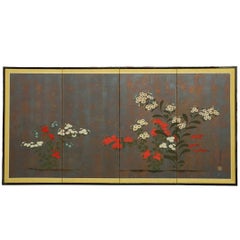
A six-panel folding screen depicting a floral and a naturalistic scene
Located in Milano, IT
Six-panel folding screen, made on paper decorated with pigments and gold dust, depicting a floral
Category

Antique Mid-19th Century Japanese Paintings and Screens
Materials

Paper

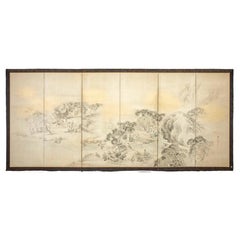
A Six-panel Screen On Paper Depicting A Scene Of Everyday Life
Located in Milano, IT
Six-panel screen on paper depicting a scene of everyday life, with men sitting in a hilly setting
Category

Antique Mid-19th Century Japanese Japonisme Paintings and Screens

Materials

Paper

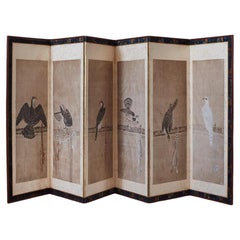
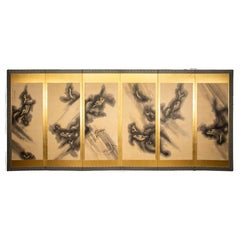
A Single Late 19th Century Six Panel Paper Screen, in manner of Soga Chokuan
Located in London, GB
considered a continuous, willful rebellion against the mainstream of Japanese art. Comparables; Original
Category

Antique 19th Century Japanese Edo Paintings and Screens

Materials

Silk, Paint, Paper

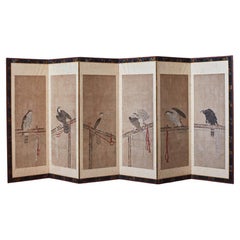
One of Pair of 19th Century Six Panel Paper Screens, in manner of Soga Chokuan
Located in London, GB
six panel screen, with pigment and ink on rice paper, surrounded by Japanese silk bordered wooden
Category

Antique 19th Century Japanese Edo Paintings and Screens

Materials

Silk, Paint, Paper

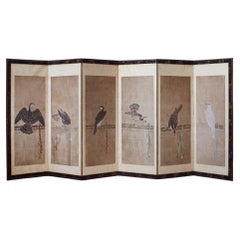
One of a Pair of 19th Century Six Panel Paper Screens, in manner of Soga Chokuan
Located in London, GB
six panel screen, with pigment and ink on rice paper, surrounded by Japanese silk bordered wooden
Category

Antique 19th Century Japanese Edo Paintings and Screens

Materials

Silk, Paint, Paper

A Single Late 19th Century Six Panel Paper Screen, in the manner of Soga Chokuan
Located in London, GB
mainstream of Japanese art. Comparables; Original Momoyama Period (Inscriptions by Ittō Jōteki (Shōteki
Category

Antique 19th Century Japanese Edo Paintings and Screens

Materials

Gold Leaf

A six-panel screen depicting six dragons painted on paper with a gold leaf backg
Located in Milano, IT
Paravento a sei pannelli raffigurante sei draghi dipinti su carta con fondo in foglia d’oro. Ogni drago, rappresentato in volo tra le nuvole, mostra posture, movimenti ed espressioni...
Category

Antique 19th Century Japanese Paintings and Screens

Materials

Paper

Japanese Byobu - Six Panel Japanese Screen
By Japanese Studio
Located in Brescia, IT
This 18th century "Kano school" six-panel screen is truly special. The author is unknown, but his
Category

Antique Late 18th Century Japanese Edo Paintings and Screens

Materials

Paper

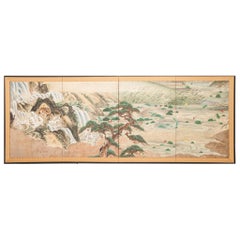
Edo Japanese Screen Gold Leaf Four Panels
By Japanese Studio
Located in Brescia, IT
Four panel Japanese screen "Kano School" with landscape hand painted with pigments and inks on rice
Category

Antique Late 18th Century Japanese Edo Paintings and Screens

Materials

Gold Leaf

Painted Japanese Panels
Located in Winnetka, IL
A set of four hand-painted leather Japanese panels. Signed on one of the panels. Backed in floral
Category

Early 20th Century Japanese Decorative Art

Materials

Leather, Paint

Japanese Screen - Six Panels
Located in Washington, DC
A Japanese screen with six panels. From left to right width measurements: A 25 1/2. B 24 3/4. C
Category

Antique 19th Century Japanese Paintings and Screens
Materials

Wood, Paper

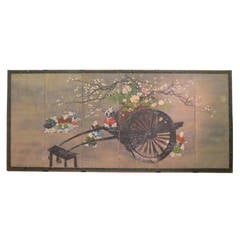
Japanese Six-Panel Screen
Located in Torino, IT
Large six-panel folding screen (byobu) depicting a flower cart with child's all around, painted on
Category

Antique Late 19th Century Japanese Paintings and Screens
Materials

Paper, Silk, Wood

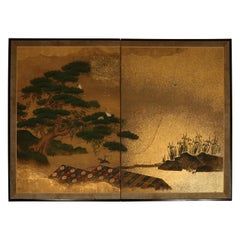
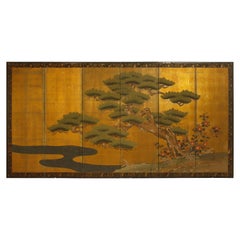
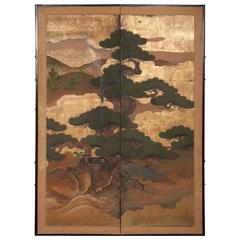
Magnificent Two-Panel Japanese Screen
Located in Stamford, CT
A watercolor and gold leaf on paper Japanese two-panel screen depicting pine in landscape scene.
Category

Early 20th Century Japanese Paintings and Screens
Four-Panel Japanese Byobu Screen
Located in Lambertville, NJ
A four-panel hand painted Japanese Byobu screen with ebonized frame. Each panel is 16.5" by 36
Category

20th Century Japanese Paintings and Screens
Materials

Wood, Paper

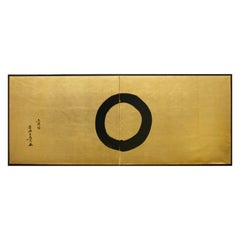
Japanese Two-Panel Screen, Enzo
Located in Hudson, NY
Enzo is a symbol in Zen Buddhist calligraphy which has multiple significances including enlightenment, perfection in simplicity, the universe, and emptiness. The literal translation ...
Category

Late 20th Century Japanese Paintings and Screens
Materials

Wood, Paper

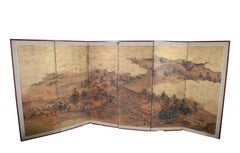
Japanese Six-Panel Paper Screen
Located in Essex, MA
Depicting a court scene in mountain landscape with gold background. Provenance, estate of John F Ball.
Category

Antique Early 19th Century Japanese Edo Paintings and Screens

Materials

Paper

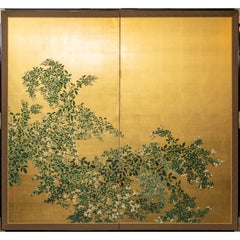
Japanese Two Panel Screen: Flowering Hedge (Japanese Privet)
Located in Hudson, NY
Showa period (1926 - 1989) painting, beautifully mounted with silvered hardware. Seal reads: Eishun. Mineral pigments on gold with a silk brocade border.
Category

20th Century Japanese Showa Paintings and Screens

Materials

Brass

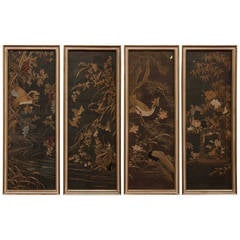
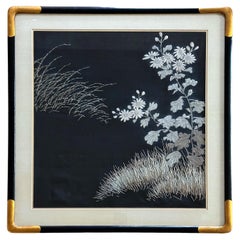
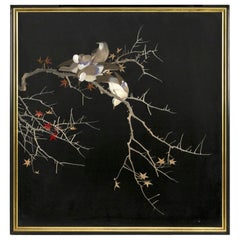
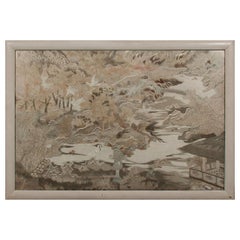
Four Framed Japanese Embroidered Silk Panels
Located in Stamford, CT
Four framed Japanese embroidered silk panels with metal thread decoration of birds in trees and
Category

Antique Late 19th Century Japanese Paintings and Screens

Materials

Silk

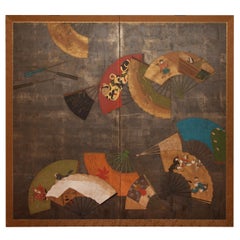
Japanese Two Panel Screen, Painted Fans
Located in Hudson, NY
Japanese Screen: Painted fans. Open fans depicting wild pinks, Heian period folks, otogi inu (dog
Category

Antique Mid-19th Century Japanese Paintings and Screens

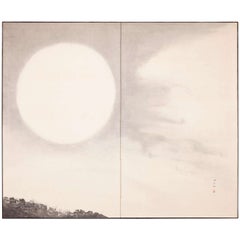
Japanese Two-Panel Screen, Moonlit Sky
Located in Hudson, NY
Japanese Two Panel Screen: Moonlit Sky, Showa period (1926 - 1989) minimal ink painting (sumi-e) on
Category

Vintage 1950s Japanese Showa Paintings and Screens

Materials

Wood, Paper

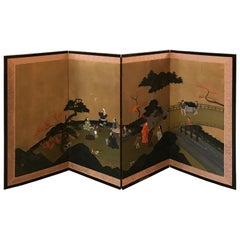
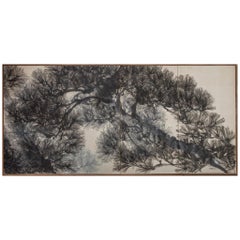
Japanese Four Panel Screen Pine Tree
Located in Hudson, NY
Ink painting on paper (sumi-e), dated 1971. Signed: Shinazumi George in Katakana; a Japanese
Category

Vintage 1970s Japanese Showa Paintings and Screens

Materials

Wood, Paper

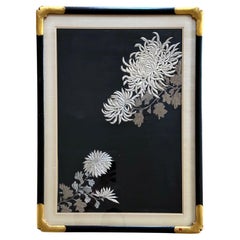
Framed Japanese Embroidery Textile Panel Meiji Period
Located in Atlanta, GA
A Japanese textile panel with embroidery needlework circa late Meiji period (1900s) presented in a
Category

Antique Early 1900s Japanese Meiji Textiles

Materials

Silk, Wood

Framed Japanese Embroidery Textile Panel Meiji Period
Located in Atlanta, GA
A Japanese textile panel with embroidered picture work circa late Meiji period (1900s) presented in
Category

Antique Early 1900s Japanese Meiji Textiles

Materials

Silk, Wood

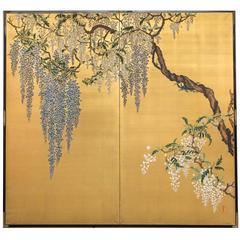
Japanese Two Panel Screen: Wisteria on Gold
Located in Hudson, NY
Japanese Two Panel Screen: Wisteria on Gold Beautifully mounted and framed with silvered brass
Category

20th Century Japanese Paintings and Screens

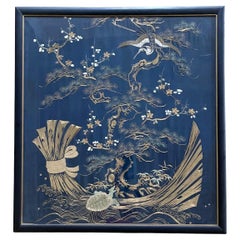
Framed Japanese Silk Embroidery Panel Meiji Period
Located in Atlanta, GA
, a traditional Japanese textile art that was used to wrap the gift on important occasions. For a
Category

Antique 1890s Japanese Japonisme Textiles

Materials

Silk, Wood

Japanese Four-Panel Screen Water Landscape
Located in Hudson, NY
Japanese four-panel screen: Water landscape, Meiji period (1868-1912) painting of a waterfall on
Category

Antique Early 1900s Japanese Meiji Paintings and Screens

Materials

Silver Leaf

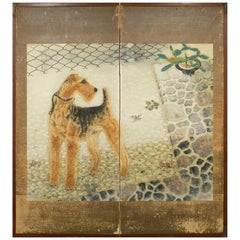
Japanese Two-Panel Screen, Airedale Terrier
Located in Hudson, NY
Beautifully detailed painting of an Airedale Terrier standing on a pebbled surface with a cactus and succulents. Mineral pigments on mulberry paper with a mica finish border. Signatu...
Category

Mid-20th Century Japanese Paintings and Screens

Materials

Wood, Paper

Framed Japanese Embroidery Fukusa Panel Meiji Period
Located in Atlanta, GA
A Japanese Fukusa Panel displayed in a wood frame circa late 19th century Meiji Period. Fukusa is a
Category

Antique Late 19th Century Japanese Meiji Textiles

Materials

Silk, Wood

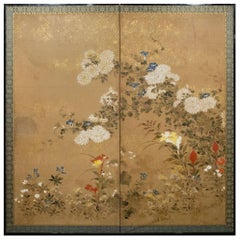
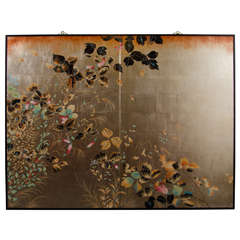
Japanese Two-Panel Screen, Flower Garden
Located in Hudson, NY
Rimpa School painting featuring cascading chrysanthemums as well as cockscombs, summer wild flowers, and a climbing morning glory vine. Beautifully executed, fine painting in mineral...
Category

Antique Mid-18th Century Japanese Edo Paintings and Screens

Materials

Gold Leaf

Japanese Two Panel Screen, Nobles at Leisure
Located in Hudson, NY
Excellently painted in Ukiyo-e style with beautiful hand embroidered border. This is a two panel
Category

Antique 19th Century Japanese Paintings and Screens

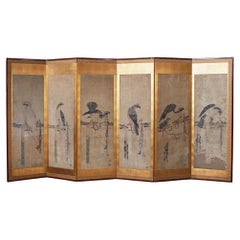
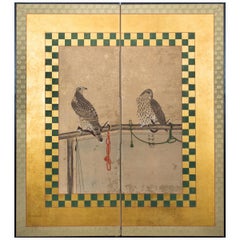
Japanese Two-Panel Screen, Hunting Falcons
Located in Hudson, NY
Late Edo period (1614-1868) painting of two falcons with silk knotted tethers resting on perches. Ink on paper mounted on gold with gold flecks, a hand painted checkerboard pattern, ...
Category

Antique Early 1800s Japanese Edo Paintings and Screens

Materials

Gold Leaf

Four-Panel Japanese Byobu Garden Screen
Located in Rio Vista, CA
Beautiful hand-painted watercolor on gold leaf paper screen depicting flowers, chrysanthemums, and blooming plants. Signed with one seal on the lower right. Silk border with an eboni...
Category

20th Century Japanese Paintings and Screens

Materials

Paint, Paper, Wood

Vintage Two-Panel Japanese Gold Toned Screen
Located in Locust Valley, NY
Vintage two-panel, Japanese byobu gold toned screen with landscape design ink and color on paper.
Category

20th Century Japanese Paintings and Screens

Materials

Paper

Japanese Four-Panel Screen Herons and Reeds
Located in Rio Vista, CA
Spectacular Japanese four-panel screen depicting a group of white Japanese herons in a pond with
Category

20th Century Japanese Paintings and Screens

Materials

Silk, Wood

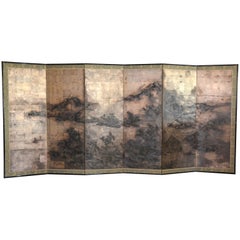
Antique Japanese Six-Panel Screen, 19th Century
Located in Austin, TX
Man's insignificance in nature is the subject of this magnificent late 19th century Japanese screen
Category

Antique 19th Century Japanese Paintings and Screens

Materials

Silver Leaf

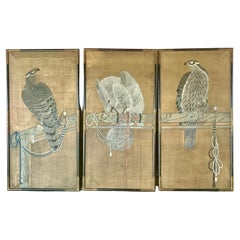
Japanese Falconry Watercolor Panels, Set of Three
Located in Bradenton, FL
Set of Three Hand-Painted Japanese Watercolor Panels depicting falconry scenes, dating from the
Category

Early 20th Century Japanese Other Paintings and Screens

Materials

Paint, Paper

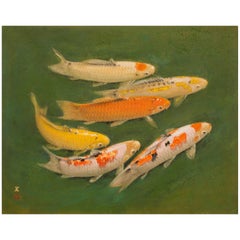
Japanese Single Panel Painting of Swimming Carp
Located in Hudson, NY
Signature reads Sho, seal reads Seki. Title written on the back reads Gunyu, which means shoal (school of fish).
Category

20th Century Japanese Paintings and Screens

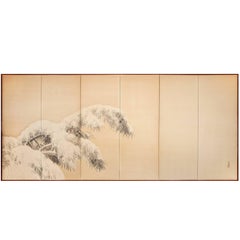
Japanese Six Panel Screen: Pine in Winter
By Bunto Hayashi
Located in Hudson, NY
Japanese Six Panel Screen: Pine in Winter, Taisho period painting (1912 - 1926) in minimal color on
Category

Early 20th Century Japanese Taisho Paintings and Screens

Materials

Wood, Paper

20th Century Japanese Two-Panel Screen with Flowers
Located in Astoria, NY
A two-panel, folding, painted, Japanese screen with colorful, floral decoration. Good vintage
Category

20th Century Japanese Paintings and Screens

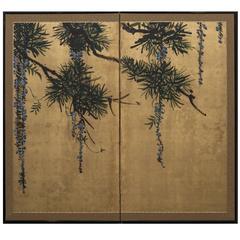
Japanese Two Panel Screen: Pine Tree and Wisteria
Located in Hudson, NY
Japanese Two Panel Screen: Pine Tree and Wisteria Taisho painting (1912-1926) Mineral pigments on
Category

20th Century Japanese Paintings and Screens

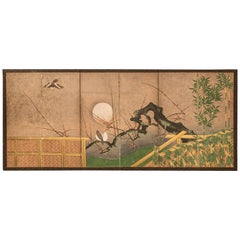
Japanese Six-Panel Screen "Moon Over Plum"
Located in Hudson, NY
With doves and woven fence, mineral pigments and silver dust on mulberry paper.
Category

Antique Early 19th Century Japanese Paintings and Screens

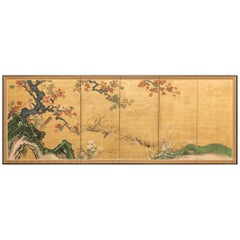
Japanese Six-Panel Screen, Autumn Audobon Scene
Located in Hudson, NY
With pheasant and quail, mineral pigments on gold leaf.
Category

Antique Late 19th Century Japanese Paintings and Screens

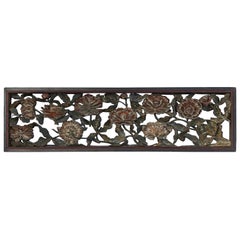
Japanese Meiji Period Carved and Painted Panel
Located in Essex, MA
With overall polychrome flowers and leaves in a rectangular panel.
Category

Antique 1850s Japanese Meiji Sculptures and Carvings

Materials

Wood

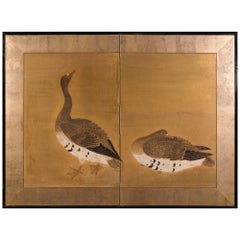
Japanese Two-Panel Screen Geese on Gold
Located in Hudson, NY
Japanese two panel screen: Geese on Gold, Edo period (circa 1800) painting of a pair of geese with
Category

Antique Early 1800s Japanese Edo Paintings and Screens

Materials

Silver Leaf

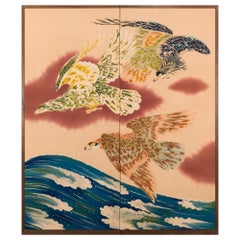
Japanese Two Panel Screen Falcons in Flight
Located in Hudson, NY
Japanese two panel screen: Falcons in Flight. Showa period (1926-1989) vibrant painting on silk of
Category

Vintage 1940s Japanese Showa Paintings and Screens

Materials

Wood, Silk

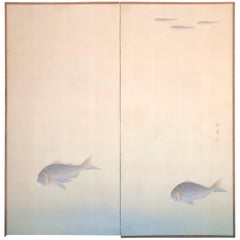
Japanese Two-Panel Screen With Serene Fish
Located in South Burlington, VT
Japan, a fine two-panel screen Byobu of simple but highly detailed brush strokes on cream ground
Category

Early 20th Century Japanese Taisho Paintings and Screens

Materials

Paper

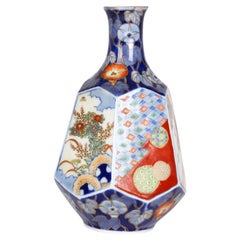
Fukagawa Japanese Meiji Imari Decorated Porcelain Panel Vase
Located in Bishop s Stortford, Hertfordshire
A very fine antique Japanese Meiji period Fukagawa porcelain vase of hexagonal shape finely
Category

Antique Early 1900s Japanese Meiji Ceramics

Materials

Porcelain

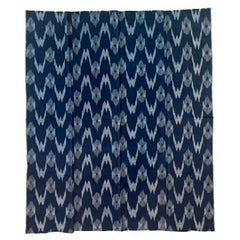
Japanese Vintage Indigo Woven Ikat Kasuri Textile Panel
Located in Atlanta, GA
A Japanese hand-woven panel with indigo blue background with white ikat chevron and diamond pattern
Category

Early 20th Century Japanese Meiji Textiles

Materials

Cotton

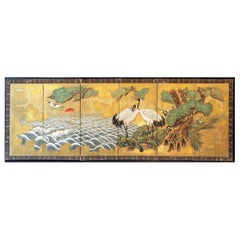
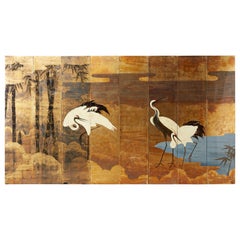
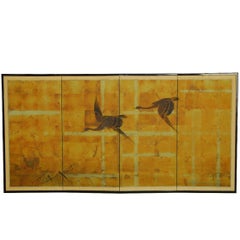
Contemporary Japanese Eight Panel Crane Landscape Screen
Located in Rio Vista, CA
Monumental contemporary Japanese eight panel screen featuring a three crane landscape scene
Category

20th Century Japanese Edo Paintings and Screens

Materials

Gold Leaf

Large Framed Japanese Embroidery Textile Panel Meiji Period
Located in Atlanta, GA
A large and impressive Japanese embroidery tapestry from late Meiji Period. This splendid silk
Category

Antique Early 1900s Japanese Japonisme Textiles

Materials

Silk

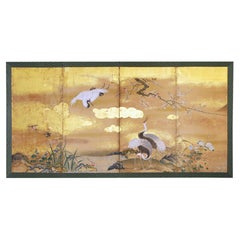
Japanese Four-Panel Byobu Screen Autumn Geese
Located in Rio Vista, CA
Golden Japanese four-panel folding Byobu screen of Autumn geese on a gilt background. Beautifully
Category

20th Century Japanese Chinese Export Paintings and Screens

Materials

Silk, Wood, Paper

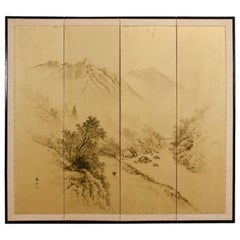
Japanese Four-Panel Byobu Gilt Landscape Screen
Located in Rio Vista, CA
Large Japanese four-panel Byobu screen featuring a painted mountain landscape on a gilt background
Category

20th Century Japanese Meiji Paintings and Screens

Materials

Brass

Six Panel Japanese Vintage Folding Byobu Screen
Located in Locust Valley, NY
Six-panel Japanese vintage folding byobu screen hand painted with fabric trim around perimeter edge.
Category

Vintage 1940s Japanese Japonisme Paintings and Screens

Materials

Gold Leaf

Japanese Four Panel Byobu Screen of Flowers
Located in Rio Vista, CA
Stunning Japanese four-panel folding byobu screen depicting hand-painted flowers on an unusual
Category

20th Century Japanese Paintings and Screens

Materials

Silk, Wood, Paper

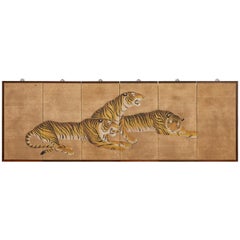
Japanese Six Panel Screen Ambush of Tigers
Located in Rio Vista, CA
Fantastic Japanese six-panel byobu screen depicting an ambush of three tigers relaxing. The
Category

20th Century Japanese Hollywood Regency Paintings and Screens

Materials

Brass

  • 1
  • ...
Get Updated with New Arrivals
Save "Japanese Panel Art", and we’ll notify you when there are new listings in this category.

Japanese Panel Art For Sale on 1stDibs

Find many varieties of an authentic piece of Japanese panel art available at 1stDibs. Frequently made of paper, wood and metal, every item from our selection of Japanese panel art was constructed with great care. Find 1490 options for an antique or vintage choice in our collection of Japanese panel art now, or shop our selection of 25 modern versions for a more contemporary example of this long-cherished piece. There are many kinds of the object in our assortment of Japanese panel art you’re looking for, from those produced as long ago as the 18th Century to those made as recently as the 21st Century. When you’re browsing for the right option in this array of Japanese panel art, those designed in mid-century modern, Art Deco and modern styles are of considerable interest. You’ll likely find more than one piece of Japanese panel art that is appealing in its simplicity, but Japanese Studio, Mitani Toshuku and Bunto Hayashi produced versions that are worth a look.

How Much is a Japanese Panel Art?

A piece of Japanese panel art can differ in price owing to various characteristics — the average selling price 1stDibs is $4,195, while the lowest priced sells for $1 and the highest can go for as much as $5,807,050.

Finding the Right Paintings-screens for You

Traditional Asian paintings were often created on scrolls and folding screens. Artisans made screens that could be folded up or spread out by connecting several panels using hinges. Today, antique Asian folding screens and paintings are sophisticated decorative accents that can serve as makeshift partitions to ensure privacy.

The original folding screens were created by Chinese artists. The earliest record of screens comes from the 2nd century B.C., and surviving examples date back to the Ming dynasty. Chinese painting utilizes many of the same tools as calligraphy — these screens were crafted from wood with painted panels featuring striking art or calligraphy that told cultural stories or represented nature and life in the area.

The practice was introduced to Japan, where paintings for screens were made on paper and silk, in the 8th century. These paintings frequently feature subjects such as landscapes, animals, flowers and Buddhist religious themes. Along with screens for tea ceremonies and dance backgrounds, there were screens for use in Shinto and Buddhist temples.

In the 17th century, screens began to be imported to Europe where their popularity grew. Coco Chanel famously collected Coromandel folding screens.

Traditional Asian paintings can make a tasteful addition to any wall, and screens can be used as decoration or, in the case of larger iterations, as an aesthetic way to divide a large room. Browse the selection of antique Asian paintings and screens from a variety of styles and eras on 1stDibs.

Questions About Japanese Panel Art
  • 1stDibs ExpertMarch 22, 2022
    Japanese panels are components of large decorative folding screens called byōbu, which translates to “wind wall.” The screens traditionally function as room dividers and feature calligraphy and decorative painting. On 1stDibs, you can shop a range of decorative Japanese panels.
  • 1stDibs ExpertApril 5, 2022
    The writing on Japanese art is calligraphy art called shodo. It uses Japanese kanji and kana characters. There are a variety of different shodo styles of art, including Kaisho, which is the basic, foundational form of the art. On 1stDibs, find a range of Japanese calligraphy art from top sellers..
  • 1stDibs ExpertApril 16, 2024
    The focus of Japanese art varies. Many traditional Japanese artists sought to capture the beauty of nature in their works. However, other Japanese artists have produced work with Buddhist themes, and contemporary artists working in the country have been inspired by a range of subjects, from socioeconomic and political issues to pop culture. On 1stDibs, explore a large selection of Japanese art.
  • 1stDibs ExpertApril 5, 2022
    There are a variety of different types of Japanese art. One of the oldest and most admired forms of Japanese art is the art of calligraphy, which originated in the sixth or seventh century. Another type of art, ukiyo-e, is the art of the woodblock print, which depicts scenes of female beauties; kabuki actors, sumo wrestlers and more. You’ll find a variety of Japanese artwork from some of the world’s top art dealers on 1stDibs.
  • 1stDibs ExpertApril 5, 2022
    Many art styles originated in Japan and grew in popularity over the years. Some of the most popular styles include shodo (calligraphy), ikebana, kanou and yamato-e. You’ll find a wide variety of authentic Japanese art from some of the world’s top dealers on 1stDibs.
  • 1stDibs ExpertApril 5, 2022
    What Japanese wall art is called depends on its type. There are numerous kinds of Japanese paintings and prints, including nihonga and ukiyo-e. A Japanese wall scroll is known as a kakejiku or kakemono. On 1stDibs, find a variety of Japanese wall art.
  • 1stDibs ExpertSeptember 23, 2024
    What the Japanese sea art is called depends on its type. Many examples of sea art from Japan are called ukiyo-e. This term refers to woodblock prints made during the 17th, 18th and 19th centuries. The Great Wave off Kanagawa by Katsushika Hokusai is arguably the most famous ukiyo-e print depicting the sea. On 1stDibs, find a wide variety of Japanese woodblock prints.
  • 1stDibs ExpertOctober 15, 2024
    To tell if art is Japanese or Chinese, study the piece's characteristics. With paintings, Chinese artists often use more color and tend to fill their entire canvases, while Japanese artists often include more negative space and choose subtler colors. There are also differences between the brushstrokes typical of traditional Chinese and Japanese art. In Japanese paintings, brushstrokes are often short and sharp. On the other hand, Chinese paintings often display longer, more fluid brushstrokes. Learning about the defining features of various art forms and periods and looking at examples of pieces made by Japanese and Chinese artists can help you learn to spot subtle differences. Explore a diverse assortment of Japanese and Chinese art on 1stDibs.