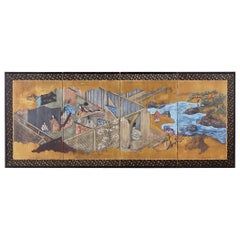
Japanese Panel Art

to
55
1,315
194
1,561
25
1
22
13
13
5
2
2
1
140
532
889
26
312
211
26
34
3
30
22
10
16
12
7
2
888
782
716
708
646
1,531
1,526
1,497
25
6
1,587
1,580
1,583
25
3
2
2
2
Sort By
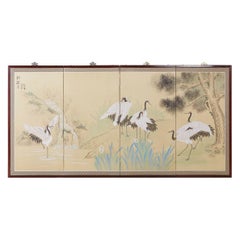
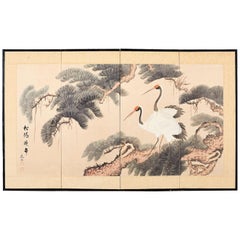
Japanese Four-Panel Screen Red Crowned Cranes
Located in Rio Vista, CA
Exquisite Japanese four panel byobu screen depicting red crowned cranes or manchurian cranes
Category

20th Century Japanese Showa Paintings and Screens

Materials

Brass

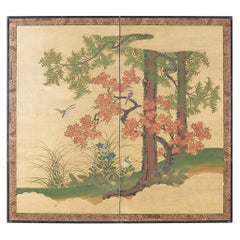
Japanese Two-Panel Meiji Screen Autumn Landscape
Located in Rio Vista, CA
Late 19th century Japanese Meiji period two-panel screen depicting an autumn landscape with
Category

Antique 19th Century Japanese Meiji Paintings and Screens

Materials

Brass, Gold Leaf

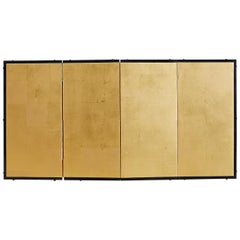
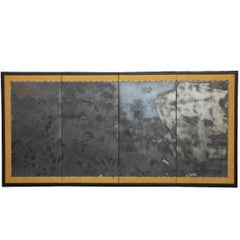
Japanese Four-Panel Gold Leaf Table Screen
Located in Rio Vista, CA
Diminutive Japanese four-panel table screen decorated with squares of gold leaf. This elegant table
Category

20th Century Japanese Showa Paintings and Screens

Materials

Gold Leaf

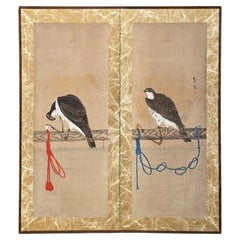
Japanese Edo Period Two-Panel Hawks Screen
Located in Fukuoka, JP
-panel screen features depictions of hawks, a subject rich with cultural significance in Japanese art
Category

Antique Early 19th Century Japanese Edo Paintings and Screens

Materials

Wood, Paper

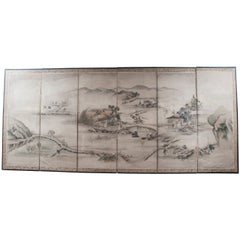
Six-Panel Japanese Screen Depicting a Chinese Landscape
Located in Washington, DC
A six-panel Japanese screen depicting a Chinese landscape.
Category

Antique Late 19th Century Japanese Paintings and Screens
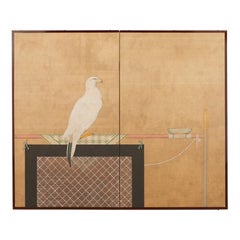
Japanese Showa Two Panel Screen Samurai Falcon
Located in Rio Vista, CA
Fantastic Japanese Showa period two-panel byobu screen featuring a white falcon hunting bird tied
Category

20th Century Japanese Showa Paintings and Screens

Materials

Brass

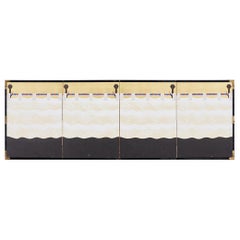
Japanese Modern Four-Panel Bakufu Curtain Screen
Located in Rio Vista, CA
Playful Japanese four-panel Bakufu curtain screen made in a modern style. Miniature 23 inch high
Category

20th Century Japanese Modern Paintings and Screens

Materials

Brass

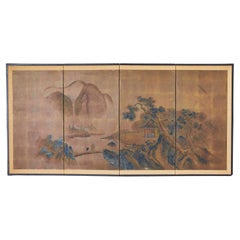
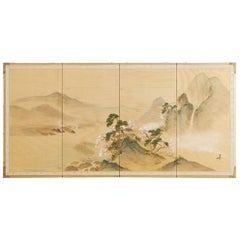
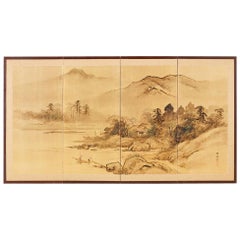
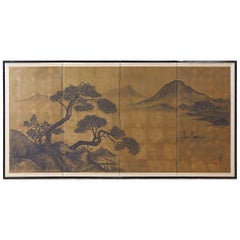
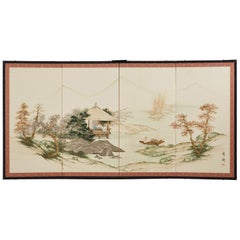
Japanese Showa Four Panel Screen Mountain Landscape
Located in Rio Vista, CA
Serene Japanese Showa period four-panel folding byobu screen depicting an idyllic mountain
Category

20th Century Japanese Showa Paintings and Screens

Materials

Brass

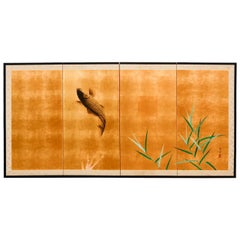
Japanese Four-Panel Gold Leaf Koi Screen
Located in Rio Vista, CA
Spectacular Japanese four panel Byobu gold leaf screen featuring a jumping koi. Each panel is
Category

20th Century Japanese Modern Paintings and Screens

Materials

Brass, Gold Leaf

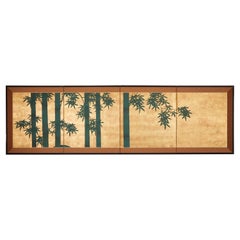
Japanese Four Panel Screen: Bamboo on Gold
Located in Hudson, NY
Painted in mineral pigments with a silk brocade border.
Category

Early 20th Century Japanese Paintings and Screens
Materials

Brocade, Silk

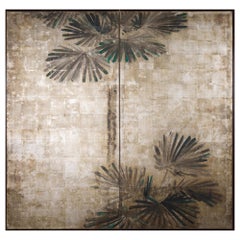
Japanese Two Panel Screen Palms on Silver
Located in Hudson, NY
Palm trees on beautifully patinated silver leaf. Back paper is lovely hand printed with mica paint. Signature reads: Kiyoshi (Sei).
Category

Antique Late 19th Century Japanese Meiji Paintings and Screens

Materials

Paper

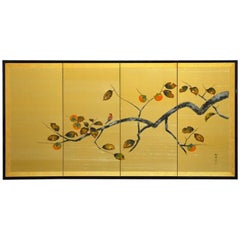
Japanese Four-Panel Persimmon Branch Folding Screen
Located in Rio Vista, CA
Exceptional Japanese silk four-panel folding screen or byobu screen featuring a fruiting persimmon
Category

20th Century Japanese Edo Paintings and Screens

Materials

Brass

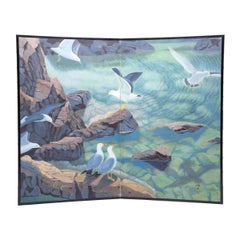
"Water s Edge" Two-Panel Japanese Byobu Screen
Located in Chicago, IL
were originally used in Japanese homes to block drafts of air. The oldest screens date back to the 9th
Category

Late 20th Century Japanese Showa Paintings and Screens

Materials

Wood, Paint, Paper

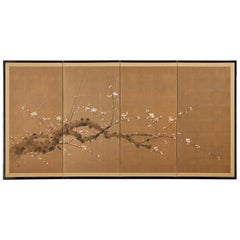
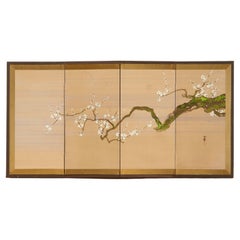
Japanese Four-Panel Screen Flowering Prunus Tree
Located in Rio Vista, CA
Serene Japanese Showa period four-panel screen depicting a spring flowering prunus tree. Ink and
Category

20th Century Japanese Showa Paintings and Screens

Materials

Brass

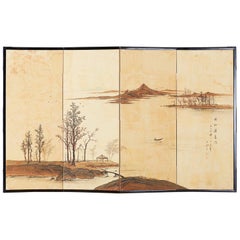
Japanese Four-Panel Screen River Landscape Scene
Located in Rio Vista, CA
Unique Japanese four-panel screen depicting a river landscape with mountains and trees. Ink and
Category

20th Century Japanese Mid-Century Modern Paintings and Screens

Materials

Brass

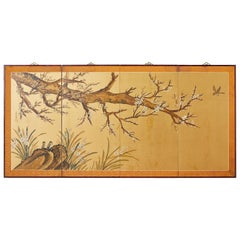
Japanese Four-Panel Screen Flowering Plum Tree
Located in Rio Vista, CA
Japanese Showa period four-panel screen depicting a large flowering plum tree, or prunus tree with
Category

20th Century Japanese Showa Paintings and Screens

Materials

Brass, Gold Leaf

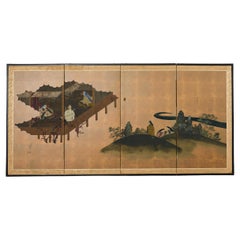
Japanese Showa Four Panel Screen Tale of Genji
Located in Rio Vista, CA
Serene 20th century Japanese Showa period four-panel folding byobu screen from the narrative "Tale
Category

20th Century Japanese Showa Paintings and Screens

Materials

Brass

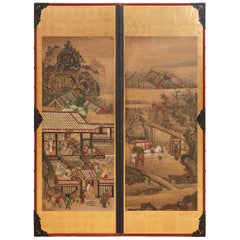
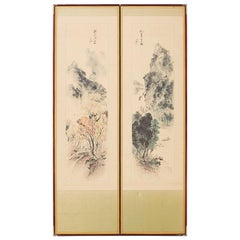
Pair of Japanese Scrolls Mounted as Panels
Located in Rio Vista, CA
Colorful pair of Japanese scrolls mounted as panels each having a border of gold leaf squares. Set
Category

20th Century Japanese Meiji Paintings and Screens

Materials

Metal, Gold Leaf

Japanese Four-Panel Silk Landscape Byobu Screen
Located in Rio Vista, CA
Exceptional Japanese four-panel Byobu screen of a mountain landscape painted on silk. The
Category

20th Century Japanese Meiji Paintings and Screens

Materials

Brass

Japanese Edo Period Four-Panel Moriage Screen
Located in Rio Vista, CA
Stunning Japanese Edo-period four-panel screen depicting a meandering stream bordered by a
Category

Antique 18th Century Japanese Edo Paintings and Screens

Materials

Brass

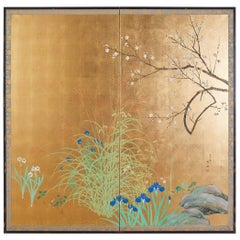
Japanese Signed Two Panel Screen Flowering Landscape
Located in Rio Vista, CA
Large Japanese two-panel screen featuring a flowering landscape over a dramatic gold leaf
Category

20th Century Japanese Meiji Paintings and Screens

Materials

Gold Leaf

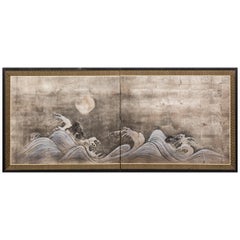
Japanese Two Panel Screen Moon Over Waves
Located in Hudson, NY
Modern painting in mineral pigments on silver of waves crashing on a craggy shoreline. Interesting mottled surface, with a silk brocade border.
Category

Mid-20th Century Japanese Paintings and Screens

Materials

Silk, Wood, Paper

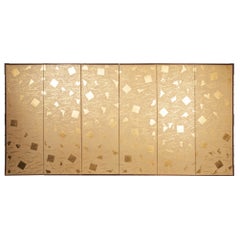
Japanese Six Panel Screen: Abstract Gold Leaf
Located in Hudson, NY
Various sizes of gold leaf applied to mulberry paper creating an abstract design.
Category

Early 20th Century Japanese Paintings and Screens

Materials

Gold Leaf

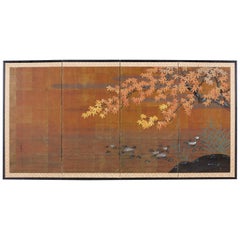
Japanese Autumn Maple Four-Panel Byobu Screen
Located in Rio Vista, CA
Serene Japanese four-panel byobu screen depicting a seasonal nature scene of an autumn maple tree
Category

20th Century Japanese Edo Paintings and Screens

Materials

Brass

Japanese Four-Panel Screen Landscape with Fisherman
Located in Rio Vista, CA
Idyllic Japanese four-panel byobu screen depicting a serene mountain and lake landscape with
Category

20th Century Japanese Mid-Century Modern Paintings and Screens

Materials

Brass

Japanese Four Panel Byobu Gilt Landscape Screen
Located in Rio Vista, CA
Hand painted Japanese four-panel byobu screen depicting a mountain and lake landscape. Painted on
Category

20th Century Japanese Mid-Century Modern Paintings and Screens

Materials

Brass

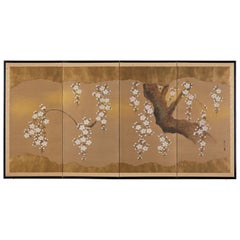
Japanese Four Panel Screen Spring Cherry Blossoms
Located in Rio Vista, CA
Gorgeous Japanese four panel Showa period screen depicting flowering cherry tree blossoms. Made in
Category

20th Century Japanese Showa Paintings and Screens

Materials

Brass, Gold Leaf

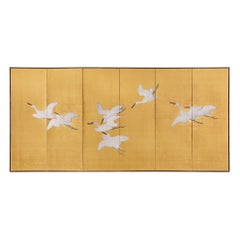
Japanese Six Panel Screen: Egrets in Flight
Located in Hudson, NY
A siege of Egrets glide along the warm golden backdrop. Mineral pigments and gold on mulberry paper with lacquered wood trim.
Category

Early 20th Century Japanese Paintings and Screens

Materials

Gold

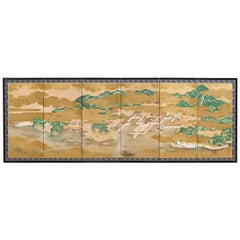
Japanese Six Panel Kano School Style Screen
Located in Rio Vista, CA
Large Japanese six-panel Byobu screen depicting an aerial view of a village with a river and
Category

20th Century Japanese Edo Paintings and Screens

Materials

Brass, Gold Leaf

Japanese Meiji Period Four-Panel Landscape Screen
Located in Rio Vista, CA
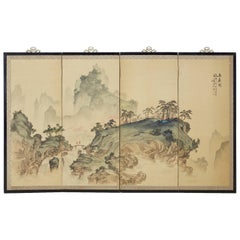
Dramatic Japanese late Meiji early Showa period landscape screen titled Mountain Residence. Ink and
Category

20th Century Japanese Meiji Paintings and Screens

Materials

Brass

Japanese Two-Panel Screen: Moonlit Ocean Landscape
Located in Hudson, NY
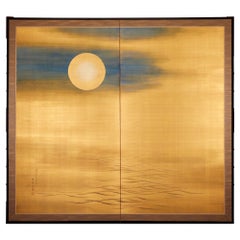
Admired for its beauty, the wonderous moon shines on gentle ocean waves. Mineral pigment on gold silk with a silk brocade border and black lacquer wooden trim with bronze hardware. ...
Category

Early 20th Century Japanese Paintings and Screens

Materials

Gold, Bronze

Antique Japanese Two Panel Byobu
Located in West Palm Beach, FL
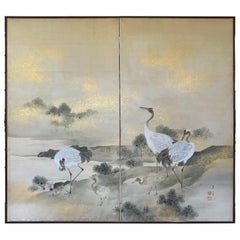
An antique Japanese two panel byobu Ink and gouache painting of cranes by a lakeside shore. Buff
Category

Antique Late 19th Century Paintings and Screens

Materials

Wood

Japanese Antique Edo Cats Two Panel Gold Screen
Located in South Burlington, VT
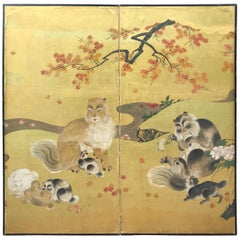
From our recent Japanese Acquisitions Travels. Japan, a stunning antique two-panel gold screen
Category

Antique 19th Century Japanese Meiji Paintings and Screens

Materials

Paper

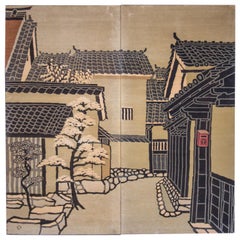
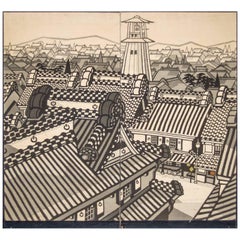
Japanese Two-Panel Screen Kyoto Town Street Scene
Located in Hudson, NY
Japanese two-panel screen: Kyoto town street scene, view down the street in Kyoto, showing a small
Category

Mid-20th Century Japanese Showa Paintings and Screens

Materials

Silk, Wood

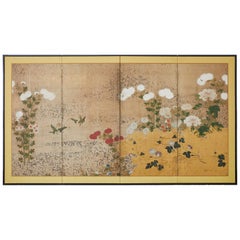
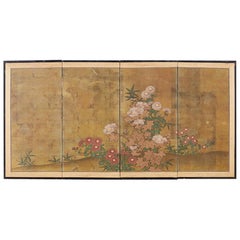
Japanese Four-Panel Screen Seasonal Flowers on Gilt
Located in Rio Vista, CA
Interesting Japanese four-panel byobu screen displaying a selection of seasonal flowers. Peony
Category

20th Century Japanese Paintings and Screens

Materials

Silk, Paper, Wood

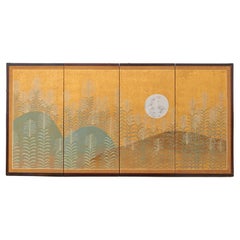
Japanese Showa Four Panel Screen Autumn Moon Landscape
Located in Rio Vista, CA
Serene Japanese Showa period four panel byobu screen titled "Obana ni Tsuki" pampas grass with
Category

20th Century Japanese Showa Paintings and Screens

Materials

Silk, Wood, Paper

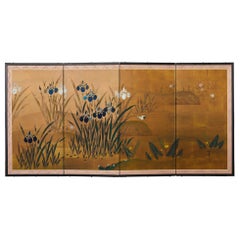
Japanese Showa Four Panel Screen Iris Water Landscape
Located in Rio Vista, CA
Colorful Japanese Showa period four-panel byobu screen depicting blue and white iris with wild
Category

20th Century Japanese Showa Paintings and Screens

Materials

Silk, Wood, Paper

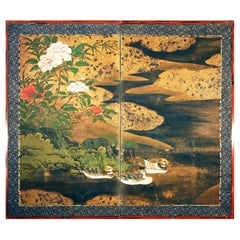
Edo Japanese Two Panel Screen, Landscape with Ducks
Located in Brescia, IT
The Japanese two panel screen, a true antique piece that I can present to you, dates back to the
Category

Antique 18th Century Japanese Edo Paintings and Screens

Materials

Paper

Japanese Two-Panel Screen Summer and Autumn Landscapes
Located in Rio Vista, CA
Unique Japanese two-panel screen depicting two painted landscapes of summer and autumn. Ink on
Category

20th Century Japanese Paintings and Screens

Materials

Brass

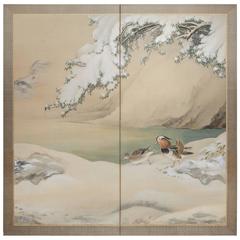
Japanese Two Panel Screen: Mandarin Ducks in Snowy Landscape
Located in Hudson, NY
Japanese Two Panel Screen: Mandarin Ducks in Snowy Landscape Mineral pigments on silk Signature
Category

20th Century Japanese Paintings and Screens

Japanese Four Panel Screen Autumn Foliage and Flowers
Located in Rio Vista, CA
Composed Japanese Showa period four-panel byobu screen depicting autumn foliage with chrysanthemum
Category

20th Century Japanese Showa Paintings and Screens

Materials

Silk, Wood, Paper

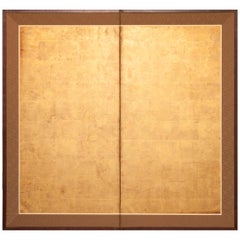
Japanese Two-Panel Screen Gold Leaf on Paper
Located in Hudson, NY
Japanese two-panel screen: gold leaf on paper. 19th century gold leaf mounted to mulberry paper
Category

Antique 19th Century Japanese Paintings and Screens

Materials

Gold Leaf

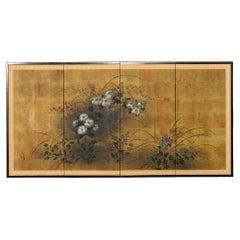
Japanese Four-Panel Flowers of Autumn Byobu Screen
Located in Rio Vista, CA
Gorgeous Japanese four-panel byobu screen depicting colorful flowers of autumn. Chrysanthemum (kiku
Category

20th Century Japanese Meiji Paintings and Screens

Materials

Silk, Paper, Wood

Japanese Four-Panel Longevity Screen of Pine Cranes
Located in Rio Vista, CA
Beautiful Japanese four-panel byobu screen titled pine cranes and longevity. Depicts two red
Category

20th Century Japanese Edo Paintings and Screens

Materials

Fabric, Silk, Wood

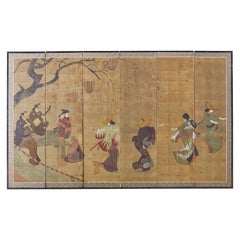
Japanese Six-Panel Screen Edo Dancers and Musicians
Located in Rio Vista, CA
Playful 20th century Japanese six-panel screen depicting early Edo period dancers and male
Category

20th Century Japanese Edo Paintings and Screens

Materials

Brass

Japanese Four-Panel Silver Gilt Byobu Table Screen
Located in Rio Vista, CA
Dramatic Japanese silver gilt byobu four-panel folding table screen featuring a metallic silver
Category

20th Century Japanese Paintings and Screens

Materials

Brass, Silver Leaf

Japanese Two-Panel Screen, City View of Kyoto
Located in Hudson, NY
With the Higashiyama Hills in the distance. Sumie (ink painting) on raw silk. Seal reads: Hata.  Born in Kyoto 1917, died 2005.
Category

Mid-20th Century Japanese Paintings and Screens

Materials

Silk

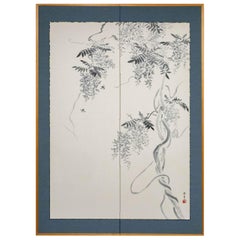
Japanese Two Panel Screen, Wisteria Vine with Bumblebees
Located in Hudson, NY
Sumi (ink) painting on paper with silk brocade border. Good mounting and good condition. Signature reads: Kimiko.
Category

Vintage 1950s Japanese Paintings and Screens

Materials

Silk, Paper

Japanese Showa Four Panel Screen Lakeside Village Landscape
Located in Rio Vista, CA
Serene Japanese Showa period four-panel byobu screen depicting a mountain lakeside village
Category

20th Century Japanese Showa Paintings and Screens

Materials

Silk, Wood, Paper

Japanese Showa Four Panel Screen Flowering Prunus Tree
Located in Rio Vista, CA
Diminutive Japanese Showa period four-panel folding byobu screen featuring a spring blossoming
Category

20th Century Japanese Showa Paintings and Screens

Materials

Silk, Paper, Wood

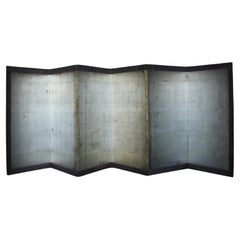
B7 Japanese Antiques Silver Screen, 6-panel Byobu
Located in Niiza, JP
request a quote from 1stdibs via "Shipping & Returns Ships from Japan: Rates vary Details".
Category

20th Century Japanese Paintings and Screens

Materials

Paper

Japanese Four Panel Showa Screen Retreat Mountain Landscape
Located in Rio Vista, CA
Serene Japanese four-panel Showa period screen depicting a Chinese scholar in a boat and officials
Category

20th Century Japanese Showa Paintings and Screens

Materials

Brass

Japanese Showa Four Panel Screen Serene Village Landscape
Located in Rio Vista, CA
Peaceful and serene Japanese showa period four-panel byobu screen depicting a village mountain
Category

20th Century Japanese Showa Paintings and Screens

Materials

Silk, Wood, Paper

Japanese Four-Panel Screen Winter Pine with Ducks
Located in Rio Vista, CA
Unique Japanese four-panel screen depicting a cool winter landscape with pine, prunus, and bamboo
Category

20th Century Japanese Meiji Paintings and Screens

Materials

Silk, Glass, Paper, Wood

Japanese Showa Four Panel Screen Rustic Lakeside Village
Located in Rio Vista, CA
Serene Japanese 20th century Showa period four-panel byobu screen featuring a rustic lakeside
Category

20th Century Japanese Showa Paintings and Screens

Materials

Silk, Wood, Paper

Japanese Six-Panel Meiji Screen Kinkakuji in Winter
Located in Rio Vista, CA
Majestic Japanese Meiji period six-panel screen of Kinkakuji in Kyoto, Japan. This 14th century
Category

Antique 19th Century Japanese Meiji Paintings and Screens

Materials

Silk, Wood, Paper

Japanese Four-Panel Screen Tales of Genji Episode
Located in Rio Vista, CA
Remarkable Japanese four-panel byobu screen depicting chapter 17 episode from tales of Genji. The
Category

20th Century Japanese Paintings and Screens

Materials

Brass

  • 1
  • ...
Get Updated with New Arrivals
Save "Japanese Panel Art", and we’ll notify you when there are new listings in this category.

Japanese Panel Art For Sale on 1stDibs

Find many varieties of an authentic piece of Japanese panel art available at 1stDibs. Frequently made of paper, wood and metal, every item from our selection of Japanese panel art was constructed with great care. Find 1490 options for an antique or vintage choice in our collection of Japanese panel art now, or shop our selection of 25 modern versions for a more contemporary example of this long-cherished piece. There are many kinds of the object in our assortment of Japanese panel art you’re looking for, from those produced as long ago as the 18th Century to those made as recently as the 21st Century. When you’re browsing for the right option in this array of Japanese panel art, those designed in mid-century modern, Art Deco and modern styles are of considerable interest. You’ll likely find more than one piece of Japanese panel art that is appealing in its simplicity, but Japanese Studio, Mitani Toshuku and Bunto Hayashi produced versions that are worth a look.

How Much is a Japanese Panel Art?

A piece of Japanese panel art can differ in price owing to various characteristics — the average selling price 1stDibs is $4,195, while the lowest priced sells for $1 and the highest can go for as much as $5,807,050.

Finding the Right Paintings-screens for You

Traditional Asian paintings were often created on scrolls and folding screens. Artisans made screens that could be folded up or spread out by connecting several panels using hinges. Today, antique Asian folding screens and paintings are sophisticated decorative accents that can serve as makeshift partitions to ensure privacy.

The original folding screens were created by Chinese artists. The earliest record of screens comes from the 2nd century B.C., and surviving examples date back to the Ming dynasty. Chinese painting utilizes many of the same tools as calligraphy — these screens were crafted from wood with painted panels featuring striking art or calligraphy that told cultural stories or represented nature and life in the area.

The practice was introduced to Japan, where paintings for screens were made on paper and silk, in the 8th century. These paintings frequently feature subjects such as landscapes, animals, flowers and Buddhist religious themes. Along with screens for tea ceremonies and dance backgrounds, there were screens for use in Shinto and Buddhist temples.

In the 17th century, screens began to be imported to Europe where their popularity grew. Coco Chanel famously collected Coromandel folding screens.

Traditional Asian paintings can make a tasteful addition to any wall, and screens can be used as decoration or, in the case of larger iterations, as an aesthetic way to divide a large room. Browse the selection of antique Asian paintings and screens from a variety of styles and eras on 1stDibs.

Questions About Japanese Panel Art
  • 1stDibs ExpertMarch 22, 2022
    Japanese panels are components of large decorative folding screens called byōbu, which translates to “wind wall.” The screens traditionally function as room dividers and feature calligraphy and decorative painting. On 1stDibs, you can shop a range of decorative Japanese panels.
  • 1stDibs ExpertApril 5, 2022
    The writing on Japanese art is calligraphy art called shodo. It uses Japanese kanji and kana characters. There are a variety of different shodo styles of art, including Kaisho, which is the basic, foundational form of the art. On 1stDibs, find a range of Japanese calligraphy art from top sellers..
  • 1stDibs ExpertApril 16, 2024
    The focus of Japanese art varies. Many traditional Japanese artists sought to capture the beauty of nature in their works. However, other Japanese artists have produced work with Buddhist themes, and contemporary artists working in the country have been inspired by a range of subjects, from socioeconomic and political issues to pop culture. On 1stDibs, explore a large selection of Japanese art.
  • 1stDibs ExpertApril 5, 2022
    There are a variety of different types of Japanese art. One of the oldest and most admired forms of Japanese art is the art of calligraphy, which originated in the sixth or seventh century. Another type of art, ukiyo-e, is the art of the woodblock print, which depicts scenes of female beauties; kabuki actors, sumo wrestlers and more. You’ll find a variety of Japanese artwork from some of the world’s top art dealers on 1stDibs.
  • 1stDibs ExpertApril 5, 2022
    Many art styles originated in Japan and grew in popularity over the years. Some of the most popular styles include shodo (calligraphy), ikebana, kanou and yamato-e. You’ll find a wide variety of authentic Japanese art from some of the world’s top dealers on 1stDibs.
  • 1stDibs ExpertApril 5, 2022
    What Japanese wall art is called depends on its type. There are numerous kinds of Japanese paintings and prints, including nihonga and ukiyo-e. A Japanese wall scroll is known as a kakejiku or kakemono. On 1stDibs, find a variety of Japanese wall art.
  • 1stDibs ExpertSeptember 23, 2024
    What the Japanese sea art is called depends on its type. Many examples of sea art from Japan are called ukiyo-e. This term refers to woodblock prints made during the 17th, 18th and 19th centuries. The Great Wave off Kanagawa by Katsushika Hokusai is arguably the most famous ukiyo-e print depicting the sea. On 1stDibs, find a wide variety of Japanese woodblock prints.
  • 1stDibs ExpertOctober 15, 2024
    To tell if art is Japanese or Chinese, study the piece's characteristics. With paintings, Chinese artists often use more color and tend to fill their entire canvases, while Japanese artists often include more negative space and choose subtler colors. There are also differences between the brushstrokes typical of traditional Chinese and Japanese art. In Japanese paintings, brushstrokes are often short and sharp. On the other hand, Chinese paintings often display longer, more fluid brushstrokes. Learning about the defining features of various art forms and periods and looking at examples of pieces made by Japanese and Chinese artists can help you learn to spot subtle differences. Explore a diverse assortment of Japanese and Chinese art on 1stDibs.