Japanese Screens Byobu

to
17
288
45
356
38
6
13
5
4
3
1
23
90
243
44
45
67
10
1
3
4
4
2
3
2
1
244
243
239
172
170
378
365
330
34
5
400
397
399
12
2
1
1
1
Sort By
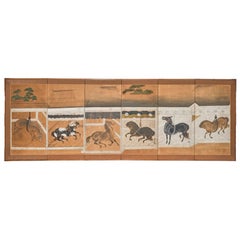
Japanese Six Panel Screen: Horses in Stable
Located in Hudson, NY
This is a beautiful and evocative antique Japanese six-panel folding screen (Byōbu), a classic
Category

Antique Early 19th Century Japanese Paintings and Screens

Materials

Brocade, Silk, Paper

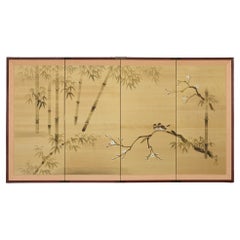
Japanese Showa Four Panel Screen Spring Bamboo Landscape
Located in Rio Vista, CA
Serene mid-20th century Showa period Japanese four-panel folding byobu screen made in the Nihonga
Category

20th Century Japanese Showa Paintings and Screens

Materials

Brass

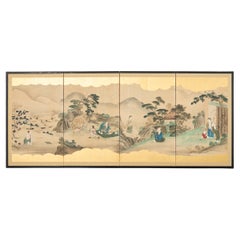
Japanese Edo Four Panel Screen Paragons of Filial Piety
Located in Rio Vista, CA
Late 19th century Edo period Japanese four panel folding byobu screen depicting four of the twenty
Category

Antique 19th Century Japanese Edo Paintings and Screens

Materials

Brass, Gold Leaf

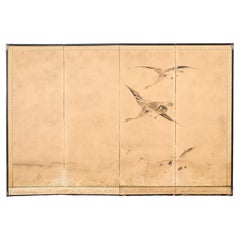
Japanese Meiji Four Panel Screen Wild Geese Over Reeds
Located in Rio Vista, CA
Muromachi period inspired Japanese four panel byobu screen depicting wild geese in flight over
Category

Antique 19th Century Japanese Meiji Paintings and Screens

Materials

Brass

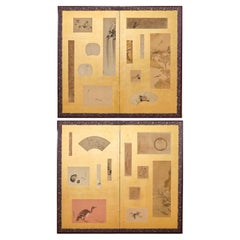
Pair of Japanese Two Panel Screens Edo Period Vignettes
Located in Rio Vista, CA
Impressive pair of Japanese two-panel byobu screens featuring late 18th-century edo period applied
Category

Antique 18th Century Japanese Edo Paintings and Screens

Materials

Gold Leaf

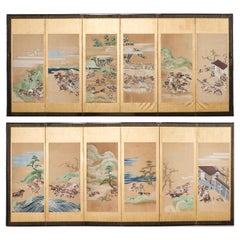
Pair of Japanese Edo/Tokugawa Screens Tale of Heiki
Located in Rio Vista, CA
Monumental pair of late 18th century Japanese Edo/Tokugawa period byobu screens depicting the
Category

Antique 19th Century Japanese Edo Paintings and Screens

Materials

Brass, Gold Leaf

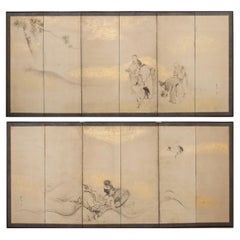
Pair of 18th Century Japanese Edo Screens of Chinese Immortals
Located in Rio Vista, CA
Mesmerizing pair of late 18th/early 19th century Japanese Edo period byobu screens by Shibata Gito
Category

Antique 18th Century Japanese Edo Paintings and Screens

Materials

Silk, Wood, Paper

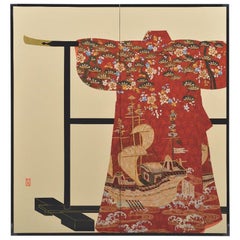
Japanese Large Red Silk Brocade Gilded Two Panel Folding Screen
Located in Takarazuka, JP
Exquisite contemporary Japanese two panel folding screen or "byobu" featuring genryoku style
Category

21st Century and Contemporary Japanese Paintings and Screens

Materials

Gold

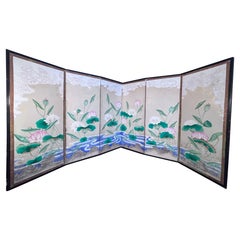
Japanese Antique Hand Painted Lotus And Blue Waters Screen Vibrant Colors
Located in South Burlington, VT
Hand Painted six panel byobu screen on silk executed with lovely lotus flowers and vibrant blue waters
Category

Antique 19th Century Japanese Meiji Paintings and Screens

Materials

Gold Leaf

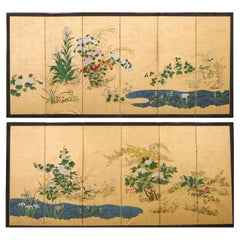
Pair of Japanese Meiji Screens Blossoms of Spring, Summer and Autumn
Located in Rio Vista, CA
Amazing pair of late 19th/early 20th century Japanese Meiji period byobu screens depicting
Category

Antique 19th Century Japanese Meiji Paintings and Screens

Materials

Brass, Gold Leaf

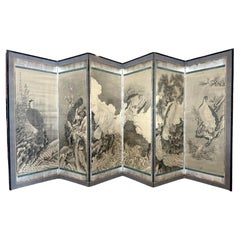
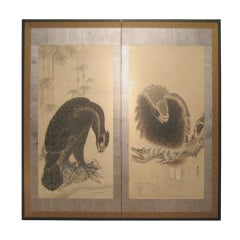
Rare Japanese Floor Screen of Perched Eagles Soga Shohaku Edo period
Located in Atlanta, GA
A rare six-panel Japanese folding floor screen (Byōbu) by Soga Shōhaku (1730-1781) from Edo period
Category

Antique 18th Century Japanese Edo Paintings and Screens

Materials

Brocade, Wood, Paper

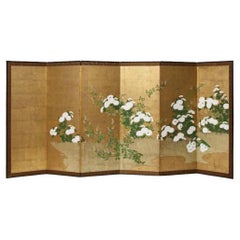
Kiku to Hagi Byobu, Rinpa School Style, Edo Period.
Located in Point Richmond, CA
A Chrysanthemum and Bush Clover painting on gold leaf six-panel folding screen, painted with
Category

Antique Early 1800s Japanese Edo Paintings and Screens

Materials

Gold Leaf

Early 20th Century Japanese 6-Panel Gouache and Gold Leaf Painted Table Screen
Located in Morristown, NJ
. Japanese folding screens, or byobu (“wind screens”), are free-standing, portable, and typically ornamented
Category

20th Century Japanese Showa Paintings and Screens

Materials

Gold Leaf

Mid-size 6-panel byôbu 屏風 with a scene from The Tale of Genji
Located in Amsterdam, NL
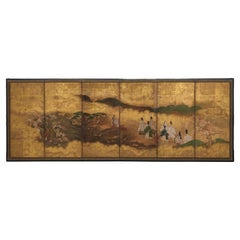
A refined medium-sized six-panel byôbu (folding screen) showcasing a classical autumn court scene
Category

Antique 17th Century Japanese Paintings and Screens

Materials

Metal, Gold Leaf

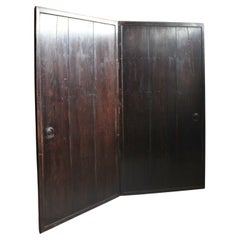
B47 Japanese antique, cedar Byobu folding screen, room dividers
Located in Niiza, JP
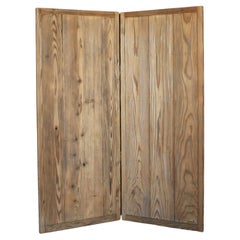
sandwiched): 15 cm x 75 cm x 180 cm, weight 20 kg A cedar folding screen with a lovely worn wood grain. Only
Category

Antique 19th Century Japanese Antiquities

Materials

Wood, Cedar

B40 Japanese antique, cedar Byobu folding screen, room dividers
Located in Niiza, JP
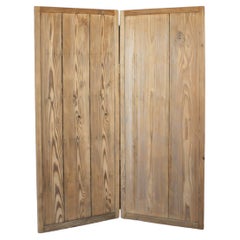
): 15 cm x 75 cm x 180 cm, weight 20 kg A cedar folding screen with a lovely worn wood grain. Only the
Category

Antique 19th Century Japanese Furniture

Materials

Cedar, Wood

B43 Japanese antique, pine, cedar Byobu folding screen, room dividers
Located in Niiza, JP
character. In Japan, this texture is described as "amber colored" or "Torotoro(melted)" and is highly valued
Category

Antique 19th Century Japanese Furniture

Materials

Cedar, Pine

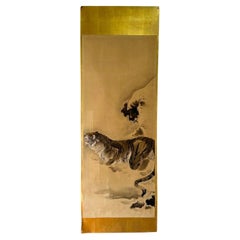
Late 19th century (Meiji period) painting depicting tiger
Located in Fukuoka, JP
and signed by the artist. This work was originally part of a Japanese byobu folding screen and can now
Category

Antique Late 19th Century Japanese Meiji Paintings and Screens

Materials

Gold Leaf

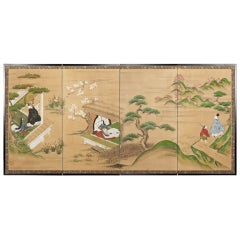
A four-panel Japanese screen (byobu)
Located in Winter Park, FL
A medium-size six panel screen decorated with scenes from the famous Japanese novel The Tale of
Category

Antique 19th Century Japanese Paintings and Screens

Materials

Brocade, Ink

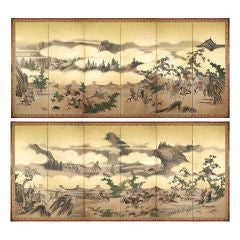
A pair of six-panel Japanese screens (byobu)
Located in Winter Park, FL
Each screen similarly decorated with a continuous scene of Tartar archers hunting, some on
Category

Antique 19th Century Japanese Paintings and Screens

Materials

Ink

A pair of six-panel Japanese screens (byobu)
Located in Winter Park, FL
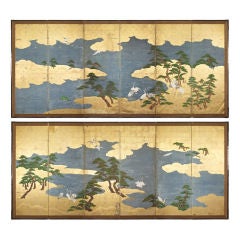
Each screen similarly decorated with a continuous scene depicting flying cranes and others standing
Category

Antique 19th Century Japanese Paintings

Materials

Ink

Byobu four-panel folding screen, Japan Showa era
Located in Saverne, Grand Est
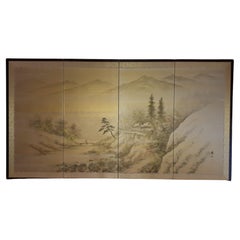
Four-panel byobu decorated with a mountain landscape, hand-painted on gilt silk and surrounded by a
Category

Mid-20th Century Japanese Showa Paintings and Screens

Materials

Silk

Hand Painted Japanese Folding Screen Byobu of Camellias
Located in 10 Chater Road, HK
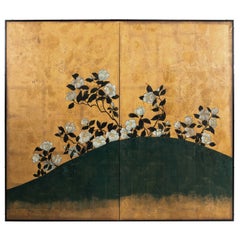
) Traditional folding screens from Japan, known as Byobu - literally “protection from wind”, were originally
Category

21st Century and Contemporary Chinese Paintings and Screens

Materials

Gold Leaf

Hand Painted Japanese Folding Screen Byobu of Hawks
Located in 10 Chater Road, HK
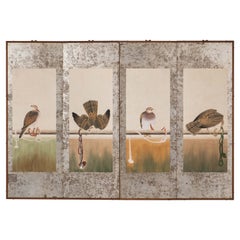
) Traditional folding screens from Japan, known as Byobu - literally “protection from wind”, were originally
Category

21st Century and Contemporary Chinese Paintings and Screens

Materials

Silver Leaf

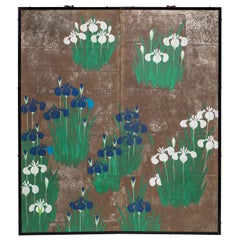
Hand Painted Japanese Folding Screen Byobu of Irises
Located in 10 Chater Road, HK
) Traditional folding screens from Japan, known as Byobu - literally “protection from wind”, were originally
Category

21st Century and Contemporary Chinese Paintings and Screens

Materials

Silver Leaf

Edo Period Byobu Japanese Screen Cherry Blossoms and Birds
Located in Santa Fe, NM
Exquisitely detailed birds sit on the branches of a wind swept old gnarled cherry tree covered in delicate white blossoms. Gilt clouds reflect light beautifully. The rocky shore on...
Category

Antique 18th Century Japanese Edo Paintings and Screens

Materials

Hardwood, Handmade Paper

17th/ 18th Century Edo Period Japanese Kano School Style Byobu Screen
Located in Louisville, KY
ink on mulberry bark paper, depicting scenes of silk production in a mountainous landscape. Note: the Kano School was pioneered by Kano Sanraku, (1559-1635) worked in Kyoto and was a...
Category

Antique 18th Century and Earlier Japanese Japonisme Paintings and Screens
Hand Painted Japanese Folding Screen Byobu of Chrysanthemum and Willows
Located in 10 Chater Road, HK
W x 140cm H) Traditional folding screens from Japan, known as Byobu - literally “protection from
Category

21st Century and Contemporary Chinese Paintings and Screens

Materials

Gold Leaf

Hand Painted Japanese Folding Screen Byobu of Flowering Grasses and Bamboo
Located in 10 Chater Road, HK
" H (145cm W x 170cm H). Traditional folding screens from Japan, known as Byobu - literally
Category

21st Century and Contemporary Chinese Paintings and Screens

Materials

Gold Leaf

Painted Rice Paper Wood Screen (Byobu)
Located in New York, NY
Hand painted byobu screen from Meiji Period Japan. First design available as a pair, with rural
Category

Antique 19th Century Japanese Screens and Room Dividers

Materials

Wood

Japanese Screen with Hawks
Located in New York, NY
Japanese folding paper screen (byobu) with painting of Hawks at the waters edge.
Category

Antique 19th Century Japanese Paintings and Screens

Materials

Silver Leaf

Japanese Byobu Golden Silkscreen Paravan, 1940s
Located in Brussels, Ixelles
Original 1940s Japanese silkscreen also known as Byobu, with golden inner panels. Wooden frame
Category

Vintage 1940s Japanese Japonisme Screens and Room Dividers

Materials

Silk

20th Century Furusaki Byobu
Located in TORINO, IT
Naka Houkou - Six panell furusaki byoubu. Front: paper and color Back: Raw silk and ink.
Category

Antique 1890s Japanese Meiji Paintings and Screens

Materials

Paper

Exceptionally Large Japanese Screen with Pine Tree Peonies
Located in Seattle, WA
An exceptionally large and finely painted Japanese six-panel folding screen (byobu) depicting an
Category

Antique 18th Century and Earlier Japanese Paintings and Screens

Materials

Gold Leaf

Japanese Two-Panel Silver Leaf Screen with Autumn Grasses
Located in Seattle, WA
Japanese two-panel folding screen, or byobu, depicting hagi (bush clover) and obana (flowering
Category

Early 20th Century Japanese Paintings and Screens

Materials

Silver Leaf

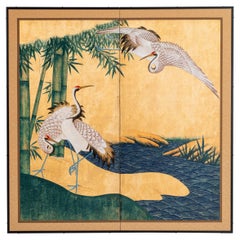
Contemporary Hand-Painted Japanese Screen of Cranes by the River
Located in 10 Chater Road, HK
support. Traditional folding screens from Japan, known as Byobu. Literally “protection from wind”, were
Category

2010s Chinese Paintings and Screens

Materials

Gold Leaf

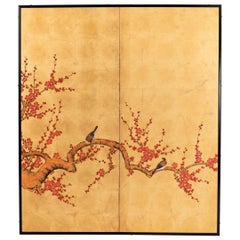
Contemporary Hand-Painted Japanese Screen of Red Plum Blossom and Birds
Located in 10 Chater Road, HK
provide support. Traditional folding screens from Japan, known as Byobu. Literally “protection from wind
Category

2010s Chinese Paintings and Screens

Materials

Gold Leaf

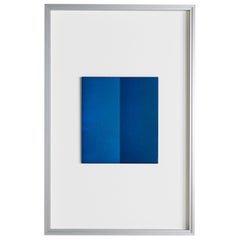
Phenomena, Colors, Keiji Takeuchi, 1st Edition, 2020
Located in Milan, IT
of aluminum beyond its functional use. My research led me to traditional Japanese folding screens
Category

21st Century and Contemporary Italian Minimalist Decorative Art

Materials

Aluminum

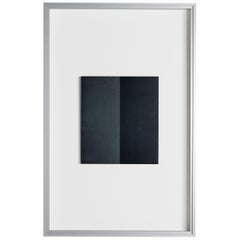
Phenomena, Black, Keiji Takeuchi, First Edition, 2020
Located in Milan, IT
potential of aluminum beyond its functional use. My research led me to traditional Japanese folding screens
Category

21st Century and Contemporary Italian Minimalist Decorative Art

Materials

Aluminum

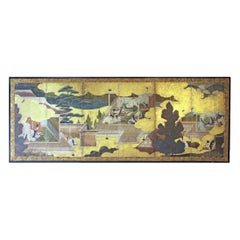
Japanese Byobu - Japanese Screen Six Panels
By Japanese Studio
Located in Brescia, IT
Six-panel folding screen depicting the famous legend of Hikaru Genji, a nobleman of extraordinary
Category

Antique Early 18th Century Japanese Edo Paintings and Screens

Materials

Gold Leaf

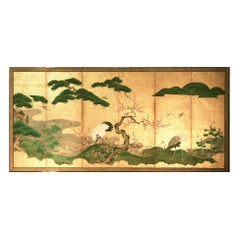
Byobu - Japanese Screen "Kano School" Gold Leaf
By Japanese Studio
Located in Brescia, IT
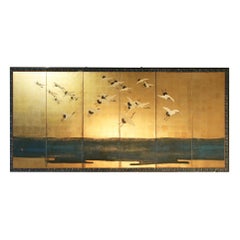
Japanese Kano School Six Panel Screen: Landscape with Beautiful and Elegant Cranes near the River
Category

Antique Late 18th Century Japanese Edo Paintings and Screens

Materials

Gold Leaf

Byobu - Japanese Screen six Panels Gold Leaf
By Japanese Studio
Located in Brescia, IT
Japanese six-panel screen from the Kano school: landscape with many beautiful and elegant cranes on
Category

Early 20th Century Japanese Meiji Paintings and Screens

Materials

Gold Leaf

Japanese Folding Screen four Panels painted on gold leaf -Japanese Byobu
By Japanese Studio
Located in Brescia, IT
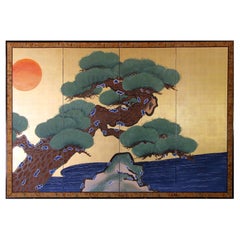
Japanese Kano school four-panel screen, with pine trees near the sea kissed by the sun. Hand
Category

Antique Late 19th Century Japanese Meiji Paintings and Screens

Materials

Gold Leaf

"Misty Morning" Japanese Byobu Screen
Located in Chicago, IL
Originally used to define living spaces and block drafts, Japanese screens also provided artists
Category

Early 20th Century Japanese Paintings and Screens

Materials

Gold Leaf

Japanese Four Panel Landscape Byobu Screen
Located in Rio Vista, CA
Hand-painted Japanese four-panel landscape Byobu screen. Features a mountain scene with pine trees
Category

20th Century Japanese Edo Paintings and Screens

Materials

Brass

Japanese Byobu Hand Painted Silk Screen
Located in Dallas, TX
Beautiful early-mid 20th century 6 panel Japanese Byobu folding screen. It is signed and features
Category

Vintage 1940s Japanese Mid-Century Modern Paintings and Screens

Materials

Silk, Wood, Paint

"Stable Jump" Two-Panel Japanese Byobu Screen
Located in Chicago, IL
The term byobu means “wind wall” and as the name suggests painted folding screens, like this one
Category

Antique Early 1700s Japanese Edo Paintings and Screens
Antique Japanese Six-Panel Landscape Screen Byobu
Located in Torino, IT
Originally used to define living spaces and block drafts, Japanese screens also provided artists
Category

Antique Late 19th Century Japanese Meiji Paintings and Screens

Materials

Paper

Japanese Four-Panel Painted Landscape Byobu Screen
Located in Rio Vista, CA
Idyllic Japanese four-panel painted landscape byobu screen. Features a delicate painted scene of
Category

20th Century Japanese Paintings and Screens

Materials

Brass

Japanese Four-Panel Spring Byobu Folding Screen
Located in Rio Vista, CA
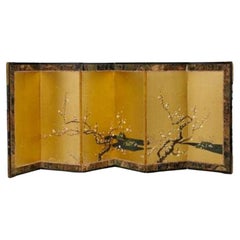
Colorful Japanese painted four panel byobu folding screen depicting trees with blossoming flowers
Category

20th Century Japanese Mid-Century Modern Paintings and Screens

Materials

Brass

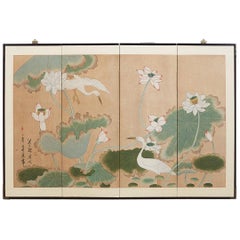
Japanese Cranes and Lotus Blossom Byobu Screen
Located in Rio Vista, CA
Beautiful painted Japanese byobu screen featuring white cranes among lotus blossoms. Painted on
Category

20th Century Japanese Showa Paintings and Screens

Materials

Brass

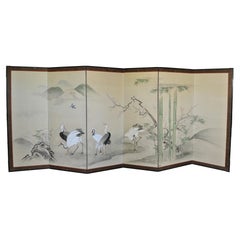
Antique Japanese 6-Panel Byobu Screen
Located in West Palm Beach, FL
An elegant antique Japanese 6-panel (byobu) screen painted with a composition of five standing
Category

20th Century Paintings and Screens

Materials

Silk

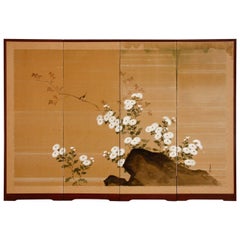
Japanese Four Panel Silk Byobu Screen of Chrysanthemums
Located in Rio Vista, CA
Vintage Japanese four panel silk Byobu screen of delicate chrysanthemums and a small bird. Features
Category

20th Century Japanese Meiji Paintings and Screens

Materials

Brass

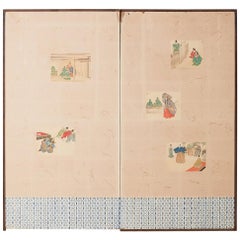
Japanese Taisho Period Byobu Screen with Noh Scenes
Located in Rio Vista, CA
Large Japanese two-panel Taisho period Byobu screen featuring colorful Noh scenes from a narrative
Category

20th Century Japanese Taisho Paintings and Screens

Materials

Wood, Paper

Japanese Four-Panel Floral and Foliate Byobu Screen
Located in Rio Vista, CA
Colorful Japanese four panel byobu screen featuring a large floral and foliate bloom drawn on paper
Category

20th Century Japanese Paintings and Screens

Materials

Fabric, Silk, Wood, Paper

Japanese Four-Panel Cherry Blossom Silk Screen Byobu
Located in Rio Vista, CA
Dazzling Japanese four panel Byobu silk screen painting of cherry blossoms. Features a gilt
Category

20th Century Japanese Modern Paintings and Screens

Materials

Brass

Japanese Two-Sided Folding Byobu Silk Painted Screen
Located in Rio Vista, CA
Unique Japanese two-sided folding byobu screen featuring paintings on silk depicting a garden scene
Category

20th Century Japanese Meiji Paintings and Screens

Materials

Brass

  • 1
Get Updated with New Arrivals
Save "Japanese Screens Byobu", and we’ll notify you when there are new listings in this category.

Japanese Screens Byobu For Sale on 1stDibs

Choose from an assortment of styles, material and more with respect to the Japanese screens byobu you’re looking for at 1stDibs. Each Japanese screens byobu for sale was constructed with extraordinary care, often using metal, paper and wood. If you’re shopping for a Japanese screens byobu, we have 87 options in-stock, while there are 8 modern editions to choose from as well. Your living room may not be complete without a Japanese screens byobu — find older editions for sale from the 18th Century and newer versions made as recently as the 21st Century. A Japanese screens byobu is a generally popular piece of furniture, but those created in Mid-Century Modern, Hollywood Regency and Modern styles are sought with frequency. Robert Crowder each produced at least one beautiful Japanese screens byobu that is worth considering.

How Much is a Japanese Screens Byobu?

The average selling price for a Japanese screens byobu at 1stDibs is $1,598, while they’re typically $285 on the low end and $26,800 for the highest priced.

Finding the Right Paintings-screens for You

Traditional Asian paintings were often created on scrolls and folding screens. Artisans made screens that could be folded up or spread out by connecting several panels using hinges. Today, antique Asian folding screens and paintings are sophisticated decorative accents that can serve as makeshift partitions to ensure privacy.

The original folding screens were created by Chinese artists. The earliest record of screens comes from the 2nd century B.C., and surviving examples date back to the Ming dynasty. Chinese painting utilizes many of the same tools as calligraphy — these screens were crafted from wood with painted panels featuring striking art or calligraphy that told cultural stories or represented nature and life in the area.

The practice was introduced to Japan, where paintings for screens were made on paper and silk, in the 8th century. These paintings frequently feature subjects such as landscapes, animals, flowers and Buddhist religious themes. Along with screens for tea ceremonies and dance backgrounds, there were screens for use in Shinto and Buddhist temples.

In the 17th century, screens began to be imported to Europe where their popularity grew. Coco Chanel famously collected Coromandel folding screens.

Traditional Asian paintings can make a tasteful addition to any wall, and screens can be used as decoration or, in the case of larger iterations, as an aesthetic way to divide a large room. Browse the selection of antique Asian paintings and screens from a variety of styles and eras on 1stDibs.

Questions About Japanese Screens Byobu
  • 1stDibs ExpertAugust 17, 2021
    Japanese screens are called Byōbu and are made from many panels with beautiful calligraphy and paintings. These folding screens can be a decorative and interesting way to separate rooms in a living space. Find a collection of Japanese screens for sale on 1stDibs.
  • 1stDibs ExpertApril 5, 2022
    Japanese screen painting is the art of creating byōbu, or Japanese screens. Byōbu vary in subject matter and style. The screens are free-standing, portable and decorated with symbolic images or calligraphy. It is common to find byōbu in pairs with at least two panels. Shop a selection of byōbu on 1stDibs.

  • Lotus Gallery
    Lotus GalleryMarch 17, 2021
    A Japanese low screen was traditionally used while seated upon the floor. The low screen would block wind and drafts, provide limited privacy, and are often decorated with seasonal themes.