Lobmeyr Patrician
Mid-20th Century Austrian Mid-Century Modern Vases
Enamel, Gold Leaf
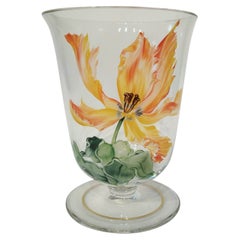

Vintage 1940s Austrian Art Deco Glass
Blown Glass
Recent Sales
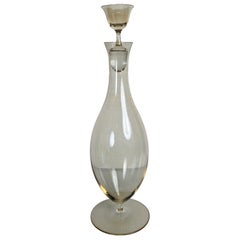
Vintage 1920s Austrian Art Deco Barware
Glass
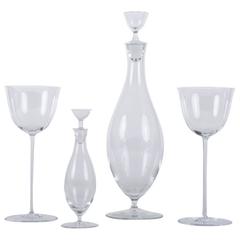
20th Century Austrian Modern Glass
Blown Glass
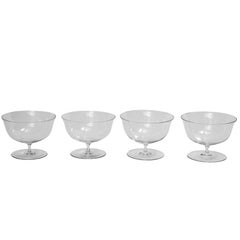
Vintage 1920s Austrian Art Deco Glass
Blown Glass
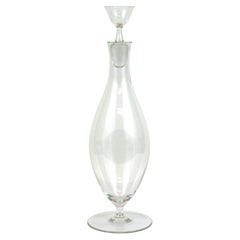
People Also Browsed
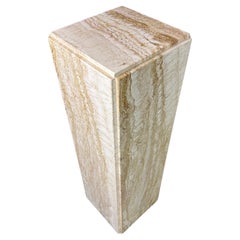
Mid-20th Century European Mid-Century Modern Pedestals
Travertine
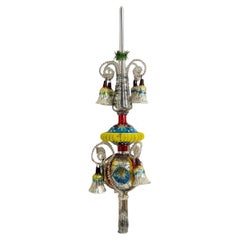
Vintage 1930s German Folk Art Historical Memorabilia
Glass
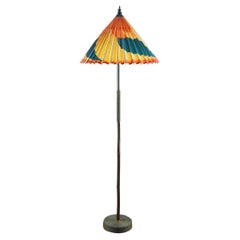
2010s American Art Deco Floor Lamps
Cement, Brass
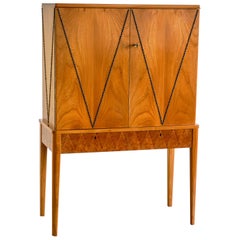
Vintage 1940s Swedish Scandinavian Modern Cabinets
Brass
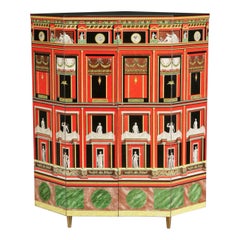
Vintage 1980s Italian Mid-Century Modern Corner Cupboards
Brass
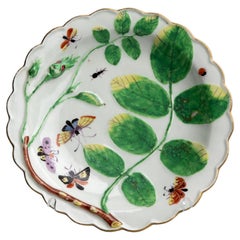
Antique 1770s English Rococo Porcelain
Porcelain
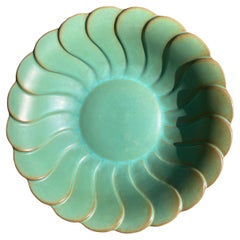
Early 20th Century Swedish Art Deco Ceramics
Faience
Vintage 1930s Swedish Scandinavian Modern Vases
Bronze
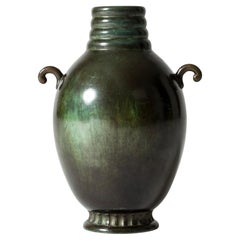
Vintage 1910s Austrian Vienna Secession Coffee and Cocktail Tables
Brass
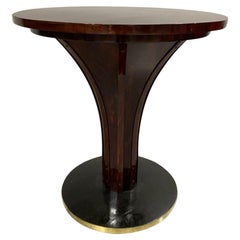
Vintage 1920s French Art Deco Crystal Serveware
Crystal
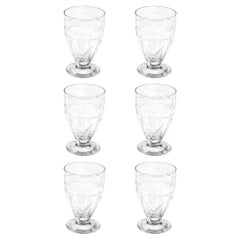
1990s Italian Modern Wall Mirrors
Blown Glass
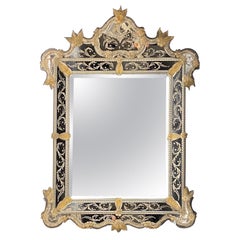
Vintage 1980s Italian Modern Vases
Murano Glass
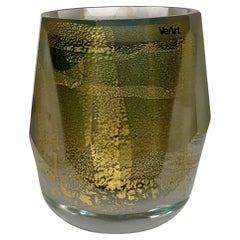
Vintage 1950s Italian Mid-Century Modern Glass
Gold
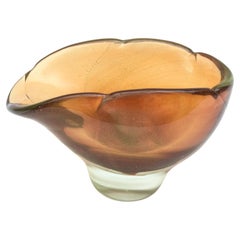
20th Century French Art Deco Vases
Crystal
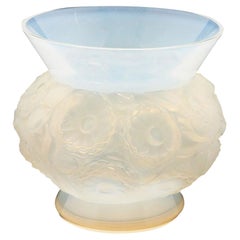
Early 20th Century Swedish Art Nouveau Decorative Dishes and Vide-Poche
Ceramic
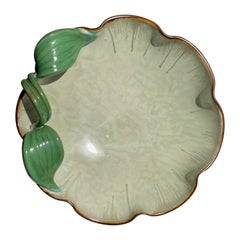
Mid-20th Century Swedish Scandinavian Modern Vases
Ceramic, Earthenware
Josef Hoffmann for sale on 1stDibs
The Austrian architect Josef Hoffmann was a central figure in the evolution of modern design, and a leader in an aesthetic movement born in Europe in the late 19th century that rejected florid, extravagant ornamentation in favor of a new emphasis on simplicity of line.
As a founder of the Vienna Secession — a union of artists and designers determined to upend Austria’s artistic conservatism — and later, a founder of the turn-of-the-century Wiener Werkstätte (in English: the Viennese Workshops), a design cooperative that produced superbly crafted furniture and housewares, Hoffmann was a pioneering practitioner of what would become a fundamental principle of modernism: that good design is a way of life.
Hoffmann came of age amidst a shift in the culture of the applied arts, as a conservative order that looked only to the past for inspiration was pushed aside. But what, exactly, would replace that order was in question — and Hoffmann’s career embodies the developing patterns of design’s new spirit. His architectural work reflects his time as a student of the Vienna architect Otto Wagner, who disdained excessive decoration and employed new materials such as steel girders and reinforced concrete to create buildings with airy, open interiors full of light.
As a designer of furniture and interiors, Hoffmann was consistently open-minded about the aesthetics he explored. He was an early adherent of the flowing, organic forms of the Art Nouveau design movement that began to flourish in the late 1880s — but by the opening of the Wiener Werkstätte in 1903, Hoffmann’s designs embraced the beauty of geometry in pieces that feature grids and angular forms.
Hoffmann’s greatest works reflect his ability to combine seemingly conflicting design visions into coherent wholes. His architectural masterpiece, the Stoclet Palace in Brussels, has an exterior that groups together simple geometric forms and spacious interiors marked by subtly naturalistic design details that lend rooms an air of charm and geniality.
Hoffmann’s signature furniture design is an adjustable lounge chair — the Sitzmaschine (1905) — that marries a curving frame with square and rectangular back- and side rests. This piece, like so many others by Hoffmann, reflects a groundbreaking, forward-thinking appreciation for the union of different looks and sources that marks the best of interior design in our own day. Moreover, items offered on 1stDibs — which range from enameled silver jewelry, to silver flower vase baskets and other decorative objects, to sofas, lighting pendants and sconces — testify to the astonishing breadth of Hoffman’s creative pursuits. He was truly a giant of design.
Finding the Right Glass for You
Whether you’re seeking glass dinner plates, centerpieces, platters and serveware or other items to elevate the dining experience or brighten the corners of your living room, bedroom or other spaces by displaying decorative pieces, find an extraordinary range of antique, new and vintage glass on 1stDibs.
Glassmaking is more than 4,000 years old. It is believed to have originated in Northern Mesopotamia, where carved glass objects were the result of a series of experiments led by potters or metalworkers. From there, the production of glass vases, bottles and other objects proliferated in Egypt under the reign of Thutmose III. Later, new glassmaking techniques took shape during the Hellenistic era, and glassblowing was invented in contemporary Israel. Then, on the island of Murano in Venice, Italy, modern art glass as we know it came to be.
Over the years, collectors of glass decorative objects or serveware have sought out distinctive antique and vintage pieces of the mid-century modern, Art Deco and Art Nouveau eras, with artisans such as Archimede Seguso, René Lalique and Émile Gallé of particular interest for the pioneering contributions they made to the respective styles in which they worked. Today, long-standing glassworks such as Barovier&Toso carry on the Venetian glasswork tradition, while modern furniture designers and sculptors such as Christophe Côme and Jeff Zimmerman elsewhere test the limits of the radical art form that is glassmaking.
From chandeliers to Luminarc stemware, find a collection of antique, new and vintage glass on 1stDibs.