Meissen Crossed Swords

to
27
279
187
249
166
94
92
82
59
50
28
26
26
25
22
21
20
19
19
14
12
11
8
6
5
4
4
3
3
3
3
3
2
2
2
2
2
1
1
1
1
389
76
25
20
11
Sort By
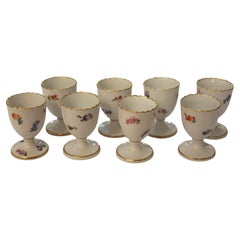
Set of Eight Meissen Egg Cups
By Meissen Porcelain
Located in Chapel Hill, NC
rubbing). Meissen crossed swords mark. c.1860-1920. 1 with small chip to top of base & one under. 3 with
Category

Antique Late 19th Century German Serving Pieces

Materials

Ceramic

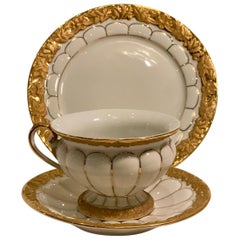
Opulent Meissen Germany "Golden Baroque" Trio Set Cup, Saucer and Dessert Plate
By Meissen Porcelain
Located in Tustin, CA
manufacture. The Meissen crossed swords logo is one of the oldest trademarks in existence.
Category

Early 20th Century German Baroque Tableware

Materials

Porcelain

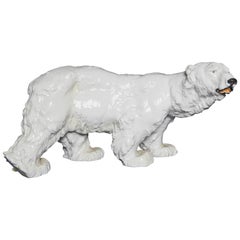
Large Art Deco Meissen Porcelain Sculpture of a Polar Bear by Otto Jarl
Located in New York, NY
cobalt blue Meissen cross swords mark under the glaze and inciced factory model number T.181. In
Category

Vintage 1910s German Art Deco Porcelain

Materials

Porcelain

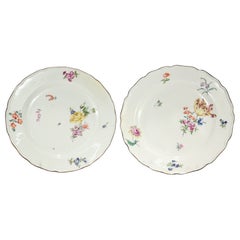
Pair Antique 18c Meissen Neuer Ausschnitt Porcelain Plates with Deutsche Blumen
By Meissen Porcelain
Located in Philadelphia, PA
Meissen crossed swords factory mark, and an impressed '36' to each. Measurements: Height: ca. 1 1/4 in
Category

Antique 18th Century German Rococo Porcelain

Materials

Porcelain

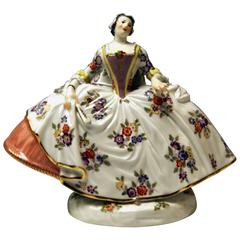
Meissen Kaendler Noble Lady Gallant Figurine Woman Model 550 Made 20th Century
By Johann Joachim Kaendler
Located in Vienna, AT
inches. Marks: Meissen crossed sword mark of middle of 20th century: Made 1950 (year's mark existing
Category

Vintage 1950s German Rococo Porcelain

Materials

Porcelain

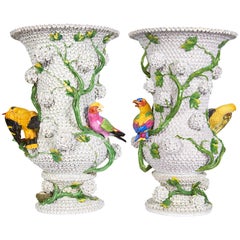
Monumental Pair of Meissen Porcelain Snowball Vases with Parrots and Birds
By Meissen Porcelain
Located in New York, NY
. Each vase Features Meissen crossed swords mark in underglaze blue.  
Category

Antique 1820s German Rococo Vases

Materials

Porcelain

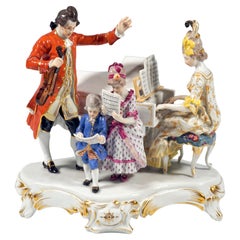
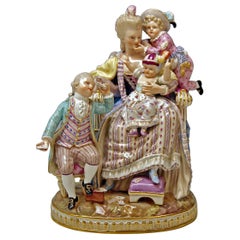
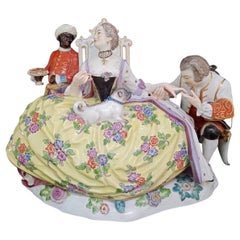
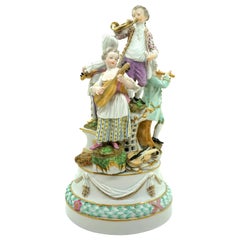
Meissen Genre Group House Concert by Joseph Von Kramer Germany circa 1903
By Meissen Porcelain
Located in Vienna, AT
crossed sword mark , First Quality Model No T 186 Former's No 8 Painter's No 3 Bibliography: - Thomas
Category

Antique Early 1900s German Art Nouveau Porcelain

Materials

Porcelain

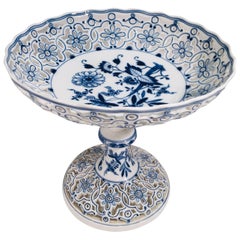
Fine Antique circa 1815 Meissen Porcelain Blue Onion Pattern Pierced Compote
By Meissen Porcelain
Located in Tustin, CA
variations of this mark are used to determine the date of manufacture, The Meissen crossed swords logo is one
Category

Antique Early 18th Century German Rococo Serving Pieces

Materials

Porcelain

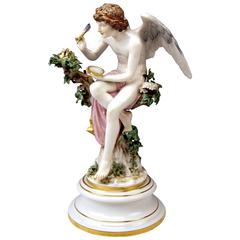
Meissen Amor Feeding Nightingales by R. Hölbe, Model N 195, circa 1900
By Meissen Porcelain
Located in Vienna, AT
, created by Rudolph Hölbe (1848 - 1926), model made circa 1882-85. Hallmarked: Meissen Crossed Sword
Category

Antique 1890s German Art Nouveau Porcelain

Materials

Porcelain

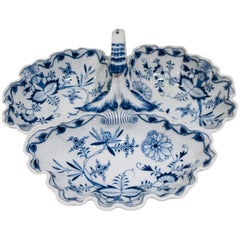
Fine Antique Meissen Porcelain Blue Onion Pattern 3 Lobed Serving Dish from 1815
By Meissen Porcelain
Located in Tustin, CA
in 1708, Meissen began production in 1710 near Dresden, Germany. The logo of the crossed swords was
Category

Antique Early 18th Century German Rococo Serving Pieces

Materials

Porcelain

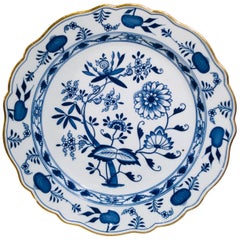
Antique 1815 Meissen Porcelain Blue Onion Pattern Large Round Serving Platter
By Meissen Porcelain
Located in Tustin, CA
determine the date of manufacture, the Meissen crossed swords logo is one of the oldest trademarks in
Category

Antique Early 18th Century German Rococo Serving Pieces

Materials

Porcelain

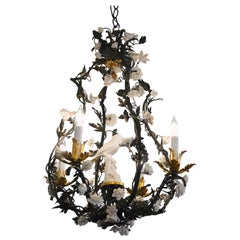
French Tole Leaf Chandelier with White Porcelain Bird and Flowers
Located in Pembroke, MA
having a central white porcelain bird bearing a Meissen crossed swords mark. The chandelier has been
Category

Early 20th Century French Louis XV Chandeliers and Pendants

Materials

Iron, Bronze, Tôle

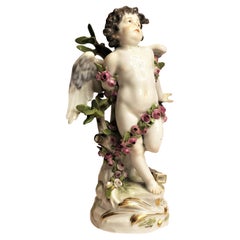
Antique Meissen Porcelain Figurine of Grieving Cupid, ca. 1860’s
By Meissen Porcelain
Located in New York, NY
instantly evokes an unambiguous emotion in the viewer – the love is gone. Hallmarked with Meissen crossed
Category

Antique 1860s German Belle Époque Figurative Sculptures

Materials

Porcelain

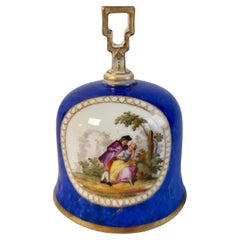
Meissen Porcelain Table Bell, Blue with Romantic Scenes, 19th C
By Meissen Porcelain
Located in London, GB
engagements. The piece is marked with the Meissen crossed swords mark that was used between 1815 and 1924
Category

Antique 19th Century German Biedermeier Porcelain

Materials

Porcelain

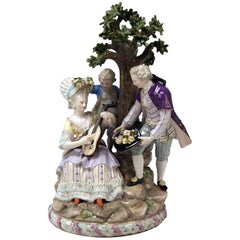
Meissen Acier Gardener Figurines Group Model D 95 Made circa 1870
By Michel Victor Acier 1
Located in Vienna, AT
band ornaments at edged area. Marks: Meissen Crossed Sword Mark Of Midle of 19th Century / Made
Category

Antique 1870s German Rococo Porcelain

Materials

Porcelain

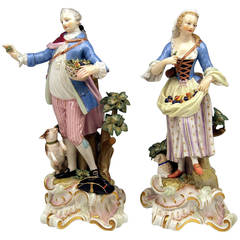
Meissen Pair of Shepherd Figurines by Ernst A. Leuteritz, circa 1870 - 1880
By Ernst August Leuteritz
Located in Vienna, AT
cm 5.51 - 5.70 inches MARKS: MEISSEN CROSSED SWORD MARK OF SECOND HALF OF 19TH CENTURY
Category

Antique 19th Century German Rococo Figurative Sculptures

Materials

Porcelain

Meissen Stunning Figurine Group The Loving Mother by Michel V. Acier, circa 1870
By Michel Victor Acier 1
Located in Vienna, AT
inches / 17.0 cm depth: 5.90 inches / 15.0 cm MARKS: MEISSEN CROSSED SWORD MARK OF MIDLE OF 19TH
Category

Antique 1870s German Rococo Porcelain

Materials

Porcelain

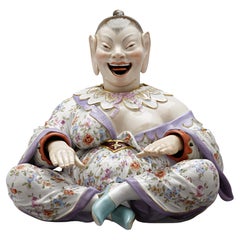
Meissen Nodder
By Meissen Porcelain
Located in New Orleans, LA
figurine is an especially fine example of the art form. Bears the Meissen blue crossed swords mark
Category

Antique 19th Century German Figurative Sculptures

Materials

Porcelain

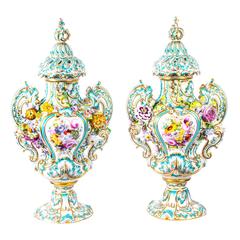
Antique Pair of Meissen Porcelain Vases, circa 1810
Located in London, GB
pourri. With the Meissen crossed swords mark on the inside of each lid, they are beautiful objects
Category

Antique 1810s German Vases

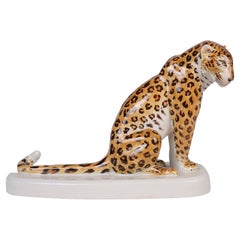
Meissen Porcelain Leopard, 20th Century
By Meissen Porcelain
Located in Brighton, Sussex
Blue crossed swords to the base. Batch 71 61587 DSKZN.
Category

Vintage 1980s German Porcelain

Materials

Porcelain

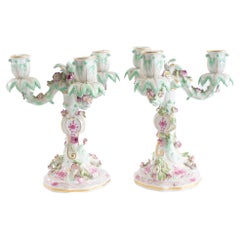
Meissen Porcelain Three Arms Candle Holder
By Meissen Porcelain
Located in Tarry Town, NY
Beautiful pair Meissen blue crossed swords porcelain pair three arms candle holder with exterior
Category

Mid-20th Century German Candelabras

Materials

Gold

Meissen Porcelain Germany JJ Kaendler 19Century
By Meissen Porcelain
Located in Buenos Aires, Argentina
in business as Staatliche Porzellan-Manufaktur Meissen GmbH. Its logo, two crossed swords (perhaps
Category

Antique 1850s German Rococo Figurative Sculptures

Materials

Porcelain

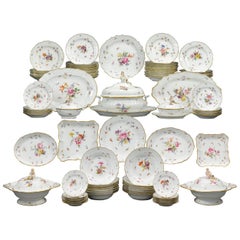
Meissen Porcelain Dinner Service, 92 Pieces
By Meissen Porcelain
Located in New Orleans, LA
. The pieces bear the Meissen blue crossed swords "sword with pommel" that dates this set between 1850
Category

20th Century German Rococo Porcelain

Materials

Porcelain

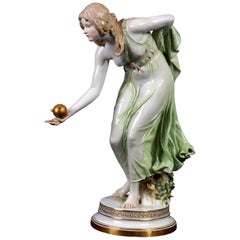
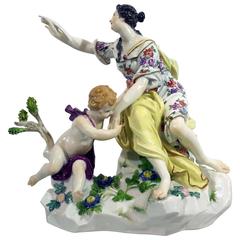
Meissen Hand Painted Porcelain Maiden Figure "Kugelspielerin"
By Meissen Porcelain
Located in Guaynabo, PR
marked with the Meissen hallmark blue crossed swords below the round base. The ball and the base are
Category

20th Century German Neoclassical Porcelain
Materials

Porcelain

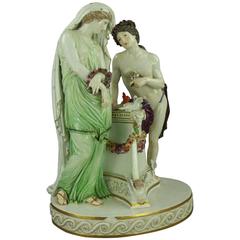
Antique German Meissen Porcelain Figural Group, Classical Courting Couple
By Meissen Porcelain
Located in Big Flats, NY
heads, Classic Meissen blue crossed sword underglaze maker's mark on base, circa 1890 Measures -15" H
Category

Antique Late 19th Century German Greco Roman Porcelain

Materials

Porcelain

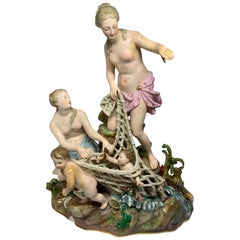
Meissen Porcelain Group Figures The Capture Of The Triton
By Meissen Porcelain
Located in Guaynabo, PR
crossed swords. The colors and the details of the body of the figures distinguish this Porcelain as
Category

Early 20th Century German Neoclassical Figurative Sculptures

Materials

Porcelain

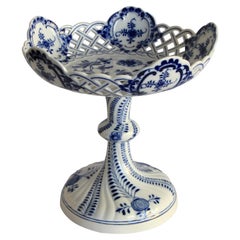
Meissen Porcelain Centerpiece with Blue Onion Pattern, Germany, circa 1880
By Meissen Porcelain
Located in Lichtenberg, AT
. On the bottom you will find the Meissen hallmark with the two crossed swords as well as the model No
Category

Antique Late 19th Century German Centerpieces

Materials

Porcelain

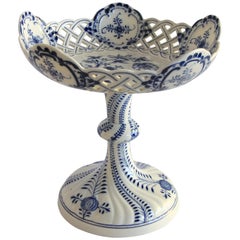
Porcelain Centerpiece Blue Onion Pattern by Meissen, Germany, circa 1880
By Meissen Porcelain
Located in Lichtenberg, AT
you will find the Meissen hallmark (two crossed swords) and the Mod. No. 23. If you are interested
Category

Antique Late 19th Century German Centerpieces

Materials

Porcelain

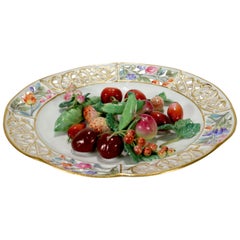
Antique Meissen Porcelain Trompe L oeil Plate with Fruit Vegetables
By Meissen Porcelain
Located in Philadelphia, PA
to the base with a Meissen blue underglaze crossed swords mark. The mark appears to have been treated
Category

20th Century German Rococo Porcelain

Materials

Porcelain

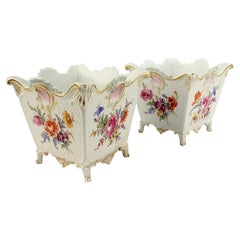
Pair of Antique 19th Century Meissen Porcelain Cachepot or Jardinieres
By Meissen Porcelain
Located in Philadelphia, PA
crossed swords factory mark Measurements: Height: 5 1/4 in. Width: 5 5/8 in. Depth: 5 3/4 in.  
Category

Antique 19th Century German Rococo Planters, Cachepots and Jardinières

Materials

Porcelain

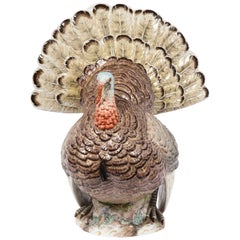
Magnificent and Rare 19th Century Life-Sized Meissen Porcelain, Turkey
By Meissen Porcelain
Located in New York, NY
likelihood of cracking or breaking increases significantly. Having the Meissen Blue Cross Swords Mark in
Category

Antique 1860s German Rococo Animal Sculptures

Materials

Porcelain

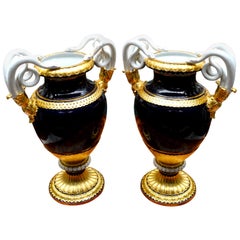
Pair of 19th Century Meissen Snake Handled Cobalt Blue "Schlangenvasen" Vases
By Meissen Porcelain
Located in Vancouver, British Columbia
fluted flaring foot. Marked on the bottom with under glazed blue crossed swords Meissen stamp. The vases
Category

Antique Mid-19th Century German Neoclassical Vases

Materials

Porcelain

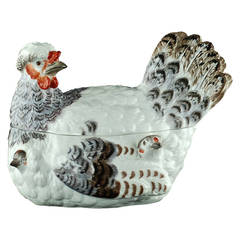
19th Century Meissen Hand-Painted Porcelain Hen and Chicks Lidded Tureen
By Meissen Porcelain
Located in Cincinnati, OH
the underglaze cobalt blue crossed swords Meissen mark and is incised in script under the glaze with
Category

Antique Mid-19th Century German Victorian Porcelain

Materials

Porcelain

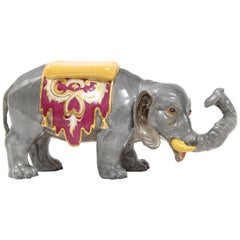
Fine Hand-Painted Meissen Porcelain Model of an Indian Elephant with a Saddle
By Meissen Porcelain
Located in New York, NY
beautiful. The underside is marked with Meissen's signature blue crossed swords. Germany, Circa: 19th
Category

Antique 19th Century German Islamic Animal Sculptures

Materials

Porcelain

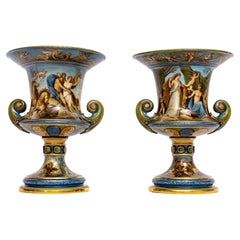
Rare Important Pair of 19th C. Meissen Porcelain Majolica Style Krater Vases
By Meissen Porcelain
Located in New York, NY
Meissen underglaze blue crossed swords mark. They are also marked with pressnumber and incised marks
Category

Antique 1860s German Other Vases

Materials

Porcelain

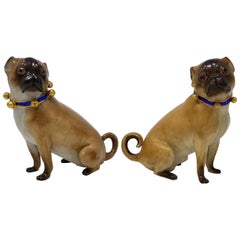
Pair of 19th Century Meissen Porcelain Figures of Pug Dogs w/ Gilt Bell Collars
By Meissen Porcelain
Located in New York, NY
with gorgeous 24k gilt bells. Found underneath each pug are the Meissen blue crossed swords mark with
Category

Antique 1850s German Rococo Animal Sculptures

Materials

Porcelain

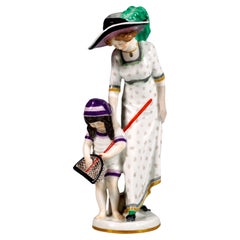
Art Nouveau Group Lady With Child On The Beach , by A. Koenig, Meissen Germany
By Meissen Porcelain
Located in Vienna, AT
underglaze crossed sword mark first quality model number B 234 former's number 131 painter's number 22
Category

Vintage 1910s German Art Nouveau Porcelain

Materials

Porcelain

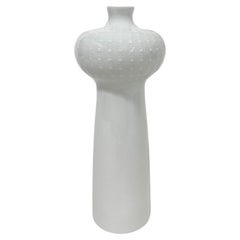
Meissen Porcelain Vase Designed by Ludwig Zepner for the "Weiss" Series
By Meissen Porcelain, Ludwig Zepner
Located in Delft, NL
. Marked with the mark crossed sword of Meissen, Germany. Model number 50185, Weiss series The
Category

20th Century German Porcelain

Materials

Porcelain

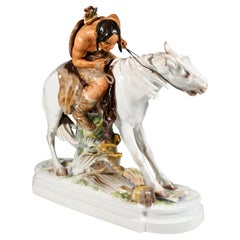
Art Nouveau Porcelain Group Hun On Horseback , by E. Hoesel, Meissen Germany
By Erich Hoesel, Meissen Porcelain
Located in Vienna, AT
underglaze crossed sword mark first quality model number Q 197 former's number 121 Bibliography: Thomas
Category

Antique Early 1900s German Art Nouveau Porcelain

Materials

Porcelain

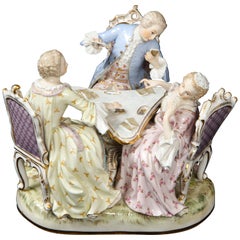
19th Century Meissen Porcelain Group of Three Card Players Gallant Figures
By Meissen Porcelain, J.J. Kändler
Located in New York, NY
Meissen's blue crossed swords mark. This piece is in fabulous condition. Germany, circa 1860.
Category

Antique 1860s German Louis XVI Figurative Sculptures

Materials

Porcelain

Meissen Rococo Group Four Children Playing Music by Kaendler, circa 1800
By Meissen Porcelain, Johann Joachim Kaendler
Located in Vienna, AT
Marks: Blue Meissen underglaze crossed sword mark with a star - Marcolini-Period 1774-1814 Model
Category

Antique Late 18th Century German Rococo Porcelain

Materials

Porcelain

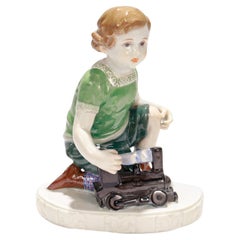
Antique Jugenstil Meissen Porcelain Boy Toy Train Figurine by Eric Oehme A232
By Meissen Porcelain, Julius Konrad Hentschel
Located in Philadelphia, PA
the base with a underglaze blue crossed swords Meissen mark / incised A232 / Impressed 35 / painter no
Category

20th Century German Jugendstil Figurative Sculptures

Materials

Porcelain

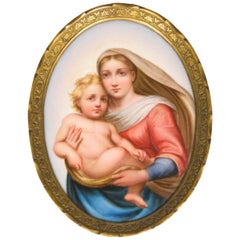
Antique Meissen Porcelain Plaque of the Sistine Madonna after Raphael
By Meissen Porcelain, (after) Raphael (Raffaello Sanzio da Urbino)
Located in London, GB
Renaissance masterpiece of 1513. The oval plaque is set in a gilt frame, and bears the Meissen mark of crossed
Category

Antique 19th Century German Renaissance Paintings

Materials

Porcelain

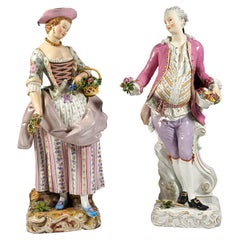
Large Meissen Pair Of Gardener Figurines, By Kaendler Schoenheit, Ca 1860
By Meissen Porcelain, Johann Joachim Kaendler, Johann Carl Schoenheit
Located in Vienna, AT
Marks: Blue Meissen underglaze crossed sword mark circa 1850, 'Pommels on hilts' / first quality model
Category

Antique Mid-19th Century German Baroque Porcelain

Materials

Porcelain

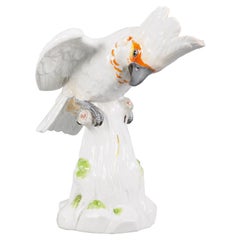
Meissen Porcelain Cockatoo Bird, circa 1880
Located in New York, NY
Crossed swords Meissen mark in underglaze blue.
Category

Antique 1880s German Animal Sculptures

Materials

Porcelain

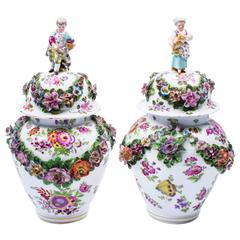
Antique Pair of Meissen Dresden Porcelain Vases, circa 1880
Located in London, GB
decorated and surmounted by figures with dogs. With the Meissen underglaze blue crossed swords mark on
Category

Antique 1880s German Porcelain

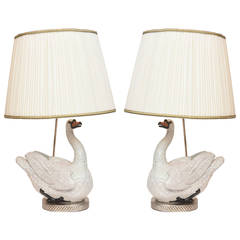
Elegant Pair of 19th Century Meissen Porcelain Large Swan Lamps
By Meissen Porcelain
Located in Palm Beach, FL
A pair of Meissen Porcelain large swans. Meissen crossed swords underglaze marks, circa 19th
Category

Antique 19th Century German Table Lamps

Materials

Porcelain

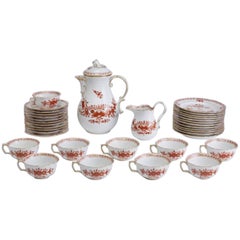
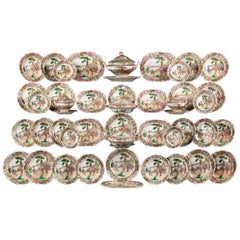
19th Century Meissen Porcelain Red Indian Painting Dessert 34 Piece Set
By Meissen Porcelain
Located in Washington Crossing, PA
bears the Meissen crossed swords mark in underglaze blue. The set is comprised of ten cups, two inches
Category

Antique 19th Century German Porcelain

Materials

Porcelain

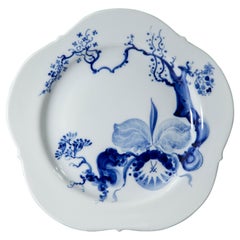
Meissen, Blue Orchid, Lunch Plate
By Meissen Porcelain
Located in Heemskerk, NL
condition. It is marked with Meissen's crossed swords on the bottom as well as the front. Please note
Category

Late 20th Century German Rococo Dinner Plates

Materials

Porcelain

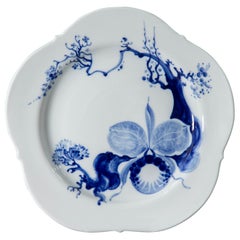
Meissen, Blue Orchid, Lunch Plate
By Meissen Porcelain
Located in Heemskerk, NL
condition. It is marked with Meissen's crossed swords on the bottom. Please note that we usually have
Category

Late 20th Century German Dinner Plates

Materials

Porcelain

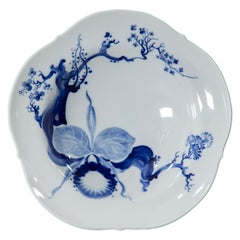
Meissen, Blue Orchid, Soup Plate
By Meissen Porcelain
Located in Heemskerk, NL
in a perfect condition. It is marked with Meissen's crossed swords on the bottom. Please note that
Category

Late 20th Century German Rococo Dinner Plates

Materials

Porcelain

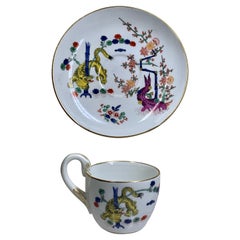
Meissen Yellow Lion Tiger Cup Saucer, Kakiemon Style
By Meissen Porcelain
Located in London, GB
decoration is known as the Kakiemon style. Each piece is marked on the back with the Meissen crossed swords
Category

Antique 1760s German Porcelain

Materials

Porcelain

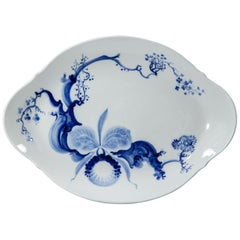
Meissen, Blue Orchid, Oval Serving Dish
By Meissen Porcelain
Located in Heemskerk, NL
. The item is in a perfect condition. It is marked with Meissen's crossed swords on the bottom
Category

Late 20th Century German Rococo Platters and Serveware

Materials

Porcelain

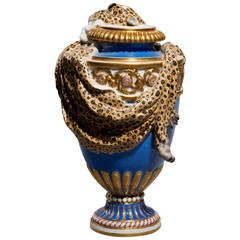
Meissen ‘Leopard Pelt’ Pot-Pourri Vase
Located in Sutton Coldfield, GB
, and marked with the Meissen crossed swords and star mark in underglaze-blue. Meissen Porcelain
Category

Antique 1780s German Vases

Materials

Porcelain

Late 19th Century Staffordshire Dinner Service
Located in Peterborough, Northamptonshire
. The borders very well painted with foliage, carrying facsimile Meissen cross swords mark. The pieces
Category

Antique 19th Century European Tableware

Materials

Porcelain

19th Century Meissen Porcelain Group
By Meissen Porcelain
Located in New York, NY
First quality Meissen. Underglazed blue crossed swords mark, depicting an allegorical scene with a
Category

Antique 19th Century German Neoclassical Porcelain

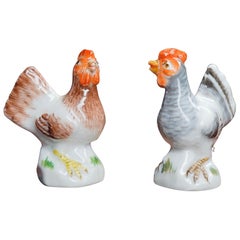
Pair of Miniature Meissen Chickens, 19th Century
By Meissen Porcelain
Located in Geelong, Victoria
Pair of miniature Meissen chickens, naturalistically coloured. Crossed swords mark, also incised
Category

Antique 19th Century German Rococo Animal Sculptures

Materials

Porcelain

  • 1
Get Updated with New Arrivals
Save "Meissen Crossed Swords", and we’ll notify you when there are new listings in this category.

Meissen Crossed Swords For Sale on 1stDibs

At 1stDibs, there are several options of meissen crossed swords available for sale. Each of these unique meissen crossed swords was constructed with extraordinary care, often using ceramic, porcelain and metal. We have 844 antique and vintage meissen crossed swords in-stock, while there are 6 modern editions to choose from as well. There are all kinds of meissen crossed swords available, from those produced as long ago as the 18th Century to those made as recently as the 21st Century. Meissen crossed swords bearing Rococo or Baroque hallmarks are very popular at 1stDibs. Many meissen crossed swords are appealing in their simplicity, but Meissen Porcelain, Johann Joachim Kändler and Michel Victor Acier produced popular meissen crossed swords that are worth a look.

How Much are Meissen Crossed Swords?

Prices for meissen crossed swords can differ depending upon size, time period and other attributes — at 1stDibs, meissen crossed swords begin at $117 and can go as high as $275,000, while the average can fetch as much as $3,719.

Meissen Porcelain for sale on 1stDibs

Meissen Porcelain (Staatliche Porzellan-Manufaktur Meissen) is one of the preeminent porcelain factories in Europe and was the first to produce true porcelain outside of Asia. It was established in 1710 under the auspices of King Augustus II “the Strong” of Saxony-Poland (1670–1733), a keen collector of Asian ceramics, particularly Ming porcelain.

In pursuing his passion, which he termed his “maladie de porcelaine,” Augustus spent vast sums, amassing some 20,000 pieces of Japanese and Chinese ceramics. These, along with examples of early Meissen, comprise the Porzellansammlung, or porcelain collection, of the Zwinger Palace, in Dresden.

The king was determined, however, to free the European market from its dependence on Asian imports and to give European artisans the freedom to create their own porcelain designs. To this end, he charged the scientist Ehrenfried Walther von Tschirnhaus and aspiring alchemist Johann Friedrich Böttger with the task of using local materials to produce true, hard-paste porcelain (as opposed to the soft-paste variety European ceramists in the Netherlands, Germany, France, Italy and Spain had been producing since the late Renaissance). In 1709, the pair succeeded in doing just that, employing kaolin, or “china clay.” A year later, the Meissen factory was born.

In its first decades, Meissen mostly looked to Asian models, producing wares based on Japanese Kakiemon ceramics and pieces with Chinese-inflected decorations called chinoiserie. During the 1720s its painters drew inspiration from the works of Watteau, and the scenes of courtly life, fruits and flowers that adorned fashionable textiles and wallpaper. It was in this period that Meissen introduced its famous cobalt-blue crossed swords logo — derived from the arms of the Elector of Saxony as Arch-Marshal of the Holy Roman Empire — to distinguish its products from those of competing factories that were beginning to spring up around Europe.

By the 1730s, Meissen’s modelers and decorators had mastered the style of Asian ceramics, and Augustus encouraged them to develop a new, original aesthetic. The factory’s director, Count Heinrich von Brühl, used Johann Wilhelm Weinmann’s botanical drawings as the basis for a new line of wares with European-style surface decoration. The Blue Onion pattern (Zwiebelmuster), first produced in 1739, melded Asian and European influences, closely following patterns used in Chinese underglaze-blue porcelain, but replacing exotic flora and fruits with Western varieties (likely peaches and pomegranates, not onions) along with peonies and asters.

During the same period, head modeler Joachim Kändler (1706–75) began crafting delicate porcelain figures derived from the Italian commedia dell’arte. Often used as centerpieces on banquet tables and decorated to reflect the latest fashions in courtly dress for men and women, these figurines were popular in their day, and are still considered among Meissen’s most iconic creations. Kändler also created the Swan Service, which, with its complex low-relief surface design and minimal decoration is considered a masterpiece of Baroque ceramics.

The rise of Neoclassicism in the latter half of the 18th century forced Meissen to change artistic direction and begin producing monumental vases, clocks, chandeliers and candelabra. In the 20th century, Meissen added to its 18th-century repertoire decidedly modern designs, including ones in the Art Nouveau style. The 1920s saw the introduction of numerous animal figures, such as the popular sea otter (Fischotter), which graced an East German postage stamp in the 1960s. Starting in 1933, artistic freedom was limited at the factory under the Nazi regime, and after World War II, when the region became part of East Germany, it struggled to reconcile its elite past with the values of the Communist government. In 1969, however, new artistic director Karl Petermann reintroduced the early designs and fostered a new degree of artistic license. Meissen became one of the few companies to prosper in East Germany.

Owned by the State of Saxony since reunification, in 1990, Meissen continues to produce its classic designs together with new ones developed collaboratively with artists from all over the world. In addition, through its artCAMPUS program, the factory has invited distinguished ceramic artists, such as Chris Antemann and Arlene Shechet, to work in its studios in collaboration with its skilled modelers and painters. The resulting works of contemporary sculpture are inspired by Meissen’s rich and complex legacy.

Find a collection of authentic Meissen Porcelain on 1stDibs.

Finding the Right Dining-entertaining for You

Your dining room table is a place where stories are shared and personalities shine — why not treat yourself and your guests to the finest antique and vintage glass, silver, ceramics and serveware for your meals?

Just like the people who sit around your table, your serveware has its own stories and will help you create new memories with your friends and loved ones. From ceramic pottery to glass vases, set your table with serving pieces that add even more personality, color and texture to your dining experience.

Invite serveware from around the world to join your table settings. For special occasions, dress up your plates with a striking Imari charger from 19th-century Japan or incorporate Richard Ginori’s Italian porcelain plates into your dining experience. Celebrate the English ritual of afternoon tea with a Japanese tea set and an antique Victorian kettle. No matter how big or small your dining area is, there is room for the stories of many cultures and varied histories, and there are plenty of ways to add pizzazz to your meals.

Add different textures and colors to your table with dinner plates and pitchers of ceramic and silver or a porcelain lidded tureen, a serving dish with side handles that is often used for soups. Although porcelain and ceramic are both made in a kiln, porcelain is made with more refined clay and is more durable than ceramic because it is denser. The latter is ideal for statement pieces — your tall mid-century modern ceramic vase is a guaranteed conversation starter. And while your earthenware or stoneware is maybe better suited to everyday lunches as opposed to the fine bone china you’ve reserved for a holiday meal, handcrafted studio pottery coffee mugs can still be a rich expression of your personal style.

“My motto is ‘Have fun with it,’” says author and celebrated hostess Stephanie Booth Shafran. “It’s yin and yang, high and low, Crate Barrel with Christofle silver. I like to mix it up — sometimes in the dining room, sometimes on the kitchen banquette, sometimes in the loggia. It transports your guests and makes them feel more comfortable and relaxed.”

Introduce elegance at supper with silver, such as a platter from celebrated Massachusetts silversmith manufacturer Reed and Barton or a regal copper-finish flatware set designed by International Silver Company, another New England company that was incorporated in Meriden, Connecticut, in 1898. By then, Meriden had already earned the nickname “Silver City” for its position as a major hub of silver manufacturing.

At the bar, try a vintage wine cooler to keep bottles cool before serving or an Art Deco decanter and whiskey set for after-dinner drinks — there are many possibilities and no wrong answers for tableware, barware and serveware. Explore an expansive collection of antique and vintage glass, ceramics, silver and serveware today on 1stDibs.