Memphis Milano Murmansk
21st Century and Contemporary Italian Modern Serving Bowls
Brass, Silver

Recent Sales
Late 20th Century Italian Modern Centerpieces
Silver Plate
People Also Browsed
2010s Mexican Brutalist Contemporary Art
Wood
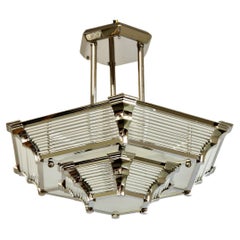
21st Century and Contemporary French Art Deco Chandeliers and Pendants
Brass
21st Century and Contemporary French Art Deco Chandeliers and Pendants
Bronze
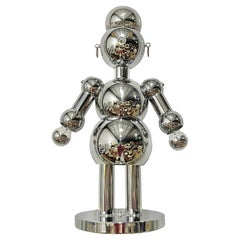
Vintage 1970s American Space Age Table Lamps
Steel, Chrome
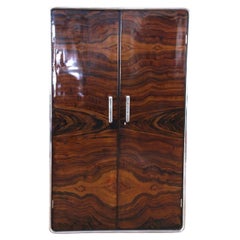
Vintage 1930s German Bauhaus Wardrobes and Armoires
Steel, Chrome
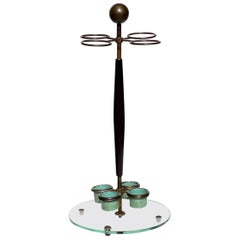
Vintage 1940s Italian Mid-Century Modern Umbrella Stands
Crystal, Brass
2010s American Modern Cabinets
Brass
21st Century and Contemporary French Art Deco Chandeliers and Pendants
Bronze
Antique Early 1900s Austrian Jugendstil Dry Bars
Brass
Late 20th Century Mexican Abstract Sculptures
Wood
Vintage 1920s American Machine Age Mantel Clocks
Glass
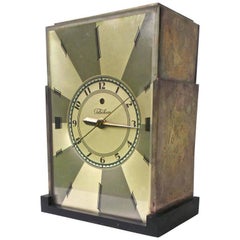
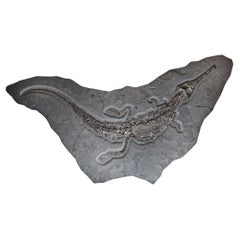
Antique 15th Century and Earlier German Decorative Art
Other
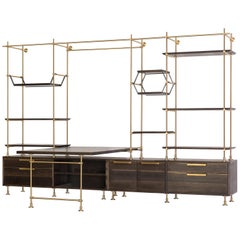
2010s American Modern Desks
Brass
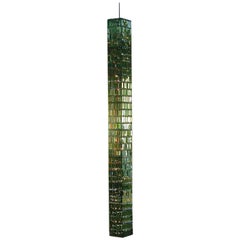
Early 2000s English Modern Chandeliers and Pendants
Crystal, Steel
2010s American Modern Dry Bars
Brass, Bronze, Steel
21st Century and Contemporary Italian Games
Crystal
Memphis Group for sale on 1stDibs
To many people, postmodern design is synonymous with the Memphis Group. This Italian collaborative created the most radical and attention-getting designs of the period, upending most of the accepted standards of how furniture should look.
The Memphis story begins in 1980, when Ettore Sottsass, then a beacon of Italian postmodernism, tapped a coterie of younger designers to develop a collection for the Milan Furniture Fair the next year, determined that all the new furniture they were then seeing was boring. Their mission: Boldly reject the stark minimalism of the 1970s and shatter the rules of form and function. (Sottsass’s Ultrafragola mirror, designed in 1970, embodied many of what would become the collective’s postmodern ideals.)
The group decided to design, produce and market their own collection, one that wouldn’t be restricted by concerns like functionality and so-called good taste. Its debut, at Milan’s 1981 Salone del Mobile, drew thousands of viewers and caused a major stir in design circles.
So as a record of Bob Dylan’s “Stuck Inside of Mobile” played on repeat, they took their name from the song, devised their marketing strategy and plotted the postmodern look that would come to define the decade of excess — primary colors, blown-up proportions, playful nods to Art Deco and Pop art. A high-low mix of materials also helped define Memphis, as evidenced by Javier Mariscal’s pastel serving trays, which feature laminate veneer — a material previously used only in kitchens — as well as Shiro Kuramata’s Nara and Kyoto tables made from colored glass-infused terrazzo.
An image of Sottsass posing with his collaborators in a conversation pit shaped like a boxing ring appeared in magazines all over the world, and Karl Lagerfield furnished his Monte Carlo penthouse entirely in Memphis furniture. Meanwhile, members like Andrea Branzi, Aldo Cibic, Michele de Lucchi, Nathalie du Pasquier, Kuramata, Paola Navone, Peter Shire, George Sowden, Sottsass and his wife, journalist Barbara Radice, went on to enjoy fruitful careers.
Some people think of the Milan-based collective as the design equivalent to Patrick Nagel’s kitschy screenprints, but for others Memphis represents what made the early 1980s so great: freedom of expression, dizzying patterns and off-the-wall colors.
Eventually, the Reagan era gave way to cool 1990s minimalism, and Memphis fell out of fashion. Sottsass left the group in 1985, and by 1987, it had disbanded. Yet decades later, Memphis is back and can be traced to today’s most exciting designers.
“As someone who was born in the 1980s, Memphis at times feels like the grown-up, artsy version of the toys I used to play with,” says Shaun Kasperbauer, cofounder of the Brooklyn studio Souda. “It feels a little nostalgic, but at the same time it seems like an aesthetic that’s perfectly suited to an internet age — loud, colorful and utilizing forms that are graphic and often a little unexpected.”
Find a collection of vintage Memphis Group seating, tables, decorative objects and other furniture on 1stDibs.
A Close Look at Modern Furniture
The late 19th and early 20th centuries saw sweeping social change and major scientific advances — both of which contributed to a new aesthetic: modernism. Rejecting the rigidity of Victorian artistic conventions, modernists sought a new means of expression. References to the natural world and ornate classical embellishments gave way to the sleek simplicity of the Machine Age. Architect Philip Johnson characterized the hallmarks of modernism as “machine-like simplicity, smoothness or surface [and] avoidance of ornament.”
Early practitioners of modernist design include the De Stijl (“The Style”) group, founded in the Netherlands in 1917, and the Bauhaus School, founded two years later in Germany.
Followers of both groups produced sleek, spare designs — many of which became icons of daily life in the 20th century. The modernists rejected both natural and historical references and relied primarily on industrial materials such as metal, glass, plywood, and, later, plastics. While Bauhaus principals Marcel Breuer and Ludwig Mies van der Rohe created furniture from mass-produced, chrome-plated steel, American visionaries like Charles and Ray Eames worked in materials as novel as molded plywood and fiberglass. Today, Breuer’s Wassily chair, Mies van der Rohe’s Barcelona chair — crafted with his romantic partner, designer Lilly Reich — and the Eames lounge chair are emblems of progressive design and vintage originals are prized cornerstones of collections.
It’s difficult to overstate the influence that modernism continues to wield over designers and architects — and equally difficult to overstate how revolutionary it was when it first appeared a century ago. But because modernist furniture designs are so simple, they can blend in seamlessly with just about any type of décor. Don’t overlook them.
Finding the Right Decorative Objects for You
Every time you move into a house or an apartment — or endeavor to refresh the home you’ve lived in for years — life for that space begins anew. The right home accent, be it the simple placement of a decorative bowl on a shelf or a ceramic vase for fresh flowers, can transform an area from drab to spectacular. But with so many materials and items to choose from, it’s easy to get lost in the process. The key to styling with antique and vintage decorative objects is to work toward making a happy home that best reflects your personal style.
Ceramics are a versatile addition to any home. If you’ve amassed an assortment of functional pottery over the years, think of your mugs and salad bowls as decorative objects, ideal for displaying in a glass cabinet. Vintage ceramic serveware can pop along white open shelving in your dining area, while large stoneware pitchers paired with woven baskets or quilts in an open cupboard can introduce a rustic farmhouse-style element to your den.
Translucent decorative boxes or bowls made of an acrylic plastic called Lucite — a game changer in furniture that’s easy to clean and lasts long — are modern accents that are neutral enough to dress up a coffee table or desktop without cluttering it. If you’re showcasing pieces from the past, a vintage jewelry box for displaying your treasures can spark conversation: Where is the jewelry box from? Is there a story behind it?
Abstract sculptures or an antique vessel for your home library can draw attention to your book collection and add narrative charm to the most appropriate of corners. There’s more than one way to style your bookcases, and decorative objects add a provocative dynamic. “I love magnifying glasses,” says Alex Assouline, global vice president of luxury publisher Assouline, of adding one’s cherished objects to a home library. “They are both useful and decorative. Objects really elevate libraries and can also make them more personal.”
To help with personalizing your space and truly making it your own, find an extraordinary collection of decorative objects on 1stDibs.