Modern Japanese Wall Relief
Recent Sales
Vintage 1970s Japanese Modern Wall-mounted Sculptures
Stone
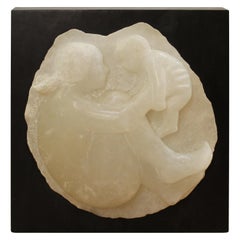

Modern Japanese Wall Relief For Sale on 1stDibs
How Much is a Modern Japanese Wall Relief?
A Close Look at Modern Furniture
The late 19th and early 20th centuries saw sweeping social change and major scientific advances — both of which contributed to a new aesthetic: modernism. Rejecting the rigidity of Victorian artistic conventions, modernists sought a new means of expression. References to the natural world and ornate classical embellishments gave way to the sleek simplicity of the Machine Age. Architect Philip Johnson characterized the hallmarks of modernism as “machine-like simplicity, smoothness or surface [and] avoidance of ornament.”
Early practitioners of modernist design include the De Stijl (“The Style”) group, founded in the Netherlands in 1917, and the Bauhaus School, founded two years later in Germany.
Followers of both groups produced sleek, spare designs — many of which became icons of daily life in the 20th century. The modernists rejected both natural and historical references and relied primarily on industrial materials such as metal, glass, plywood, and, later, plastics. While Bauhaus principals Marcel Breuer and Ludwig Mies van der Rohe created furniture from mass-produced, chrome-plated steel, American visionaries like Charles and Ray Eames worked in materials as novel as molded plywood and fiberglass. Today, Breuer’s Wassily chair, Mies van der Rohe’s Barcelona chair — crafted with his romantic partner, designer Lilly Reich — and the Eames lounge chair are emblems of progressive design and vintage originals are prized cornerstones of collections.
It’s difficult to overstate the influence that modernism continues to wield over designers and architects — and equally difficult to overstate how revolutionary it was when it first appeared a century ago. But because modernist furniture designs are so simple, they can blend in seamlessly with just about any type of décor. Don’t overlook them.
Finding the Right Wall-mounted-sculptures for You
Antique and vintage wall-mounted sculptures can tie a room together and will work well with existing decor. From mid-century modern works to Art Deco to brutalist sculptures, there’s something to pair with every furniture style and aesthetic taste.
Whether you tend toward the dramatic or prefer to keep things casual with understated works of metal or wood, introducing wall-mounted sculpture as part of your decor is going to make a statement. Any sculpture, no matter its size or shape, will bring life into a space and accentuate the work you’ve already done to create a welcoming environment.
A unique three-dimensional figurative sculpture mounted on your dining-room wall is definitely going to stir reflection and conversation over meals and cocktails, while a trio of abstract works arranged on the bookshelves in your living room can add spontaneity and draw attention to your collection of first-edition artist monographs. And while decorating with busts, which are sculpted or cast figurative works, hasn’t topped the list of design trends every year, busts are back.
In your living room, perhaps you’re thinking about integrating a dazzling wallpaper design or large-scale landscape paintings.
If you’re instead considering creating a single focal point with a wall-mounted sculpture, there is an array of objects that you might not have top of mind. Art Deco wall mirrors, your collection of Fornasetti dinner plates or a grouping of ceramic wall planters, for example, when positioned to face the main entrance of your living room, will help you plan for furniture placement and can amount to a warm and inviting touch for an area that will see a lot of foot traffic.
The good news is that design is personal. Perhaps your space will benefit from a maximalist touch? Alongside his scores of Instagram followers, for example, unapologetic maximalist James Kivior, a design enthusiast and national educational manager for French cosmetics brands, is inspired by the idea of too much tiger print. If a maximalist approach sounds like too much for your modest-sized space, consider a sparse distribution of your collection instead — some vintage mid-century modern wall sculptures can go here, some vibrant folk art or Italian art glass can go here. Get creative!
Whatever your preference, find an extraordinary range of antique, new and vintage wall-mounted sculptures today on 1stDibs.