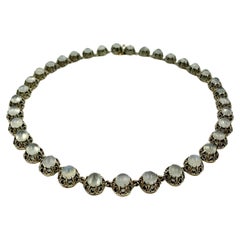
Moonstone Riviere Necklace
20th Century Arts and Crafts Choker Necklaces
Moonstone, 14k Gold, Silver, Rose Gold

People Also Browsed
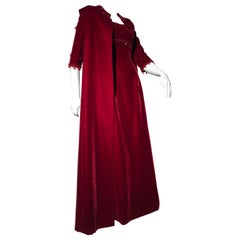
1960s French Dress and Coat Ensembles
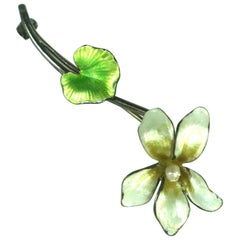
Antique Early 1900s German Art Nouveau Brooches
Sterling Silver, Enamel
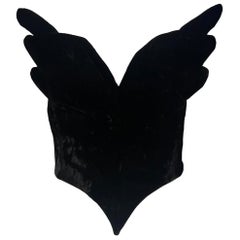
1980s French Bustiers
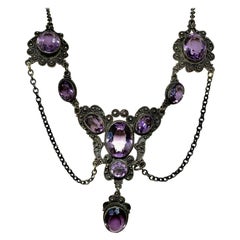
Antique 19th Century Unknown Belle Époque Pendant Necklaces
Amethyst, Sterling Silver
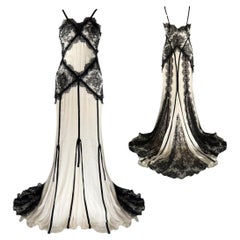
Early 2000s Italian Evening Gowns
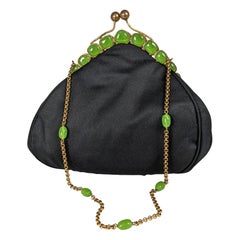
1980s French Evening Bags and Minaudières
Antique 19th Century British Art Nouveau Pendant Necklaces
Diamond, Pearl, 9k Gold, Sterling Silver
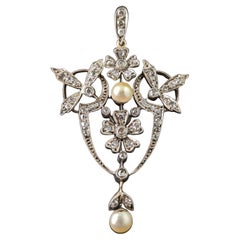
Antique Early 1900s American Art Nouveau Pendant Necklaces
Diamond, White Diamond, Pearl, Gold, 14k Gold, Yellow Gold, Enamel
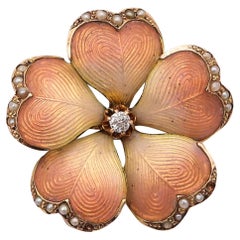
21st Century and Contemporary American Art Deco Beaded Necklaces
Tanzanite, Gold Plate, Sterling Silver
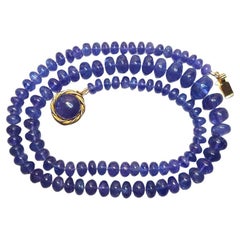
Antique Late 19th Century New Zealand Late Victorian Pendant Necklaces
Diamond, White Diamond, Pearl, Cultured Pearl, Natural Pearl, Gold, 14k ...
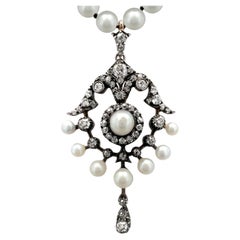
Antique 1890s American Art Nouveau Brooches
Pearl, Sapphire, Blue Sapphire, Gold, 18k Gold, Yellow Gold
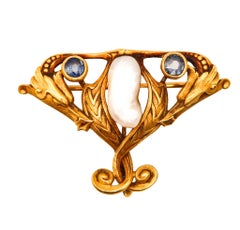
Antique Early 1900s American Art Nouveau Brooches
Pearl, Natural Pearl, Gold, 14k Gold, Yellow Gold, Enamel
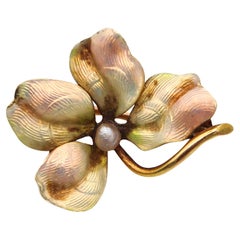
Vintage 1910s British Art Nouveau Link Necklaces
Opal, Gold, 15k Gold
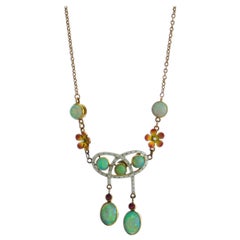
21st Century and Contemporary Link Necklaces
Diamond, Natural Pearl, South Sea Pearl, Gold, 18k Gold
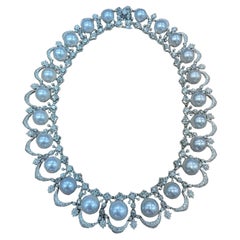
2010s Thai Art Nouveau More Necklaces
Diamond, Opal, Blue Sapphire, Gold, 18k Gold
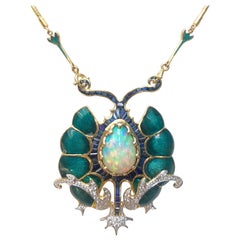
Early 20th Century Japanese Art Deco Beaded Necklaces
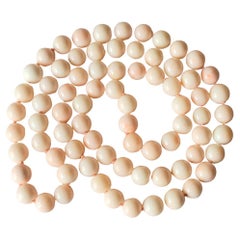
Coral
A Close Look at Arts-and-crafts Jewelry
The Arts and Crafts movement that emerged in England in the late 19th century saw a dehumanization of design in the rise of industrialization and mass production of objects. Its practitioners prized craftsmanship and a close connection between the artisan and the entire process of what they were making. This included the design of Arts and Crafts jewelry and watches, which evolved as the movement spread to the United States in the early 20th century.
While much of the Arts and Crafts furniture realm was dominated by male designers like William Morris and Gustav Stickley, several women came to prominence in Arts and Crafts jewelry design, including British metalworker Charlotte Newman and American enamelist and metalsmith Elizabeth Copeland. Many creators were part of guilds, encouraging an exchange of ideas, with some focused on jewelry, like England’s Guild and School of Handicraft — founded by Charles Robert Ashbee — and Birmingham Guild of Handicraft.
In contrast to the Victorian era, with its decadent gemstones and heavy mourning jewelry, designers of Arts and Crafts jewelry looked to the past and abroad for inspiration, from simple medieval shapes to East Asian styles. The movement’s emphasis on natural forms overlapped with Art Nouveau. Flourishes like leaves and flowers formed from silver, aluminum and copper can be found in bracelets and necklaces designed in this style, while rings and earrings are adorned with affordable gems such as turquoise and freshwater pearls.
Arts and Crafts jewelry designers used materials that were often simple, such as semiprecious stones and enamel, which is one of the oldest forms of surface decoration. Artisans prioritized the use of artistic techniques to elevate the jewelry rather than expensive components, and every piece was intended to be one of a kind — a work of wearable art.
Find antique Arts and Crafts jewelry boxes and a collection of Arts and Crafts jewelry on 1stDibs.
Finding the Right Choker-necklaces for You
Vintage choker necklaces are elegant, alluring and stylish. Cameos, pearls, diamonds and other stones can decorate these necklaces, which come in single or multiple strands. Whether it is a statement piece or a delicate chain, these short necklaces always stand out and turn heads.
The history of the choker can be traced back thousands of years, with Sumerian examples discovered from 2600–2500 B.C. They endured as a popular form of adornment through the centuries, and during the French Revolution they took on a symbolic significance. Women wore ribbons around their throats to mark the passing of those killed by the guillotine. Soon, the plain ribbons were adorned with small cameos and other ornamentation.
European choker necklaces gained a salacious reputation in the 19th century when prostitutes were associated with black ribbons tied around the neck, such as the model in Édouard Manet’s Olympia (1863). Queen Alexandra, Princess of Wales, reversed the trend in the late 19th century by wearing a large pearl and diamond choker, reputedly to hide a scar.
Fashioned from gold, pearls and other precious stones and metals, chokers continued to be worn into the 20th century, alternately statements of wealth and rebellion. They experienced periods of revival in the 1920s, ’40s, ’70s and ’90s for both men and women.
Vintage chokers make a statement with an unmistakable air of femininity. On 1stDibs, find an alluring collection of vintage chokers today, including gold, sapphire and emerald chokers.
- What is a Riviere necklace?1 Answer1stDibs ExpertApril 5, 2022A Riviere necklace is a diamond necklace that features a continuation of gemstones all the way around the neckline. The size of the gems can either be uniform or be larger in the front, gradually getting smaller toward the back. Shop a collection of Riviere necklaces from some of the world’s top sellers on 1stDibs.
- 1stDibs ExpertApril 5, 2022The rivière necklace features gemstones of the same type that are either all the same size and shape or, more frequently, they graduate from smaller in back to larger gems in the front center. In the Georgian Period, or from 1714 to 1837, rivière necklaces had become popular and remained so throughout the century, sometimes with the addition of a pendant in the later years. In the 1920s, the channel-cut necklace replaced the rivière necklace in popularity. Find a collection of vintage and modern rivière necklaces on 1stDibs.