Moorcroft Moonlit
Vintage 1920s British Art Nouveau Pottery
Pottery

Recent Sales
Vintage 1920s European Vases
Ceramic
20th Century Vases
Ceramic
Vintage 1920s British Art Nouveau Pottery
Pottery
Vintage 1920s British Art Nouveau Pottery
Pottery
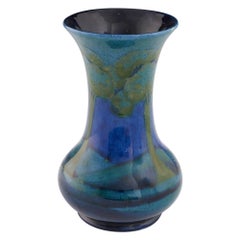
Early 20th Century British Arts and Crafts Vases
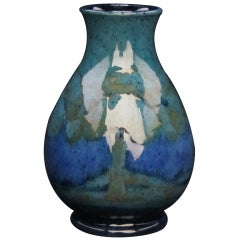
20th Century Vases
Ceramic
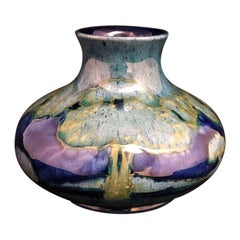
Vintage 1920s English Arts and Crafts Jars
Ceramic
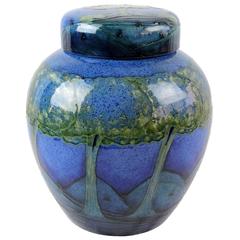
People Also Browsed
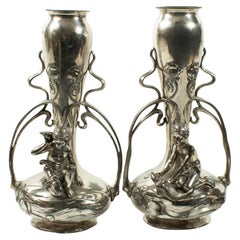
Antique Late 19th Century German Art Nouveau Sheffield and Silverplate
Metal, Silver Plate
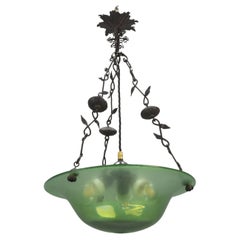
Vintage 1920s French Art Nouveau Chandeliers and Pendants
Wrought Iron
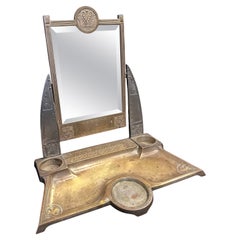
Early 20th Century Italian Art Nouveau Table Mirrors
Silver Plate
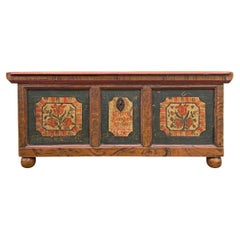
Antique Early 1800s Italian Other Blanket Chests
Fir
Antique Early 1900s German Folk Art Toys
Tin
Antique Early 1900s Dutch Art Nouveau Vases
Ceramic
20th Century American Art Nouveau Table Lamps
Bronze
Antique Early 1900s Austrian Jugendstil Vases
Glass
Antique Mid-19th Century Swedish Folk Art Blanket Chests
Pine, Paint
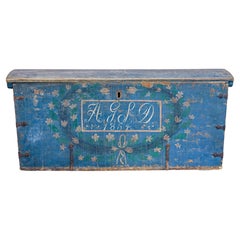
Antique Mid-19th Century Swedish Folk Art Blanket Chests
Iron
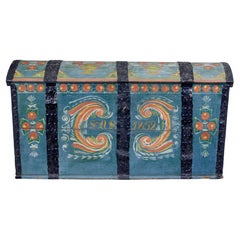
Antique 1820s Italian Directoire Cabinets
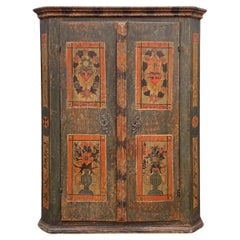
Fir
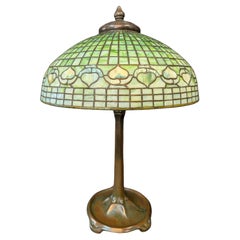
20th Century Art Nouveau Table Lamps
Art Glass
Mid-20th Century American Folk Art Outsider and Self Taught Art
Metal, Iron
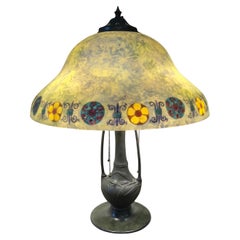
Vintage 1910s American Art Nouveau Table Lamps
Bronze
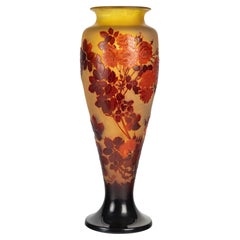
Vintage 1910s French Art Nouveau Glass
Art Glass
William Moorcroft for sale on 1stDibs
William Moorcroft (1872–1945), the founder of the celebrated British art-pottery company that shares his last name, was both an aesthete and a technical innovator. Along with William de Morgan, he is regarded as one of the greatest ceramists of the Arts and Crafts movement, yet Moorcroft’s singular style is heavily inflected with the lush naturalism of the Art Nouveau school of art and design.
The son of a decorative pottery painter, Moorcroft was born in Staffordshire, the center of English ceramics-making, studied at the Wedgwood Institute and in 1897 joined the local pottery manufacturer James Macintyre Co. as a designer. After a year, he was put in charge of the company’s art-pottery studio, and there he developed a new style of wares named “Florian,” made with a technique called tube-lining, or slip-trailing. In this method, decorative motifs are outlined with a thin, raised border produced by piping a thread of clay onto the body of a vessel — much like squeezing toothpaste from a tube.
Moorcroft, who took the unusual step of signing his ceramics, would go on to win numerous international awards. In 1913, backed by the London department store Liberty Co., he left Macintyre to open his own workshop. Queen Mary, wife of King George V, gave Moorcroft her Royal Warrant in 1928. Shortly before he died in 1945, his son, Walter Moorcroft (1917–2002), took over as head of the firm. The pottery company is still in business in Staffordshire, with a design department headed by Rachel Bishop.
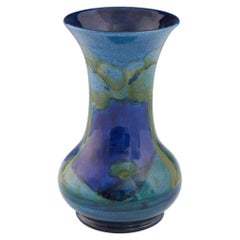
William Moorcroft’s ceramics are noted for their colorful, ebullient (and often slightly surreal) decorations depicting stylized natural forms — flowers, toadstools, fruit (pomegranate is a favorite among collectors), insects and landscapes. Most Moorcroft wares are finished with a glossy overglaze. Blue-and-white and pastel shades were generally used as underglazes on early Moorcroft pieces, and he later developed a rich, ruddy background glaze he called “flambé.”
Moorcroft art pottery has a rich, warm and inviting look — a comforting aesthetic that explains their enduring appeal.
Find antique and vintage William Moorcroft pottery, vases, serveware and more on 1stDibs.