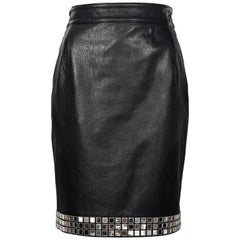
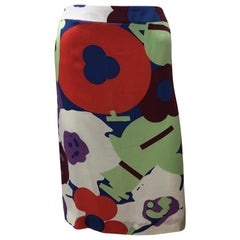
Moschino Leather Skirt
21st Century and Contemporary Skirts
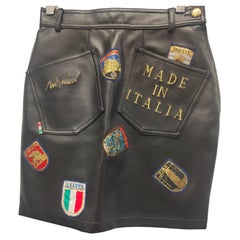
1990s Italian Skirts
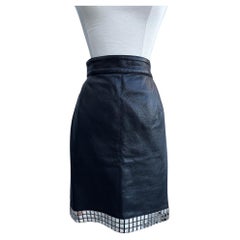
1990s Pencil Skirts
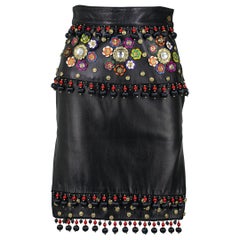
1980s Italian Skirt Suits
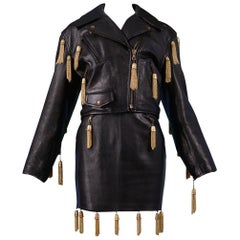

Recent Sales
1990s Italian A-Line Skirts
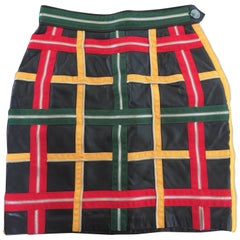
21st Century and Contemporary Italian Pencil Skirts
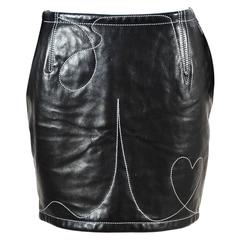
Early 2000s Italian Skirts
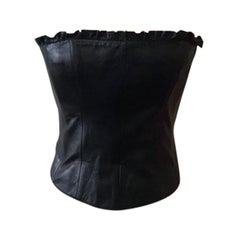
21st Century and Contemporary Italian Skirt Suits
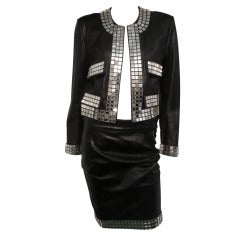
1980s Italian Skirts
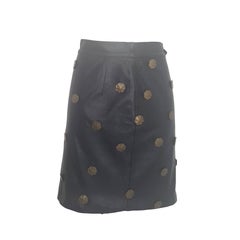
Late 20th Century Italian Pencil Skirts
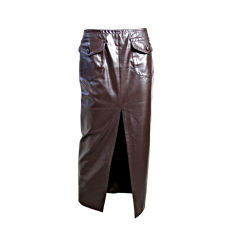
1990s Italian Skirts
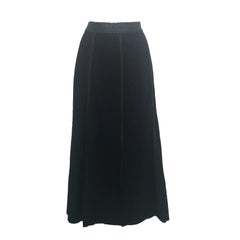
1980s Italian Pencil Skirts
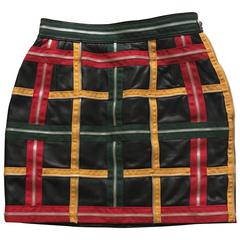
2010s A-Line Skirts
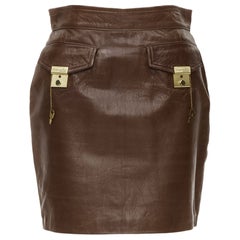
1990s Italian Skirts
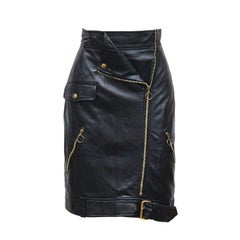
1990s Italian Skirts
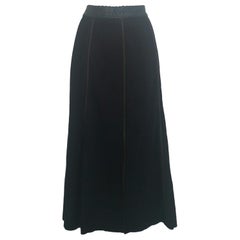
Late 20th Century Italian Skirts
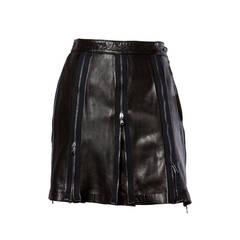
1980s Italian Pencil Skirts
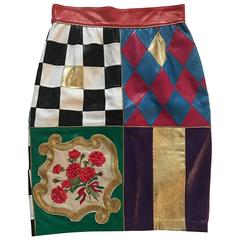
Late 20th Century American Pencil Skirts
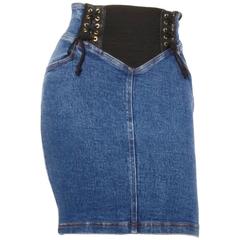
Late 20th Century Italian Skirts
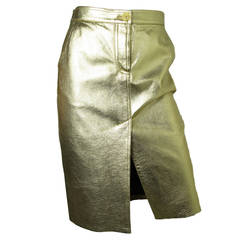
Late 20th Century Italian Pencil Skirts
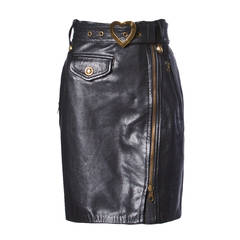
21st Century and Contemporary Italian Pencil Skirts
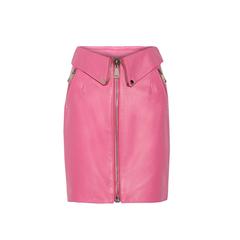
1990s Italian Skirts
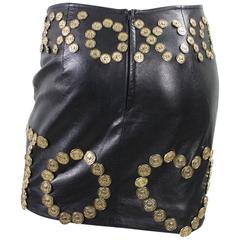
1990s Italian Skirts
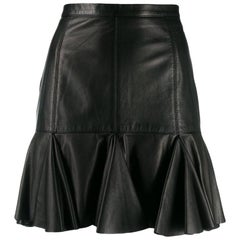
2010s French Skirts

2010s Pencil Skirts
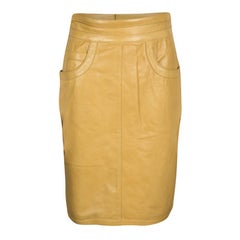
1990s Italian Pencil Skirts
People Also Browsed
2010s Italian Day Dresses

2010s Italian High Heels
1980s Italian Mini Dress
21st Century and Contemporary Italian Evening Dresses and Gowns
1970s American Evening Dresses and Gowns
1990s Italian Skirt Suits
Early 2000s French Cocktail Dresses
Early 2000s French Day Dresses
21st Century and Contemporary Italian High Heels
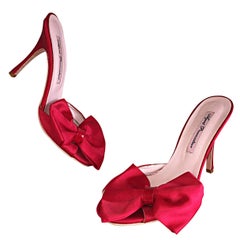
1990s French Jackets
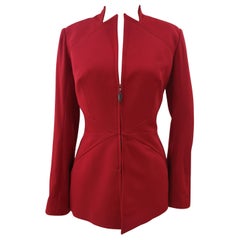
1990s Italian Day Dresses
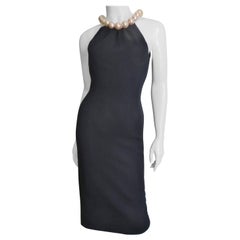
Early 2000s Italian Day Dresses
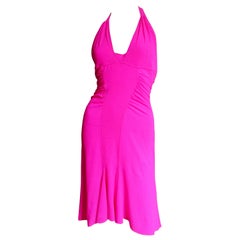
Early 2000s French Pencil Skirts
1990s Italian Shoulder Bags
1990s Italian Casual Dresses
1990s Italian Crop Tops
Moschino Leather Skirt For Sale on 1stDibs
How Much is a Moschino Leather Skirt?
Moschino for sale on 1stDibs
The Moschino story begins in the early 1980s, when Franco Moschino (1950–94), a freelance magazine illustrator and Gianni Versace collaborator, founded a label in Italy whose ethos was all about having fun.
Moschino initially pursued a degree in painting at Milan's Brera Academy of Fine Arts during the late 1960s, turning to freelance illustration to help pay his way through school. He found inspiration in Pop art, Dadaism and bold graphics. During the 1970s, he began to work for Gianni Versace’s now-legendary house as a sketcher and freelanced as a clothing designer with other fashion labels. In 1983, encouraged by Versace, he launched his own extravagant and excessive couture collection.
Moschino's expertly tailored, vibrant designs for casual wear and more, each adorned with loud, playful details, spoofed the chic high fashion of the day, and Franco's close relationship with fine art — as well as his eye for innovation — welcomed comparisons to Elsa Schiaparelli over the years. The label’s work essentially mocked the industry even as its hand fed Moschino, with the founder emblazoning shirts with slogans such as “Good taste doesn’t exist” or embroidering jackets with the phrase “Waist of money,” while the theatrical shows were positioned with an undercurrent of critique.
Today, the Metropolitan Museum of Art holds two vintage Moschino handbags in its collection: one shaped like a milk carton and the other an iron.
“Under all the surface witticisms, [Moschino] had a serious knack for running class pieces through a wringer of irony or Surrealism,” observed Vogue. “Chanel-isms were his favorite trope, though he also poked fun at Jean Paul Gaultier’s lingerie dressing and put out pasta bags in a parody of the Prada accessories craze.”
Accessories, jeans and the first men’s collection were presented at the Regal Palace in Milan in 1985, with his Moschino Jeans womenswear collection following in 1986. Then Moschino released Moschino for Women, its first fragrance, the next year in Europe.
In 1988, long before brands had considered the concept of a spin-off, Moschino bowed its cheeky diffusion line for men and women, Moschino Cheap and Chic, during the shows in Milan. The label thrived, adding its first stores in Italy and campaigning for eco-friendly fur. Its retrospective-slash-fashion show “X Years of Kaos” in the early 1990s benefited a children’s AIDS organization.
After Moschino’s untimely death at the age of 44 from AIDS complications, Rossella Jardini, his longtime friend and colleague, took the reins. She carried the torch for nearly 20 years, adding eyewear, watches and jewelry. American designer Jeremy Scott was named creative director in 2013.
Scott, who grew up on a farm and once unveiled a collection of evening dresses charred with burn marks, imbues all his work with a message of inclusion, be it his Fast Food collection in 2014 (hot dog dress included) or Moschino Barbie.
“I don’t care if the critics don’t like me,” Scott told Vogue. “I want to be the people’s designer, like Diana was the people’s princess.”
Find vintage Moschino clothing on 1stDibs.
Finding the Right Skirts for You
For everyday casual wear, elevating your look at the office or making a dramatic entrance at a formal event, authentic designer and vintage skirts are reliably versatile garments.
Skirts have been around for thousands of years. A woman’s straw skirt found in an Armenian cave is believed to have been handwoven in 3,900 B.C., and long, full skirts were worn by men and women in Ancient Egypt and Ancient Mesopotamia. Over time, the hemlines might have changed significantly but the skirt’s integral role in fashion has remained in place.
By the early 1900s, skirt hemlines had crept up slightly to ankle-length height from the densely layered floor-length style that dominated the Victorian era — a radical shift. As women in the United States began to live more active lives during the 1920s, designers such as Gabrielle “Coco” Chanel sought to free them from the long skirts and other constrictions that persevered in fashion by introducing her first little black dress. That same decade, she debuted her perfume, Chanel No. 5, as well as the Chanel suit with a fitted skirt, inspired by the boxy lines of men’s clothing and employing a sporty tweed.
Advancements in swimwear during the 1920s and 1930s also reflected a climbing hemline. Visionary designers such as Elsa Schiaparelli eventually pushed the boundaries of modesty with her backless suit, but women still wore long garments in public. Also during the so-called Roaring ’20s, short flapper dresses that fell at the knees and boasted a free-flowing sack-like silhouette, as well as chic beaded evening gowns and floral day dresses, paired fabulously with the dazzling jewelry of the era. This proved to be just a fleeting deviation from prevailing social convention, however. Skirts grew longer again in the 1930s, even if bows and other embellishments were added. As women entered the workforce in large numbers, clean lines accentuated curves and flared slightly where the material resolved at the ankles.
After World War II, France earned recognition as the center of fashion design for women. It was the golden age of haute couture, and women, quick to dispense of the drab utilitarian wartime garb that hung in their closets, pined for luxurious, elegant skirts designed by Christian Dior, Chanel, Givenchy and others, which were splashed across the pages of Vogue and Harper’s Bazaar in richly colored photographs shot by the likes of Richard Avedon and David Bailey. The 1960s introduced narrow pencil skirts and provocative minis emblazoned with geometrically dazzling patterns or bright floral prints by designers such as Emilio Pucci, Pierre Cardin and Lilly Pulitzer. By the 1970s, women felt emboldened to wear different varieties of this all-purpose garment, exploring wraps, crushed velvet maxis and other styles crafted by Halston, André Courrèges, Yves Saint Laurent and others.
On 1stDibs, find a wide range of designer and vintage skirts for any gender by Prada, Dolce Gabbana, Alexander McQueen and more. Whether it’s a skirt that can be altered to suit a specific style or an addition that’s ready to join your cherished collection, find exactly what you’re looking for today.