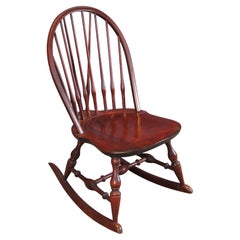
Nichols And Stone Rocker
Recent Sales
Early 20th Century British Colonial Rocking Chairs
Cherry

A Close Look at British-colonial Furniture
Typically made of mahogany, teak or bamboo and featuring a range of fabrics and prints with botanical patterns, antique British Colonial furniture and decor varies as it involved local materials and techniques and spanned centuries of design styles.
As the British Empire expanded from the 16th to the 20th century, its conquest and control of colonies around the world bolstered its wealth through the extraction of resources. Including colonies in the Americas, Africa, Asia and Australasia, this spread of often violent subjugation imposed British culture, language and faith on Indigenous peoples. The design of homes was included in this expression of imperial power, with government officials, merchants and military officers creating homes mimicking the luxuries they were used to in England.
Local artisans were commissioned to replicate British designs, resulting in versions of Regency, Chippendale, Sheraton and other styles of furniture being crafted from mahogany, rosewood, ebony and teakwood as opposed to beech and oak, which were more common in Europe. Whereas the colonial furniture for the Portuguese and Dutch regularly had motifs of indigenous flora and fauna, the British tended to want more exact reproductions of their home country’s designs.
To escape the summer heat in places such as India and the Caribbean, British colonizers relocated to airy houses in the hills or plantations, leading to foldable chairs and collapsible desks in the style of military campaign furniture. Rather than upholstery as they might have in Europe, chairs and sofas in the British Colonial style had rattan and cane seating for these higher temperature climates. The contrast between the light textiles and the dark colors of the sturdy furniture became a defining aesthetic of British Colonial interiors.
Find a collection of antique British Colonial outdoor furniture, seating, bedroom furniture, decorative objects and other items on 1stDibs.
Finding the Right Rocking-chairs for You
The phrase “rocking chair” didn’t find its way into the dictionary until the mid-18th century. While most of the sitting furniture that we use in our homes originated in either England or France, the iconic rocking chair is a quintessentially American piece of furniture.
A Philadelphia cabinetmaker’s bill for a proto-rocking chair issued in 1742, which identified the seat as a “Nurse Chair with rockers,” is the earliest surviving evidence of this design’s humble beginnings. The nurse chair was a low side chair intended for nursing women, so giving it a soothing rocking motion made sense. Rocking chairs, which saw a curved slat affixed to the chairs’ feet so that they could be literally rocked, quickly gained popularity across the United States, garnering a reputation as a seat that everyone could love. They offered casual comfort without the expensive fabrics and upholstery that put armchairs out of many families’ budgets.
Rocking chairs are unique in that they don’t just offer a place to rest — they offer an opportunity to reminisce. The presence of one of these classic pieces stirs up our penchant for nostalgia and has the power to transform a space. They easily introduce a simple country feel to the city or bring the peaceful rhythm of a porch swing into a sheltered sunroom. Although craftsmen took to painting and stenciling varieties of the chairs that emerged in New England during the 19th century, the most traditional rocking chairs are generally unadorned seats constructed with time-tested materials like wood and metal. As such, a minimalist vintage rocking chair can be ushered into any corner of your home without significantly disrupting your existing decor scheme or the room’s color palette.
In the decades since the first rocker, top designers have made the piece their own. Viennese chair maker Michael Thonet produced a series of rockers in the middle of the 19th century in which the different curved steam-bent wood parts were integrated into fluid, sinuous wholes. Mid-century modernists Charles and Ray Eames added wooden rockers to their famous plastic shell armchair, while Danish designer Frank Reenskaug opted for teak and polished beech, introducing pops of color with small cushions (a precursor to the bold works that would follow in the 1970s and 1980s).
No matter your personal style, let 1stDibs pair you with your perfect seat. Deck out your porch, patio or parlor — browse the vintage, new and antique rocking chairs in our vast collection today.