Niels Otto Moller Ottoman
Recent Sales
Vintage 1960s Danish Scandinavian Modern Ottomans and Poufs
Papercord, Teak
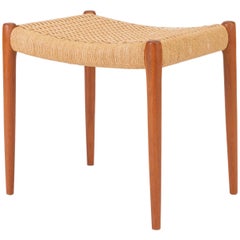

Vintage 1960s Danish Scandinavian Modern Ottomans and Poufs
Papercord, Teak
20th Century Danish Scandinavian Modern Ottomans and Poufs
Teak, Wool
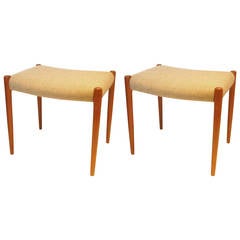
Vintage 1950s Danish Scandinavian Modern Footstools
Papercord, Rosewood
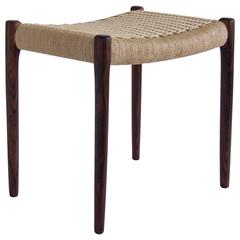
Vintage 1960s Danish Mid-Century Modern Stools
Cord, Papercord, Wood, Teak
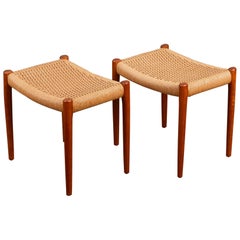
Vintage 1960s Danish Mid-Century Modern Stools
Papercord, Teak
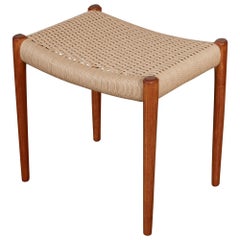
Vintage 1960s Danish Mid-Century Modern Ottomans and Poufs
Textile, Teak
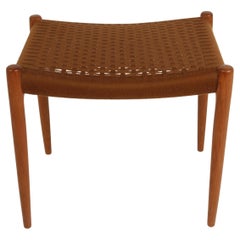
Mid-20th Century Danish Scandinavian Modern Ottomans and Poufs
Papercord, Teak
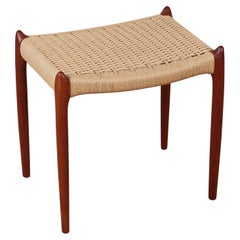
Vintage 1960s Danish Mid-Century Modern Ottomans and Poufs
Papercord, Teak
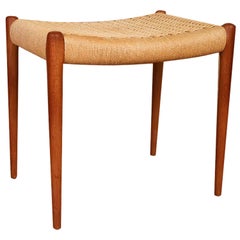
Vintage 1960s Danish Mid-Century Modern Ottomans and Poufs
Papercord, Teak
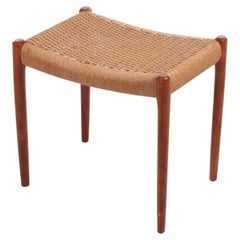
Mid-20th Century Danish Mid-Century Modern Dining Room Chairs
Papercord, Teak
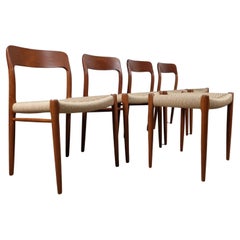
Vintage 1960s Danish Mid-Century Modern Stools
Papercord, Teak
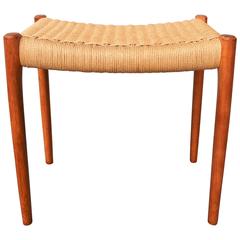
Niels Otto Møller for sale on 1stDibs
Working in rich woods to create durable furniture that is today recognized for its elegant simplicity and solid craftsmanship, Niels Otto Møller was one of the original designers of the famed Scandinavian modern movement that swept through postwar Europe and, eventually, the United States.
At the age of 19, Møller studied to be a cabinetmaker, gaining a strong affinity for working with natural materials. He furthered his education at the local design academy in his hometown of Århus, Denmark, where, in 1944, he established J.L. Møllers Møbelfabrik. Møller’s first chair — called simply No. 1 — was introduced in 1946. In 1961, he expanded his thriving business by opening a factory in Højbjerg, producing his popular dining chairs as well as armchairs, lounge chairs, tables and more. Rather than unnecessary ornamentation, he focused on a warm and more minimalist approach that valued function over form. Nearly all of his pieces, from the 1962 Model 78 chair to his simple tables, feature gentle curves formed from woods such as rosewood and teak (a sought-after material among furniture designers of the time).
Though the furnishings boasted a contemporary look and were a departure from the ornate designs of the recent past, Møller’s company crafted all of them using traditional, age-old techniques. For instance, the 1959 Model 77 side chair’s seat is handwoven using a single 425-foot-long cord. Today, the Danish furniture designer’s refined pieces continue to be as sought after as they were when mid-century modernism was in full swing.
The company, still based in its original factory, remains a family business, now headed by Møller’s granddaughter, Kirsten Møller. Along with new pieces, they craft the celebrated original designs, from raw wood to finished assembled products, that made J.L. Møllers Møbelfabrik a renowned name in Danish Modern design.
Find a collection of vintage Niels Otto Møller furniture on 1stDibs.
Finding the Right Ottomans-poufs for You
Antique and vintage ottomans and poufs add comfort and style to any living room, game room, home office or minimalist lounge space. An ottoman is a short seat or footstool that is also often used to store items. A pouf is similar, but it’s typically more petite than an ottoman, usually without the storage space inside.
When one thinks of the Ottoman Empire, it’s easy to overlook the iconic seat named for the region. The ottoman — originally an upholstered seat or small bench without a back or arms — was a family’s main seating furniture, a way to merge floor seating with cushions and mats. It wasn’t until they were brought to Europe from Turkey, during the 18th century, that it became popular to join ottomans with other pieces of furniture, such as at the base of a chair. Eventually, these footrests were transformed into storage furnishings to organize quilts and blankets or other textiles. Furniture makers crafted their ottomans with lids that revealed a hidden cupboard, which rendered them both comfortable and practical.
Poufs, which appeared in France during the 1840s, are also of the low-platform seating variety. These versatile furnishings have been made available in all manner of shapes and sizes over time, and depending upon their firmness can be used as a side table should an occasion call for an extra one. However, your average ottoman is almost always firmer than a pouf, and even if the plush pouf in your living room feels sturdy, it’s probably not the best surface for your early-evening cocktail.
Both ottomans and poufs can help create an inviting and warm atmosphere in your living space. For the smaller rooms that are characterized by a casual feel, a shaggy or woven wool pouf might be a better choice, as it’s likely to be more compact and floor-cushion-like than an ottoman. The latter are often larger and more table-like and are comparatively a good fit for a more formal room such as a library or a study. Today, you might find that an ottoman works well in your bedroom, where there isn’t room for a sofa, or perhaps it can serve as a reliable perch in front of your vintage vanity table.
Whatever your seating needs are, find a collection of antique, new and vintage ottomans and poufs in varying styles on 1stDibs that include neoclassical, Industrial and mid-century modern. From the bright colors and bold patterns deployed by Milan-born designer Lorenza Bozzoli to the classy leather furnishings created at family-run Brooklyn, New York, atelier Moses Nadel, there is an endless range of these lovable low stools that merge seamlessly with most decor.