Oil On Porcelain
to
3
33
23
24
20
16
15
10
4
3
2
2
2
1
1
1
1
1
7
2
1
1
1
Sort By
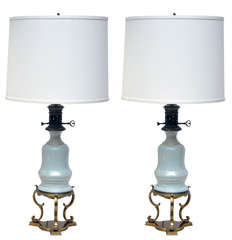
Pair of Paris Porcelain Celadon Oil Lamps on Stands, Circa 1860
Located in Lake Forest, IL
Pair of Paris Porcelain Celadon Oil Lamps on Gilt-Bronze Stands, Circa 1860
Category
Antique 19th Century French Table Lamps
Materials
Bronze

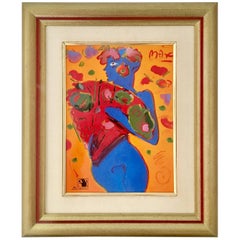
20th Century Peter Max LE Oil on Porcelain Painting, "Fan Dancer"-1989 Signed
By Peter Max
Located in West Palm Beach, FL
20th century, Peter Max oil on porcelain plaque, framed and singed lower left, Peter Max. This
Category
20th Century American Modern Paintings
"Doll, " Contemporary, Figurative, Still- Life, Study, Oil on Paper
By Jen Mann
Located in Vancouver, British Columbia
, figurative, still-life, study, oil on paper depicts a small, porcelain doll surrounded by pink satin.
Jen
Category
2010s Contemporary Still-life Paintings
Materials
Oil, Archival Paper

- 1
Get Updated with New Arrivals
Save "Oil On Porcelain", and we’ll notify you when there are new listings in this category.
Oil On Porcelain For Sale on 1stDibs
You are likely to find exactly the piece of oil on porcelain you’re looking for on 1stDibs, as there is a broad range for sale. There are many Contemporary and Old Masters versions of these works for sale. Making the right choice when shopping for an item from our selection of oil on porcelain may mean carefully reviewing examples of this item dating from different eras — you can find an early iteration of this piece from the 20th Century and a newer version made as recently as the 21st Century. Adding a choice in our collection of oil on porcelain to a room that is mostly decorated in warm neutral tones can yield a welcome change — find a piece on 1stDibs that incorporates elements of brown, gray, black and more. An object in our assortment of oil on porcelain from Olga Antonova, Angelo Granati, Natasha Zupan and Janet Rickus — each of whom created distinctive versions of this kind of work — is worth considering. Frequently made by artists working in oil paint, paint and canvas, these artworks are unique and have attracted attention over the years.
How Much is a Oil On Porcelain?
The average selling price for a piece of oil on porcelain we offer is $5,600, while they’re typically $550 on the low end and $25,000 for the highest priced.
Questions About Oil On Porcelain
- 1stDibs ExpertOctober 7, 2024The difference between semi-porcelain and porcelain is the temperature at which it is produced and its appearance. Both types of pottery usually come from kaolin clay, but porcelain gets fired at higher temperatures than semi-porcelain. Consequently, porcelain has a translucent appearance, while semi-porcelain is opaque. In addition, semi-porcelain is usually more water-absorbent than porcelain. Explore a wide range of porcelain and semi-porcelain pieces on 1stDibs.
- What was porcelain used for?1 Answer1stDibs ExpertMay 30, 2024Porcelain was once used for many of the same purposes as it is today. Ancient Chinese artisans invented the material and created statues, trinkets, cups, plates, teapots and other dinnerware and serveware, just as contemporary manufacturers do. Today, porcelain is also a key material in the manufacturing of electrical insulation, plumbing fixtures, tiling, dental bridges and crowns and many other items. Find a large selection of porcelain wares on 1stDibs.
- Where was porcelain made?1 Answer1stDibs ExpertFebruary 27, 2024Porcelain was first made in China. Artisans began producing early forms during the Tang Dynasty, which lasted from 618 to 907 A.D. During the Yuan Dynasty from 1279 to 1368, crafting techniques advanced to produce the strong, translucent pottery that we call porcelain today. Shop a wide variety of porcelain objects on 1stDibs.
- What is feldspar porcelain?1 Answer1stDibs ExpertMarch 22, 2022Feldspar porcelain is a type of ceramic made from a blend of kaolin clay and the mineral feldspar. The mix of ores gives the porcelain a translucent gray-blue appearance. Rorstrand is known for producing feldspar porcelain décor. On 1stDibs, shop a range of feldspar porcelain decorative objects.
- What is Hirado porcelain?1 Answer1stDibs ExpertApril 5, 2022Hirado porcelain or Hirado ware is made in Japan. Most often it’s made in Makawachi so you will hear it referred to as Mikawachi ware at times. A sometsuke underglaze of cobalt and white is most popular as it highlights the fine grain of the porcelain and the complicated details and elaborate openwork. Shop a collection of Hirado ware from some of the world’s top sellers on 1stDibs.
- What is vitro porcelain?1 Answer1stDibs ExpertMarch 22, 2022Vitro-porcelain is a variety of glass. It gets its name from its pressed construction, which gives it the look of porcelain or pottery. John George Sowerby invented the material in 1877. On 1stDibs, shop a range of porcelain decorative objects.
- What is a porcelain socket?1 Answer1stDibs ExpertOctober 12, 2021A porcelain socket is a socket made of porcelain. It can endure higher temperatures when compared to other materials. If the light is outside or hangs with a bulb facing down, a porcelain socket is the best recommended. On 1stDibs, find a variety of antique and vintage porcelain socket lamps.
- What is a porcelain sign?1 Answer1stDibs ExpertOctober 5, 2021Porcelain signs are thin metal sheets bonded with durable glass coating at a high temperature. It is further coated with enamel for protection. Because of its multi-layer coating, these signs are thicker than painted metal signs. Visit 1stDibs for a collection of porcelain signs.
- What is a porcelain vase?1 Answer1stDibs ExpertMarch 22, 2022A porcelain vase is a vessel made out of vitrified pottery. Porcelain is a semi-translucent white color and has a smooth, sleek texture. Traditionally, people use porcelain vases to hold fresh, dried and silk flower arrangements, but you can also display them empty as decorative accents. Find a range of antique and vintage porcelain vases on 1stDibs.
- What is Bavarian porcelain?1 Answer1stDibs ExpertApril 5, 2022Bavarian porcelain is characterized by its delicate translucent porcelain and finely decorated designs. The colorful designs often depicted hand-painted floral scenes and figurines. Shop a collection of Bavarian porcelain from some of the world’s top sellers on 1stDibs.
- What is porcelain made of?1 Answer1stDibs ExpertFebruary 22, 2021Porcelain is made up of kaolin, feldspar, quartz, and clay. It is created using a two-ore firing process.
- What is in porcelain clay?1 Answer1stDibs ExpertApril 5, 2022Most porcelain contains a mixture of silica, clays, feldspar and kaolin. In the case of bone china, bone ash is also included. Porcelain is a ceramic and is made like all others by mixing clay with additives, shaping it and then firing it in a kiln. Where porcelain differs is the ingredient mixture, often containing kaolin and the fact that it’s fired at a hotter temperature. Shop a range of antique and vintage porcelain on 1stDibs.
- What is Lladró porcelain?1 Answer1stDibs ExpertApril 5, 2022Lladró is known for its porcelain figurines and sculptures. Lladró high porcelain creations express beauty and technical perfection and are meticulously made. The designs pay high attention to detail, which results in life-like figurines and bold sculptures that represent a wide range of ideas and motifs. Find a selection of Lladró porcelain on 1stDibs.
- When was porcelain invented?1 Answer1stDibs ExpertMay 3, 2024Porcelain was invented during the Tang Dynasty in China, which began in 618 A.D. and ended in 907. Pieces produced during this period tended to be very simple and might not be easily recognizable as porcelain to modern-day collectors. The form of porcelain that most people envision today emerged during the Yuan Dynasty, which occurred between 1279 and 1368 A.D. On 1stDibs, shop a large selection of porcelain.
- What is Japanese porcelain?1 Answer1stDibs ExpertApril 5, 2022The creation of Japanese porcelain began in the late 1500s. Although the styles and variations of Japanese porcelain range, many consider Kyushu to be the center of Japanese porcelain production. You’ll find a variety of antique and modern Japanese porcelain pieces on 1stDibs.
- What is a porcelain plate?1 Answer1stDibs ExpertApril 22, 2024A porcelain plate is a dish made out of a material called porcelain. A type of ceramic, porcelain is made out of highly refined clay that gets fired at high temperatures. Porcelain plates have an appealing translucent appearance and are harder and less porous than other types of ceramic dinnerware. On 1stDibs, explore a selection of porcelain plates.
- 1stDibs ExpertNovember 20, 2024Opinions vary on who is the most realistic oil painter. Among contemporary artists, Leng Jun, Richard Estes and John Baeder are all acclaimed for the incredibly lifelike works they produce. Other artists who could be contenders for the title include Frédéric Bazille, George Bellows, Rosa Bonheur, Gustave Caillebotte, Gustave Courbet, Honoré Daumier, Thomas Eakins and Jules Bastien-Lepage. Shop a wide range of oil paintings on 1stDibs.
- 1stDibs ExpertSeptember 25, 2019
Clean an oil painting by dusting it with a natural-hair artists’ brush.
- 1stDibs ExpertApril 5, 2022To tell if an emerald has been oiled, look for white or yellow branch patterns along the surface of the gem. If you see them, the gem is likely oiled. Also, examine it under a magnifying glass for any signs of trapped bubbles. These also indicate an oiled gemstone. Consulting a licensed jewelry appraiser is the best way to accurately identify oiled emeralds. You'll find a collection of expertly vetted emerald gemstone jewelry on 1stDibs.
- 1stDibs ExpertMarch 22, 2024To maintain oil paintings that you purchased for your home, experts suggest that you keep them out of direct sunlight. Prolonged exposure to the sunlight coming in from a window can fade the colors in your painting. Do not hang your oil painting near a heat source or where it can get wet (bathrooms and kitchens are not safe for your oil painting).
You may wish to dust your oil painting so that layers of dust don’t begin to gather on its surface. This should only be considered to remove loose dust. Never spray any chemical substance on your oil painting. Do not use a damp cloth to dust your oil painting. (Again, your painting should not be exposed to moisture.)
To remove loose dust, use a soft brush that measures approximately one to two inches wide with natural-hair bristles. Do not use a dust cloth or a feather duster, as those items may catch or leave threads or feathers behind. Do not apply pressure or dust your painting for an extended period of time.
If you think that your oil painting is considerably dirty or believe that other issues may be at work, experts strongly suggest that you consult with a professional conservator.
Read about how to arrange your wall art and find oil paintings for sale on 1stDibs.
More Ways To Browse
Napoleon Crossing The Alps
Lilac French Vase
Kissing Fish
Porcelain Hunting Plates
Porcelain Chinese Woman
Porcelain Signs Oil
Napoleon Porcelain Flowers
Ernest Quost
Skye Terrier
Retro Hula Dancer
Reuben Haley
Reverse Painted Glass Cabinet
Rhinoceros Porcelain
Richard Bampi
Richard Manz
Ride On Toy
Rinascimento Vintage
Robert Cherry